

General News
UPS Gives Online Shoppers World Delivery Confidence


UPS said it will expand UPS My Choice and the UPS Access Point network, two of the company’s powerful services that work seamlessly together to provide busy online shoppers and global retailers new personalized solutions to manage residential package deliveries.
UPS My Choice, the customizable online and mobile service where consumers choose delivery preferences and more, will now be available to consumers in 15 additional countries throughout North America and Europe.
UPS My Choice is an industry-first innovation introduced in the U.S. in 2011.
The UPS Access Point network, with the broadest integrated cross-border footprint in Europe, is now available in New York City and Chicago and will expand rapidly to cover all major U.S. metropolitan markets during 2015.
The UPS My Choice and UPS Access Point combined service will also be available in Poland, Italy, Canada and Mexico later this month.
UPS My Choice
More than 10 million U.S. consumers already use UPS My Choice to plan for their deliveries when and where it is convenient for them.
Consumers in Austria, Belgium, Canada, Denmark, France, Germany, Italy, Mexico, Netherlands, Poland, Puerto Rico, Spain, Sweden, Switzerland and the United Kingdom will be able to sign up for the free service at ups.com/mychoice.
“UPS My Choice has received outstanding customer response and continues to experience rapid growth with one new consumer enrollment every six seconds,” said Alan Gershenhorn, UPS executive vice president and chief commercial officer, in a statement on UPS’ site.
“Our mobile apps allow users to access UPS My Choice with their smart phone in a streamlined manner and offers several delivery and shipping solutions that fit their needs.”
UPS My Choice members receive advance delivery notifications informing them of the delivery timing of each UPS package.
Consumers also have the ability to reroute eligible packages to another address or reschedule deliveries for a future date before a UPS driver makes a delivery.
Consumers can also activate a vacation setting to have packages held and delivered when they return home.
Unique to the UPS My Choice service, consumers only enroll one time and never need to provide additional information to retailers or UPS to begin taking control of their UPS deliveries.
“UPS My Choice and the UPS Access Point network are a powerful duo that give e-tailers new solutions for personalizing their customer’s package delivery experience,” Gershenhorn said.
“UPS My Choice status alerts have industry-leading e-mail open rates and are extremely valuable for retailers that want to extend special customer offers or communications in addition to the shipment delivery notification and confirmation. We have more than 375 shippers in the U.S. utilizing this feature, including some of the most widely recognized names in retail.”
UPS Access Point Locations
The only thing consumers dislike more than missing a package is having to rearrange their lives to retrieve it.
Earlier this year, 37% of U.S. online shoppers participating in the 2014 UPS Pulse of the Online Shopper study, said they want alternate delivery locations when they are not at home.
Now there is a convenient alternative: UPS Access Point locations. These local businesses, primarily neighborhood convenience and grocery stores with evening and weekend hours, fit a consumer’s busy lifestyle. The locations are designed to be approximately 10 minutes or less from the consumer’s delivery address.
UPS drivers, when unable to deliver a package at the consumer’s residence, will leave a note informing them when they can expect to collect their package at a nearby UPS Access Point location.
Consumers will go to www.ups.com and use the tracking number on the note to get the address.
Consumers will need photo identification to receive their package. In addition, UPS My Choice members will have the ability to send qualifying shipments directly to a UPS Access Point location as their preferred delivery address.
Consumers can also drop off pre-labeled and prepaid packages at a UPS Access Point location during the store’s hours.
There are nearly 300 UPS Access Point locations in New York City and Chicago with more locations being added each week. As part of the UPS Access Point network, UPS is installing self-service smart lockers in metropolitan Chicago.
With government issued identification, or a mobile device, consumers can retrieve their package from a locker in less time than it takes to withdraw cash from an ATM. UPS My Choice members can route their packages directly to these lockers when they will not be home to receive deliveries.
In January 2015, the company plans to add all 4,400 The UPS Store locations throughout the U.S. to the UPS Access Point network.
Currently, there are more than 12,000 UPS Access Point locations in seven European countries. UPS expects to have 20,000 locations in key markets throughout Europe and the Americas by the end of 2015.
—



AfriStakes has launched a new capital platform in Nigeria aimed at linking African small- and medium-scale enterprises with a broad range of investors in a move to address persistent funding gaps across the continent.

In a statement, the firm said the platform would improve capital allocation by bridging the disconnect between available funds, investment-ready businesses, and viable opportunities.
The launch comes as many African businesses continue to face funding constraints despite the availability of capital within the financial system.
AfriStakes said structural barriers have limited access to funding, even as capital remains concentrated in traditional instruments such as fixed deposits, equities, and managed funds.
The platform enables businesses and investors to connect directly by creating profiles, listing funding needs, and identifying suitable investment partners.
According to the company, businesses can upload key documents and showcase their funding requirements, while investors can outline their interests and financial capacity.
Founder of AfriStakes, Henry Adebisi, said the initiative was designed to tackle inefficiencies on both sides of the investment market.
“In Africa, businesses suffer from low access to capital while investors suffer from low access to investable opportunities. With AfriStakes, we ensure businesses are properly prepared and positioned for investment, while investors gain the clarity and confidence needed to deploy capital effectively,” Adebisi said.
The company noted that a major challenge for many SMEs is not a lack of value but poor investment readiness, which affects their ability to attract funding.
AfriStakes said it addresses this gap by providing a structured framework that helps businesses present financial information, develop investment narratives, and prepare realistic projections.
The platform also offers support services such as due diligence, deal structuring, and preparation of investor-facing materials.
It added that the platform would facilitate capital inflow from local and international investors, including individuals, angel investors, diaspora investors, entrepreneurs, and institutional players.
Adebisi said the platform would promote efficient capital flow into businesses driving economic growth across Africa.
“Our vision is to build a system where capital flows more efficiently into real businesses that drive economic change. By positioning both businesses and investors for success, we enable stronger investment decisions and more impactful economic outcomes,” he said.
AfriStakes said it supports multiple funding pathways, including debt financing, equity investment, partnerships, and acquisitions.
The company added that the platform would promote transparency, inclusivity, and structured investment processes across the African business landscape, adding that the initiative positions AfriStakes as a key player in addressing the continent’s financing challenges by creating a bridge between capital and opportunity.

The modern kitchen is no longer just a place to cook, rather where families gather, conversations happen, and lifestyles are expressed. Today’s homeowners want appliances that don’t just work efficiently but also reflect their personality and enhance their living experience.

This is exactly where the LG MoodUP™ Refrigerator stands out. Designed to combine innovative technology, customizable design, and smart entertainment, the LG MoodUP Refrigerator transforms the kitchen into a vibrant, expressive, and connected space.
A Refrigerator That Matches Your Mood and Lifestyle
Traditional refrigerators focus solely on storage and cooling. The LG MoodUP Refrigerator takes a bold step further by redefining what a kitchen appliance can be.
At the heart of this innovation are colour‑changing LED door panels that allow users to personalise their refrigerator’s appearance. With just a few taps via a smartphone app, you can effortlessly change the colors of the refrigerator doors to match your mood, décor, or occasion.
Whether you prefer calm neutral tones, vibrant colours for entertaining guests, or subtle lighting for a relaxed evening at home, the LG MoodUP adapts seamlessly.
Customizable LED Panels: Design Meets Technology
One of the most striking features of the LG MoodUP Refrigerator is its customizable LED door panels. These panels offer multiple colour options and lighting combinations, helping you create a kitchen that truly reflects your personality.
Why This Matters for Modern Homes
- Enhance kitchen aesthetics without renovations
- Allows you to refresh your space instantly
- Creates a dynamic, stylish focal point in the kitchen
- Ideal for design‑conscious homeowners and young professionals
In Nigerian homes where kitchens are increasingly becoming open, social spaces, this feature adds a unique blend of style and innovation.
Built-In Bluetooth Speaker: Entertainment at the Heart of Your Home
The LG MoodUP Refrigerator goes beyond design by introducing entertainment into the kitchen. With a built‑in Bluetooth speaker, users can connect their smartphones directly to the refrigerator.
This allows you to:
- Play music while cooking
- Listen to podcasts or radio shows
- Enjoy audio while hosting family or friends
- Make daily kitchen routines more enjoyable
From meal prep to weekend gatherings, the kitchen becomes a more social and engaging environment.
Smart Technology for Smarter Living
LG is known globally for pioneering smart home solutions, and the MoodUP Refrigerator reflects this commitment. Using LG’s intuitive app interface – LG ThinQ, users can control lighting, sounds, and certain settings directly from their smartphones.
This smart connectivity ensures:
- Easy customization
- Seamless user control
- A modern, connected kitchen experience
For tech‑savvy Nigerian consumers looking to integrate smart appliances into their homes, the LG MoodUP Refrigerator fits perfectly into today’s digital lifestyle.
Designed for Style, Comfort and Everyday Use
Beyond its innovative features, the LG MoodUP Refrigerator remains a high‑performance refrigerator built for daily use. It delivers reliable cooling performance, efficient food preservation, and durable construction expected from LG appliances.
Key lifestyle benefits include:
- Elegant, premium design
- Reliable cooling efficiency
- Smart functionality without complexity
- A blend of practicality and visual appeal
This makes it ideal for homes that value both performance and style.
Why LG Continues to Lead in Home Innovation
LG’s approach to product development focuses on understanding how people live today and how technology can improve everyday moments. The MoodUP Refrigerator is a strong example of this philosophy, demonstrating that appliances can be both functional and expressive.
Rather than blending into the background, the LG MoodUP stands out as a lifestyle statement; one that reflects individuality, creativity, and modern living.
For anyone looking to upgrade their kitchen experience and embrace the future of smart living, the LG MoodUP Refrigerator delivers a bold and refreshing approach where your kitchen truly matches your mood.
For more information, kindly visit https://www.lg.com/africa/refrigerators/lg-gr-a24fdmmb

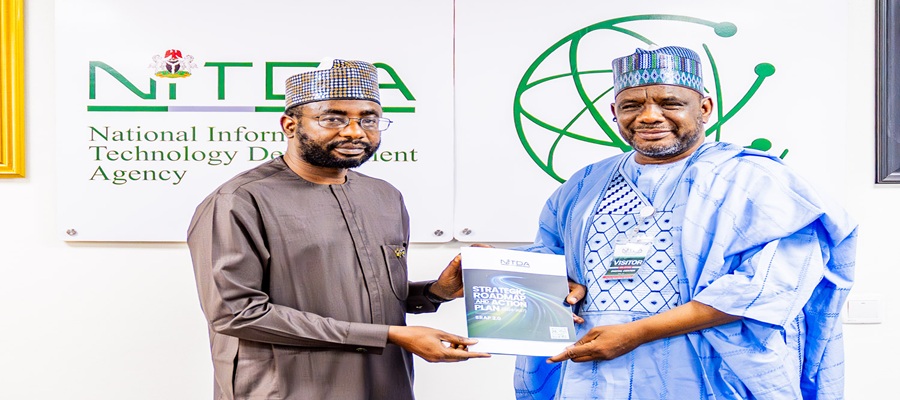
Kashifu Inuwa, National Information Technology Development Agency (NITDA), has emphasized the critical role of Nigeria’s human capital in driving national development and positioning the country for global competitiveness.

The DG of NITDA, Kashifu Inuwa Abdullahi, alongside the Executive Secretary of the Almajiri Commission, Dr. Muhammad Sani Idris, with management team of both organisations in a group photograph at the end of the visit held at NITDA’s headquarters in Abuja
Speaking while receiving a delegation from the National Commission for Almajiri and Out-of-School Children’s Education at the agency’s headquarters in Abuja, Inuwa noted that Nigeria’s youthful and rapidly expanding population presents a unique opportunity at a time when many countries are facing ageing populations and declining workforces.
He explained that the global demand for technical talent is projected to significantly outstrip supply by 2030, creating a window for Nigeria to emerge as a major contributor to the global workforce.
According to him, “with the right investments in education and digital skills, Nigeria can transform its demographic advantage into a powerful engine for economic growth and global relevance.”
The NITDA boss stressed that the country has the potential to become a global talent hub and a net exporter of skilled professionals.
Reframing migration narratives, he described Nigerians in the diaspora as valuable national assets who contribute through remittances and knowledge transfer, noting that diaspora inflows remain one of Nigeria’s most stable sources of foreign exchange.
Drawing comparisons with India, Inuwa highlighted how sustained investments in human capital have enabled the Asian nation to produce top executives in leading global technology firms. He attributed this success to a deliberate system of talent development and global placement.
Addressing Nigeria’s out-of-school population, he said equipping millions of underserved individuals with digital skills could unlock vast economic opportunities and help bridge the global talent gap.
Central to this ambition, he said, is NITDA’s National Digital Literacy Framework, which targets achieving 95 per cent digital literacy nationwide by 2030.
The framework focuses on six key areas: device and software operation, information and data literacy, digital content creation, digital marketing, online safety, and problem-solving.
Inuwa further explained that digital skills could transform critical sectors such as agriculture and commerce.
Farmers, he said, can leverage digital tools and smartphones to improve productivity through data-driven decisions, while small-scale traders can expand their reach and boost income using online platforms.
On implementation, he unveiled the “Digital Literacy for All” initiative, which targets students, workers, and participants in the informal sector.
He also disclosed ongoing partnerships with global organisations aimed at training civil servants and strengthening institutional capacity.
The NITDA DG reaffirmed the agency’s commitment to collaborating with the Almajiri Commission to establish digital learning centres, develop training programmes in indigenous languages, and deploy instructors to Almajiri schools across the country.
Earlier, the Executive Secretary of the commission, Muhammad Sani Idris, commended NITDA’s efforts in promoting digital literacy, describing them as crucial to bridging Nigeria’s education gap.
He expressed concern over the growing number of out-of-school children, noting that the traditional Almajiri system—originally designed for Qur’anic education—has been weakened by years of neglect and socio-economic pressures.
According to him, many children are sent far from home without adequate care, exposing them to exploitation and insecurity.
Idris called for coordinated action among government, communities, and development partners to address the crisis, highlighting the trans-border nature of the Almajiri system and the need for strategic collaboration.
He also expressed optimism about deepening partnerships with NITDA to leverage digital innovation in expanding access to education and creating better opportunities for millions of Nigerian children.

FCCPC Denies Banning Airtime Borrowing, Blames Cartel for Misinformation

Court Suspends Enforcement of FCCPC’s Reform on Loan Apps

FG Rules Out Borrowing from IMF’s $50Bn Support Fund
CBN Introduces Overnight Financing Rate to Compete with US, EU

AfriStakes Unveils Platform to Connect SMEs with Investors

Canal+ to Cut Jobs as Part Sweeping Restructuring

NBC Boss Urges Content Ceators to Participate in DSO

NITDA Takes Over National Digital Architecture System

DLM SPV PLC Lists ₦9.00bn AAA-Rated Medium-Term Notes on FMDQ Exchange, Sets Benchmark in Corporate Bond Market

FG Shifting Focus to “Meaningful Connectivity” to Drive Inclusion – Minister




 News2 days ago
Lagos Targets Vulnerable Residents in Expanded Social Register

 E-Business2 days ago
CAC Urges Users to Secure Accounts after Cyberattack Scare

 E-Financial2 days ago
IMF Downgrades Nigeria’s GDP Outlook, Warns of Rising Risks

 E-Financial2 days ago
CBN Proposes 30-Member Mediation Panel for Loan Disputes

 E-Financial2 days ago
NDIC Seeks Court Nods to Liquidate 89 Failed Banks
 Telecom1 day ago
MTN Suspends Data, Airtime Borrowing Service over New FCCPC Lending Rules

 News2 days ago
Study Shows 38% of Northern Women Lack Access to Financial Services

 E-Financial2 days ago
SEC Sets N7.5Bn Capital Floor to Shield Investors in FTZE Public Offerings