

Broadcasting
When Legacy Meets Preparedness – Olusegun Alebiosu as CEO, Firstbank Group

By Aniekan Ezekiel
What happens when legacy meets preparedness? What results from such a combination? Let us not be in a hurry to put forward any answers yet. Instead, let us consider first the opposite situation: When legacy meets unpreparedness.

The world abounds in examples of this distressing situation. A dynasty that has built wealth from generation to generation, with its illustrious heirs providing generational leadership, finds itself in a strange phase where an ill-prepared heir takes over the reins and in that same generation, not the next, wipes out the entire family fortune built over several generations.
We see the same thing with nations. History is replete with examples of great nations built by great leaders, which slid into oblivion when they were hit by arguably the greatest misfortune that ever befalls humanity – bad leadership. It is the reason American author and leadership expert John Maxwell asserts, “Everything rises and falls with leadership.”
As with nations, so with organisations. We see organisations that have thrived for decades and over several generations, get a new leader who is not prepared for such leadership, and the leader pushes the organisation to the brink of collapse.
Contrast this picture with the situation at Nigeria’s most enduring corporate organisation with the most amazing legacies of firsts, First Bank of Nigeria Limited, which witnessed a leadership transition about a year ago. Faced with a number of quality options in and outside the then management team, the decision-makers at the bank and its parent company FBNHoldings, now First HoldCo Plc, had to be clear-minded about who could become the new Chief Executive Officer of FirstBank Group.
Equally important as the need for continuity was the non-negotiable requirement for capacity to manage the ship of the 130-years-plus institution to sustain its enviable legacies and consolidate the gains made in recent years. The search was for someone with a steady head and hands (talk of risk control and mitigation), in addition to an excellent track record of sterling performance and achievements.
Fortunately, fate was on their side. They did not have to look outside. Right there before them was someone who understood all kinds of risks and how to control and mitigate them. He had been with FirstBank since 2016 when he joined as Group Executive / Chief Risk Officer. Then in January 2022 he was elevated to Executive Director / Chief Risk Officer and Executive Compliance Officer.
This man has given nearly three decades of his working life to the banking and financial services industry. He has under his belt a rich tapestry of cross-functional experience in credit risk management, financial planning and control, credit and marketing, and trade. His cross-functional exposure also includes corporate and commercial banking, agriculture financing, oil and gas, transportation, including aviation and shipping, and project financing
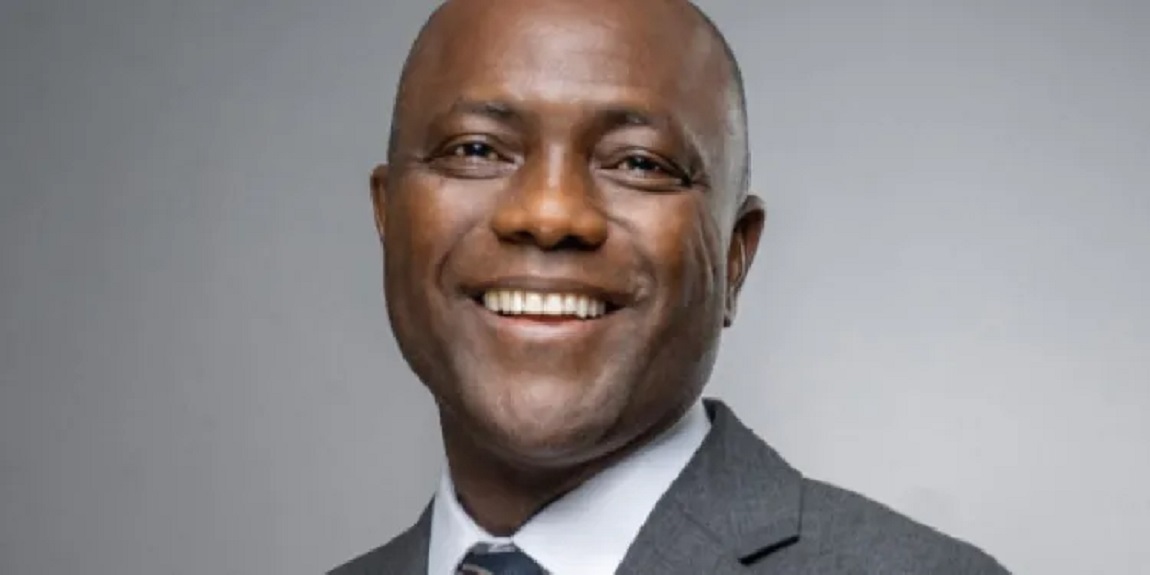
Meet Olusegun Alebiosu, the man history had prepared and the one decision-makers chose among the quality options. He was appointed substantive Chief Executive Officer of FirstBank Group in June 2024, having acted in that capacity since April 2024 when the former CEO left.
Determined to build on the bank’s legacies while navigating the ever-changing landscape of the financial services industry, Alebiosu has shown unwavering commitment to lead the bank through a transformative period that places emphasis on strategic consolidation, technological advancement and market expansion.
Alebiosu’s approach to sustaining the legacies of firsts at FirstBank, which has been at the vanguard of accelerating Nigeria’s digital payments as the first bank to issue over 13 million cards to customers, draws from his vast professional experience which began with Oceanic Bank Plc, now Ecobank Plc, in 1991. Between then and joining FirstBank in 2016, he had worked at Coronation Merchant Bank as Chief Risk Officer, at African Development Bank Group as Chief Credit Risk Officer and at United Bank for Africa as Group Head, Credit Policy and Deputy Chief Credit Risk Officer.
Under one year of his appointment as substantive CEO of FirstBank, Alebiosu’s strategic consolidation efforts have demonstrated that he is a worthy successor, not an ill-prepared or unprepared one, proving the decision-makers right. Understanding the critical role of its human capital in sustaining the bank’s legacies, Alebiosu has invested himself and the bank’s resources in promoting staff welfare.
A comprehensive review of the bank’s compensation structure was undertaken to position it within the 75th percentile of the industry, making the bank more retentive of, and attractive to, the best talents. The highest number of staff promotions across various grades in the last five years has happened under Alebiosu’s watch, with 1,654 employees being elevated in one single promotion cycle.
Under his leadership, over 2,186 new hires have been recruited across key functions and subsidiaries, with a large number of them deployed to the sales function to ensure that retail customers are adequately served. Staff are now more engaged based on the high employee engagement score of 86% achieved in the April 2025 WorkBuzz survey, indicating remarkable progress in the bank’s multi-pronged efforts to promote a positive and inclusive workplace culture.
This drive to reinforce a culture of inclusion and recognition has been accentuated by the launch of a group-wide culture transformation initiative with the goal of embedding the core values of integrity, excellence and innovation. It has also been strengthened by a renewed focus on inclusion, collaboration and high performance. Also contributing was the staging of a FirstBank Employee Appreciation Day 2025 featuring, among others, a personalised appreciation video message from the CEO to all employees across the group throughout Africa and beyond. The inclusion message is further boosted by the launch of the inaugural edition of the bank’s pioneering initiative, Mandarin Language School, to bolster the bank’s expansion in the Asian market.
Expansion is a critical plank in FirstBank’s new strategic planning horizon, under Alebiosu’s leadership. Taking off this 2025, the plan seeks to reinforce the bank’s market dominance across all operational regions and it includes deliberate expansion into new markets within and outside Africa.
Beyond geographical and horizontal expansion, Alebiosu’s plan has also targeted a skyward expansion. Or how else does one describe the groundbreaking ceremony in March 2025 for the bank’s new green-certified, 44-storey iconic head office building in Eko Atlantic City, Lagos State?
Alebiosu is also prioritising the acceleration of process automation in recognition of the importance of digital transformation. It is a massive push for technological advancement that includes adopting robotics technology and artificial intelligence at scale, to give the bank an unassailable competitive advantage among its peers in the industry.
The bank has deployed digital tools to enhance seamless account opening and optimised backend systems and customer service delivery. Two additional Digital Experience Centres (DXCs) have been launched – one at Lekki Admiralty Way, Lagos State and the other at its UNN branch, Nsukka, Enugu State. Also, the bank’s agent network has expanded to over 280,000, a 50,000 increase from the 230,000 agents it had in 2023.
As expected, shareholders, among other stakeholders, have been observing the strides the bank has been making under Alebiosu’s leadership, with a keen eye on the numbers. Fortunately, again, the bank’s results for the financial year ended December 2024 speak volumes, with after-tax profit of its parent company rising to the highest point it has reached in the last 12 years, according to the company’s latest financial statement.
In recognition of his achievements within such a short period and his exemplary leadership, Alebiosu was honoured at the World Business Outlook Awards as “Banking CEO of the Year – Nigeria 2025”. He has also been honoured with the “Special African Banking Leadership Award” by African Leadership Magazine. This was in 2024.
The story of Alebiosu’s leadership at FirstBank has clearly been one of preparedness meeting legacy. Working with the board and management team, he has consistently sustained the bank’s legacies and also consolidated its recent gains in ways that will ensure the gains keep compounding. FirstBank, more than ever before, is poised for greater intra- and intercontinental growth and impact in the years ahead.



Canal+ is to cut jobs at MultiChoice as part of a sweeping restructuring plan aimed at stabilising the African pay-TV operator, following years of operational and financial pressure.

The move comes alongside a planned $115 million capital injection, underscoring the urgency of efforts to revive the business after the French media group took control.
The planned layoffs are expected to form a core element of a broader cost-cutting and efficiency drive, as Canal+ seeks to streamline MultiChoice’s operations and improve profitability.
The restructuring signals a shift toward leaner operations, with a focus on eliminating redundancies and optimising the company’s cost base.
MultiChoice has struggled in recent years with declining subscriber numbers across key African markets, weighed down by macroeconomic pressures, currency volatility, and changing consumer behaviour.
The rise of global streaming platforms has intensified competition, chipping away at the company’s traditional pay-TV dominance.
Canal+’s intervention marks a pivotal moment for MultiChoice, reflecting a more aggressive approach to repositioning the business.
By combining fresh capital with structural reforms, the new owners are aiming to both stabilise short-term performance and lay the groundwork for longer-term growth.
The $115 million injection is expected to provide immediate financial relief, supporting operations and potential strategic initiatives.
However, the accompanying job cuts highlight the depth of the challenges facing the company and the scale of transformation required to restore competitiveness.

Nigeria has ranked first globally in the ownership of the two largest stablecoins, Tether (USDT) and USD Coin (USDC), reflecting the country’s growing reliance on dollar-linked digital assets.

USDT, USDC
Stablecoins such as USDT and USDC are designed to maintain a fixed value against the U.S. dollar, allowing users to store money digitally while avoiding the price volatility associated with cryptocurrencies like Bitcoin.
According to the 2026 Stablecoin Utility Report released by BVNK, about 59 percent of Nigerian crypto users hold USDT, while 48 percent own USDC, giving the country the highest combined ownership rate among all nations surveyed.
The report placed Nigeria ahead of several major economies, including Australia and India, highlighting the country’s strong adoption of dollar-denominated digital assets. Australia ranked second with 34 percent USDT ownership and 29 percent USDC, while India placed third with 30 percent USDT and 27 percent USDC holdings.
The study also examined adoption levels across other regions. Countries such as Colombia and Singapore showed strong usage of both stablecoins, while adoption levels were also notable in South Africa and the United States.
Other markets included in the analysis were Philippines, Thailand and Argentina, where stablecoin ownership has also increased significantly. Among European economies, the report said France and Germany showed moderate levels of adoption, while Latin American markets such as Mexico and Brazil recorded smaller but growing usage rates.
The United Kingdom also appeared in the ranking with modest levels of stablecoin ownership. The report noted that USDT ownership exceeds USDC in many countries, including Nigeria, Australia, India, Singapore, the Philippines, Thailand, Argentina and France.
However, USDC is often viewed as a more compliance-focused stablecoin because of its stronger transparency and regulatory alignment. In some markets, including South Africa, Colombia, Germany and Brazil, the report found that USDC adoption slightly exceeds USDT.
More broadly, the data suggests that stablecoin adoption is being driven largely by emerging economies rather than advanced financial markets. According to the report, countries such as Nigeria, Argentina and the Philippines are among the biggest users of stablecoins, where people increasingly rely on dollar-pegged digital assets to protect savings from currency volatility and facilitate cross-border payments.

Spotify has unveiled Nigeria-specific data from its annual Loud & Clear report, highlighting how Nigerian artists generated more than ₦60 billion in revenue from the platform alone last year, amid explosive growth in streams, local consumption, and global discovery.

The report, which analyzes millions of data points to illuminate music streaming economics, shows Nigerian artists’ revenue surged over 140% in the past two years.
This boom stems from rising global appeal and stronger domestic engagement, with 30.3 billion streams and 1.6 billion listening hours on Spotify in 2025. First-time discoveries of Nigerian music hit 1.3 billion, up 26% from 2024.
Locally, Nigerian tracks dominated Spotify Nigeria’s Daily Top 50, accounting for over 80% of features, while consumption of homegrown artists jumped 170% year-on-year.
“Nigeria’s music scene thrives on creativity, innovation, and global influence,” said Jocelyne Muhutu-Remy, Spotify’s Managing Director for Africa. “Loud & Clear spotlights how artists are forging sustainable careers and deepening local ties.”
Key highlights include:
55% year-on-year growth in local streams for Nigerian female artists.
75% surge in streams for independent Nigerian artists.
Independents and indie labels earning 58% of all royalties from Nigerian artists on Spotify.
Spotify’s editorial playlists featured nearly 2,000 Nigerian artists in 2025, boosting visibility. Nigerian music appeared in 320 million global user playlists and over 12 million in Nigeria, totaling more than 60 million playlists worldwide.
The report also notes evolving tastes, with top-growing genres in Nigeria over five years including pop urbaine, alternative pop, anime, emo, and drill.
For full details, visit spotify.com/loudandclear.

CBN Introduces Stricter BVN Rules to Curb Fraudulent Transactions

Binance is Missing from Ghana’s Crypto Sandbox

Canal+ to Cut Jobs as Part Sweeping Restructuring

Activist Warns against Rising Junk Food Culture in Nigeria

World Bank Debars 3 PwC Subsidiaries for 21 Months over Alleged Project Fraud

Kaspersky Discovers New Phishing Campaign Exploiting Google Tasks Notifications to Steal Corporate Credentials

esentry 2025 Report Shows Healthcare, Financial Services and Telecoms as Staging Grounds for Increased Cyberattacks in Africa

AfDB, UNDP Launch $10Bn AI Initiative for Africa

Mutual Benefits Assurance Settles ₦5.9bn Claims in January 2026

MultiChoice Suspends Yearly DStv Price Hike as Canal+ Pushes Growth




 E-Financial2 days ago
Kuda MFB Increases Kuda for Her Business Grants to ₦10 Million

 News3 days ago
Kaspersky Discovers Infostealers Mimicking Claude Code, OpenClaw and Other AI Developer Tools

 General News3 days ago
Banks, Offices to Close for Thursday and Friday for Eid-el-Fitr

 Telecom3 days ago
Nigeria, Ghana Trigger Stunning 45 Percent Surge in MTN Dividends

 Telecom2 days ago
Vitel Wireless Lures Subscribers with “Data that Never Expires” Campaign

 E-Financial3 days ago
SEC Shuts Over 400 Fraudulent Investment Schemes, Arrests Operators

 Telecom3 days ago
ATCIS Urges FG to Ensure Safety of Consumers Data

 News2 days ago
BoI, MTN Foundation Launch N1Bn Fund for Women Entrepreneurs