

E-Business
Wristwear Dominates Wearables Market, Clothing & Earwear Growing- IDC

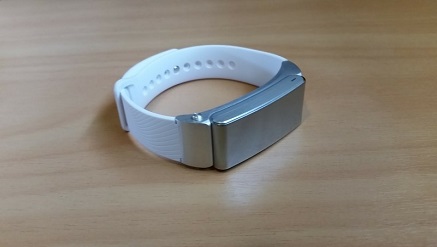
The overall wearables market is expected to return to strong growth after a brief slowdown in 2016 that resulted from delayed launches of major platforms and notable vendors struggling to maintain pace.
Looking ahead, new vendors, emerging form factors, and an expanded number of retail outlets will drive worldwide wearable device shipments from 102.4 million in 2016 to 237.5 million in 2021, a five-year compound annual growth rate (CAGR) of 18.3%, according to new data from the International Data Corporation (IDC) Worldwide Quarterly Wearable Device Tracker.
“With the shift towards watches and clothing, the need of a fashionable design will take center stage,” said Jitesh Ubrani senior research analyst for IDC Mobile Device Trackers. “Tech companies will be forced to step up their game and offer a wider selection of sizes, materials, and designs in order to appeal to a broader audience. We also expect more tech vendors to partner with fashion brands for their creativity, and equally important, their distribution network. In doing so, wearables will be made available to a previously unaware auidence – one that frequents fashion outlets over tech outlets.”
Earworn devices are also poised for growth as new startups bring their innovative technology to the table and traditional headphone companies incorporate additional capabilities beyond audio. Though growth is expected, volumes will remain somewhat modest as the primary features of health and fitness tracking “hearables” overlap with the more popular wrist worn devices.
In addition to the growth opportunity for these products, it is important to note the diversity of options within each category.
“Watches struggled as mass market devices due to limited and unclear value proposition to a broad base of potential users,” noted Ramon T. Llamas, research manager for IDC’s Wearables team. “Most potential customers saw watches performing multiple functions, but none of them worked exceptionally well to accomplish a myriad of tasks. Going forward, we instead expect watches to hyper-segment into specific niches, including connected kids’ watches, athletic watches, luxury and fashion watches, and lifestyle watches that better address different segment needs, whether they be communication, health and fitness, or as smart luxury and fashion timepieces. Not all of them will have the same features, but they will have enough – and the rights ones – to do the job.”
The same approach can be applied to emerging products. Llamas added, “Clothing, for example, can be designed to track athletic performance or to track vital information and communicate with workers – like first responders heading into dangerous situations. Similarly, companies are augmenting earwear with fitness tracking and smart coaching, while others are focusing on enhancing audio or providing real-time language translation. In both cases, the wearable is not taking a one-size fits all approach, and instead concentrates on specific solutions for specific use cases.”



Nigeria needs some 480,000 data protection officers (DPOs), to develop, implement, and oversee organizations’ data privacy strategy to ensure compliance with laws like the GDPR and the Nigeria Data Protection Act (NDPA).

Currently only about 10,000 individuals possess the necessary certification highlighting a major skills gap, according Vincent Olatunji, national commissioner, Nigeria Data Protection Commission (NDPC).
Olatunji spoke on Monday at the second edition of its Data Protection Officers training and certification programme in Abuja and Lagos.
He said that the NDPC has domesticated the certification of data protection officers (DPOs) to address the widening gap in certified DPOs, despite steady growth in the number of trained professionals over the past three years.
“At the moment, we have about 10,000 certified DPOs to work in that space. The gap of about 480,000 still exists,” he said.
The shortfall reflects rising demand for data privacy skills as more businesses, government agencies and digital platforms process personal data under the Nigeria Data Protection Act.
Olatunji said the number of certified DPOs has grown from fewer than 1,000 three years ago to over 10,000, while more than 27,000 professionals now operate within Nigeria’s wider data protection ecosystem.
He said the commission is scaling up training and certification efforts to close the gap and position Nigeria as a leading source of data protection talent in Africa.
“Our goal is to make Nigeria the go-to country when it comes to sourcing qualified data protection officers in Africa,” he said, adding that the certification meets global standards.
The NDPC said expanding the talent pool could also support job creation and strengthen trust in Nigeria’s digital economy.
Tolu Fadipe, head of research and development at the commission, said data protection is becoming critical as the country moves deeper into digital systems and emerging technologies.
“As we move towards a digital economy, data becomes central and protecting that data is essential,” she said.
Adeola Sopade, lead trainer, said participants in the programme would be trained on global best practices, including data protection principles, compliance requirements and handling user data requests.
The training also includes practical exposure and internships with organisations to improve job readiness.
Participants said the programme offers opportunities for young Nigerians to build careers in technology and prepare for emerging fields such as artificial intelligence.

Federal government has inaugurated the Electronic Pharmacy Regulation Platform (E-Pharmacy) to enhance the safety of online healthcare services.

Pic credit….healthreporters.info
The platform, championed by the Pharmacy Council of Nigeria (PCN), is designed to regulate digital pharmaceutical services and improve public health outcomes.
Inaugurating the platform, Prof. Ali Pate, coordinating minister of Health and Social Welfare, said the initiative signified Nigeria’s commitment to building a world-class regulatory environment.
Pate noted that pharmacy regulation had faced significant challenges for over three decades but expressed optimism that the new platform would strengthen oversight and accountability.
He said the initiative would enable evidence-based monitoring of pharmaceutical practices while supporting innovation and investment in the health sector.
“This launch is a testament to our collective commitment to advancing technology in the service of health, safety and human dignity.
“It is a decisive step to ensure that pharmaceutical practice in Nigeria aligns with national and global health priorities, reflecting the realities of the 21st century.
“It enables the country to adopt evidence-based approaches to monitoring and protecting public health while supporting innovation and investment,” he said.
The minister added that the platform would help establish a safe, accessible and well-regulated national e-pharmacy ecosystem driven by digital technology.
Earlier, Alhaji Ibrahim Ahmed, registrar/chief executive officer of PCN, said the need to regulate online pharmacy operations became more urgent during the COVID-19 pandemic.
Ahmed said the pandemic accelerated the adoption of digital tools and e-commerce in healthcare, exposing longstanding inefficiencies in pharmaceutical supply chains, particularly in Africa and Nigeria.
“This has led to the increasing adoption of digitised distribution of essential medicines through cost-effective and technology-enabled models.
“For decades, PCN has regulated pharmacy education, training, practice and business in Nigeria. However, as the world shifts towards digital solutions, access to medicines has evolved.
“The Electronic Pharmacy Regulations 2026 provide a comprehensive legal and technical framework for the registration, licensing, operation and oversight of digital pharmaceutical services,” he said.
He added that the framework would ensure that ethical standards and patient safety are not compromised in the delivery of online pharmaceutical services.


Olugbenga Agboola, CEO, Flutterwave, has announced plans to establish Anambra State as the company’s hub for Nigeria’s South East, leveraging a fresh banking license from the Central Bank of Nigeria (CBN) to boost local fintech and businesses.

Flutterwave
Agboola made the disclosure yesterday in Awka during a meeting with Anambra tech community leaders, hosted alongside Dr. Stanley Uzochukwu, CEO, Stanel Group and proprietor, Delborough Hotel.
He highlighted Flutterwave’s status as Africa’s leading payment system, born in Nigeria, with infrastructure powering companies nationwide.
“We want Anambra to be our hub for the entire South East,” Agboola said. “We’ll deploy our systems, fees, infrastructure, and POS terminals to every small business and large firm here, making our services the top consumer choice.”
Agboola pledged a massive impact program for Anambra entrepreneurs to foster global platforms from the state, enabled by the new license for faster growth.
For a decade, Flutterwave has facilitated payments, but now aims to empower South East businesses through partnerships, POS access, loans, and value for SMEs.
“We’re partnering on a huge impact program launching soon—impacting the tech community with technology, financing, and lending to create more millionaires from this city,” he added.

FG Investigates ‘Sharp Sharp’ Loan Operators over Alleged Privacy Violations

CISA Asks NDPC, Police to Act on Alleged Data Breach by NIPSS

Fela Makes History as First African to be Inducted into Rock and Roll Hall of Fame

Lawmakers Ask CBN to Suspend Payment to ZTE for Failed $460m CCTV Project

Ecobank Delivers Strong Results, Posts $801m in Pre-Tax Profit for 2025

Spotify’s Loud & Clear Report Reveals Over ₦60Bn Revenue for Nigerian Artists in 2025

Kuda MFB Increases Kuda for Her Business Grants to ₦10 Million

Canal+ to Cut Jobs as Part Sweeping Restructuring

Nigeria tops global rankings for USDT, USDC ownership

NBC Boss Urges Content Ceators to Participate in DSO




 Telecom3 days ago
SpaceX Hints at Home‑Built Chip Module for Starlink Mobile

 E-Financial2 days ago
Fidelity Surges Ahead in Recapitalisation Drive with ₦564bn Capital

 General News3 days ago
Teenager Hacks Celebrities Whatsapps, Sells Adult Content in Delta

 Telecom3 days ago
Digital Realty, IXPN Expand Peering Network with New Internet Exchange Point of Presence in Nigeria

 Telecom3 days ago
Elon Musk Accuses South Africa of Racism over Starlink Licence Block

 E-Financial3 days ago
Lawyers Sue CBN over One-Time BVN Phone Number Change

 News3 days ago
Meta Files Appeal over $25,000 Damages Awarded to Falana

 E-Financial3 days ago
FG Slashes Import Duties on Cars, Rice, Palm Oil in 2026 Fiscal Policy