

Telecom
WTL’s Survey Receives 94% Support for Network Sharing

By peter oluka
A survey carried out by World Telecom Labs (WTL) about rural telephony in Africa has supported network sharing as critical for achieving rural telephony.
Conducted every year, WTL’s surveys provide the latest insight and opinions from operators, ISPs, Governments and vendors building networks across rural Africa.
The survey shows that, despite the significant investment in Africa’s telecom infrastructure during the past year, the cost of building rural networks combined with low ARPUs and a long ROI continue to be the major barriers to building rural networks.
Unfortunately the survey revealed a general cynicism amongst industry stakeholders. In answer to the question ‘Which African operators are really trying to build networks in rural areas?’ 33% of respondents said that no operators were really trying whilst 40% said MTN was the most proactive operator.
However, it’s clear that people working in rural telephony are looking for new ways to build commercially sustainable networks with 94% saying that every element of a rural network could and should be shared – and that network sharing, spectrum sharing and neutral wholesale players all offer a way to spread the CAPEX costs of rural networks.
In answer to the question ‘What do you think Governments in Africa should do to speed up the rollout of rural networks?’ the responses were mixed.
In WTL’s view, each and any of the ideas below would be welcomed by those who want to build rural networks.
It also recommended that governments should legislate, giving operators targets: 10% of survey respondents; esstablish policies to allow all types of infrastructure sharing: 10% of respondents; allow the creation of dedicated MVNOs for rural service: 10%; ensure that roaming agreements in rural areas are in place: 16%; collaborate with local municipalities to support and facilitate the deployment of shared infrastructure: 9%; subsidise the backhaul infrastructure: 12%; reduce the industry-specific supply tax rate: 10%; build open access networks: 11%; offer fair and non-discriminatory access to public infrastructure: 11% and other: 1%.
Leigh Smith, MD of WTL, said “We hope that the findings of our survey are of interest. We present our results with appropriate commentary, as an indication of current thinking, and as a call to action to urge greater stakeholder collaboration to help break barriers, extend boundaries and deliver more coverage.
It’s clear that the traditional MNO model is not working for rural Africa – and that most people think that network sharing is the way to move forward.
“WTL is now able to provide a rural system that can be shared by multiple operators and we are looking forward to working with operators, ISPs, NGOs and Governments who are open to a new rural wholesale model.”
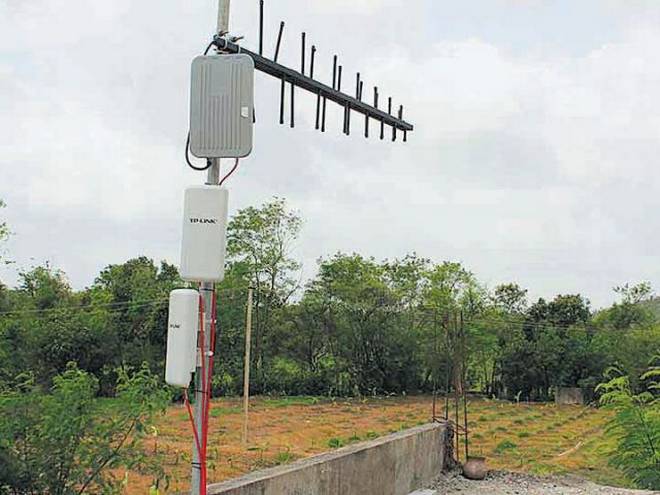
As a result of demand from the industry, WTL has customised its multi-award winning Vivada (Village Voice and Data) system so that wholesale carriers can build sustainable and commercially viable rural networks that can be used by operators of all sizes.
Vivada is suitable for providing services to pre and post-paid customers with varying telecoms budgets including GSM for every type of handset; Wifi connectivity for smartphones, tablets, laptops and PCs – and connectivity to cybercafés and hotspot call cabins.


In the wake of increasing geopolitical tension, Cassava Technologies has unveiled its National Sovereign Cloud offering for African governments.

The solution, the company claims, will help the continent’s governments ensure data is kept on infrastructure that remains under local legal and operational jurisdiction.
According to the official announcement, made yesterday, the solution provides “secure, locally-governed digital infrastructure that enables the deployment of AI-enabled public services”.
The overarching solution encompasses cloud, cyber security, AI computing infrastructure, as well as local language AI models and skills support for governments.
The announcement comes amid increasing uncertainty over the hosting of sensitive national data on cloud services operated by foreign hyperscalers, which are subject to legal frameworks, such as the U.S. CLOUD Act. The CLOUD Act opens the door to allow American authorities to access data stored on the servers of US hyperscalers, wherever those servers are physically located.
Cassava has claimed separately that currently, “approximately 33% to 45% of the world’s data is hosted in the USA”.
The company added: “A sovereign cloud reduces exposure to extraterritorial laws, improves cyber resilience, and ensures that model weights and training data for public AI remain under national custody.”
The Africa Data Centres Association’s 2026 Economic Report states that “data sovereignty has evolved from a legal aspiration into a strategic policy lever”.
Ahmed El Beheiry, Group COO and Group Chief Technology and AI Officer, Cassava Technologies said: “Across Africa, governments are accelerating their digital transformation agendas and are increasingly focused on ensuring that data and digital infrastructure remain secure and sovereign.”
Announced at the Mobile Word Congress in Barcelona, this week, the Sovereign Cloud offering launch accompanied the launch of Cassava’s Cloud Partner programme.
The partner programme targets mobile network operators and system integrators across Africa to resell and distribute AI, cloud, and other digital services using Cassava’s infrastructure and technology platforms.
El Beheiry added: “We are expanding Africa’s sovereign AI ecosystem to build solutions that address the continent’s unique challenges while creating new opportunities for growth and digital inclusion.”
The programme offers partners access to NVIDIA Cloud Partner solutions, Cassava’s AI Factory, its own native AI solutions and its AI Multi-Model Exchange, which supports both Anthropic’s Claude and Google’s Gemini models.

Mazen Mroue, a non-executive director at MTN Nigeria Communications Plc, has resigned effective February 27, 2026, to prioritise other responsibilities within the MTN Group, the company announced in a Nigerian Exchange Limited (NGX) filing.

MTN Nigeria
The notice, signed by company secretary Uto Ukpanah, stated: “This is to enable Mr. Mroue to focus on other priorities within MTN Group Limited. The Board wishes to express its appreciation to Mr. Mroue for his immense service to MTN Nigeria and wishes him success in his future endeavours.”
Mroue joined MTN Nigeria’s board on June 1, 2022, bringing over 28 years of telecom experience. A veteran MTN executive, he previously served as CEO of MTN Uganda and MTN Liberia, non-executive director at MTN Cyprus, and held leadership roles at MTN Ghana.
Since February 2022, he has been MTN Group’s Chief Technology and Information Officer, overseeing technology strategy and governance. Earlier, as MTN Nigeria’s COO from August 2018 to January 2022, he also sat on the MTN Nigeria Foundation board.
The exit follows MTN Nigeria’s stellar 2025 results, posting a ₦1.70 trillion profit before tax—reversing a ₦550.3 billion loss in 2024 driven by forex woes—marking one of the telco’s strongest rebounds.

Google has rolled out support for Yorùbá and Hausa languages in its AI-powered Search features—AI Overviews and AI Mode—enabling millions of Nigerians to get quick answers, summaries, and conversational web exploration in their mother tongues.

The update forms part of Google’s push to cover 13 African languages, including Afrikaans, Akan, Amharic, Kinyarwanda, Afaan Oromoo, Somali, Sesotho, Kiswahili, Setswana, Wolof, and isiZulu, selected based on high search activity across the continent.
Now, a Kano student can ask complex questions in Hausa, while an Ibadan trader seeks business tips in Yorùbá—both receiving culturally nuanced AI responses via text or voice on Android, iOS, or web.
Taiwo Kola-Ogunlade, Google’s West Africa Communications Manager, said: “Building truly global Search requires nuanced local understanding. With Gemini-powered AI, we’ve made advanced capabilities relevant in Yorùbá and Hausa, so Nigerians converse naturally with Search in their mother tongues.”
To use: Open the Google app, tap AI Mode, and query in Hausa or Yorùbá for personalised guidance—breaking language barriers and making technology reflect Nigeria’s diverse identity.

Police Says Victims Enable Cyber Attacks Out of Ignorance

Bank Accuses Magistrate, Lawyer of Using Fake Order to Steal N3.5m from Account

FG Launches NERD to Combat Certificate Fraud

NCDC Issues Public Advisory on Cerebrospinal Meningitis

Goodnews Naija Launches ‘Building in Nigeria’ Series on Entrepreneurs, Real Sector Builders

Dr. Cairo Ojougboh Foundation Bolsters Nigeria’s Education Drive with ₦2.7m Student Support

Kaspersky Brings more Transparency to Threat Detection with New Hunt Hub

PwC Reveals AI Scaling Gap Slows Africa’s Digital Transformation

Kaspersky Discovers New Phishing Campaign Exploiting Google Tasks Notifications to Steal Corporate Credentials

esentry 2025 Report Shows Healthcare, Financial Services and Telecoms as Staging Grounds for Increased Cyberattacks in Africa




 General News2 days ago
FCCPC Bans Lagos ‘No Refund’ Policy, Vows Fines and Shutdowns for Traders

 E-Financial2 days ago
Senate Targets Fintech Overreach, Vows Ponzi Crackdown After ₦1.3trn CBEX Scam
 E-Business1 day ago
Police Says Victims Enable Cyber Attacks Out of Ignorance

 Telecom2 days ago
Google Adds Yorùbá, Hausa to AI Search, Boosting Access for Millions of Nigerians

 E-Financial2 days ago
SmartCash Launches ‘No Be Cho Cho Cho’ Campaign to Boost Digital Banking in Nigeria

 E-Financial1 day ago
Quest Merchant Bank Achieves CBN Regulatory Recapitalisation Milestone

 Telecom2 days ago
MTN Nigeria Non-Executive Director Mazen Mroue Quits to Focus on Group Role

 Telecom2 days ago
NativeID Launches Free Digital Identity Platform to Shield Nigerian SMEs from Scammers