

Telecom
Xiaomi launches Redmi Note 7 & Redmi 7 in Nigeria


Partnering with Jumia, Xiaomi, a global technology leader has launched Redmi Note 7, the latest smartphone in its highly popular Redmi Note series in the country.
Redmi Note 7 continues the series’ tradition of featuring a large display and excellent battery life, and pushes smartphone photography to a new level in this price range. Together with Redmi Note 7, Xiaomi also launched Redmi 7, the latest smartphone in the new Redmi brand.
Speaking at the launch, Steven Wang, Head of Expansion Marketing, Xiaomi Global, said “Redmi Note is one of Xiaomi’s most popular series, Redmi Note 7 truly illustrates our philosophy of innovation from everyone because of its amazing performance and attractive price.
“Partnering with Jumia, we’re very excited today to bring Redmi Note 7 and Redmi 7 to our customers in Nigeria.
Juliet Anammah, CEO Jumia Nigeria, said “The launch of Redmi Note 7 is coming at a time when Nigeria is mentioned among seven countries that would contribute 700 million new mobile subscribers to hit the 6 billion mobile subscribers mark in the world by 2025.
Availability of honest price point smartphones such as Xiaomi will deepen smartphone penetration in the country and help the country in meeting its 4% quota of the 700 million new global mobile subscribers, as predicted by GSMA Intelligence.”
Stunning all-new design
Redmi Note 7 marks the greatest shift in design in the series, sporting a new premium style with the front and rear covered in Corning® Gorilla® Glass 5. The gorgeous 19.5:9 Dot Drop display measures 6.3 inches diagonally and has a FHD+ resolution of 2380 x 1080. The Redmi Note 7 screen’s high pixel density and accurate colors (84% NTSC color gamut) offers one of the finest visual experiences in its class.
Class-leading camera for amazing photos even in low light
On the back, Redmi Note 7 sports the Samsung ISOCELL Bright GM1 backside illuminated CMOS sensor that has 48 million physical pixels. When taking pictures, the sensor uses Samsung’s Tetracell technology that merges four pixels to work as one large 1.6µm pixel. This greatly increases light sensitivity and makes the resulting 12MP image much brighter and clearer, even in low-light conditions.
Furthermore, Xiaomi couples Redmi Note 7’s cameras with the latest AI features, including the night mode photography feature that was introduced along with Xiaomi’s flagship Mi MIX 3, as well as AI scene detection, AI beautify and AI portraits that allow users to create amazing photos with ease.
Uncompromised performance and battery life
Redmi Note 7 is powered by the Qualcomm® Snapdragon™ 660 AIE SoC, with a 2.2GHz maximum clock speed, ensuring uncompromised peak performance when playing games and processing data.
Redmi Note 7 carries on the Redmi tradition of excellent battery life with its large 4000mAh battery, which will last over a day for almost all users. Recharge via the USB Type-C port, and enjoy shorter charging times thanks to support for Qualcomm® Quick Charge™ 4. Redmi Note 7 also includes an IR blaster capable of controlling numerous home appliances, such as televisions or air conditioners. In addition, it comes with Smart PA audio for louder and higher-quality sound.
Built to last
Redmi Note 7 is built to be reliable, designed to last so users can use it worry-free for longer. It features Gorilla Glass 5 on the front and back, making it less vulnerable to damage from drops. Corners on the chassis are also reinforced, further improving durability. In addition, buttons and ports come with watertight seals to lessen the impact of accidental splashes that may occur in everyday use.
Price and availability
Redmi Note 7 will come in Space Black, Neptune Blue, and Nebula Red. It will retail at NGN 66,900 for 4GB+64GB, and NGN 75,500 for 4GB+128GB.Starting from April 29, 3GB+32GB version will be available first onJumia. 4GB+64GB and 4GB+128GB versions will be on sale through offline channels from May 6.
Redmi 7
Redmi 7 is powered by the Qualcomm® Snapdragon™ 632 Mobile Platform. This chipset features the Qualcomm®Kryo™ 250 Octa-core CPU, which consists of four performance and four power-saving cores. This gives a significant boost in performance compared to smartphones in this price range.
Featuring a 6.26” HD+ Dot Drop display, Redmi 7 has 4-sided curved gradient design with reduced bezels. The display is also TÜV Rheinland certified — by turning on reading mode, it will provide protection against blue light and reduce the likeliness of visual fatigue.
Redmi 7’s 12MP rear camera has a sensor with 1.25μm pixels that produces higher quality images than other products in the same price range. The 8MP front camera supports using hand gestures for selfies.
With an upgraded 4000mAh battery and system optimizations, Redmi 7 has a standby time of up to 400 hours. Redmi 7 produces better sound quality and offers an increase in volume to ensure clarity during media playback and in calls by using a larger speaker than its predecessor.
Redmi 7 will come in Comet Blueand Eclipse Black, and retail at NGN 47,500 for 3GB+32GB and NGN53,500 for 3GB+64GB. Starting from April 29, 2GB+16GB version will be available on Jumia. 3GB+32GB and 3GB+64GB versions will be on sale through offline channels from May 6.


Nigerian Exchange Group (NGX) hosted its annual Made of Africa (MOA) 2025 Awards on Monday, February 4, 2026. The event, held during the NGX year-end celebrations, brought together regulators, listed companies, and market operators such as MTN, BUA, Dangote, Transcorp, to celebrate achievements in compliance, sustainability, and market performance.

In his opening remarks, Dr. Umaru Kwairanga, the Chairman of Nigerian Exchange Limited, said “Excellence in compliance, sustainability, and several other categories recognises the fact that capital market operators and quoted companies must be standards not only in terms of the size of their operations but also adherence to regulations and best practices of corporate social responsibilities.”
He emphasised that the awards serve as a benchmark for excellence. He noted that the 2025 honourees demonstrated significant improvements in branding, customer service, and operational standards despite a challenging economic environment in Nigeria.
Among the evening’s significant winners was MTN Nigeria, which was honoured for its commitment to corporate transparency. The technology giant received the award for Leadership in Sustainability Reporting, emerging as the winner in a category that included Seplat Energy, BUA Cement, and Transnational Corporation of Nigeria PLC.
The award recognised the brand’s adherence to both national and global reporting standards, reflecting its role in advancing environmental, social, and governance (ESG) practices within the Nigerian corporate space.
Tobe Okigbo, Chief Corporate Services & Sustainability Officer, MTN Nigeria, said “This recognition for Leadership in Sustainability Reporting underscores our commitment to transparency and aligning with global best practices.
“As the capital market moves toward greater accountability, MTN Nigeria remains dedicated to demonstrating resilience and faith in the Nigerian economy through comprehensive and standard-compliant reporting.”
The ceremony saw several other major players in the financial sector secure multiple accolades. Chapel Hill Denham emerged as one of the night’s most successful firms, winning in categories including Fund Manager with the Largest Listed Fund Size and Market Operator with the Highest Value of Foreign Portfolio Investment (FPI) Transactions.
Other notable winners included: Cardinal Stone Securities Limited, named Broker of the Year and Equity Trader of the Year, Dangote Cement was awarded Best Issuer in terms of Fixed Income Listings, BUA Cement PLC was recognised as the Most Compliant Listed Company, and Transnational Corporation of Nigeria (Transcorp) PLC received special recognition for Capital Market Excellence in Equity.
Mr. Jude Chiemeka, the Chief Executive Officer of Nigerian Exchange Limited, congratulated the recipients, noting that the market saw a 51% close in the All-Share Index last year, making it the second-best performing market globally. He urged winners and nominees alike to continue striving for excellence to further the aspiration of a $1 trillion Nigerian economy.
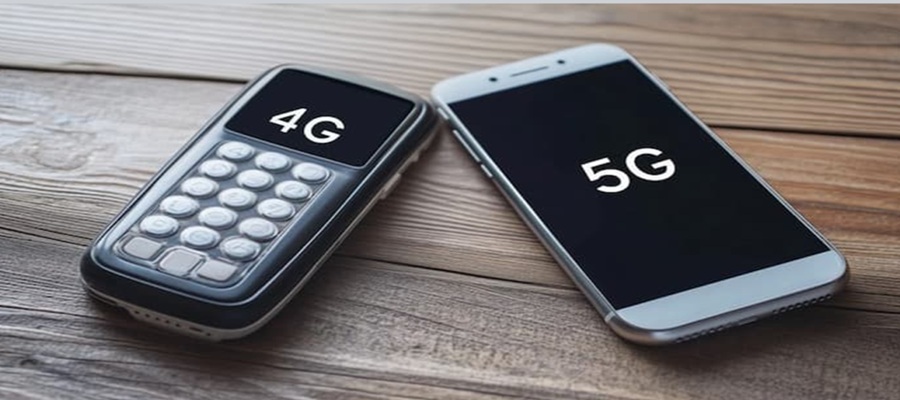
Nigeria’s broadband landscape remains anchored by 4G LTE at 52.95% market share in December 2025, with 2G holding steady at 37.37%, while 5G penetration crawls at just 3.77%, per Nigerian Communications Commission (NCC) data.

4G’s dominance stems from urban smartphone migrations and MTN-Airtel infrastructure expansions, fuelling the digital economy, as 2G persists in rural areas due to feature phone reliance and a stubborn device gap.
5G growth stalls from high smartphone costs amid inflation, telco preference for 4G’s quicker returns over capital-heavy 5G rollouts, and limited mainstream apps beyond elite urban streaming in Lagos and Abuja.
Broadband subscriptions topped 112 million, lifting penetration to 51.97%—up from 42.2% in October 2024—crossing the halfway mark for the first time, though monthly gains of 2-3 million slowed mid-year amid population growth and regional disparities.
The NCC’s 70% target stays elusive, highlighting sustained urban-rural demand but underscoring needs for affordable devices, infrastructure, and use cases to accelerate high-speed access nationwide.

Nigeria’s internet subscriber base surged to 148.2 million by December 2025, achieving 68.3% penetration, even amid 50% tariff hikes and naira depreciation, according to Nigerian Communications Commission (NCC) data.

MTN and Airtel dominated with 86% market share, Airtel adding 1 million subscribers in December alone, while Glo and 9mobile lagged as legacy players.
Data consumption exploded 35% to 13.25 million terabytes yearly, but Nigerians spent ₦20.87 billion daily—totalling ₦7.62 trillion ($5.58 billion)—as gigabyte prices doubled from ₦287 to ₦575.
User frustrations mounted from network failures, thousands of fibre cuts due to construction and vandalism between January and August 2025, and poor service quality despite billions in revenue. 4G LTE held 52.95% share as the workhorse, 2G clung to 37.37% in rural areas, and 5G remained a 3.77% urban luxury limited by device costs and base stations.
The NCC’s 70% broadband target fell short at 51.97%, though the ICT sector boosted Q3 GDP by ₦7.47 trillion and restored telco profits post-2024 losses.
In 2026, attention shifts to quality matching rising costs, with users urged to stay powered amid persistent “spinning wheel” woes.

LG Nigeria Begins Nationwide Search for Oldest Working TV, Rewards Loyalty with AI QNED Upgrade

AfCFTA, AGRA Collaborate to Reduce Non-tariff Barriers to Intra-African Food Trade

African Leaders Highlight Africa’s AI Ambitions

MTN, BUA, Dangote & Other Industry Giants Triumph at NGX Made of Africa Awards

4G Dominates Nigeria’s Broadband as 5G Lags Behind

Firm Detected a Fivefold Surge in QR Code Phishing Attacks in the Second Half of 2025
Nigeria’s 9 Top FinTech Firms Valued at $10.6Bn in January 2026

DG NCC Tasks University Dons on Research Commercialization, IP Management to Build Global Competitive Ecosystems

Firm Detected a Scam Exploiting OpenAI’s Teamwork Features

Kaspersky Launches OT Calculator to Align Cybersecurity Investments with Business Goals




 General News2 days ago
Jumia Targets Break-even in 2026 After Strong Q4 Surge

 General News2 days ago
Nigeria’s Banks Race to Meet CBN Recapitalisation Deadline Amid Verification Push

 General News2 days ago
BOI, MTN Foundation Unveil N1Bn Fund for Women Entrepreneurs

 General News1 day ago
UBA Unveils Diaspora Platform to Connect Global Africans with Investment, Wealth Opportunities

 E-Financial2 days ago
No VAT on Land, Buildings and Rent Under New Tax Law — Oyedele

 E-Financial2 days ago
CBN Slams Up to N10m Fine on Banks and Cheque Printers for Security Breaches

 E-Financial2 days ago
Is Nigeria Borrowing to Survive or to Build?

 General News1 day ago
Leo Stan Ekeh Foundation, Zinox Group To Invest 10B on 1000 University Tech Scholarships for Indigent Nigeria Wiz-kids