

E-Financial
FCMB Joins the World to Observe Earth

First City Monument Bank (FCMB) Plc in collaboration with World Wildlife Fund (WWF) on Saturday March 23, joined millions of people, 4,000 cities, heritage sites, royal palaces, schools, cafes and corporations from all over the world in observing the Earth Hour.
This is in furtherance of its advocacy campaign on environmental sustainability.
This global event, which is celebrated in the last week of March annually, requires households and businesses to turn out all their non-essential lights and other electrical appliances between 8.30pm and 9.30pm on the day.
Mr. Ikechukwu Kalu said, FCMB’s group head, Marketing and Communications, “at exactly 7.30pm, Saturday, 23rd March, the FCMB community, customers and some friends in Lagos gathered at the First City Plaza, Marina Lagos, Nigeria which is the recognised iconic building for Earth Hour. At exactly, 8.30pm, all non-essential lights were turned off, to observe the lights-out global exercise, creating a sharp contrast to the usual beauty of the iconic building”.
During the lights-out, the community listened to comments made by environmental experts such as Desmond Majekodunmi among others. It was saving the Earth, environmental protection, energy conservation and the survival of Humanity that featured most, to educate participants and raise awareness.
Ikechukwu Kalu also explained that as part of FCMB’s CSR strategy in support of environmental protection and healthy living among its host communities nationwide, the firm partners with other local and international agencies to sponsor Earth Hour annually.
The Earth Hour is aimed at promoting the practice of energy conservation and emission reduction through public awareness by educating and uniting people on the risks of climate change in order to enable them imbibe corrective measures.
FCMB in collaboration with WWF had ahead of this year’s Hour, organised a community sensitisation exercise in Alausa, Lagos.
In its bid to enhance the well-being of individuals and the society, FCMB has over the years actively invested in different programmes, communities and institutions across the country in its three critical areas of corporate social responsibility focus: namely Poverty Alleviation, Economic Empowerment and Environmental Sustainability. Apart from embarking its regular environmental sustainability and cleanliness project tagged Committed-to-Green, the bank has in the last three years co-sponsored the Lagos State Summit on Climate Change. Also, in collaboration with WWF, the bank ahead of this year’s Earth Hour, organised a community sensitisation exercise in Lagos.
Earth Hour was conceived by WWF and The Sydney Morning Herald newspaper in 2007, when 2.2 million residents of Sydney (the capital of Australia) participated by turning off all non-essential lights. Following Sydney’s lead, many other cities around the world adopted the event in 2008.


The federal government has issued the general guidelines for the implementation of the Tax Acts 2025, establishing a formal framework for managing the country’s transition from its repealed tax laws to a new tax regime that takes effect from January 1, 2026.

The guidelines, released by the Federal Ministry of Finance on Thursday, are addressed to taxpayers, tax practitioners, revenue authorities and other stakeholders, and cover a wide range of issues arising from the changeover — including the treatment of existing tax liabilities, ongoing audits, pending incentive applications, and transactions that straddle both the old and new legal regimes.
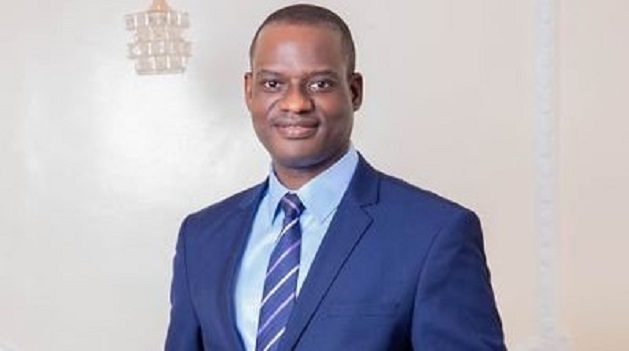
Speaking on the release, Finance Minister and Coordinating Minister of the Economy, Mr. Taiwo Oyedele, described the document as a framework for managing transitional issues while ensuring that the new laws are not applied with retroactive effect.
“The Guidelines are anchored on three key principles — clarity, fairness and administrative certainty,” Oyedele said.
The Tax Acts 2025 comprise four statutes: the Nigeria Revenue Service (Establishment) Act, the Nigeria Tax Act, the Nigeria Tax Administration Act, and the Joint Revenue Board (Establishment) Act. Each law carries its own commencement date as enacted. The Nigeria Tax Act, 2025, in particular, takes effect from January 1, 2026.
Under the guidelines, all tax liabilities, assessments, audits, investigations, disputes and enforcement actions relating to periods before January 1, 2026, will continue to be handled under the repealed laws.
Tax returns covering accounting periods that ended before that date must also be filed under the previous legal framework, while returns due from January 1, 2026, onward will fall under the new regime.
Existing tax incentives and exemptions granted under the repealed laws will remain valid until they expire, providing continuity for businesses and investors that had secured such reliefs under the old framework.
However, new applications and pending requests will be reviewed under the provisions of the Tax Acts 2025.
The document also addresses the treatment of income taxes and transaction taxes, development levies, record-keeping obligations, and cross-regime transactions that begin under one legal order and conclude under the other.
The ministry said the guidelines are intended to ensure uniformity in implementation across all revenue administration bodies, including the Nigeria Revenue Service, State Internal Revenue Services, the FCT Internal Revenue Service, Local Government Revenue Committees, and the broader community of tax practitioners.
The minister described the Tax Acts 2025 as a significant milestone in Nigeria’s ongoing tax reform programme, saying the guidelines clarify how existing obligations, live matters and future transactions will be treated as the country moves from the old regime to the new framework.
E-Financial
Fidelity Bank Empowers 1,950 Residents in Anambra, Distributes Machines, Cash Grants, School Support Items

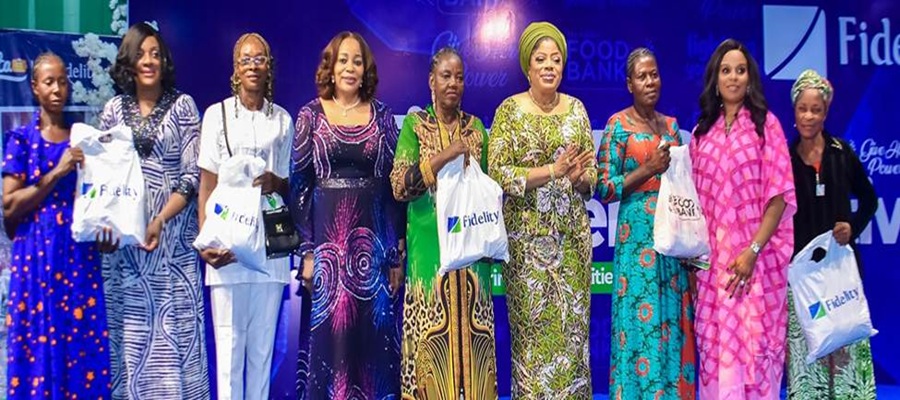
Fidelity Bank Plc, leading financial institution, has reaffirmed its commitment to sustainable social impact and economic inclusion through the empowerment of women and schoolchildren in Anambra State.

Fidelity Bank
The landmark intervention, held recently in Awka during the 2026 Fidelity Empowerment Programme, featured the distribution of 200 sewing and grinding machines to women entrepreneurs, N25 million in seed capital support, 1,500 food packs to vulnerable households, and 250 solar-powered school bags to schoolchildren.
The initiative was implemented in partnership with Healthy Living with Nonye Soludo, a Non-Governmental Organisation led by the Wife of the Governor of Anambra State, Dr. Mrs. Nonye Soludo.
Speaking at the event, the Managing Director and Chief Executive Officer of Fidelity Bank Plc, Dr. Nneka Onyeali-Ikpe, described the programme as a reflection of the Bank’s enduring commitment to empowering individuals, strengthening communities, and creating opportunities for sustainable growth.
According to the bank’s CEO, the initiative marked the first time that three of Fidelity Bank’s flagship social impact initiatives—the Fidelity Food Bank Initiative, Lighting Young Minds Programme, and Give Her Power Initiative—were brought together under a single intervention platform; and Anambra State is the first beneficiary.
“Today is more than an empowerment event; it is a demonstration of our belief that meaningful progress begins when people are given the tools and opportunities to succeed.
“At Fidelity Bank, our purpose goes beyond banking. We are committed to helping individuals realize their aspirations, overcome challenges, and build better lives.
“When communities thrive, businesses thrive; when families prosper, societies become stronger; and when people are empowered, possibilities become endless,” she stated.
Dr. Onyeali-Ikpe further noted that the Fidelity Food Bank Initiative continues to provide critical support to vulnerable households across Nigeria, particularly during a period of economic challenges affecting many families.
“Access to food remains a basic human need. By supporting vulnerable families, we are restoring dignity, strengthening resilience, and fostering greater social inclusion within our communities,” she added.
Speaking on the Lighting Young Minds Programme, Dr. Onyeali-Ikpe explained that the solar-powered school bags distributed to pupils are designed to enhance learning outcomes by providing a reliable source of light for studying after dark, especially in communities with limited access to electricity.
The programme also featured the Give Her Power Initiative, through which women received vocational tools and financial support aimed at promoting entrepreneurship, enhancing household income, and advancing women’s economic participation.
In her remarks, the Wife of the Governor of Anambra State, Dr (Mrs.) Nonye Soludo, commended Fidelity Bank for its unwavering commitment to uplifting vulnerable groups and investing in community development.
“We gather today, not merely to distribute items or celebrate another social impact initiative, but to reaffirm a simple truth: when we invest in people, we invest in the future. Every woman supported, every child empowered, and every family assisted represents a step towards building a stronger, healthier, and more prosperous Anambra State,” she said.
Mrs. Soludo expressed appreciation to Fidelity Bank for aligning with the vision of empowering communities and improving lives through impactful interventions.
“Beyond the empowerment items being distributed today, Fidelity Bank is investing in human potential, family stability, and community development. This partnership demonstrates the important role socially responsible organisations can play in advancing sustainable development and improving the quality of life of the people they serve,” she added.
The Fidelity Empowerment Programme forms part of Fidelity Bank’s broader commitment to driving positive social impact across Nigeria through targeted interventions in education, economic empowerment, food security, health, and community development.
Ranked among the best banks in Nigeria, Fidelity Bank Plc is a full-fledged Commercial Deposit Money Bank serving more than 10 million customers through digital banking channels, its 255 business offices in Nigeria and United Kingdom subsidiary, FidBank UK Limited.
The Bank is a recipient of multiple local and international awards, including the 2025 Development Bank of Nigeria (DBN) Innovation Award for MSME support; Best Retail and SME Bank Award from Independent Newspapers; Best Bank for Export & Trade Finance and Most Innovative Bank of the Year at the 2025 BusinessDay Banks and Financial Institutions (BAFI) Awards; and Nigeria’s Best Private Bank at the 2025 Euromoney Awards. The Bank also received the inaugural Most Improved Commercial Bank of the Year award by Nairametrics, the SME Bank of the Year award by NewsDirect, and the Straight-Through Processing (STP) Excellence Award by Citi Group, in addition to recognition by Global Brands Magazine for Excellence in Community Empowerment.

The International Monetary Fund (IMF) has warned that the rapid expansion of stablecoin usage in Nigeria could significantly weaken demand for the naira and reduce the effectiveness of domestic monetary policy.

This is coming as the country recorded about $59 billion in crypto-asset inflows between July 2023 and June 2024.
The IMF said in it’s report titled “Stablecoins in Nigeria: A Growing Cross-Border Channel,” that the growing adoption of dollar-pegged digital assets for payments, remittances, and savings reflects deeper macroeconomic pressures in Nigeria, including elevated inflation, foreign exchange scarcity, and persistent currency depreciation.
According to the Fund, these conditions have increased the attractiveness of stablecoins as both a store of value and a medium of exchange, particularly among individuals and businesses seeking stability amid exchange rate volatility.
The IMF warned that the widespread use of U.S. dollar-denominated stablecoins effectively represents a form of “digital dollarisation,” which could erode demand for the naira and weaken the Central Bank of Nigeria’s (CBN) ability to transmit monetary policy through interest rates and exchange rate interventions.
Nigeria remains one of the world’s most active digital asset markets, ranking second globally in Chainalysis’ 2024 Global Crypto Adoption Index and sixth in the 2025 edition.
The IMF further noted that the country accounts for nearly 60 per cent of stablecoin inflows into sub-Saharan Africa since 2019, underscoring its dominant role in regional crypto activity.
The report also highlighted the appeal of stablecoins in reducing transaction costs and improving the speed of cross-border payments.
However, the IMF cautioned that the increasing shift of payment activity from traditional banking systems to crypto exchanges and digital wallets may create regulatory blind spots.
It warned that such developments could complicate the monitoring of capital flows and increase exposure to illicit financial risks, including money laundering.
Despite these concerns, the Fund did not advocate restrictive measures. Instead, it called for a balanced policy approach that addresses the structural drivers of stablecoin adoption while strengthening oversight frameworks.
Key recommendations include maintaining macroeconomic stability to support the naira, enhancing regulatory clarity for stablecoin-related activities, and strengthening coordination between the Central Bank of Nigeria (CBN) and the Securities and Exchange Commission (SEC).
The IMF also urged improved transaction data collection through blockchain analytics and continued investment in efficient, regulated payment infrastructure.
The Fund noted that stablecoin growth is largely driven by inefficiencies in cross-border payment systems, stressing that policy efforts should focus on narrowing these gaps while ensuring emerging risks remain effectively contained.

AfreximBank Urges Nigeria, Others to Strengthen Continental Trade

FG Issues Transition Guidelines for Tax Acts 2025

Mobile Technologies Boost Africa’s Economy by $240B in 2025, Commences a New Phase of Digital Transformation

Fidelity Bank Empowers 1,950 Residents in Anambra, Distributes Machines, Cash Grants, School Support Items

Telecom Regulator, NCC, Digital Encode, AfriGoPay Support eBusinesslife Girls In ICT Campaign

CBN Extends PoS Geo-Fencing Enforcement Deadline to August 2026

NCC Drafts New Rules for Virtual Mobile Operators

FG Targets Alleged N3tn Capital Flight, Opens Airtime Credit Market to Nigerian Fintechs

London Strengthens Global Investment Ties with Africa @ First Ever London-Africa Business Summit

Easybuy Partners WAWUAfrica to Upskill 10 Million Youths and Women, Boosting Nigeria’s Economic and Financial Inclusion




 Telecom2 days ago
MTN Foundation Commits N32Bn in Projects across Nigeria

 E-Financial2 days ago
IMF Warns of New Risks for Monetary Policy over $59Bn Crypto Inflows into Nigeria

 E-Financial2 days ago
AI-Powered Loan Recovery Pilot Rakes in N69m for VeendHQ

 Telecom2 days ago
NCC Begins Review Telecom Termination Rates after 8 Years

 Telecom2 days ago
Airtel Africa Foundation Completes Year One Scholarship Disbursement for 100 Tech Scholars in Nigeria

 E-Business2 days ago
The Case for a Holistic AI-Led Approach to Cybersecurity in the Fintech Ecosystem

 Broadcasting2 days ago
Stakeholders Endorse Hybrid Model for Nigeria’s Digital Switch

 News2 days ago
Nigeria’s Apapa, Tin Can Ports Make Global Top 20 Improvement List