

E-Financial
Reasons Naira May Hit N500 to $1 Before Year End- Otunuga


Lukman Otunuga, a research analyst at FXTM a keen follower of macroeconomic events, with a strong professional and academic background in finance, has once again predicted that certain external and internal factors may push the Nigeria’s currency vulnerability to dollar exchange rates even before the end of the year.
Well versed in the various factors affecting the currency and commodity markets, Otunuga, who was speaking Nigeria CommunicationsWeek recently in Lagos, said that depreciate in international oil price is principal among factors affecting the naira due to the mono-economic nature of the country.
He provides in-depth analysis on the global currency and commodity markets and isoften quoted by leading international media outlets such as: MarketWatch, CNBC, NASDAQ, Reuters, AFP, The Guardian and Yahoo.
Prior to joining FXTM, Otunuga spent two years as a research analyst with international currency broker FXCM, where he focused on technical and fundamental analysis of the global currency, commodity and stock markets.
Otunuga was also responsible for leading educational seminars for international and local high net worth individuals, and has published a series of educational articles on forex trading with City A.M.
Otunuga holds a BSc (hons) degree in Economics from the University of Essex, UK and an MSc in Finance from London School of Business and Finance, where he studied corporate finance, mergers & acquisitions and the role of international financial institutions.
Enjoy the chat:
When you heard, National Bureau of Statistics report that Nigeria’s economy has slide to recession, what first came to your mind?
“When I heard that the National Bureau of Statistics report that Nigeria’s economy has slip to recession, what first came to my mind was for extended period that oil price was down punished major oil-export dependent nations with Nigeria been a no exception.
“If we consider the fact that about 95% of export revenues and 70% of government revenue in Nigeria come from oil revenue, then you can understand why the nation has been under pressure. So, what has happened to Nigeria is both external and internal.
“Looking at the external factors, Nigeria is heavily oil export dependent. At the same time, even though dollar is not the legal tender in Nigeria, it has strong grip on the economy. Therefore, when you consider the global oil market and the dollar issues, they combined to put Nigeria under pressure.
With Nigeria’s mid-term policies, how quick can we come from the present recession?
“Well, we have to look at this from the short term and long term. Just last week, the even the Central Bank of Nigeria (CBN) decided to maintain the interest rate at 14%, despite the Finance Minister was saying that higher interest rates can actually act as barrier to the growth in future. Now, the CBN, on the short term is looking at price stability. In the month of August, inflation has climbed to 17.6%.
“So, I think the CBN is trying to see how the economy will fare in the Months of September and October before taking action. So, referring to the question, I think, on the short term, what the CBN can do is stay on the fence and watch how the Nigerian economy performs.
“On the long term, we have to fix our minds that a step has been taking towards diversification to agriculture and building of infrastructure. If these things are put in place, Nigeria could be back within the next two to three years.
You predicted that if CBN continued its policy direction with regards dollar restrictions, Naira will suffer in the market. That prediction has come to pass, Now, what in your view should CBN do differently?
“Yes, I remember that prediction. When I made that prediction I said that if the CBN was to delay de-peg of the Naira it will become deplorable over the natural forces of the demand and supply where equilibrium forces.
“That is what has happened. If you look at the Naira the official rate today naira is trading around N360 to $1 while the black market is around N420. So, I think even now, the Naira could be open to further losses, due to stronger dollar and weaker oil prices.
“There are still talks at the CBN which is why there is still gap between the official price and the black market. On what CBN should be doing, we have to keep in mind that the Naira is still affected by external factors- oil price. This entails that Naira could still be open to some losses in 2016.
Can you estimate how long (months, years) it will take Nigeria’s economy to flourish again BEYOND oil; that is, owing to Government’s decision to focus on Agriculture, technology?
“The way to diversification is best for Nigeria, but will take a very long time. Remember, Nigeria is made up over 160 million populations with youth the population quite high. One aspect of the diversification is agriculture, which is a better option to reducing food importation and export the surplus.
“When you look at agriculture, manufacturing, technology and building of infrastructure will help Nigeria live beyond oil exportation. For instance, in the West they produce oil and refine it instead of exporting crude only to import as oil later. So, this is something that can take years to achieve; I think four year minimum.
What Should CBN do with regards managing Bureau De Change (who are principal managers of dollar-naira exchange rates outside the banks)?
“I think the CBN could attempt that funds in this area be transferred through the CBN channels which will be used to manage the dollar-naira exchange.
The Federal Government of Nigeria has declared it intends to submit 2017 budget proposal to NASS as soon as possible, which sector, in your view, should have the lion’s share with regards to economic recovery?
“It goes back to what we have been saying. I feel the share should go to agriculture. No doubt, this is the time for Nigeria to diversify; and it takes time and money to get agriculture to a stable state. And when you have surplus, you export to boost your nation’s self reliance and foreign reserves.
“Another area of investment should be on infrastructure. We know that Nigeria’s infrastructure is weak and it takes a nation with strong infrastructure to easily galvanise all sectors for economic growth, especially manufacturing.
“Tourism could also be a huge industry to help in diversifying the economy. Let the government invest on roads to boost transportation of those agricultural produce and power. Power will enable SMEs heave sign of relief too and spring up surprises in technological advancements.
What is you prediction with regards how much Naira will exchange to Dollar by year end? What informed your view?
“For now, the main driver between the naira-dollar exchange rates as at today the dollar is domineering. The dollar may continue to strengthen against the Naira, because the U.S is working to strengthen its currency too. If this continues by year end naira may exchange for N500 to a dollar at the black market and N400 official rate.
In the face of the economic recession in the country, what is FXTM doing to help Nigerians (traders) on financial mastery/management?
“Good financial management is extremely important and this comes down to a person’s ability to successfully balance opportunities and risk with regard to their investments. When talking about forex trading, this means having in place a robust risk management strategy and acquiring an in-depth knowledge of the markets so that you can react accordingly to changing market conditions.
“These skills can be learnt and improved, which is why at FXTM we’ve really invested in trader education to ensure that Nigerians can achieve the most from their trading experience. We’ve recently held a number of highly successful educational events in Abuja, including a seminar on ‘The Ultimate Trading Formula’ and a 3-day afternoon trading workshop, and we’ll be holding similar events in Lagos in November. In addition, our local office also offers regular free educational training sessions.
Each week we hold a range of programs including: Basic, Applied and Advanced level financial market trading courses, a MetaTrader 4 Class and an investment seminar on how to trade with the FXTM Invest Program.
“FXTM was one of the first brokers to introduce the updated MetaTrader5 platform that offers hedging and we are seeing a lot of interest in that, so we will look to develop classes on that in the near future as well.



Federal Competition and Consumer Protection Commission (FCCPC) has dismissed as false a report claiming it approved 48 additional digital loan applications, raising the number of licensed digital lenders in Nigeria to 505.

In a statement posted on its official X handle on Sunday, the commission described the publication, titled “FCCPC Approves 48 More Loan Apps, Raises Licensed Digital Lenders in Nigeria to 505,” as “false, misleading and” not reflective of its actions.
The commission said it had not granted any new approvals or licences for digital lenders, stressing that it was complying with an ex parte order of the Federal High Court restraining the implementation of the Digital, Electronic, Online and Non-Traditional Consumer Lending Regulations, 2025, pending further proceedings.
The statement read, “The attention of the Federal Competition and Consumer Protection Commission has been drawn to a publication titled ‘FCCPC Approves 48 More Loan Apps, Raises Licensed Digital Lenders in Nigeria to 505.’ The publication is false, misleading and does not represent the position or actions of the Commission.
“The FCCPC is a law-abiding institution and is fully complying with the ex parte Order of the Federal High Court restraining the implementation of the Digital, Electronic, Online and Non-Traditional Consumer Lending Regulations, 2025 pending further proceedings.
“Consequently, the Commission has not granted any new approvals or licences pursuant to those Regulations. Any publication suggesting that the Commission recently approved additional digital lenders under the Regulations is entirely false.”
The commission urged members of the public, industry stakeholders and media organisations to disregard the publication and rely only on information released through its official communication channels.
It reiterated its commitment to complying with court orders and providing accurate information on its regulatory activities.
E-Financial
PalmPay Calls for Trust, Infrastructure and Responsible AI to Drive Payment Ecosystem Innovation


Industry leaders, regulators, and payment experts have called for stronger infrastructure, responsible artificial intelligence (AI) adoption, and deeper cross-sector collaboration to unlock the next phase of growth in Nigeria’s digital payments ecosystem.

The stakeholders made the call during the 2026 Digital Pay Expo held in Lagos on June 17 and 18, 2026. This year’s event focused heavily on the transformative role of AI, cybersecurity, cross-border transactions, and deepening financial inclusion across Africa.
Speaking at the event, Dr. Rekiya Yusuf, Director of the Payment System Supervision Department at the Central Bank of Nigeria (CBN), represented by Chika Ugwueze, Deputy Director, stated that Nigeria’s payment ecosystem is rapidly evolving beyond digital adoption into deeper digital transformation.
According to Yusuf, artificial intelligence is emerging as a critical driver of this shift, particularly in real-time fraud detection and expanding access to underserved populations. “The goal is to make financial transactions seamless. AI is now driving innovation, helping in real-time fraud detection and helping to expand access,” she said.
She noted, however, that important gaps remain, particularly around infrastructure and inclusion. Building a resilient digital market system in the AI era requires reliable connectivity, robust infrastructure, intentional talent development, and sustained capacity building.
Echoing the regulator’s call for robust ecosystem support, Chika Nwosu, Managing Director of PalmPay Nigeria, said trust, access, and practical financial support remain critical to helping small businesses participate more meaningfully in the formal economy.
He noted that while micro, small, and medium enterprises (SMEs) contribute an impressive 40 per cent to Nigeria’s Gross Domestic Product (GDP), limited access to credit and reliable payment infrastructure continues to slow their ability to grow and scale.
To drive true innovation, Nwosu argued that financial inclusion must move beyond simply opening accounts and enabling basic transactions; it requires building a foundation of trust and tangible economic empowerment.
“SMEs contribute 40 per cent of the country’s GDP. For us at PalmPay, we don’t just provide payment solutions to them, we also support them with financial tools they need to expand and create jobs,” he said. .
Nwosu further emphasised the importance of digital literacy, noting that stronger understanding of digital tools and AI-enabled systems will be essential to buildling long-term trust and participation across the ecosystem.
The discussions at Digital Pay Expo 2026 reflected a growing consensus across the industry: the future of African digital payments will depend on getting the fundamentals right. That means stronger infrastructure, responsible use of AI, better cybersecurity, and closer collaboration between regulators, fintechs, and other ecosystem players.
For PalmPay, the event reinforced the importance of building a payments ecosystem that is more resilient, more secure, and better equipped to support inclusion and growth at scale.
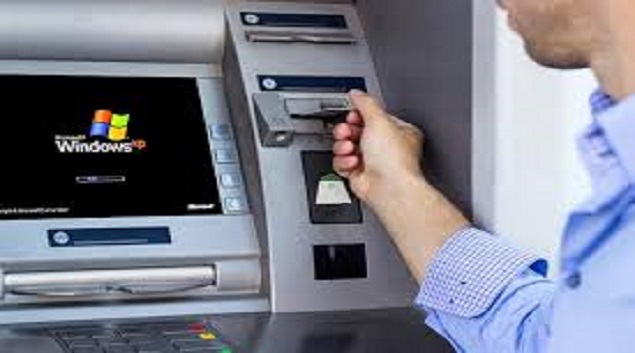
Nigeria’s Computer Emergency Response Team (NgCERT) has urged financial institutions to reinforce their cybersecurity systems following a surge in automated teller machine (ATM)-related attacks targeting banks across Africa.

In a cybersecurity advisory issued on June 25, the agency classified the threat as “high risk,” warning that the attacks could inflict significant financial losses, disrupt banking operations and damage public confidence if not promptly addressed.
NgCERT, the federal agency responsible for coordinating responses to cyber threats in Nigeria under the Office of the National Security Adviser (ONSA), said the warning was prompted by a recent cyberattack on United Bank for Africa (UBA) in Senegal.
According to the advisory, cybercriminals successfully compromised the bank’s card authorization infrastructure, enabling them to manipulate transaction controls and carry out 3,421 ATM withdrawals that resulted in losses exceeding $2 million.
The agency said the attack demonstrated a sophisticated methodology that poses a serious threat to financial institutions operating similar ATM and payment card systems across Africa.
“This methodology poses a significant threat to financial institutions operating similar ATM and card systems across the region,” the advisory stated.
NgCERT explained that investigations into recent incidents indicate that attackers typically gain initial access to bank networks through phishing campaigns, vulnerabilities within third-party supply chains or insider assistance.
Once inside the network, the attackers conduct extensive reconnaissance to identify critical systems responsible for ATM transaction processing, card management and transaction authorisation.
The agency said the threat actors then deploy malware, escalate their system privileges and manipulate key security controls, including ATM withdrawal limits, transaction velocity restrictions, fraud monitoring thresholds and payment card parameters.
It added that the attackers are also capable of creating new payment card records or altering existing ones, enabling coordinated cash-out operations involving multiple operatives simultaneously withdrawing large amounts of cash from ATMs across different locations.
NgCERT warned that successful exploitation of these vulnerabilities could result in massive financial losses through the rapid depletion of ATM cash reserves, compromise of core banking infrastructure and manipulation of customer accounts.
Beyond direct financial losses, the agency said such attacks could trigger regulatory sanctions, reputational damage, service disruptions and broader network compromise that may lead to sensitive data breaches.
To mitigate the threat, ngCERT advised banks to strengthen privileged access management and enforce multi-factor authentication for all administrative accounts.
The agency also urged financial institutions to immediately harden their ATM infrastructure by disabling unnecessary remote access, applying the latest firmware updates and reviewing all third-party remote access channels and vendor accounts.
Other recommendations include implementing strict network segmentation, enhancing real-time transaction monitoring, conducting continuous threat-hunting activities, carrying out regular penetration testing and red-team exercises, and strengthening employee awareness of phishing attacks and insider threats.
NgCERT further called on banks to regularly test and update their incident response plans to ensure they are equipped to respond effectively to sophisticated ATM cash-out attacks as cyber threats continue to evolve.

FCCPC Dismisses Report Claiming Approval of 48 New Loan Apps

ALTON Backs NCC’s Local Smartphone Manufacturing Drive to Widen Digital Access

LASTMA Launches 3367 Toll-Free Hotline for Emergency Response, Traffic Management

PalmPay Calls for Trust, Infrastructure and Responsible AI to Drive Payment Ecosystem Innovation

OADC Reaffirms Abundant Capacity in Data Centres in Nigeria to Host Financial Data

CBN Extends PoS Geo-Fencing Enforcement Deadline to August 2026

London Strengthens Global Investment Ties with Africa @ First Ever London-Africa Business Summit

FG Targets Alleged N3tn Capital Flight, Opens Airtime Credit Market to Nigerian Fintechs

Mobile Internet Gender Gap Widest in Africa – GSMA

Japan, UNESCO Boost Digital Learning in 15 CoEs with Donation of ICT Equipment




 General News2 days ago
Tinubu appoints Adigwe to head National Health Technology, Data Analytics Office

 E-Financial2 days ago
NRS, CITN Deepen Partnership to Strengthen Tax Awareness

 E-Financial2 days ago
Paystack Unveils AI-powered Payments Tools

 E-Financial2 days ago
Fidelity Bank Wins DBN Award for Expanding First-Time Credit Access to MSMEs

 General News2 days ago
PalmPay Strengthens Data Protection Culture with Employee Privacy Workshop and Privacy Champions Programme

 E-Financial2 days ago
FCMB Turns Normal Banking into Rewards with New Mobile App Upgrade

 Telecom2 days ago
Meta, FG Unveil New Safety Measures to Protect Nigerian Teens Online

 E-Financial2 days ago
Despite Warnings, FG Draws Down $1.5Bn as First Tranche of FAB $5Bn Loan Deal