

General News
MobiLotto is a Wealth Distributor- Humber-Osofisan


Andrew Humber-Osofisan is the president and chief executive of Humber Group, a boutique firm that specializes in a diverse range of business disciplines.
Through its technology partner, Humber Technologies, the company recently developed a unique Unstructured Supplementary Service Data (USSD) based lottery gaming that promises to transform lives of ordinary Nigerians and enrich the country called MobilottoAfrica.
Humber-Osofisan spoke to peter ugwu on the objectives of the operation revolves around
Information and Communication Technology (ICT) Solutions and Financial and Business Consulting and Advisory Services.
Humber’s Interest in Africa
Since I came back to Nigeria, after 32 years of sojourning in America, I saw gaps that must be closed and needs to be fulfilled, not just in Nigeria, but Africa in general.
One thing is that Nigerians are very smart people, and they make things happen abroad, then why can’t we replicate those achievements abroad here in Nigeria.
That formed the main interest for us investing in African.
Lottery Business and Abuses
First of all, Nigeria is the only country where an individual or corporate organization actually obtains lottery license; elsewhere it is either the lottery is owned by the Federal Government or the State Government.
But in a situation whereby an individual is licensed to operate a lottery, it becomes a problem, because it takes a lot of resources to actually establish a solid lottery operation.
If you look at places like Canada, UK, among others, it takes a lot of structure to put this in place.
I think that is one of the reasons it has not really been grounded in Nigeria. However, we have agencies that can regulatory the industry in Nigeria.
But when you have so many people getting lottery licenses, coming up with several schemes, at the end, some of them close shop due to lack of sustainable structure in place.
They lack the capacity to make the lottery scheme favour the community, the players and the government.
They use the proceeds to enrich themselves, and not necessarily to add value to the players themselves.
MobilottoAfrica Distinguishing Characteristics
The lottery of MobiLottoAfrica is a lottery that is like the ones played in the United States of America, the jackpot goes up to $500 million.
It is the same kind of Lottery we play in Toronto, Canada, or like the Euromillion.
Here, we have developed it into mobile applications, because Nigerians are used to their mobile phones, which has become the easiest way to reach people.
We have application for that. And mobile lottery cuts across religious and ethnic beliefs.
So, we are bringing a global perspective to the process, which will make a lot of difference.
What we have done in essence is that every cell-phone, in the hands of the player, becomes the lottery terminal, which is expected to be operational 24 hours of the day.
So, we are going to build agencies or physical terminals, which cuts down cost.
Every individual carries his own lottery terminal in his hand and will not be subjected to locate any physical terminal before he plays.
MobilottoAfrica and Fight against Unemployment
I would like to take this from the report that government can make about $300 billion annually from an organized lottery industry.
The thing is that when a lottery is played, the Government gets 20 per cent share.
Imagine a situation where we have 98 million adults (of 18 years and above), who are legally qualified to play the lottery, even if only 10 per cent of that participate; that is 9.8 million people playing either on daily, weekly or monthly basis.
Now, our lottery is a daily one, so if 10 per cent of our adult population plays N100 per play, that is N900,080 million, so if the government is taking 20 per cent of that every day, by the time it gets to months, we should be talking about billions of naira coming into government’s coffers.
More so, I would like us to take into consideration that an individual plays once. Our statistics show that an average player plays four times.
By the time, government gets this revenue it will plough the fund back into education, health, agriculture, youths empowerment, among other, and employment is created.
How about the players? 50 per cent of all the money that comes goes to them.
Therefore, when you have N900, 080 million and you divide it into two, money goes out to somebody every day, they are being empowered, entrepreneurial spirit is created and standard of living is improved.
That is what lottery does in every other country that genuinely bought into it.
Penetrating the Skeptical Market
Humber group has already penetrated the market, because our booth is in everybody’s hand.
The second thing is that Nigerians are used to lottery-promos. So, it is not like they are not aware.
And with the recent ban of lotteries and promos by NCC, we are giving Nigerians another option, because ours is different and there are a lot of transparencies with what we are doing.
When you play the lottery today, the draws are done on a national television, so that the whole world can see; whoever has won, the public will see the result.
And within 20 minutes of the draw we shall send out an alert congratulating the winner. So, trying to penetrate the market will be simple, as the equipment required to push this is already in the market.
Strategies for Sustainability
On my part, the project will sustain itself for ever. However, there are extenuating circumstances and forces like what just happened (NCC’s ban on promos and lotteries); assuming we have been running ours and NCC says stop.
That is a disruption and will not sustain it. If the telecoms base stations go down, probably for vandalism or technical hitches, because everything runs on networks, that will affect the players also.
But all things being equal, it will run smoothly. The results are announced on daily basis and
people are empowered.
Sustaining Platform through Software Applications
Well, taking into cognizance of what happens in Nigeria, especially due to infrastructure; electricity, network congestion, etc, we developed a solution called Unstructured Supplementary Service Data (USSD).
What that does is that it acts like an SMS and WAP application.
With our technology one does not require to download or subscribe to anything. It’s just to embrace the USSD platform and when you finish playing you sign out.
So, it does not have congestion issue. It does not use the same channel that voice uses or SMS. With this USSD platform, assuming we have a million people that play at once, the system will not take a million and one.
Once one person finishes a new player gets on. The maximum time one can spend on a session is 40 minutes.
And it takes 20 to 28 seconds to kick off play.
Unlike SMS, if you make a wrong play our system will send and invalid response to you. You are never charged until you make a right play.
Therefore, there are no arbitrary charges or surcharging of the players.
Remitting of Prizes to the Winners
When I came back to Nigeria, what I heard was that no body will believe in this lottery; there are so much fraud.
People cited cases of multi-million naira lottery schemes that came up and people believed them, only for them to be duped, and I answered that the way we do ours is that when a player wins, he gets a congratulatory SMS within 20 minutes.
Then the ticket will be announced, because for every play there is a ticket attached to it.
Then, every individual has a pass code given to him. In essence we have created file for every player using the telephone number, so for everything you do, you are easily recognized.
Then the player will initiate claims by pressing ‘winning’ that will redirect him to Mobilotto platform. And what we have done is that we have partnered major banks in Nigeria.
So, the winner chooses the banks he wants to use and we forward the transaction code to the bank. All of this happens within seconds.
That is the technology we are bringing to bring sanity and transparency into the industry.
It’s either the person withdraws with his ATM card or it becomes a mobile money.
In other words, there will be no cash transaction, thereby bringing the industry to comply with the CBN’s cashless policy. In essence we have created the largest mobile money eco-system in Nigeria.
Ombudsman
We have a customer care programme. At the same time, this is automated. So we try to minimize the contact.
There is an Interactive Voice Response (IVR) system that we have created which is on the same USSD platform where the player partakes in the process.
And you don’t get charged for any of these, except when you play and it is valid.
But in a situation whereby a player could not get satisfactory answer or he needs more explanations, there is a toll-free line to call.
Regulators’ Backing
When we started, we spoke to the authorities; of course anybody can be skeptical about a new thing.
Unfortunately, some people believe that when a Nigerian is coming up with a technology it doesn’t make sense; it must come from China, America or India.
We had worked with the America Government, developed applications they used in this sector, so all we need is for the Nigerian government to give this a trial and believe in Nigerians.
Even as we didn’t get much support, but we had the confidence and now they are beginning to accept the platform after some demos.
We have completed the technology, but the delay has been with connecting the telecos. In spite of the ban, NCC is doing a great job.
I have seen them change a lot of things. On the recent ban of promos and lotteries, I think there is a misunderstanding in some place.
A blanket ban on lottery, I think it is misinformed. They would have said that lottery licensees should have been exempted because there is a regulatory body for that.
And I don’t think there is a lottery licencee in the country that is doing full mobile lottery like ours, they are mainly on SMS platforms and that is where the problems come in. NCC should look at that too.


The IMF on Tuesday warned of risks surrounding Nigeria’s plan to borrow up to $5 billion through a derivatives agreement with First Abu Dhabi Bank, saying such transactions are often opaque and complex.

Recall that the Senate in April gave its approval to the agreement, joining other Africa borrowers like Senegal and Angola who have tapped similar arrangements over the past year.
“Our view is that the transaction in these types of structures carry risks. Usually they are opaque so the terms are not always very transparent when we reviewed these instruments across countries,” Christian Ebeke, IMF resident representative in Nigeria, told reporters.
Ebeke said Nigeria could instead issue eurobonds to finance its deficits or other means to raise funding, including on concessional terms.
Nigeria intends to use proceeds from the total return swap, or TRS, to refinance expensive debt and pay for infrastructure.
In its latest Article IV review, the Fund praised Nigeria’s sweeping reforms, saying they had strengthened economic stability and investor confidence, but warned that the benefits had yet to reach millions of citizens and could be undermined by global shocks, including the Middle East conflict.
The reforms since 2023 under President Bola Tinubu – including fuel subsidy removal, tighter monetary policy and exchange rate liberalisation – had rebuilt buffers and improved macroeconomic management, the IMF said.
However, it cautioned that the reforms were also contributing to social strain, with poverty levels at 63% and millions facing food insecurity, underscoring a widening gap between macro gains and household realities.
The IMF said improved policy credibility and forex reforms had helped Nigeria regain access to international capital markets and attract portfolio inflows, while reducing risk premiums. The central bank says gross reserves are at $50 billion, the highest in 17 years.
But reliance on volatile foreign portfolio investment poses rollover risks, the IMF said, urging a shift towards more stable, long-term capital such as foreign direct investment.
Security Skills Development Company (SSDC) has released its 2026 Security Outlook, highlighting four major security challenges expected to shape Nigeria’s business and operating environment as the country moves closer to the 2027 general election.

The report, developed from a nationwide survey and expert contributions at the recently concluded Security Thought Leadership Roundtable, identifies internal security threats, protection of national assets, cyber risks and election-related instability as the most significant concerns facing organisations and institutions in the coming year.
According to SSDC, findings from the survey and stakeholder discussions reveal growing concern over the increasing complexity of security challenges and their potential impact on business continuity, economic stability and public confidence.
A substantial number of respondents identified internal threats within organisations as an emerging risk, pointing to the need for stronger corporate governance, workforce integrity measures and structured risk management systems.
Security experts at the roundtable noted that weaknesses in critical public infrastructure and national assets could have far-reaching consequences for the economy and national development if not adequately addressed.
The report also highlights cybercrime as a persistent and evolving threat to both public and private sector institutions.
Participants stressed the importance of strengthening cyber resilience through proactive monitoring, investment in technology-driven safeguards and improved security awareness.
Another key concern raised in the outlook is what SSDC described as the “2027 Election Shadow.” Many respondents expressed concerns about the possibility of heightened political tension as the election season approaches, warning that uncertainty and security disruptions could affect business operations, investment decisions and overall economic confidence.
Speaking on the report’s findings, Mike Igbodipe, managing director, SSDC, called for a more strategic approach to security management across both public and private sectors.
He said organisations must move beyond reactive security measures and integrate security considerations into their broader strategic planning and decision-making processes. He also advocated the development of a gold-standard, locally certified training programme for security professionals tailored to Nigeria’s unique security environment.
SSDC, a security training and consulting firm focused on advancing professional standards in Nigeria’s security sector and strengthening industrial resilience through capacity building and strategic expertise, said the Security Outlook forms part of its ongoing thought leadership initiative aimed at promoting informed dialogue on national security, institutional resilience and risk management.
The company reaffirmed its commitment to supporting stakeholders through research, training and strategic advisory services designed to improve preparedness and response to emerging security challenges.
General News
Moniepoint DreamDevs Bootcamp Graduates Second Cohort to Strengthen Homegrown Talent Pipeline

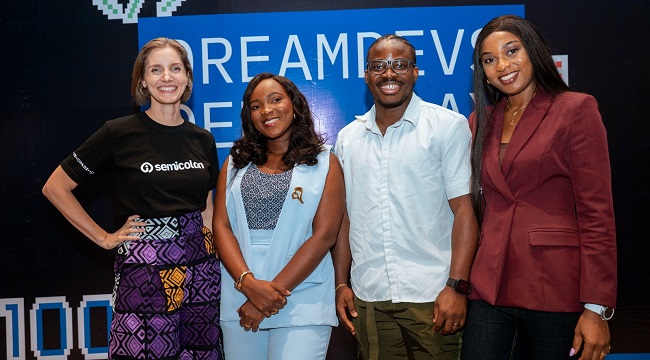
Moniepoint Inc., Africa’s leading digital financial services provider, has officially graduated the second cohort of its flagship DreamDevs Bootcamp, marking a significant milestone in the company’s ongoing effort to build world-class engineering talent from the ground up.

The graduation was celebrated at a Demo Day event held in Lagos, themed “Training Done! Demo Up!”, where participants presented capstone projects built to real-world engineering standards.
The graduation comes at a crucial time for Africa’s tech ecosystem. Although Nigeria’s tech talent is growing, it isn’t sufficient, especially at the mid-to-senior engineering level, where demand far exceeds supply. By 2030, the global shortage of software developers could reach 85 million, leading to economic losses of $5.5 trillion. For a continent developing its digital infrastructure, this is critical. Moniepoint’s DreamDevs Bootcamp is a strategic response to these challenges.
The nine-week curriculum, created by Moniepoint’s Engineering Unit in partnership with Semicolon, covered Java Object-Oriented Programming, Data Structures and Algorithms, Software Testing, MySQL, Spring Boot APIs, System Design, Docker, Messaging Queues, Frontend UI, and Cloud Infrastructure. Participants received programme stipends and mentorship from experienced Moniepoint software engineers, gaining valuable exposure to the production environment of one of Africa’s fastest-growing fintech firms.
During the Demo Day presentation, the participants paired into 9 teams were excited to showcase how they have deployed knowledge and skills gained during the course of the bootcamp into real and useful solutions in real estate, hospital management, event management, food and agriculture.
Commenting, Felix Ike, Co-Founder and Chief Technology Officer of Moniepoint, said, “DreamDevs is a structural investment in Nigeria’s digital economy, not a recruitment exercise, not a pipeline built solely to serve Moniepoint’s hiring needs. That said, we are proud that some graduates from our first cohort are already active members of our engineering team, proof that when young African engineers are given the right training and the right environment, they can compete at the highest level”.
Felix added that “Engineering excellence is not a naturally occurring phenomenon. It is a curated and intentionally built process that requires the right systems, the right resources, and sufficient time to take hold. Building that process and making it accessible to the brightest young engineers on this continent is a responsibility we have chosen to own.
Africa’s digital economy is attracting significant global capital, yet the talent infrastructure required to sustain that growth remains underdeveloped. The DreamDevs Bootcamp and our other capacity-building initiatives across some of Nigeria’s public universities demonstrate Moniepoint’s commitment to this responsibility.
The initiative also aligns with Nigeria’s broader national agenda on technology skills development. Moniepoint serves as a key sponsor of the Federal Government’s 3 Million Technical Talent (3MTT) programme, which focuses on mass technical skills training across the country. While 3MTT addresses the scale challenge, DreamDevs provides depth, offering a specialised, end-to-end pathway from foundational training through to employment within Moniepoint’s complete development ecosystem.
As Nigerian fintechs deepen their infrastructure ambitions, the ability to grow engineering capacity that feeds these aspirations requires an urgent industry intervention, as Moniepoint is demonstrating to address Africa’s engineering talent challenge.

MTN Launches One TV with Free-to-View, Pay-as-You-Go

Telcos Compensate 75m Subscribers over Poor Network Quality – NCC

IMF Warns Nigeria of Risks in $5Bn Swap Deal with First Abu Dhabi Bank

Senate Moves to Regulate Crypto Sector, Seeks Investor Protection

Kaspersky Report Shows Early 2026 Witnessed an Increase in Cyberattacks on the Manufacturing Sector

CBN Extends PoS Geo-Fencing Enforcement Deadline to August 2026

FG to Launch Nationwide Free Digital TV Platform June 17

MTN, Airtel, Glo Under Pressure as FG Demands Better Service Delivery

Jumia Nigeria Records Strong Q1 2026 Growth as Technology-Led Strategy Drives Market Expansion

Metro Digital, Nigerian Firm Accuses Multichoice Of Refusal to Obey Court Judgements




 E-Financial3 days ago
BOI Wins Dual Honours @ EMEA Finance Awards for Sustainability and Social Impact Leadership

 E-Financial3 days ago
CBN Imposes N100m Penalty on Dealing Bank Inadequate Processing of Forex Documents

 E-Business3 days ago
NITDA Okays NiRA’s Annual, Business Report

 Telecom3 days ago
Price of Data in Nigerian Mobile among Top Four Cheapest Globally – MTN CEO

 Telecom3 days ago
NAIFF Returns for 2026, Expands Focus on AI-Powered Storytelling in Africa

 Telecom3 days ago
FCCPC Refutes Airtime Market Takeover Claims

 General News3 days ago
SSDC Warns Businesses against Cyber, Election-Related Risks

 E-Financial3 days ago
Reps Committee Recovers N521m Unremitted VAT from CBN