

General News
MultiChoice Will Win Back EPL, Others -Hundah

MultiChoice Will Win Back EPL, Others -Hundah
Joseph Hundah new managing director of MultiChoice Nigeria Hundah is described as having a solid understanding of Africa and the challenges faced by the media on the continent.
He has a deep knowledge of the Nigeria media landscape, culture and economy having worked in Nigeria in the last 18 months.
The new Multichoice boss has led a revolution in the quality and quantity of uniquely African programming screened by DStv.
Hundah spoke to chike onwuegbuchi and hilary okeke on a wide range of issues.
Multichoice and Rights to English Premiership
First, I would like to correct that misconception that we are a monopoly. Multichoice is not a monopoly because in my view, a monopoly is when you are the sole industry player in any particular industry. Here, there have been other players: Trend TV, My TV and so on. There are lots of other players in the industry. I think by the nature of our dominance in the industry, it gives the impression that we are a monopoly. I think there are more than 10 pay-TV licenses in Nigeria now and some of those licensees are still in operations today. Where I do agree with you is that we are dominant in the market and face competition – that is part of our challenges in this business. That been said, I still maintain that competition is good because through competition, we have become better in what we do, our marketing has improved, our product offering has improved. In the last year since this competition started, our business has doubled in terms of the number of subscribers. It means that we have to focus on other things we can do to make our outfit as you said a dominant player. Competition is a positive thing for the industry, for the consumers, for Nigeria in general. What we are trying to show Nigerians is that we are more than just the Premier League; there is the belief that if you lose the Premier League you are going to collapse but I think consumers are more intelligent than that and I think that they appreciate more content than just the Premier League. I think the Premier League was a big loss for us, something that we are not happy with in terms of losing it. But in terms of it being a fair process – that is perfectly fine. Before we lost the Premier League, there was so much talk about how Multichoice was monopolizing the Premier League, how we had control over it. That was the case and we lost it. Channels are available, you can go and bid for them if you want them and if you get it right, you can get those channels on your bouquet. Our job is to make sure that we have a good relationship with company suppliers; we communicate and market our products properly and tell the people that there are other things that we offer as well. There are news channels; there are educational channels, there are kids channels, there are entertainment channels in terms of movies, comedies, music – I think that is what ultimately makes Multichoice a very strong brand. We cover everything and we cater to various people’s content appreciation. Of course, we will try to win back the Champions league; we will try to win back everything that we have lost. We will put in our best bid and hope that that bid is what is going to get us all those rights back again. Let us see how it goes when the time comes.
Entry Barrier and Cost of Installation
We are thinking about that too. We are thinking about different ways of making it easier for consumers to get the product, first and once they have it, what they can afford. Over the past couple of years, we have introduced new bouquets. Before, we used to have one standard bouquet for N9, 000; now we have others of N4, 300; N2, 500. So, this tells you that we are constantly thinking about that. We have not determined what to do about the starter price but it is top on my mind. I have identified what I need to look into but we are a bit careful about how to go about it; we want to be sure we are going to do something that we can stick to forever. We do not make decisions that we are going to adhere to for just one month and change. It has to be permanent. We are looking into that but I cannot go committing anything beyond that. Like I said, reducing the entry barrier for people to be connected to DSTV is on top of my mind and we are trying to do something about it. We are working on the subscription price. Another project we are carrying out is to extend our reach to different parts of the country. There are some places where we do not have branches, where we do not have a connection with the local possible subscribers and those who are current subscribers. We are planning to extend our reach as far as Maiduguri, Sokoto and those places up-North and getting entrenched in those areas because we are not really entrenched in that part of the country. So, those are the things we are looking at – we are looking at reviewing prices; we are looking at our reach, making sure that our product is acceptable. Now the next step is to look at the starter price – how do we get the starter price down? We have not yet arrived at what we think is the right model to that effect.
Local Content in Programming
Through Mnet, we have done a very good job of trying to increase local content. It is very sensitive; it is about quality, whereby Africans will appreciate it across Africa. We are always working hard to see that people get what they want. Look at what we are doing in terms of the local football league; we have set aside a lot of money for that in terms of coverage and that is what we are looking at in terms of localizing on sports and programmes generally. We are setting up programmes on Mnet, which are built around the ideal of localizing content. We have had shows like Big Brother Nigeria, we have had Idols West Africa, we have had Edge of Paradise; these are programmes that have been made for Mnet, locally. We have now realized that local content is how we are going to appeal to most Nigerians. That is one of our major strengths, and we have a strategy to create more local content both on sports and on general entertainment.
Satellite and Fiber Optics in Service Delivery
Why not! I mean, Multichoice has always been at the forefront of technology. If you look at the kinds of decoders we have introduced into the market – there is the PVR, the Dual View decoder. We are driven by technology and that will never stop. We believe in constantly reinventing ourselves; making ourselves readily available to any new technology that comes along. When fiber optics comes along in Nigeria, the network is properly mapped out, and it reaches every part of the country, we might look into it as a possible medium for delivering our products, whichever form it comes in. It depends on the workability and cost effectiveness of the platform – I mean there is nothing bad about employing the fiber optic option as a way of moving forward.
3G Enabled DSTV Mobile and Other Operators
There is a misconception that it is Multichoice that is partnering with MTN. Let me correct this impression, first, it is a company called Details Nigeria Limited, which is a sister company of Multichoice, that is in partnership with MTN. What Multichoice does here is to help them in terms of platform; help them in terms of sourcing the content that goes on that platform. I know that they are looking into partnering with other service providers. However, I do not have the right information on how far the negotiations have gone, whom they are expecting too and how it is going to work. We have heard that they are holding discussions with service providers but I am not sure exactly who, otherwise, I would have given you that information.
Major Challenges in the Environment
I think the challenges we have are those that every other company has – the issue of power is a big issue. Some of our subscribers ask why they should subscribe when they do not know when they are going to have electric power. Some would like to pay for 6 months in advance but do not know what the power situation is going to be and considering the cost of things today, they cannot have their power generator on all the time. Another is our reach across Nigeria. The country is very vast and the challenge we have is in trying to make sure that we have enough reach across the country and that is something we have been working on. I think these are the biggest challenges we have that are not directly within our own control. Personally, I would like to think that Nigerians like the product; I think they appreciate it; they have supported us over the years and we are very appreciative of that. Also, Nigerians are very good at following technological trends. You know, when you introduce something new, they accept it, absorb it and make use of it; which I think is a very positive thing.
Nigerian Subscribers and Payment Circle
I think the South African situation is very different. First, the South African credit banking system is very good. You find out that majority of subscribers in South Africa pay by debit order, they do not even come to the Multichoice office. All they do is leave instructions for their bankers and payment is made. That is not something that has been fully adopted in Nigeria. But I think times are changing, Nigeria is changing; Nigerians are becoming more aware of the gains of electronic payment. When they fully adopt this mode of payment, you will see it will be much easier for consumers to pay before disconnection. However, as we are trying to expand our reach, we are trying to increase the number of places where consumers can pay so that people would not be put through the inconveniences of going to Multichoice office. Now, we have a situation where you can work into any bank in Nigeria and pay your subscription fees. We are leveraging on various technological advancements to make payment easier for subscribers. We try to tell consumers not to wait until their subscription expires to pay up. We send SMS to subscribers few days before their subscriptions expire. We send messages to their decoders to that effect. But some people still ignore those messages and eventually get disconnected which is rather sad.


Haleon, a global consumer health company with a purpose to deliver better everyday health, is introducing its corporate identity across Nigeria in a phased transition. Trusted brands such as Panadol, Sensodyne, Macleans, Otrivin, Voltaren, Cac 1000 and Andrews Liver Salts remain unchanged in formulation, quality, and effectiveness.

Following the formal demerger from GSK, Haleon was launched on July 18, 2022, as an independent company 100% focused on consumer health. Haleon is the new home for brands like Sensodyne, Panadol, Centrum and others, trusted by millions worldwide for their proven effectiveness in improving everyday health.
From relieving tooth sensitivity or pain to providing essential vitamins and nutrients, our products are designed to fulfil Haleon’s purpose: to deliver better everyday health with humanity.
This revised corporate identity is a branding change only and does not affect the safety, quality, or efficacy of the products. Haleon is sharing this update as part of its commitment to transparency and consumer confidence, helping consumers continue to choose the brands they know and trust.
Haleon’s collaboration with Fidson Healthcare forms part of this approach, reinforcing the value of local production in supporting trusted everyday health brands in Nigeria.
Panadol Extra 100s and Panadol Pain & Fever 100s are currently being produced and supplied to the market under the Haleon identity. Sensodyne Rapid Action will bear the Haleon corporate identity from mid-June, followed by Andrews Liver Salts later this year.
In due course, additional brands—including Otrivin, Voltaren, Cac 1000, Macleans, and the wider Sensodyne portfolio—will also transition to the Haleon identity.
Haleon remains committed to ensuring consumers can continue to access the same high-quality brands at pharmacies, supermarkets and other retail outlets across Nigeria.
“As Haleon introduces its identity in Nigeria, we want consumers to feel informed and reassured. The trusted products they rely on remain the same in quality, formulation and effectiveness.
“At the same time, our local production approach in partnership with Fidson Healthcare supports reliable access to high-quality everyday health products in Nigeria,” said Himanshu Raj, Haleon General Manager for Sub-Saharan Africa.
Recent research by Kaspersky has shown that the so-called “grey” websites repeatedly target all world regions, and this may be driving both financial loss and large-scale data harvesting.

Grey websites are deceptive online platforms that fall outside traditional phishing definitions but still manipulate users into voluntarily handing over money and personal data. Kaspersky’s new report provides detailed insights into the threats posed by the grey websites on global and regional levels.
Unlike classic phishing attacks, which aim to steal credentials outright, grey websites rely on persuasion, misleading interfaces, and hidden terms to exploit users. They often impersonate legitimate services such as e-commerce platforms, financial tools, AI services, or subscription-based content, making them significantly harder to detect.
Kaspersky analysis shows that the majority of suspicious resources globally fall into several recurring categories:
- Fake browser extensions and “security tools” that actually harvest browsing data and track user activity.
- Fraudulent financial platforms including crypto exchanges, trading tools, and investment schemes promising unrealistic returns.
- Intermediary services (e.g., legal or real estate), charging for low-value or nonexistent services while harvesting sensitive personal data.
- Subscription traps offering low-cost trials that convert into costly recurring payments hidden in fine print.
- Fake online shops that either deliver counterfeit goods or nothing at all.
Example of a grey website.
A notable trend is the emergence of tools disguised as AI services or image-processing platforms, reflecting attackers’ ability to adapt to current digital trends and target younger audiences.
There are proven security solutions that help users to detect grey websites across different types of devices – those running on Windows, Linux, Android and iOS. The detection model is based on many factors, including domain name and age, IP reputation, stability of the infrastructure used, DNS configurations, HTTP security headers, digital identity and popularity of the web resource and other criteria.
Regional specifics
Regional variations in grey websites demonstrate how threat actors localise scams based on user behaviour and trending technologies.
In Europe, the threat landscape is dominated by links to suspicious browser extensions and fake “privacy-enhancing” tools.
These resources often present themselves as security solutions, promising safer browsing or anonymous search capabilities. In reality, they function as browser hijackers – intercepting traffic, collecting cookies, tracking user behaviour, and injecting advertisements.
The popularity of these threats reflects a high level of user concern around privacy and security, which attackers actively exploit. Additionally, these regions show a steady presence of phishing intermediaries and crypto-related scams, indicating a blend of technical and financially motivated attacks.
Across African markets, financial scams are the most prominent category of suspicious resources. Fraudulent trading platforms, fake brokers, and investment schemes frequently mimic legitimate financial services, often accompanied by fabricated licenses or endorsements.
These platforms typically prevent users from withdrawing funds, instead introducing additional “fees” or taxes to prolong the scam. The concentration of these threats highlights how attackers leverage growing interest in online investing while exploiting gaps in regulatory enforcement and financial literacy.
In the Middle East and North Africa region, suspicious resources frequently mimic communication (Internet telephony) tools, financial platforms, or betting services. Additionally, Ponzi-style investment schemes and crypto scams are widespread, often presented through polished interfaces that mimic legitimate platforms.
Web browser-based threats also play a significant role, with malicious extensions targeting user data and browsing activity. The regional threat profile reflects a convergence of financial fraud and technical compromise, where users risk both data exposure and monetary loss.
“Suspicious websites don’t look harmful at first glance. But they exploit trust, urgency, and familiarity, and a single click on what looks like a harmless AI image tool, a “secure” browser extension, or a heavily discounted online shop could be all it takes to lose money or expose sensitive data.
Instead of direct credential theft, attackers turn to behavioural manipulation – whether that’s subscribing, investing, or installing software,” comments Anna Larkina, Web Content and Privacy Analysis Expert at Kaspersky.
General News
MSMEs Paucity of Funds Receives Boost as Senate Backs Bill Seeking to Unlock Cash for them

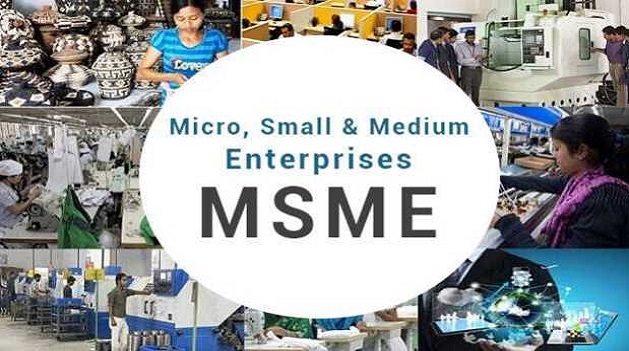
Businesses across Nigeria, particularly micro, small and medium enterprises (MSMEs), may soon be able to convert unpaid invoices and credit sales into immediate cash without relying on conventional bank loans following the passage of the Factoring, Assignments and Receivables Financing Bill for second reading in the Senate.

The bill, which seeks to establish a legal framework for factoring and receivables financing, is expected to improve access to credit, boost liquidity for businesses and enhance domestic and international trade.
It also seeks to provide legal certainty for the assignment of receivables through factoring, promote transparency, modernise assignment laws and facilitate greater access to credit for businesses across the country.
Leading debate on the bill which was sent from the House of Representatives for concurrence, Senate Leader Opeyemi Bamidele said on Tuesday that the proposed legislation would create an enabling environment for debt factoring to thrive in Nigeria while defining the rights and obligations of creditors, factors and debtors involved in such transactions.
He explained that the bill provides for factoring contracts between sellers and factors and clarifies the legal relationship among parties in receivables financing arrangements.
According to Bamidele, the legislation has already passed all legislative stages in the House of Representatives and has complied with the Senate’s procedural requirements under Order 78(3) of the Senate Standing Orders.
He told lawmakers that the Senate Ad Hoc Committee on Compliance, chaired by Abdul Ningi, had scrutinised and cleared the bill for concurrence.
“The committee confirmed that all procedural requirements for consideration and concurrence by the Senate have been fully met,” he said.
Seconding the bill, Adetokunbo Abiru said the legislation would provide businesses with an alternative source of financing by enabling them to turn credit sales into cash and improve their working capital.
Abiru noted that factoring has become increasingly popular across Africa over the last decade, largely through initiatives supported by the African Export-Import Bank (Afreximbank).
He disclosed that the African factoring market is currently valued at over $50 billion, but Nigeria’s participation remains below one per cent.
According to him, countries such as Egypt and Morocco have benefited significantly from the financing model, adding that Nigeria risks missing out on the growing market without a clear regulatory framework.
“I think that passing this major legislation will help support our micro, small and medium enterprises in terms of converting most of their credit sales into cash without going through the normal borrowing arrangement,” Abiru said.
In his remarks, Ningi also assured lawmakers that the compliance committee had reviewed the bill and found no legal impediments to its passage.
Following a voice vote, the Senate approved the bill for second reading and subsequently referred it to the Committee of the Whole for clause-by-clause consideration.

UK, Nigeria Launch £15 million Growth Programme to Accelerate Economic Transformation

Haleon Introduces New Corporate Identity in Nigeria

NITDA Unveils Ambitious Strategy to Turn Southwest into Nigeria’s Next Innovation Powerhouse

Airtel Africa Foundation Publishes Inaugural Annual Report

Mobile Internet Gender Gap Widest in Africa – GSMA

CBN Extends PoS Geo-Fencing Enforcement Deadline to August 2026

Jumia Nigeria Records Strong Q1 2026 Growth as Technology-Led Strategy Drives Market Expansion

NCC Drafts New Rules for Virtual Mobile Operators

TD Africa, HPE Drive Conversations on the Future of Intelligent Networking

Anthropic Raises $65 Bn to Expand AI Research, Innovation




 E-Business2 days ago
Firm Discovered a New Corporate Phishing Technique using a Popular AI Web Development Platform

 Telecom2 days ago
No More Deleting and Reposting: Instagram Unveils Long-Awaited Profile Update

 Telecom2 days ago
Airtel Nigeria Launches Web Data Calculator to Give Customers Greater Visibility into Data Usage

 Telecom2 days ago
All Set for 2026 Nigeria DigitalSENSE Forum and Awards: NLNG, IHS, and others rally support

 Telecom2 days ago
NCC Board Reviews Telecom Sector, Notes Progress in Network Expansion, Consumer Compensation

 Broadcasting3 days ago
MTN Launches One TV with Free-to-View, Pay-as-You-Go

 Telecom2 days ago
FG’s $10m Hello.cv Deal Sparks Outrage as Experts Question Snub of .ng Domain

 E-Financial2 days ago
America Borrows Power, Nigeria Borrows Survival