

News
Enabling Environment for Nigeria Content Development in the ICT Sector (1)

This is a word that has been misused to the detriment of overall development of indigenous content. Some years back when car and truck assembly plants were still functional in this country, the then national assembly tasked the plants on the need to improve on the input of local content of the vehicles. I remember clearly a particular company touting that they have achieved over 30% local content input. The company then went to list the items supplied locally as cables, car seats, car paints, etc. The company in a sense is right since they sourced those items locally. But the question that needs to be addressed is whether the components were indigenously manufactured in Nigeria? If the government buys a car assembled in Nigeria, can it rightly say it has bought an indigenously manufactured car?
So we must distinguish between local input (content) and indigenous input.
Content Development
This can be viewed as import substitution when some of the intermediate components that go into the manufacture of a product are now indigenously produced using local resources and technology. Let me clarify this. Most casings of laptop computers and mobile phones are made from the by-product of petrochemical refineries. Nigeria is a major crude oil producing and "refining" country, yet these components are still imported. If the downstream sector of the petroleum industry is developed casing and other similar component will produced indigenously.
Enabling Environment
There are many numerous definitions of the enabling environment and they range from all encompassing to narrow. For the purpose of this paper, I shall look at enabling environment as a set of interrelated conditions – such as legal, bureaucratic, fiscal, informational, political, and cultural – that impact on the capacity of investors to engage in investment processes in a sustained, effective and profitable manner.
Introduction:
We were made to understand that after World War II, products from Japan were ridiculed and denigrated by consumers for its presumed sub-standard quality. British made products were preferred. He said they use to derogatorily call it Japanese product: Fabrique au Japan. But today, Japanese products are very much in demand because it is believed to be of the highest quality. If in doubt, take a look through your window and count the number of Japanese cars out there; or do an audit of the household and consumer electronics in your house. If the Japanese government did not put in place favourable policies and create enabling environment that is favourable to investment, the country’s putative steps into manufacturing could have fizzled out.
The above scenario was recreated with Taiwanese, Korean and Singaporean made goods. Today, these countries are industrial powers, producing products that are competing favourably with, (and even surpassing in quality), products from North America and Europe. China, India, Thailand, Malaysia, Indonesia, Philippines, etc, are not far behind. The Asian Tigers are no longer coming; they are at our door steps!
Let’s move half a world away from the Asian Tigers. Nigeria’s Defence Industry Corporation, (DIC) was set up in the early 60s. I understand the Brazilian government following in the footsteps of Nigeria, set up her own equivalent 6 months after Nigeria. Today, the Brazilian own is indigenously manufacturing military hardware such as airplanes, warships, missiles, etc. In fact in the early 80s, many of us present here were eye witnesses to the berthing of Brazilian manufactured submarine at Marina when her Navy paid a visit to Nigeria. Compare this to the feat done by our own DIC. Last year it was announced that Nigerian DIC has started the assembling of AK47 rifles which they ingeniously named OBJ-007. Talk of comparing an airplane with bicycle!
Whither Nigeria? Where lies the problem?
The ICT industry is unique in that we are now in the Information Age with attendant dependence on the Internet for most transactions. Information Societies are emerging changing the ways business is conducted. Under this present scenario, the use of ICT product is pervasive affecting all sectors of a country. Anything that affects the ICT industry affects the entire human society. Any business that refuses to adapt becomes history. This being so, the manufacturers and producers of this business and productivity tool (ICT tool) need to be encouraged to make these tools available to the vast majority of the populace at affordable rate in order to empower the new e-work force. For MDG to be achieved, as many citizens as possible need to be empowered to function optimally in the new Information Society, if Nigeria is to achieve her desire of being among the top 20 economies in the world by the year 2020).
What factors impact Content Development?
From my experience, Nigeria is not an investor friendly country. What is prodding some of us on is the faith that things may get better; that generation unborn will be spared the anomaly that we have experienced; and finally to make a difference in this generation. Business practices in global markets are changing because of international competition and Nigeria has to key into it or risk remaining in the back waters of development. The Nigerian private sector, which consists of small, medium, and micro-sized enterprises (SMMEs) and the informal sector, is widely regarded as a potential engine of growth in the information economy. Government favourable policies will provide opportunities for competent ones to increase their markets and trading potential well beyond the Nigerian borders. This will in turn provide capital that will aid research into indigenous inputs and content development.



The UK Government has announced the appointment of Mr Peter Vowles as the next British High Commissioner to the Federal Republic of Nigeria.

Mr Vowles succeeds Dr Richard Montgomery CMG and is expected to take up his post in Abuja in September 2026. Dr Montgomery remains in post until that time.
Mr Vowles brings extensive diplomatic and development experience to the role, having served as His Majesty’s Ambassador to Zimbabwe from 2023 to 2026 and previously as Ambassador to Myanmar from 2021 to 2022.
He has held senior leadership positions across the FCDO and its predecessor department DFID, including as Transformation Director and Director for Asia, Caribbean and Overseas Territories.
Earlier in his career, Mr Vowles worked in international development across South Asia, Central Africa and East Africa, including postings in Bangladesh, India, the Democratic Republic of Congo and Kenya. He began his career in Zimbabwe, where he worked in education and development.
Peter Vowles said: “I am honoured to be appointed as British High Commissioner to Nigeria. Nigeria is a country of immense importance to the United Kingdom, and I look forward to working closely with Nigerian partners to strengthen our relationship across trade, development and security.”

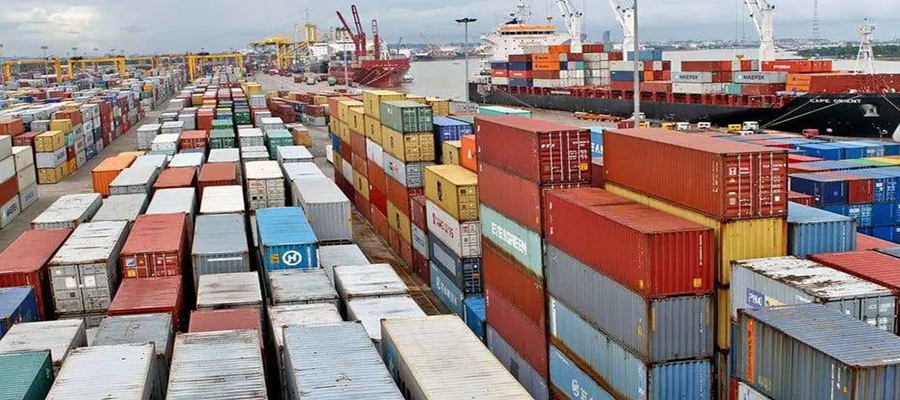
World Bank has ranked the Apapa and Tin Can Island Port complexes in Lagos among the world’s 20 most improved ports in its 2025 Container Port Performance Index (CPPI), released in June 2026.

The ranking places both ports in the “Top 20 Port Improvement Since 2020” category, reflecting significant gains in operational efficiency and vessel turnaround time.
The CPPI is a global benchmark used to assess the efficiency of container ports based on factors such as cargo handling speed, ship turnaround time and overall logistics performance.
According to the report, the improvement highlights ongoing reforms and modernization efforts within Nigeria’s maritime sector.
The Managing Director of the Nigerian Ports Authority (NPA), Mr Abubakar Dantsoho, attributed the recognition to ongoing policy reforms and infrastructure upgrades in the sector.
He said the development reflects the impact of economic policies of President Bola Tinubu and the support of the Minister of Marine and Blue Economy, Mr Adegboyega Oyetola.
“With the investor-friendly policies of President Bola Ahmed Tinubu providing the impetus for increased investment to drive our port infrastructure and equipment modernisation programme, coupled with the unflinching support of the Honourable Minister of Marine and Blue Economy, Adegboyega Oyetola, we have all it takes to further enhance trade facilitation, improve competitiveness and boost the national economy,” he said.
The NPA said the recognition is expected to strengthen investor confidence in Nigeria’s maritime sector and enhance the country’s position as a regional trade and logistics hub.
It noted that improvements in port operations are already contributing to increased efficiency in cargo movement and reduced delays at key terminals.
The authority also pointed to ongoing efforts to modernise port infrastructure and expand digital systems aimed at improving service delivery.
Earlier in February 2026, the NPA said the federal government had intensified efforts to position Nigeria as a leading maritime destination through port rehabilitation and modernization projects.
It also highlighted public-private partnership initiatives, including developments at the Lekki Deep Sea Port, as part of broader reforms aimed at improving efficiency and attracting investment.
The CPPI ranking is expected to further boost Nigeria’s maritime profile and encourage additional investment in the sector.

As digital payment adoption continues to grow across Nigeria and emerging markets, the next phase will depend not just on innovation, but on the strength, reliability, and trustworthiness of the infrastructure behind it.

While the ecosystem has made clear progress in recent years, trust remains a critical issue for users, businesses, and operators alike. Questions around resilience, security, interoperability and transaction reliability continue to shape how the market evolves and how confidently digital payments can scale.
These issues will be central to the deliberations at Digital Pay Expo 2026, where fintech leaders, payment operators, and other ecosystem stakeholders will gather under the theme, “Seamless Digital: Fostering Pan-African Market Expansion in the Era of AI.”
PalmPay’s participation reflects its continued commitment to building trusted and scalable payment infrastructure, while contributing to the broader industry efforts to strengthen systems, standards, and partnerships needed to support long-term ecosystem growth.
Speaking ahead of the event, Olorunfemi Hanson, Head of Marketing and Communications at PalmPay Nigeria, said: “As the financial services ecosystem continues to grow, trust and reliability become even more important.
“The industry’s next phase will be shaped not only by innovation, but by the strength of the infrastructure supporting it. Digital Pay Expo provides an important platform to address the resilience, interoperability, and trust issues that will shape the future of digital payments growth across Africa.”
The event, scheduled to be held from the 17th to the 18th of June, 2026, will feature Chika Nwosu, Managing Director of PalmPay Nigeria, alongside other distinguished guests, including the Director-General, Payment System Management Department (PSMD), Central Bank of Nigeria. The event will examine how the industry can balance innovation, regulation, and scalability while strengthening trust across the digital payments value chain.
For PalmPay, this event reinforces its role in supporting a more resilient, secure and scalable payments ecosystem for Nigeria and emerging markets more broadly.

AfreximBank Urges Nigeria, Others to Strengthen Continental Trade

FG Issues Transition Guidelines for Tax Acts 2025

Mobile Technologies Boost Africa’s Economy by $240B in 2025, Commences a New Phase of Digital Transformation

Fidelity Bank Empowers 1,950 Residents in Anambra, Distributes Machines, Cash Grants, School Support Items

Telecom Regulator, NCC, Digital Encode, AfriGoPay Support eBusinesslife Girls In ICT Campaign

CBN Extends PoS Geo-Fencing Enforcement Deadline to August 2026

NCC Drafts New Rules for Virtual Mobile Operators

FG Targets Alleged N3tn Capital Flight, Opens Airtime Credit Market to Nigerian Fintechs

London Strengthens Global Investment Ties with Africa @ First Ever London-Africa Business Summit

Easybuy Partners WAWUAfrica to Upskill 10 Million Youths and Women, Boosting Nigeria’s Economic and Financial Inclusion




 Telecom2 days ago
MTN Foundation Commits N32Bn in Projects across Nigeria

 E-Financial2 days ago
IMF Warns of New Risks for Monetary Policy over $59Bn Crypto Inflows into Nigeria

 E-Financial2 days ago
AI-Powered Loan Recovery Pilot Rakes in N69m for VeendHQ

 Telecom2 days ago
NCC Begins Review Telecom Termination Rates after 8 Years

 Telecom2 days ago
Airtel Africa Foundation Completes Year One Scholarship Disbursement for 100 Tech Scholars in Nigeria

 E-Business1 day ago
NIPOST Plans Digital Postcodes for Every Building in Nigeria

 E-Business2 days ago
The Case for a Holistic AI-Led Approach to Cybersecurity in the Fintech Ecosystem

 Broadcasting2 days ago
Stakeholders Endorse Hybrid Model for Nigeria’s Digital Switch