

/home/kenneth/web/nigeriacommunicationsweek.com.ng/public_html/wp-content/themes/zox-news/parts/post-single.php on line 153
">
Warning: Undefined array key 0 in /home/kenneth/web/nigeriacommunicationsweek.com.ng/public_html/wp-content/themes/zox-news/parts/post-single.php on line 153
Warning: Attempt to read property "cat_name" on null in /home/kenneth/web/nigeriacommunicationsweek.com.ng/public_html/wp-content/themes/zox-news/parts/post-single.php on line 153
Philately Business is a Serious Business- Ugo

King Fhud of Egypt describes philately as king of hobbies and hobby for kings. Postage stamps are considered the most effective medium for immortalizing monuments and past histories, yet not many people know that there is more to stamp than mere affixing it on the envelope as a postal condition for carrying of letters. The name philately may sound strange to some people who do not understand what the business is all about, but for those in the known are actually making their millions silently in this business which A.U Okpara of the Dept. of Fine and Applied Arts, Imo State University Owerri once described as treasure in the trash.
The implication of the definition of Treasure is that the philatelist collects stamps from the trash cans- the useful part of the discarded envelope and recognizes its value as a work of art and places value on it.
In this period when the world is experiencing economic meltdown with its ugly consequence on the capital market, Mr. Ugo C. Ugo, manager Philately Bureau Lagos has said that attention is now shifting to philately as a cool and sure way of making money. He said philately business is all about collecting and studying of stamps.
In talking about stamps collection and sale, Ugo insists that first and foremost there is need to know how the stamp is produced. He said that all the postage stamps you see in Nigeria are printed for Philately Bureau by the Security Printing and Minting Company (SPCMC).
He went further to say that there are two different types of stamps namely the definitive and commemorative stamps. Definitive stamp, he said, is the one that is produced to last for about five years while the commemorative stamp lasts just for six months. But Ugo said that the Philately Bureau can still sell commemorative stamps beyond six months even when they are not available in the general post offices. In fact he said the office can sell commemorative stamps for up to two years saying that this differentiates Philately office from the general post office business. When stamps are produced, he said the chief finance officer of Postal Order and Stamp Supply (the unit that distributes the stamps) will collect the stamps and distributes to territories.
Ugo agrees that not many people know about the business of stamp studying and collection in Nigeria and says the few people that know about it are among the literate class quite unlike in developed countries of U.S, Britain, Germany and others whose postal services make a whole lot of money from philately business. Ugo says that philately business is a serious business and that there are stamp clubs all over the world where people who similar interest can belong.
Tracing the origin of postage stamps, Ugo said that postage stamp was invented by Sir Roland Hills, an Englishman who lived between 1795-1879. In Nigeria, he said that the history of postage stamp dates back to 1859 when a hand struck stamp with the inscription “Paid in Lagos was used.” In June 1874 the first consignment of stamps were released in Lagos.
Stamp collection as a hobby started in Great Britain around 1840 when the first stamp issue was released but Ugo says it is general belief that the idea of collecting stamps came from a Belgium school master who asked his pupils to adorn their atlases with stamps . He said that this adornment became so appealing that in 1854 stamp collecting was taken more seriously and stamp clubs started emerging afterwards. In Nigeria, philately as a hobby was run on a small scale before 1969. in order to improve the standard and quality of Nigerian stamps and provide adequate philately services to Nigerians and foreign collectors, the Nigerian Philatelic Bureau was established in 1969.
Awareness about stamp collection and study is generally low in the country and Ugo says his bureau has been making efforts in recent times to sensitize the people about what philately is all about through the print and circulation of flyers and corporate gift items to members of the public. “ In abroad most postal services make about 70 per cent of their revenue from philately but in Nigeria, the philately is not developed and we are not making the type of money we are supposed to be making”, Ugo said .
To register as a stamp collector, what you need to pay is just a thousand naira and account will be opened for you. Those abroad pay a minimum of forty U.S dollars for the same purpose and they can do everything online. Ugo says that some of the two thousand eight hundred philately members registered with the Nigerian Philately Bureau are white people. Each stamp collector, according to Ugo must have a particular interest of stamps he is collecting whether on animals, telecommunications, music , costumes etc saying that the longer the year of stamp produced, the higher the amount it can attract on sale. He said that when one pays one thousand naira as registration fee that the bureau uses that money to supply the member with postage stamps of various denominations for almost a year and that as soon as the money is exhausted, the Philately accounts officer will alert the member to come for renewal.
Nipost Philately position as the 196th member of International Philately Federation five years ago underscores the fact that philately is a growing business worldwide and Nigerians stand to gain a lot from it. The biggest challenge therefore is creating of awareness by the Nigerian Postal Service to educate the people on what they stand to gain from the hobby.
Chief J. Ade Fagbeminro is in his seventies but he has been in the philately business since early sixties when he said a friend introduced him to the business. Then he said the money they were getting from the business was not much but had real value. He said he has a network of buyers and belongs to international dealership associations. We have dealership association all over the world and whenever there’s need for stamps they call me. I deal in Nigeria stamps and other countries as well. People from abroad contact me on email and telephone to request for stamps”, Fagbeminro disclosed to Nigeria Communications Week. You too can tell the same beautiful story in future if you start now to invest into this gold mine.


Warning: Undefined array key 0 in /home/kenneth/web/nigeriacommunicationsweek.com.ng/public_html/wp-content/themes/zox-news/parts/post-single.php on line 493
Warning: Attempt to read property "cat_ID" on null in /home/kenneth/web/nigeriacommunicationsweek.com.ng/public_html/wp-content/themes/zox-news/parts/post-single.php on line 493


A recently released Henley Passport Index 2026, showed that Nigerian citizens can travel to at least 20 destinations outside the African continent where entry is allowed either visa-free, with a visa on arrival (VOA) at no extra cost, or via an e-visa.

This expanded access opens doors for Nigerian travellers to experience countries in the Caribbean, Asia, and beyond with greater ease.
Below is a comprehensive guide to countries outside Africa which Nigerian passport holders can visit without a traditional visa.
Visa-Free Countries outside Africa for Nigerian Passport Holders:
Barbados

Cambodia – Visa on arrival
Comoros Islands – Visa on arrival
Cook Islands
Dominica
Fiji
Haiti
Iran – Visa on arrival
Kiribati
Lebanon
Maldives – Visa on arrival
Micronesia
Montserrat
Niue – Visa on arrival
Palau Islands – Visa on arrival
Samoa – Visa on arrival
St. Kitts and Nevis
Timor-Leste – Visa on arrival
Tuvalu
Vanuatuul
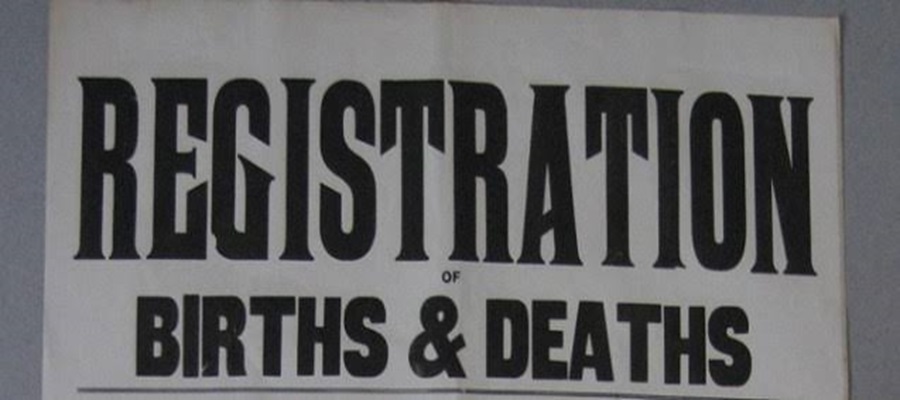
National Population Commission (NPC) has announced commencement of full digital registration of births and deaths through the VitalReg platform, which became operational nationwide on July 1, 2026.

Chidi Ezeoke, federal commissioner representing Anambra, disclosed this in Awka during a press conference to announce commencement of full digital birth and death registration under the Electronic Civil Registration and Vital Statistics (E-CRVS) system and the marking of World Population Day commemorated every July 11.
He revealed that a total of 131 registration centres had been opened in the 21 local government headquarters and several communities in the state, adding that more centres would be opened later.
Ezeoke described the initiative as a major milestone in Nigeria’s Civil Registration and Vital Statistics (CRVS) system, to ensure every birth and death in the country was captured through a digitally enabled registration platform.
“It builds on the launch of the E-CRVS system and the inauguration of the National Coordination Committee on Civil Registration and Vital Statistics by President Bola Tinubu on Nov. 8, 2023.
“A total of 4,011 functional registration centres has been established across the 774 LGAs of the federation and the commission iswas working to expand the number to about 8,000.
“In Anambra, 131 registration centres have been opened in the 21 local government headquarters and several communities. More centres had been proposed for the state,” he said.
According to the Commissioner, the VitalReg platform would provide faster registration services, 24-hour online access, digital certificate issuance where applicable, reduced paperwork and waiting time, improved data validation and a more secure national CRVS database.
While noting that the platform would serve as a foundational database to support other national data systems and strengthen interoperability across Nigeria’s digital identity ecosystem, Ezeoke urged Nigerians and other stakeholders to support the initiative by ensuring prompt registration of all births and deaths.
Speaking on the 2026 World Population Day themed, “Realising the Hopes and Aspirations of Young People – Today and for the Future”, the Commissioner called for greater investment in education, healthcare, skills development, decent employment opportunities and youth participation in governance for sustainable national development.
Earlier, Mr Obiakonwa Okagwu, state director, NPC, said the occasion served as a reminder of great opportunities provided to harness young people’s capabilities, which he said would shape the future of the country when adequately harnessed.
He called on residents to take registration of births and deaths as national responsibility, just as he urged the media to take the message on civil registration to all parts of the State.

Lagos Chamber of Commerce and Industry (LCCI) has urged the Federal Government and the National Pension Commission (PenCom) to suspend the proposed increase in Nigeria’s mandatory pension contribution from 18 per cent to 21 per cent, warning that the policy would raise the cost of doing business, threaten jobs and undermine enterprise sustainability at a time of mounting economic pressures.

Dr. Chinyere Almona, director general of the LCCI, said while strengthening retirement security remains an important policy objective, increasing mandatory pension contributions by three percentage points would impose additional financial burdens on businesses already grappling with high borrowing costs, persistent inflation, foreign exchange volatility, rising energy prices and multiple taxes.
According to the chamber, the proposed increase comes at a period when many businesses, particularly micro, small and medium-sized enterprises (MSMEs), are struggling to remain profitable amid Nigeria’s challenging operating environment.
The LCCI noted that Nigeria’s existing mandatory pension contribution rate of 18 per cent comprising 10 per cent by employers and 8 per cent by employees is already broadly aligned with the Organisation for Economic Co-operation and Development (OECD) average of 18.8 per cent.
It argued that raising the contribution to approximately 21 per cent would place Nigeria above several comparable economies, including the United Kingdom, where mandatory contributions stand at 8 per cent; the United States at 12.4 per cent; Kenya at 12 per cent, subject to earnings caps; and South Africa, where there is no equivalent mandatory private-sector pension contribution.
The chamber warned that implementing the proposed increase would significantly raise employment costs for employers, discourage new recruitment, constrain wage growth and place disproportionate pressure on MSMEs, which account for a substantial share of employment in Nigeria.
According to the LCCI, the higher payroll obligations could also reduce Nigeria’s competitiveness as an investment destination, encourage non-compliance with pension regulations and push more businesses into the informal sector.
“A stronger pension system cannot be built on weaker businesses,” the chamber stated, stressing that economic sustainability and business growth remain critical to expanding pension coverage over the long term.
The LCCI therefore called on the Federal Government to defer the proposal until a comprehensive Nigeria-specific actuarial and economic impact assessment is conducted to determine its implications for businesses, workers and the broader economy.
It also urged policymakers to engage in extensive consultations with organised private sector groups, labour unions and other key stakeholders before implementing any changes to the country’s pension contribution framework.
According to the chamber, the government’s immediate priority should be restoring business confidence, preserving existing jobs, encouraging investment and expanding the formal economy, which it described as the most sustainable pathway to improving retirement savings.
As an alternative to increasing contribution rates, the LCCI advised PenCom to focus on developing more innovative investment instruments capable of generating stronger returns on pension assets.
The chamber said improving investment performance would enhance contributors’ retirement savings without imposing additional financial obligations on employers and employees already facing difficult economic conditions.

See Verified 20 Countries Nigerian Passport Holders Can Travel Visa-Free

NPC Opens 131 Births, Deaths Registration Centres in Anambra

Lagos Chamber Opposes 21 Percent Pension Contribution, Warns of Job Losses

Subscribers, Telcos Warn FCCPC over Airtime Lending Enforcement

NCC, REA Partner to Cut Telecom Costs with Renewable Energy

NRC, Ponzi Scheme Collapses Resulting Loss of Billions of Naira

EFCC Busts NIS Visa Overstay Racket, Uncovers N700m in an Account

Tokenization, Blockchain Technology will Transform Financial Institutions – IMF

From Scarcity to Scale: What Africa Can Learn from India’s Agricultural Transformation

Spotify partners Afro Nation Portugal to expand African music experience




 Telecom3 days ago
GSMA Supports Abuja Declaration on Meaningful Connectivity for Africa, Joins Partners to Launch ATLAS Umoja

 Telecom3 days ago
Airtel Secures Another 10-year Spectrum Renewal in Nigeria

 E-Business3 days ago
HURIWA, CLO Protests Bill Asking Social Media Firms’ to Open Shops Nigeria

 Telecom3 days ago
MTN Nigeria Warns Customers Against Fake ‘One Month Free Data’ Promotion

 News3 days ago
Nigeria, Israel Strengthen Research, Technology Collaboration

 Broadcasting3 days ago
Glo Sponsored African Voices to Feature Netflix’s “The Polygamist” Stars

 E-Financial3 days ago
Moniepoint as a Key Driver in Expanding Financial Access for Businesses in Nigeria

 General News3 days ago
Anambra Govt Bans Graduation Ceremonies in Anambra Schools