

/home/kenneth/web/nigeriacommunicationsweek.com.ng/public_html/wp-content/themes/zox-news/parts/post-single.php on line 153
">
Warning: Undefined array key 0 in /home/kenneth/web/nigeriacommunicationsweek.com.ng/public_html/wp-content/themes/zox-news/parts/post-single.php on line 153
Warning: Attempt to read property "cat_name" on null in /home/kenneth/web/nigeriacommunicationsweek.com.ng/public_html/wp-content/themes/zox-news/parts/post-single.php on line 153
e-Business Will Drive the Industry in the Future-Ibekwe

Information and Communications Technology (ICT) development has constituted a restriction on one side to courier business but the same ICT is actually throwing up a major opportunity of the future for the industry. Mike Chukwuemeka Ibekwe, chief executive officer of Suvex Delivery Service and financial secretary, Association of Nigerian Courier Operators (Anco) disclosed this to Nigeria Communications Week in his office recently. Ibekwe says the real future of the industry in Nigeria is e-business which is already being practiced abroad where someone can stay in his bedroom and order what he wants from anywhere. In this process, Ibekwe says the shop doesn’t deliver these items but the courier. "That is the business of the future and that is what will determine or drive the industry in the future. That aspect of the market is grossly underdeveloped in Nigeria but time will come when the market in Nigeria will be e-driven", Ibekwe predicted.
To improve the services of the courier industry, Ibekwe says it will take the will power of the government to fast track action on the postal reform bill believing that once that bill is passed into law and the commission set up that the commission will then be able to define standard and ethics of the profession as well as measure operators and those that don’t measure up to those standards as he suggested, may be given a time frame either to measure up or fold up or join with some others. In addition, there is need for public enlightenment as Ibekwe expects that customers should also know what his or her rights are to courier service as well as recognize his responsibilities too.
Ibekwe emphasizes the need for training in the courier industry arguing that courier is a peculiar industry where there is no university or institution that offers courier as a course underlying the fact that the industry is vague to some extent. Therefore, to get the real quality and service according to Ibekwe, the industry has to come up with clear cut training programmes and packages, processes and procedures, standards and expectations which each organization will be involved in. Ibekwe says Suvex Delivey Service which provides domestic and international courier services, haulage, consultancy, in-house mail management has its own customized approach to doing business which the company does not compromise no matter what. He defines Suvex Courier as a company that observes honesty, integrity, character, relationship, value for money and respect for their customers as the core values of the organization especially this time around when there are a lot of sharp practices in the industry. "People don’t honour promises or honour their words but we go to any extent to keep our promise", Ibekwe said.
Ibekwe identifies the customer as the king and the reason for the existence of Suvex Delivery Service even as he says that it is a sacrilege for the organization to do anything against their clients and that the firm goes any mile to ensure customer satisfaction. Professional and efficient delivery of service within the budget of the customer is some of the selling points of the organization. Ibekwe believes it is one thing to deliver service and another for the service to fall within the budget of what the customer can afford.
He talks of Anco as a young organization that is still coming up compared to most of other trade groups. He says the biggest challenge in the organizations is trying to mobilize people who don’t believe in themselves not to talk of believing in an organization. Ibekwe says the truth of the matter is that the courier industry cannot get to its zenith without a proper organization and that that is what Anco is trying to do with the help and support of the Courier Regulatory Department (CRD). According to him, the association is looking forward particularly when the industry will be sanitized, when it will have a legal frame work that properly defines what should be and what shouldn’t. "You have an independent umpire there setting the standard and a professional organization that understands, believes and is willing to take all it has into the industry. We will then have a room to operate. That is the future we are looking at but right now Anco is using moral persuasion and every means possible to convince, mobilize, encourage and galvanize the multitude of people that are licensed to operate courier in the country," Ibekwe said.


Warning: Undefined array key 0 in /home/kenneth/web/nigeriacommunicationsweek.com.ng/public_html/wp-content/themes/zox-news/parts/post-single.php on line 493
Warning: Attempt to read property "cat_ID" on null in /home/kenneth/web/nigeriacommunicationsweek.com.ng/public_html/wp-content/themes/zox-news/parts/post-single.php on line 493


Human Rights Writers Association of Nigeria (HURIWA) has opposed a bill seeking to compel major global social media companies to establish physical offices in Nigeria.

The rights advocacy group urged the National Assembly to discard the proposed legislation, warning that it could become a tool for censorship and undermine citizens’ constitutional right to freedom of expression, despite being presented as a measure to strengthen Nigeria’s digital economy and improve corporate accountability.
The position was contained in a presentation submitted yesterday by Emmanuel Onwubiko, national coordinator, HURIWA, to the chairman of the Senate Committee on ICT and Cyber Security.
The bill, sponsored by Senator Ned Munir Nwoko, has already passed second reading in the Senate and is before the committee for further legislative consideration.
HURIWA said it carefully reviewed the proposed legislation and concluded that compelling global technology companies to establish offices in Nigeria was unnecessary and potentially counterproductive.
The organisation argued that while the firms generate substantial revenue from Nigeria’s vast digital market, they already engage Nigerians through existing structures, including paying eligible content creators, working with local technology professionals and participating in legal proceedings whenever required.
According to the group, appointing local representatives where necessary would adequately address concerns about engagement with regulators and users without forcing the companies to maintain physical offices.
It also dismissed claims that mandatory country offices would significantly improve consumer complaint resolution, technology transfer or employment generation.
HURIWA maintained that the platforms already have effective feedback mechanisms for resolving users’ complaints and routinely appear before Nigerian courts through their representatives whenever litigation arises.
The group, however, said its greatest concern was the potential for the proposed law to be used as an instrument for restricting freedom of expression.
It argued that establishing local offices could expose global social media companies to pressure from government authorities to remove online content considered critical of those in power.
According to the rights group, the presence of social media companies in Nigeria could become an avenue for authorities to pressure them into abandoning internationally recognised digital rights standards in favour of politically motivated content moderation.
It recalled previous attempts to regulate social media in Nigeria that generated widespread concerns over possible restrictions on free speech, stressing that any legislation affecting the digital space must contain clear safeguards against abuse.
The organisation warned that the proposed law should never become “a backdoor mechanism for government surveillance, arbitrary content removal or political censorship.
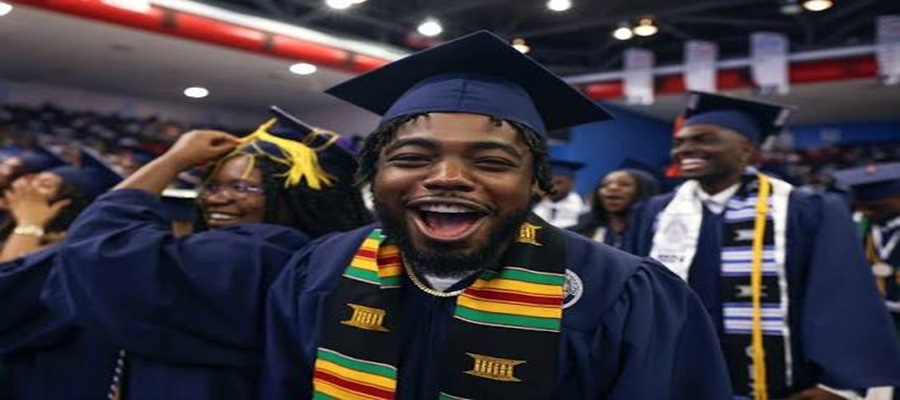
Prof. Chukwuma Soludo, governor, Anambra State, has approved an indefinite ban on graduation ceremonies in kindergarten, primary and secondary schools across the state as part of efforts to reduce the financial burden on parents.

Prof. Chukwuma Soludo, governor, Anambra State,
The directive was confirmed by Dr. Law Mefor, commissioner for Information and Value Reformation, in a statement issued on Friday.
According to the commissioner, the government deemed it necessary to clarify the policy following public inquiries and concerns over the scope of the ban.
Mefor explained that the directive applies to all graduation-related ceremonies in both public and private schools across the state.
He said the ban covers events described as graduation, passing-out, crossover or any other ceremony organised to mark the completion of kindergarten, primary or secondary school levels.
The government said the decision was taken to discourage unnecessary financial obligations often imposed on parents through elaborate school celebrations.
The commissioner clarified that students completing Senior Secondary School (SS3) are exempt from the directive.
However, he stressed that graduation ceremonies for SS3 students are not compulsory and may only be held without imposing any financial burden on students or their parents.
According to him, schools choosing to organise such ceremonies must ensure that no levies, compulsory contributions or hidden charges are demanded from parents.
Mefor warned that the state government would not hesitate to sanction any school that violates the directive.
He said schools found organising prohibited graduation ceremonies or imposing illegal charges on parents risk severe penalties, including possible closure.
The commissioner urged school proprietors and administrators to comply fully with the directive in the interest of parents and the education sector.
The state government said the policy is part of broader efforts to make education more affordable and eliminate unnecessary expenses associated with school activities.
Many parents have previously complained about the increasing costs of graduation ceremonies, including compulsory levies for gowns, entertainment, souvenirs and other related expenses.
The government expressed optimism that the directive would ease the financial pressure on families while encouraging schools to focus more on academic excellence than ceremonial activities.

Airtel Nigeria has secured a fresh 10-year renewal of its spectrum licence from the Nigerian Communications Commission (NCC), reinforcing the telecom operator’s long-term commitment to expanding broadband connectivity and improving digital access across the country.

The renewed licence covers Airtel’s spectrum holdings, which are critical to the delivery of voice and high-speed data services, providing regulatory certainty for continued investments in network expansion, capacity upgrades and improved customer experience.
According to the company, the renewal underscores confidence in Nigeria’s telecommunications sector and will support its ongoing efforts to bridge the country’s digital divide by extending quality connectivity to more underserved communities.
Sunil Taldar, chief executive officer, Airtel Africa, said the renewal provides the company with the confidence to continue investing in Nigeria’s digital infrastructure.
He said, “The spectrum renewal reaffirms our long-term commitment to Nigeria, our largest market. It gives us the certainty required to continue investing in network expansion, improve service quality and accelerate digital inclusion for millions of Nigerians.”
Taldar added that Airtel remains focused on expanding broadband access and supporting Nigeria’s digital economy agenda through sustained investments in telecommunications infrastructure.
He further said, “We appreciate the Nigerian Communications Commission and the Federal Government for their continued support in creating an enabling environment for investment. We remain committed to delivering reliable and affordable connectivity while contributing to Nigeria’s socio-economic development.”
Meanwhile, Industry observers said the licence renewal removes regulatory uncertainty and allows Airtel to pursue long-term capital investments, including the expansion of 4G and 5G networks, as demand for mobile data and digital services continues to grow across Nigeria.
The renewal comes as telecom operators continue to invest heavily in broadband infrastructure to meet rising data consumption and support government efforts to achieve Universal digital access.
Furthermore, It also aligns with the NCC’s objective of ensuring efficient spectrum management while encouraging sustained private sector investment in the country’s telecommunications industry.

HURIWA, CLO Protests Bill Asking Social Media Firms’ to Open Shops Nigeria

Anambra Govt Bans Graduation Ceremonies in Anambra Schools

Airtel Secures Another 10-year Spectrum Renewal in Nigeria

Moniepoint as a Key Driver in Expanding Financial Access for Businesses in Nigeria

Nigeria, Israel Strengthen Research, Technology Collaboration

NRC, Ponzi Scheme Collapses Resulting Loss of Billions of Naira

EFCC Busts NIS Visa Overstay Racket, Uncovers N700m in an Account

Tokenization, Blockchain Technology will Transform Financial Institutions – IMF

From Scarcity to Scale: What Africa Can Learn from India’s Agricultural Transformation

Spotify partners Afro Nation Portugal to expand African music experience




 E-Business2 days ago
Kaspersky Warns Mobile‑data Buyers about Scammers Posing as Telecoms Operators

 E-Financial2 days ago
ChatPay Unveils Public Waitlist for WhatsApp-Based Banking Platform

 General News2 days ago
Three Entrepreneurs Secure ₦5 Million at The Gathering on 100 Pitchathon

 News2 days ago
African Judges Pledge Support for AfCFTA’s Success

 Telecom2 days ago
Airtel Africa Backs London Listing

 Telecom2 days ago
GSMA Says High Smartphone Costs Threatens Africa’s AI Future

 E-Business2 days ago
Nigeria Leads Africa in Online Gambling Regulation – GCI

 News2 days ago
How 21 Former Almajiri Children Learned to Build Computers and Drones in Months