

General News
10 Challenges Facing Buhari

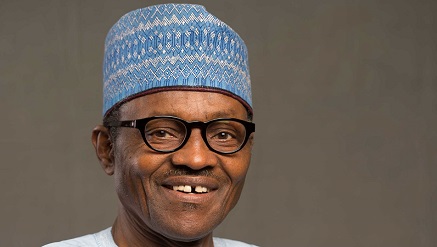
President Muhammdau Buhari faces a tough battle to diversify an economy reliant on oil and hampered by terrorism and endemic corruption. Buhari won the 2015 election as a self-described “converted democrat,”took over from Goodluck Jonathan.
However, it’s not the first time he has led the Nigeria—he ruled as dictator between 1983 and 1985, after taking power in a coup.
But below are some of the top challenges the new leader of Africa’s most populous nation faces:
1. Too much oil, not enough fuel
The crisis caused this week by fuel shortages will make this the topmost item in Gen Buhari’s in-tray, but the problems in Nigeria’s oil and gas industry are more fundamental.
Nigeria is among the top 10 oil producers in the world and Africa’s leader, pumping 2.5 million barrels of oil out of the ground every day.
It is also one of the leading importers of petroleum products because its four refineries have long been run down through corruption and mismanagement, leading to an inefficient and wasteful subsidy system behind the regular fuel shortages.
Gen Buhari must find ways to divert the wasteful fuel-import subsidies into refurbishment of Nigeria’s oil refineries and sell some government stakes to bring in foreign investment and technical know-how.
2. Powered by generators
The fuel shortages this week exposed another chronic energy security problem in Nigeria: the country is powered by generators. A regular soundtrack to the hum and din of Nigeria’s cities is the diesel symphony of millions of generators purring away, powering everything from lights to water pumps to air conditioning units.
A quick solution to more stable power supply is to set up heavy thermal power plants fed by the country’s oil, but the power grid is in need of refurbishment and investment.
Official figures show that Nigeria requires about 40,000 megawatts of electricity for its population of more than 100 million.
It only produces a little more than 3,000 megawatts and this dropped to less than 1,200 megawatts during the recent crisis as 18 out of the 23 power stations were forced to shut down for lack of fuel.
3. Boko Haram Inc.
The high level of insecurity since 2009 had become worrisome, starting with the menace of Niger Delta militant groups, but the Boko Haram insurgents in the north east have turned insecurity into a national crisis with terror attacks across the country.
As a Muslim leader from the north and with a military background, Gen Buhari has the credentials to get the Nigerian military back into fighting shape and seize the initiative against the insurgents, who have killed upwards of 10,000 people in a few years.
Rescuing the 200 girls captured from Chibok will be a psychological victory, but stamping out extremist views will take a lot more firepower and smarter anti-radicalisation policies.
4.Corruption
Many Nigerians complain about being stereotyped over corruption, and with some merit; you are more likely to be hacked by a Bulgarian or Russian gang.
However, Gen Buhari acknowledges that corruption is a big problem in Nigeria, as does Transparency International, which ranks only 39 countries out of 175 as being more corrupt than Nigeria.
Gen Buhari has promised a crackdown, but as a civilian leader, he is unlikely to resort to the executions he ordered against corrupt officials in his 20 months in office as a military dictator from 1983.
A good place to start is the $20 billion that former Nigeria Central Bank Governor Sanusi Lamido said was stolen from the country’s oil revenue account. The figure is contested; the extent of graft is not.
5. Education’s missing children
As with many African countries, Nigeria’s public education system is wobbling under large numbers, poor policies, poorly paid teachers, and poor facilities. Many move their children to the mushrooming and expensive private schools as soon as they can afford it. Most of the country’s 69 federal and state universities and institutions of higher learning are full.
Of the more than 1.4 million qualified candidates who write the matriculation examination yearly, fewer than 230,000, or less than two in 10, are placed.
6. No jobs
Thanks to the high drop-out rate, an education system that produces graduates ill-suited to the job market, and an economy growing without producing enough jobs, unemployment has been on the rise in Nigeria for many years.
This has been exacerbated by the lack of deliberate job-creation programmes; a high cost of doing business that has forced the relocation of industries, and non-payment of contractors.
The unemployment figure has been put at between 20 million and 24 million – about the entire combined population of Benin, Gambia, Gabon and Togo.
7. National debt
When the previous government took power, it inherited zero national debt. It leaves the country with more than $30 billion debt, according to Finance minister Ngozi Okonjo-Iweala.
This debt is likely to expand further as the government invests in energy and transport infrastructure, but Gen Buhari must make earlier investments work to provide the tax revenue the government needs to repay its creditors.
8. Big economy, small base
Gen Buhari needs to find a way to wean Nigeria off oil and gas which account for more than 90 per cent of the total export revenues and 70 per cent of the tax revenues.
The recent slump in world crude oil prices has hit Nigeria’s tax revenues, export earnings and national reserves hard, and contributed to the Naira sliding from N160 to N221 to the dollar since November 2014.
To cure Nigeria’s Dutch disease, Gen Buhari must force through reforms to attract investments in the agricultural, services and manufacturing sector. The new government must use oil as the means to, not the end of, economic growth.
9. Big country, bloated government
Gen Buhari must find ways to cut down the size and cost of public administration. A mismatch between revenues and expenditures has seen 28 out of the 36 states fail or struggle to pay salaries.
Some 70 per cent of the Nigeria’s budget is devoted to recurrent expenditure, most of it wages. Although the country presently has 42 ministers for its 22 ministries, these are swollen by large retinues of aides, assistants and other political appointees.
In a megalomaniac society such as Nigeria, it is hard to think of a lean and efficient government, yet that is precisely what the country needs to work its way out of its difficulties.
10. Sleeping African giant
Finally, the Gen Buhari administration must take Nigeria’s rightful place alongside South Africa at the head of the African table. The country has long punched below its weight on continental issues.
With South Africa showing signs of uncertainty and hamstrung by a xenophobic outlook by some of its people towards the rest of the continent, Nigeria has an opportunity to emerge as the leader among African nations.
With the right diplomatic outreach in Ecowas, SADC and the East African Community, Gen Buhari might find that his election as President of Nigeria gives him a platform to shape continental policy. Africa is watching him and his government.


Nigeria’s startup ecosystem received a fresh injection of momentum as top emerging ventures secured funding and investor attention at the iHatch National Demo Day, where Interface Africa clinched the highest prize of $15,000.

The 4th cohort of the NITDA–JICA-backed accelerator brought together founders, policymakers, and venture stakeholders in Abuja, showcasing innovations ranging from clean-energy financing and digital food marketplaces to next-gen fintech tools.
The startups went rounds of running through state-level selections and regional competition. iHatch was established in 2021 as a strategic partnership to create an enabling environment for young Nigerians to develop and scale their innovative solutions.
The iHatch National Demo Day (4th Cohort), is an initiative by NITDA and JICA which provides a clear pathway for homegrown talent to contribute significantly to economic diversification and digital transformation.
After rigorous selection processes, the top founders converged to pitch their innovations, recognised the standout performers, which are:
Interface Africa with $15,000, the firm is driving Nigeria’s clean energy transition by enabling structured and affordable solar financing.
Ahioma with $12,000, the firm enhances food accessibility with a digital marketplace connecting consumers directly to trusted vendors.
Linia Finance with $10,000, the firm is helping Nigerians take control of their finances with tools for budgeting, tracking, and smart money planning.
Chapta got a laptop reward. They delivering an offline-capable school application ensuring consistent, accessible learning for students everywhere.
Softdrop also got a laptop reward, they solve logistics challenges through a modern delivery platform designed for speed, convenience, and efficiency.

Fidelity Bank Plc, a leading financial institution, will host a free virtual training on the Nigeria Tax Act 2025 (NTA) as part of its commitment to helping small businesses prepare for the upcoming legislation.

Fidelity Bank
The masterclass is scheduled for 10:00 AM (Nigerian time) on Friday, 12 December 2025. It will provide participants with clear insights into changes in the tax framework, the impact on income and business operations, and practical steps to avoid penalties in 2026.
Attendees will also learn strategies to stay ahead in an evolving regulatory environment.
The Nigerian government enacted major tax reforms on 26 June 2025 when President Bola Ahmed Tinubu signed four tax bills into law.
These Acts will take effect on 1 January 2026 and represent a significant overhaul of the country’s tax system.
The reforms aim to modernize and harmonize Nigeria’s tax framework, improve revenue generation, broaden the tax base, and create clearer rules for individuals, businesses, and government agencies.
“Our decision to host this masterclass reflects our commitment to empowering businesses with the right information ahead of the commencement of the new tax regime.
“Information is money and a well-informed business owner is already steps ahead in the race to success.
“This is why we are bringing experts to provide accurate details and demystify the tax act,” said Osita Ede, Divisional Head, Product Development, Fidelity Bank Plc.
Interested participants can register via https://bit.ly/2026TaxLawMasterclass .
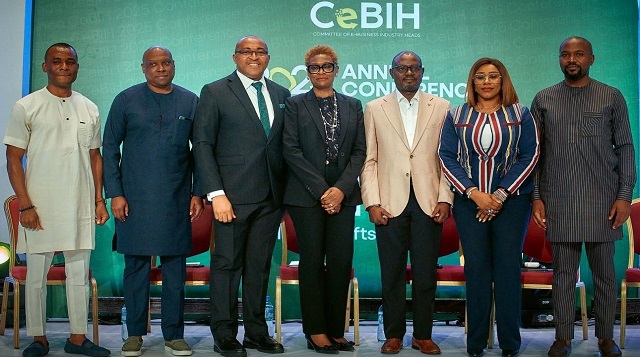
PalmPay, Nigeria’s leading digital banking platform, has renewed its commitment to deepening financial inclusion across the country. At the CeBIH Annual Conference 2025, themed “Reimagining Financial Inclusion through Cultural Shifts in Consumer Credit,” PalmPay’s Managing Director, Chika Nwosu, urged industry players to deepen financial inclusion by embracing community-aligned solutions and customer-centric innovations that can better serve Nigeria’s underserved and unbanked populations.

Speaking during a panel session titled “Social Inclusion, A Veritable Tool for Financial Inclusion,” Chika Nwosu joined other industry leaders to share insights on strengthening participation among women, rural dwellers, low-income earners, and other financially excluded groups.
Chika Nwosu highlighted PalmPay’s commitment to inclusive finance through its 500,000-strong agent network, which enables seamless cash-in/cash-out services for unbanked users across Nigeria. He also emphasised the importance of PalmPay’s USSD platform, 861#, which allows users with basic phones or limited internet access to perform essential financial transactions.
“Financial inclusion goes beyond access; it must be equitable and tailored to real-life needs,” Chika Nwosu said. He shared how PalmPay leverages behavioural insights to design impactful services, including affordable health insurance, reliable bill payments, merchant solutions, and automated savings features that support financial discipline among users.
The session further examined the role of grassroots agents and community touchpoints in driving last-mile adoption. Chika Nwosu noted that PalmPay’s widespread community presence continues to build trust and encourage excluded populations to embrace digital financial tools.
The session was moderated by Ronke Kuye of the CeBIH Advisory Council and featured representatives from E-Doc Online, SmartCash Payment Service Bank, SANEF, and EFINA.
PalmPay reaffirmed its commitment to driving accessible, secure, and inclusive financial services for all Nigerians. PalmPay is a leading digital banking platform driving financial inclusion and economic empowerment in underserved emerging markets. Through its secure, user-friendly, and inclusive suite of financial services, PalmPay empowers individuals and businesses with tools to manage and grow their money.
PalmPay offers a comprehensive range of products, including mobile payments, savings, and micro-insurance via its app and mobile money agent network.
Since launching in Nigeria in 2019 under a Mobile Money Operator license, the platform has grown to over 35 million app users. PalmPay has operations in Nigeria, Ghana, Tanzania, and Bangladesh.

NCC Blocks Piracy Sites as Nollywood Faces Rising Digital Theft

Minister Claims Bandits Exploit Poor Network, Bounce Calls Off Multiple Towers

FIRS says MOU with DGFIP Won’t Compromise Nigeria Tax Data Sovereignty

Top Nigerian Startups Secure Funding Boost @ iHatch Demo Day Awards

Four Must-Watch African Films Debut Free on Glo TV

Kaspersky Introduces Cyber Pathways to Support Career Development in Cybersecurity

Hackers Breach Phones of Dangote and Otedola, Demand Ransom

Nigeria Records Highest Weekly Cyberattacks in Africa — Report

Banks Lost N3.3Bn to Fraud in Q1 of 2025 – FITC

Cyber Tsunami Hits Nigeria as Breaches Surge 1,047%, esentry Q3 Report Reveals



 Telecom2 days ago
Minister Claims Bandits Exploit Poor Network, Bounce Calls Off Multiple Towers
 E-Financial2 days ago
FIRS says MOU with DGFIP Won’t Compromise Nigeria Tax Data Sovereignty

 News3 days ago
FRC, ICPC Seal Anti-corruption Alliance

 Telecom3 days ago
MoMo PSB Brings Relief to UNILAG Students with Ultra-Cheap Bus Fares

 News3 days ago
Debt Rises in AI Data Centre Boom
 General News2 days ago
Top Nigerian Startups Secure Funding Boost @ iHatch Demo Day Awards

 Telecom2 days ago
Google.org Backs CyberSafe’s Resilio Africa to Shield 2m People from Cyber Threats

 Telecom2 days ago
CBN, NCC to Launch Short Code for Swift Consumer Complaint Resolution