

General News
TLcom Secures First Close of $150mn Pan-African Tech Fund

TLcom, the Africa-focused venture capital firm, on Thursday announced a first close of $70mn for its $150mn Africa focused tech fund, firmly positioning the investor to become the largest independent VC firm fully dedicated to the continent.

With a first close in line with the total size of its TIDE Africa Fund closed in 2020, TLcom’s second fund sees participation from Allianz, the world’s largest insurance company, through AfricaGrow, its joint venture with DEG Impact (German Investment Corporation), as well as a host of new and returning investors including Bertelsmann, King Philanthropies, the TLcom team and FBNQuest from the private sector, and major DFIs such as CDC Group (the UK’s development finance institution), IFC, Proparco and Swedfund. A second close of the fund is expected later in 2022.
With its new fund, TLcom will expand its existing focus on fast-growth, tech-enabled African startups to Egypt, as well as strengthen its long-standing presence across East and West Africa.
With ticket sizes ranging from $500,000 – $15mn, TLcom expects to add an additional 20 early-stage startups to its portfolio with an emphasis on Seed and Series A stages and will target entrepreneurs tackling some of the continent’s most complex challenges in sectors including fintech, mobility, agriculture, healthcare, education and ecommerce.
Speaking on the launch of the new fund, Maurizio Caio, Nairobi-based Founder and Managing Partner at TLcom, says, “Since the closing of our previous fund, African tech has secured more high-value financing rounds, exits and M&As than ever before and this is only just the beginning.
“It is becoming increasingly evident that our sector has broken into a new era of maturity driven by very strong business fundamentals that African founders are demonstrating not only in the fintech space, but across a huge number of the continent’s largely underserved markets.”
“As we partner with some of the world’s leading global investors for our new fund, this is not only an endorsement of the massive value generation upside on the continent, but also of our proven track record in identifying and supporting entrepreneurs successfully winning and redefining Africa’s key verticals.
“In order to contribute to unlocking the next phase of Africa’s huge economic upside, we’ll be mobilizing our new fund to strengthen our partnership with African founders, with a special emphasis on female entrepreneurs, as well as our role as the leading local partner of choice for global VCs increasingly looking at Africa.”
The entrepreneurs supported by the TIDE Africa Fund have amassed huge traction in recent years with total revenues across its portfolio growing 3x since investment, over 2,300 jobs created and significant up-rounds secured with participation from leading global investors including Softbank, Owl Ventures and Index Ventures.
To-date, TLcom’s portfolio companies have raised more than half a billion dollars of capital in addition to funding issued by the TIDE Africa Fund and on average, new investments secured from these startups were priced at 5x the valuation of the initial investment received from TLcom. In 2021, the investor also announced the first unicorn in its portfolio following Andela’s $200mn Series E funding at a valuation of $1.5bn.
Abhinav Sinha, Director and Head of Technology and Telecom at CDC (soon to become British International Investment (BII)), says “We are excited to expand our partnership with TLcom.
“The fund’s focus on business fundamentals coupled with deep understanding of local context has been instrumental in identifying market shaping businesses and innovative entrepreneurs in Africa.
“We are confident that our continued relationship will further amplify TLcom’s ambitions to accelerate impact to consumers and businesses across Africa’s diverse markets.”
Martin Ewald, Lead Portfolio Manager Impact Investments, AfricaGrow/Allianz Global Investors, adds “One thing is clear to those who are close to the African VC market: it will grow.
“We at AfricaGrow believe much more is possible in terms of capital influx into the continent especially in the VC space.
“There is considerable upside for everyone if investment activities accelerate even more: African businesses can boost productivity, gain in terms of competitiveness and technological edge and tens of millions more Africans could gain stable employment while generating returns for investors.”
Launched in 1999, TLcom currently has in excess of $350mn worth of funds under management across primary and secondary funds and boasts one of the leading portfolios in African tech featuring 12 startups including Andela, Ajua, Autochek, Ilara Health, Kobo360, Okra, Pula, Seamless HR, Shara, Terragon Group, Twiga Foods and uLesson.
The company’s highly experienced and growing team – which is also 50% female at a senior leadership level – consists of Founder and Managing Partner Maurizio Caio based in Kenya, Senior Partner Dr. Omobola Johnson based in Nigeria, and Partners Andreata Muforo in Kenya, and Ido Sum in the UK. With its offices based in Kenya, Nigeria as well as the UK, TLcom invests across all stages of the venture capital cycle and manages a broad portfolio of tech-enabled startups addressing a range of sectors including agriculture, education, data analytics and logistics.
Ijeoma Agboti, Managing Director at FBNQuest Funds, closes “FBNQuest Funds is pleased to have participated in the first close of TLcom’s 2nd edition pan-African Tech Fund (TIDE Africa Fund II). This follows our first close commitment to the manager’s maiden fund (TIDE Africa Fund I).
“Our decision to back TLcom on its second fund was based on the fund manager’s demonstrated track record of investing in high growth tech companies with strong business fundamentals and implementing value creation strategies that improve the operations and profitability of these companies.
“We remain confident that TLcom is well-positioned to continue to deliver on our shared objective to provide capital, the required operational support and access to international partnerships to technology companies in the Africa region through the TIDE Africa Fund II.
“At FBNQuest Funds, we recognize the transformational role that technology must play in narrowing the gap between industries in Africa and the rest of the world, and we are keen to play a pivotal role in enabling this growth.”


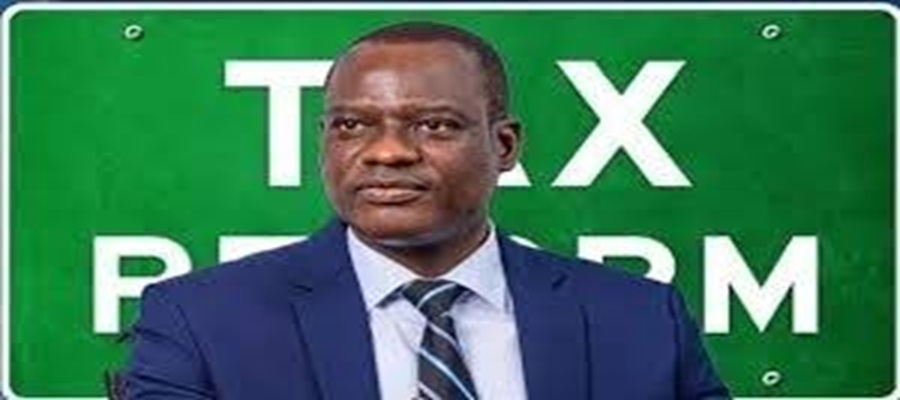
Taiwo Oyedele, Chairman of the Presidential Fiscal Policy and Tax Reforms Committee, has cautioned that failure to implement Nigeria’s new tax laws by January 1, 2026, would leave the vast majority of workers and businesses at a disadvantage.

Taiwo Oyedele
Speaking on Channels Television’s The Morning Brief, Oyedele said postponing the reforms would mean that “the bottom 98 per cent of workers remain overtaxed,” while businesses continue to grapple with multiple taxation and miss out on exemptions.
He added that small and unprofitable enterprises would still be subject to minimum taxes, and hidden VAT charges would keep driving up the cost of essentials such as food, healthcare, and education.
His comments come amid calls by former Vice President Atiku Abubakar, Labour Party’s 2023 presidential candidate Peter Obi, and several civil society groups for a suspension of the reforms. Oyedele argued that rather than halting implementation, specific areas of concern should be identified and corrected.
“So, we need to be clear about what we are asking for,” he said. “Even if it is established that there have been substantial alterations to what the National Assembly passed, my view will be to identify those provisions… and go ahead to implement the law as passed by the NASS, while you address the issues as to how they got in there in the first place.”
Oyedele acknowledged that even the version passed by lawmakers contained sections requiring amendment, citing issues with referencing and definitions.
He also addressed controversy over alleged discrepancies between the gazetted laws and those approved by the National Assembly, noting that without access to the officially harmonised bills certified by the clerk, it was difficult to determine differences.
He pointed to Section 41(8), which initially appeared to require a 20 per cent deposit but was later excluded from the final version, stressing that some draft materials circulating in the media did not originate from the House committee. “I think we should allow them do the investigation,” he said.
President Bola Tinubu has already signed the four tax reform bills into law, describing them as the most significant overhaul of Nigeria’s tax system in decades.
The reforms — the Nigeria Tax Act, Nigeria Tax Administration Act, Nigeria Revenue Service (Establishment) Act, and Joint Revenue Board (Establishment) Act — are scheduled to take effect on January 1, 2026, under a unified Nigeria Revenue Service.

Banks across the country have raised fresh warnings to customers over the rising risk of digital fraud linked to the use of public Wi-Fi networks for banking and payment transactions, particularly during the festive season when electronic spending typically surges.

Wi-Fi
In customer advisories issued ahead of Christmas and New Year celebrations, banks cautioned that fraudsters are increasingly exploiting unsecured public internet networks in places such as airports, hotels, shopping malls and restaurants to gain unauthorised access to bank accounts.
Access Bank, one of Nigeria’s largest banks, over the weekend, via emails, alerted customers that the holiday period remains a prime window for cybercriminals seeking to harvest sensitive financial information through compromised networks.
“The festive season is here and there is no better time to keep your account safe. Please do not share your PIN, OTP, CVV, or full card number with anyone no matter how tempting the offer is. Verify transaction alerts via the Accessmore app and avoid using public Wi-fi for banking transactions”, the bank stated.
According to cybersecurity experts, public Wi-Fi networks can allow attackers to deploy techniques such as “man-in-the-middle” attacks, where fraudsters intercept communications between users and banking platforms, potentially stealing login credentials or transaction details.
Nigeria’s banking sector has continued to grapple with rising digital fraud as the adoption of mobile banking, instant payments and card transactions accelerates. Industry data from the Nigeria Inter-Bank Settlement System (NIBSS) show that fraud losses across digital payment channels have remained in the tens of billions of naira annually, with spikes typically recorded during peak spending periods such as year-end festivities.
Banks say the growing sophistication of fraud schemes has made customer awareness a critical line of defence, especially as criminals increasingly target behavioural lapses rather than technical loopholes.
Access Bank advised customers to verify all transaction alerts through its AccessMore app and to act swiftly if suspicious activity is detected. “Block your account immediately by dialing *901*911# or chat with us via the LiveChat icon on AccessMore if you suspect your account has been compromised,” it said.
Other banks are also reinforcing similar messages, urging customers to rely on secure mobile data or trusted private networks for financial transactions, while avoiding links, offers or messages that promise unusually high returns or urgent payment requests.
Analysts note that while banks have invested heavily in cybersecurity infrastructure, fraud prevention remains a shared responsibility between financial institutions and customers.
The Central Bank of Nigeria (CBN) has continually stressed that there was a need for Fintech innovation, collaboration and trust as it will shape Nigeria’s digital financial future, while insisting on regulatory compliance among Fintech players.
Its Governor, Olayemi Cardoso, while speaking during a keynote address at the opening ceremony of the ongoing Nigeria Fintech Week 2025 in Lagos, themed: ‘The Fintech Ecosystem Symphony: Orchestrating Nigeria’s Digital Future’, organised by Fintech Association of Nigeria (FintechNGR), explained that the Nigerian Fintech ecosystem would require harmony between innovators and regulators, between inclusion and security, and between competition and collaboration, adding that only through such balance can Nigeria orchestrate a future that advances innovation, strengthens trust, and enhances financial inclusion.
As digital payments continue to dominate Nigeria’s retail and commercial transactions, banks say vigilance will be key to preventing festive cheer from turning into financial loss. For customers, banks stress that caution, verification and restraint, especially on unsecured networks, remain the most effective safeguards against fraud.
By Tim Akano
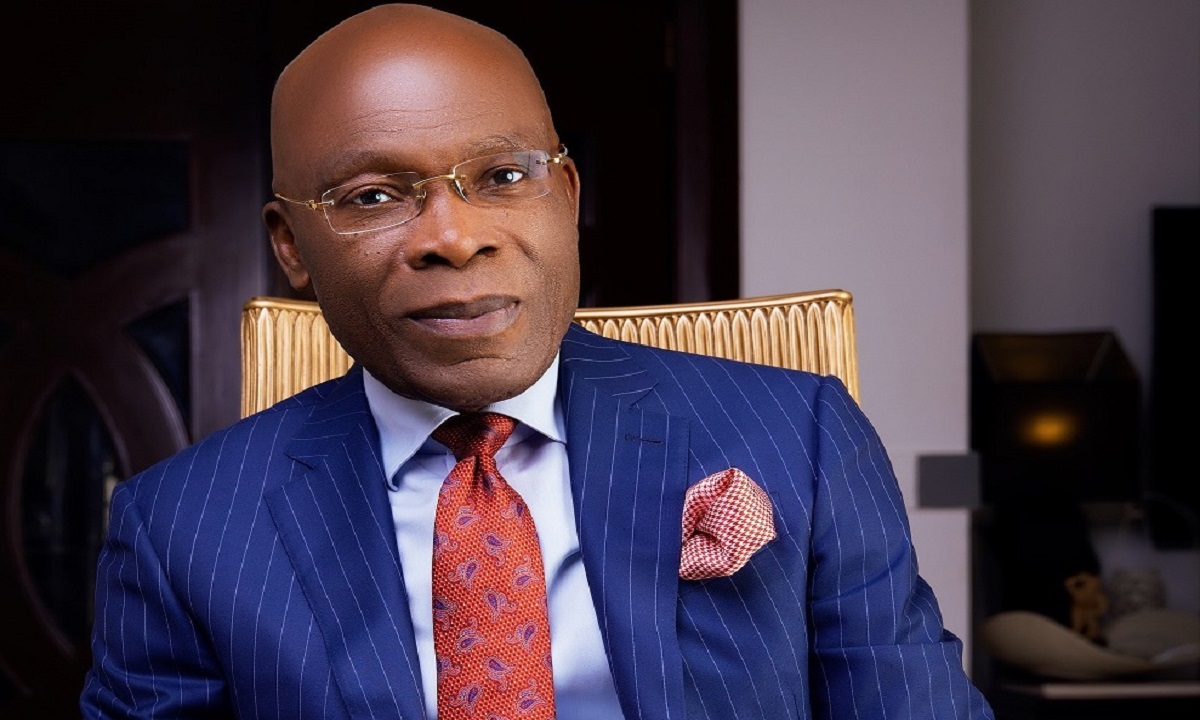
Leo Stan Ekeh (LSE) is an extraordinary human being. He is extremely hardworking, hugely brave, and massively intelligent. He is a shrewd businessman but with a cathedral-size heart of butterfly

Leo Stan Ekeh
I’m a product of LSE’s generosity. But not only me, I am close enough to know. We are uncountable.
I was always with him after office hours in his office twenty years ago when he was constructing a church in his place of birth. He was so committed to details and beauty that when the church was roofed and he went for inspection and discovered some misalignment, he instructed the contractor to remove the roof and redo it, without minding the extra cost coming from his pocket.
There was this physically challenged fellow that LSE bought a car for, including a driver to make life easier for her.
During one of his birthday celebrations, he told me, Tim, I am not inviting my friends for any birthday party this year, all the money I would have used in buying expensive wine, I am donating everything to charity
LSE & I
He actually looked for me when I started New Horizons. He read my interview in the Vanguard news paper and asked his staff to look for me.
Prayer:
May each of us receive a telephone call before the end of 2025 that will change our life’s trajectory for good for ever in Jesus name, Amen.
I did.!
Our conversation on that fateful Friday went like this:
LSE: Tim, I read your interview in the newspaper. I would like us to meet.
Tim: You are our LEADER in the Technology ecosystem, Sir.
I can come to your house tomorrow Saturday morning for a breakfast.
LSE: Tim, that’s good, I will be expecting you by 8am tomorrow in my house.
By 8am the following day, I was in his massive, intimidating house.
As I entered the premises I said a simple prayer: The God Almighty who is blessing LSE, please Daddy God be kind to me also in my entrepreneurship journey Amen.
That day the breakfast meeting went well. He wanted to see the man behind the ambitious vision of transforming the ICT education in Nigeria.
He saw tomorrow!
1 LSE First Intervention: Two years after I started my company, New Horizons, I ran out of cash, even to pay salary was a prayer item every 30th of the month. That was May, 2007 it remained just 72 hours for Heaven to fall on my head, metaphorically speaking, that is!
I needed N10M to stop HEAVEN FROM CRASHING ON MY HEAD!
Banks in Nigeria are irrelevant to Start-ups, except and until you START WALKING, Banks will not come to your assistance in Nigeria.
It is O.Y.O (On Your Own) for every Start-up. If you don’t have God 100% on your side, don’t dabble into entrepreneurship in Nigeria!
This is why over 80% of Start-ups failed in Nigeria. In America, it is about 50%.
LSE was in Abuja on this particular Thursday. I called him and requested to see him. He told me to come.
Our conversation went like this:
LSE: Tim, I know you are keeping well.
Tim: My chairman, I am strong in faith, but in reality, heaven is hot on my side o! I need help, Chairman.
LSE: What is the matter, Tim?
Tim: I need N10M soft loan to keep afloat. It is urgent, critical and time- bound.
LSE ok, Tim, see me on Monday (that meeting took place on a Thursday).
Tim: My chairman, I am not exaggerating the criticality of my situation. by Monday it would be too late because Heaven would crash on my head in another 72 hours without the N10M! And it would be all over.
LSE adjusted himself, he breathed in , he looked me straight in the eyes. I wouldn’t know what LSE saw in my eyes that day.
But he stood up, went to the inner room and he came out with his cheque book. He gave me an Access Bank cheque for N10M, which I later refunded 3 months later without interest.
I survived, heaven didn’t fall that day, glory be to God and thanks to LSE.
LSE intervention 2:
This time we had grown, having survived the ABIKU YEARS (The first 5 years of Start-up are the ABIKU YEARS, years of premature, sudden death. If you survive the first 5 years, your chances of living to celebrate your 20 years in business are bright). We did, all gratitude to God.
I got a business that required huge capital to execute- very big money, which was beyond my capacity.
I went to my destiny- helper again. He is never tired of seeing me. He picks my calls on the first ring. But I don’t abuse the access too. No frivolous conversations. No irrelevant calls. Every call is about matter and mission critical
This particular day LSE was looking extremely tired, having over flogged his body.
He told me he had been sleeping in the office for about 3 days, busy putting his papers together to enable him close a massive business deal, which he eventually got, after fighting like a lion whose cub was taken by a lone leopard!
LSE overwhelmed every opposition. He fought like Mohammed Alli, the world’s greatest boxer of all time. LSE won.
And that changed everything for him, too, forever. Fortune favours the Brave
Our conversation that day went like this:
LSE: Tim, congrats you are doing well, I can see. Indeed I instructed all my staff to make sure they read any article you published (“I felt flattered”).
Tim: Chairman, I need your help, KONGA is not ready to give me the products I needed on credit and I don’t have cash to pay and the client will not pay me until after 9 months.
Tough one, indeed.
LSE: Tim, I will be honest with you, there is no way KONGA would give you products worth N500M (10 years ago money!) on credit.
Indeed, we held a meeting on Monday over your matter, the resolution of the Zinox Group is that you must look for cash before you can get the products. Let me tell you, my staff made me to sign-off on our resolution that as the Chairman of Zinox , I, LSE will not go behind to do the opposite of what we all agreed to, and I signed. Tim, I am sorry, my hands are tied!
As of that time, some of the young people LSE helped disappointed him badly. So bad, some souls are ungrateful.
Tim: Chairman, I know some of the people you helped even went to the extent of wrongfully blackmailing you in the media. I know that for a fact.
But Chairman, I am different. I am Tim Akano, I won’t disappoint you.
I will remain eternally grateful if you can still think out- of -the box and help me out.
I added: Chairman, you recall you were the one who looked for me that you would give me a helping hand in life.
I think my last statement touched him.
LSE Tim, I will give you my personal cheque. Here is the cheque for you, take it to KONGA and pay for your goods to meet your deadline.
Tim On getting to KONGA, from my steps and tone, the staff knew something positive had happened.
I confidently presented my cheque to Loretta & Co, the lady managing our account in KONGA then
They were shell shocked that God pulled it through for me another time, using Leo Stan Ekeh.
There were many more positive interventions, which I will reserve for my memoir.
Lessons: The reason behind the rise and rise of Leo Stan Ekeh (LSE) has to do partly because of his massive generosity, most of them are done silently.
Yes, LSE is a shrewd businessman, but he has a heart of a butterfly.
2 LSE is unconquerable and himself and his lineage will remain so because of several lives he has impacted positively
3 We are all products of people’s generosity. No one is a self-made man. In my own corner, through the TIM AKANO FOUNDATION, I am giving back in thousands folds all the kindness I am enjoying from people like LSE & others. I’m not withholding any kindness from people who need it when it’s within my capacity. God saw my heart, too, that when he must have helped me to stand, I will light thousands of candles.
It was William Shakespeare who admonished his followers to tell him all the good things they wanted to tell him while he was still alive because tributes written in beautiful prose means nothing to a dead person.
I congratulate LSE children, they have a great father in and his legendary generosity will always speak for them up to the 4th generation., as the Holy Bible said. LSE children should be proud of their father, he is a Lion, an Eagle and a butterfly, (LEB) all together at the same time.
@LSE: Sir, if you manage to read this short public appreciation, which I was inspired to write in a wedding event (the couple is taking over one hour to come out, instead of joining people who are anxious, I decided to use my idle time to pay you this tribute today), I want you to feel proud of yourself; what you have achieved will take an average person 10 lifetimes to achieve.
Your positive numerous interventions in my entrepreneurship journey have germinated and I am also touching lives- like you- in thousands across Africa, not only in Nigeria, especially with regards to Youth Empowerment.
I am eternally grateful, my chairman, my destiny-helper.
My prayer for you my Chairman, LSE: The Lion, the Eagle, the Butterfly (LEB) is for God to keep you continuously in sound, divine health, peace and happiness- that you will still remain strong at 120 years of age like the Biblical Moses who miraculously escaped physical depreciation in his eyes, strength and mental magnitude.🙏
Gratitude!
Gratitude!!
Gratitude!!!

AfDB Group Mobilises Global Private Capital to Close Africa’s Financing Gap

FIRS says NIN, CAC Numbers to Serve as Tax IDs from 2026

Oyedele Dismisses Claims Bank Accounts Without TIN Will Be Frozen

Fidelity Bank Bolsters Ikoyi Fire Station with Hoses, Pumps for Safer Communities

Amazon Blocks 1,800 North Koreans From Job Applications

Nigeria Records Highest Weekly Cyberattacks in Africa — Report

Cyber Tsunami Hits Nigeria as Breaches Surge 1,047%, esentry Q3 Report Reveals

Minister Claims Bandits Exploit Poor Network, Bounce Calls Off Multiple Towers

GenAI Adoption Among African workers Outpace Global Peers

Jumia’s Data Shows Nigerians Turning to Digital Retail to Navigate Inflation Pressures




 News2 days ago
US Okays $2.1Bn for Christian Healthcare in Nigeria

 General News2 days ago
The Mood Market to Light Up Lagos with a Rooftop Gifting, Food & Lifestyle Fair this Christmas

 News2 days ago
SERAP Asks Tinubu to Release CTC of Tax Bill

 Broadcasting2 days ago
Tim Akano Recounts 20-Year Growth, Media Support at NITRA End-of-Year Meet

 E-Financial2 days ago
Sterling Bank, Water.org, Sterling One Foundation Partner on WASH Loan for Millions

 General News2 days ago
Leo Stan Ekeh: A “Rare Avis”, an Unconquerable Entrepreneur

 General News2 days ago
FCCPC Forces Ikeja Electric Into Compliance, Unseals Headquarters After Rights Breach

 General News2 days ago
NITDA Wins Triple SERVICOM Honours for Citizen-Centred Service Delivery