

Telecom
13 New Things Google Launched at I/O 2025

Across Africa, more and more people are finding themselves interacting with artificial intelligence every day, perhaps without even realizing it. From the personalized recommendations that pop up on their phones to the smart assistants helping them manage their schedules, AI is quietly becoming an indispensable part of modern life.

This widespread adoption underscores a global trend: AI is evolving from a complex theoretical concept into practical, helpful tools that solve real-world problems and enhance our capabilities.
It’s against this backdrop that the annual Google I/O conference takes center stage. Google I/O is Google’s flagship event featuring the latest announcements and updates in technology. It’s Google’s moment to reveal the future they’re building, pulling back the curtain on their newest products, technologies, and, most significantly this year, their breakthroughs in AI. This is where ambitious research prototypes often make their public debut, demonstrating how AI is moving from the lab into everyday tools designed to enrich our lives.
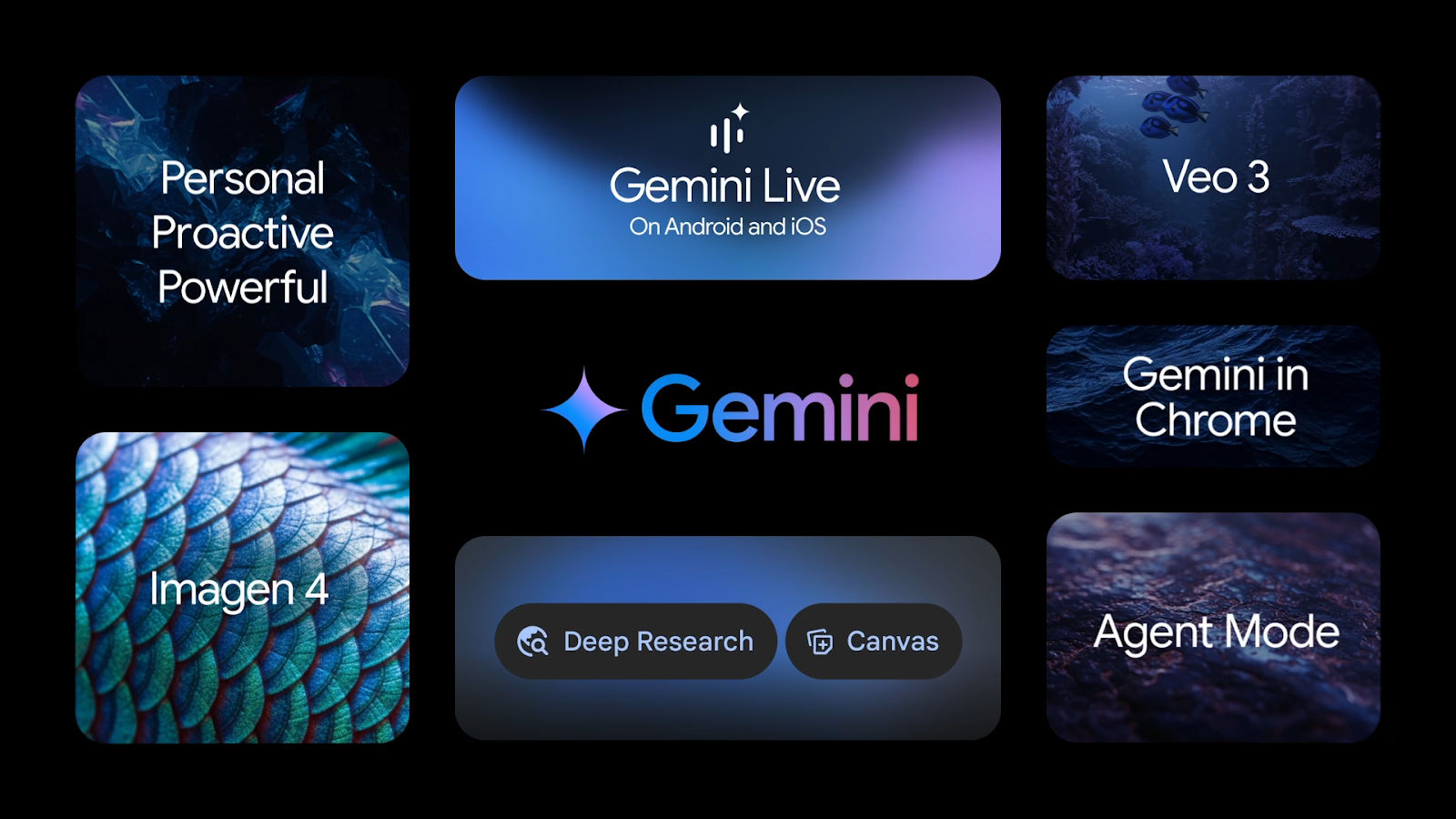
This year’s proceedings highlighted the ongoing advancements in Google’s AI capabilities, with its most advanced models, Gemini, being extensively integrated across its product offerings and research initiatives. A central theme observed was the development of artificial intelligence intended to be not just powerful but also beneficial, designed to be more intelligent, more capable of taking action on behalf of users (referred to as ‘agentic’), and more uniquely tailored to individual needs and preferences (personalised). Building on previous developments, Gemini has now been incorporated into every one of Google’s 15 products that collectively serve over half a billion users. The innovations unveiled at I/O 2025 suggest a focus on expanding the scope of AI applications and making artificial intelligence broadly more useful and intuitive for a wider audience.
Here are 13 of the new AI-powered tools, features, and advancements announced at Google I/O 2025 and how they are designed to assist you:

1. Faster and Smarter AI Experiences Enabled with Gemini 2.5
Google’s Gemini 2.5 family of models is being rapidly advanced. Gemini 2.5 Flash has now become Google’s default model, developed to combine remarkable quality with extremely fast response times, thereby offering both speed and efficiency for your daily interactions. For enhanced reasoning and the tackling of complex challenges, an experimental mode called Deep Think is being explored in Gemini 2.5 Pro, utilizing the latest research on cognitive processes. New previews for text-to-speech are also being introduced that support native audio output, including first-of-a-kind multispeaker support for two voices, allowing for more expressive and natural conversations.
2. Cutting-Edge Images Generated with Imagen 4
Imagen 4, described as a frontier-pushing image generation model, was introduced by Google and is now accessible within the Gemini app. The images it produces are richer, with more nuanced colors and fine-grain details, helping your visual ideas be brought to life with striking clarity. Imagen 4 has been significantly improved in its handling of text and typography, making creative choices in font, spacing, and layout, which is a transformative feature for design and content creation. A super fast variant, up to 10x quicker than the previous model, is also slated for release soon, enabling faster iteration on your ideas and boosting your creative workflow.
3. Advanced Video Content Created with Veo 3
Alongside Imagen 4, Veo 3, Google’s state-of-the-art video generation model, was launched. Available today in the Gemini app for Gemini subscribers in the United States, Veo 3 offers improved visual quality, a stronger understanding of physics for more realistic animations, and more intuitive controls, making video creation more accessible than ever. Notably, Veo 3 includes native audio generation capabilities, allowing users to add sound effects and background noise, with dialogue creation coming soon, thereby transforming your video projects.
4. AI for Filmmakers Unleashed with Flow
Built with and for creatives, Flow is a new AI filmmaking tool designed to help users seamlessly create cinematic clips, scenes, and stories with consistency. Custom-designed for Veo and utilizing Gemini models for intuitive prompting, Flow allows users to create story elements like cast, locations, objects, and styles using natural language, simplifying complex filmmaking tasks. Users can also easily integrate their own assets and reference images for consistency across clips, ensuring their creative vision is maintained. Flow is available today for Google AI Pro and Ultra subscribers in the U.S. only.
5. An AI-Powered Google Search Experience Introduced with AI Mode
Rolling out to everyone in the U.S. starting today, AI Mode in Search is designed as Google’s most powerful AI search experience. It features advanced reasoning and multimodality, allowing for deeper exploration via follow-up questions and helpful links, providing more comprehensive answers. A custom version of Gemini 2.5, Google’s most intelligent model, is being incorporated into Search for both AI Mode and AI Overviews in the U.S. this week. Over time, many of AI Mode’s cutting-edge features will be directly integrated into the core Search experience, enhancing everyday searches.
6. Experience the power of AI with Gemini in Chrome
Starting tomorrow, Gemini in Chrome will begin rolling out on desktop to Google AI Pro and Google AI Ultra subscribers in the US who use English as their main Chrome language on Windows and macOS. The first version allows you to easily ask Gemini to clarify complex information on any webpage you are reading or summarise information. In the future, Gemini will be able to work across multiple tabs and navigate websites on your behalf.
7. Real-time Visual Assistance from Search (Search Live) Provided
Bringing capabilities first explored in Project Astra into Search, Search Live allows users in the U.S. to engage in a back-and-forth conversation with Search about what they see in real-time using their camera. This means Search can function as a learning partner, explaining concepts or offering suggestions based on visual input, with links to other resources, making learning and problem-solving more intuitive. Search Live is expected to be released to AI Mode in Labs this summer.
8. Task Accomplishment Facilitated by AI Mode
Applying the concept of “agentic” AI, Google is integrating the capabilities of Project Mariner into AI Mode in the U.S. This is designed to help users save time by performing tasks on their behalf, such as purchasing tickets for events, making restaurant reservations, or booking local appointments. AI Mode will scan across sites, analyze options, and handle tedious form-filling, presenting options that meet your criteria while you complete the purchase on your preferred site, ensuring control is maintained. These agentic capabilities are coming to AI Mode in Labs this summer.
9. Deep Research Capabilities Enhanced with AI Mode
For questions requiring a more thorough response, Deep Search capabilities are coming to AI Mode in Labs this summer. Utilizing an advanced “query fan-out” technique, Deep Search can initiate hundreds of searches, reason across disparate information, and create an expert-level, fully-cited report in just minutes, potentially saving users hours of research and helping to quickly grasp complex topics.
10. Personalized Search Results Delivered
Soon, AI Mode in Labs will offer personalized suggestions based on past searches, making the search experience more relevant. Users can also optionally connect other Google apps, starting with Gmail, to provide personal context for tailored responses, such as restaurant suggestions based on booking history when planning a trip. This feature is always under the user’s control, allowing for connection or disconnection at any time. AI Mode will also be able to analyze complex datasets and create custom charts and graphs for data visualization in sports and finance queries, coming to Labs this summer, aiding in clearer information understanding.
11. Smarter Shopping Experiences in AI Mode Unveiled
The new shopping experience in AI Mode combines Gemini model capabilities with Google’s Shopping Graph to help users browse for inspiration, consider options, and narrow down products more efficiently. This includes a new “try-on” feature allowing users to virtually try on billions of apparel listings by uploading their own image, beginning its rollout to Labs users in the U.S. today, making online shopping more confident. Users can also ask an agentic checkout feature to make purchases with Google Pay when the price is right, with their guidance and oversight. This shopping experience is expected to be available in AI Mode in the U.S. in the coming months.
12. The Helpful Gemini App Enhanced
Google’s objective for the Gemini app is for it to become the most helpful universal AI assistant. This is being enhanced by integrating capabilities first explored in Project Astra, such as video understanding and improved memory, making interactions with Gemini more natural and productive. Gemini Live in the app will soon be integrated with Google services like Maps, Calendar, Tasks, and Keep for deeper daily assistance, helping to manage daily life more seamlessly. The ability to use your camera or share your screen in Gemini Live is being rolled out to iOS users starting today, in addition to Android. More Project Astra live capabilities are also coming soon to Gemini Live.
13. Complex Tasks Delegated with Agent Mode
For Google AI Ultra subscribers, an experimental version of Agent Mode will be introduced in the Gemini app soon. This new capability allows users to delegate complex planning and tasks, seamlessly combining features like live web Browse, in-depth research, and integrations with Google apps to manage multi-step tasks from start to finish with minimal oversight, freeing up time and mental energy.


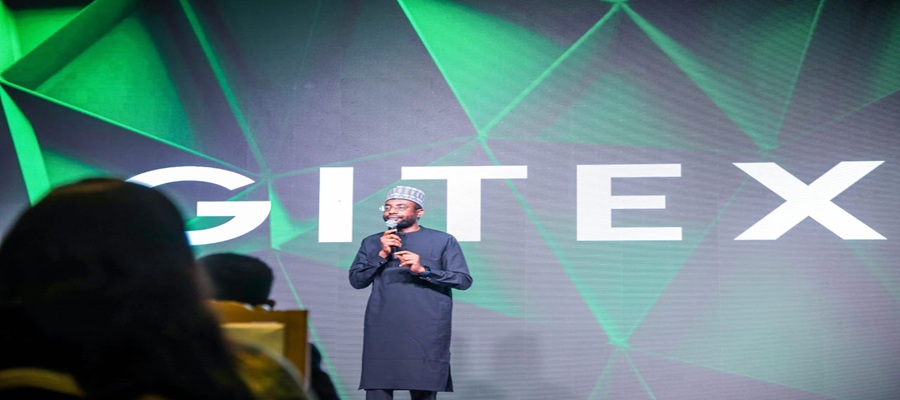
Nigeria is strengthening its position as a leading digital economy in Africa as it prepares to host the second edition of GITEX Nigeria, against projections that the continent’s artificial intelligence (AI) economy could generate up to $1 trillion in economic value by 2035.

GITEX Nigeria
GITEX Nigeria, described as West Africa’s largest technology, AI and startup event, is scheduled to hold in Abuja and Lagos from Aug. 31 to Sept. 3, under the patronage of President Bola Tinubu.
The event is supported by the Federal Ministry of Communications, Innovation and Digital Economy in collaboration with the National Information Technology Development Agency (NITDA), endorsed by the Lagos State Government and organised by KAOUN International.
With the theme, “Beyond Connectivity: The Bridge to Sovereign Innovation,” the 2026 edition is expected to bring together global technology companies, investors, policymakers, regulators, startups and other stakeholders to advance Nigeria’s digital transformation agenda.
According to the organisers, the event will focus on strengthening digital resilience, scaling AI infrastructure, attracting strategic investments and building partnerships to support digital sovereignty across Nigeria and West Africa.
Nigeria’s progress in digital skills development is expected to feature prominently at the event, with the Federal Government’s 3 Million Technical Talent (3MTT) programme highlighted as a major intervention.
The programme has recorded 1.87 million registrations across all 774 local government areas, while more than 135,000 Nigerians have been trained through three cohorts.
The programme has also extended learning opportunities to more than 300,000 people through community resources and created 15,000 job and opportunity pathways, according to figures released by the organisers.
Another key initiative, Project BRIDGE, is aimed at expanding Nigeria’s national ICT backbone and improving connectivity in underserved communities.
The project is expected to create up to 20,000 direct jobs and more than 150,000 indirect jobs, train 5,000 Nigerian youths, raise internet penetration above 70 per cent and extend high-speed connectivity to millions of households, businesses, schools and hospitality establishments.
Dr Bosun Tijani, Minister of Communications, Innovation and Digital Economy, said Nigeria’s objective was to build the foundations for digital sovereignty and a globally competitive AI-powered economy.
“Building on the momentum forged through the implementation of Project BRIDGE, our national blueprint for expanding digital infrastructure and connecting communities across Nigeria, our aspiration ahead of this year’s edition is clear: to solidify the foundations Africa needs for digital sovereignty, technological self-determination, and a globally competitive AI-powered economy,” Tijani said.
He said Nigeria was seeking to promote equitable access, accelerate cross-continental progress and position the country as a producer and exporter of digital technologies and AI solutions.
The GITEX Nigeria Government Leadership and AI Summit will open in Abuja on Aug. 31, bringing together ministers, governors and regulators to discuss digital public infrastructure and other issues shaping West Africa’s digital economy.
The GITEX Nigeria Tech Expo and Future Economy Conference, as well as the Startup Festival, will also return for the second consecutive year.
A new component, FDX Nigeria by GITEX, will focus on finance and digital asset exchange, with the organisers describing it as a platform designed to promote financial inclusion and connect emerging technology with global capital.
Gov. Babajide Sanwo-Olu of Lagos State said the state remained central to Africa’s digital transformation, noting its role in attracting talent, capital and innovation.
He said hosting GITEX Nigeria would further support Lagos’ ambition of becoming a smarter, more connected and globally competitive economy.
Kashifu Inuwa Abdullahi, Director-General of NITDA, said Nigeria’s digital future would depend not only on technology adoption but also on resilience, trust and effective governance frameworks.
“GITEX NIGERIA seamlessly complements this mandate, creating a unique environment for the dialogue needed to accelerate responsible AI adoption, develop a secure digital economy, and unlock new opportunities for innovation and economic growth,” Abdullahi said.
He said the expertise, investment and partnerships generated through the event would contribute to building an AI ecosystem that was secure, inclusive and capable of supporting Nigeria and West Africa’s long-term competitiveness.
The organisers said Nigeria’s National AI Strategy, 3MTT programme and Project BRIDGE were among initiatives strengthening the country’s capacity in talent development, digital infrastructure, investment attraction and responsible AI adoption.
They said GITEX Nigeria would provide an avenue for global stakeholders to establish partnerships and develop solutions capable of accelerating the region’s digital transformation.
Trixie LohMirmand, CEO of GITEX, said the event was intended to demonstrate that West Africa was ready to convert technological ambition into economic growth, resilience and global competitiveness.
She said GITEX Nigeria would facilitate strategic conversations and partnerships aimed at strengthening regional competitiveness and unlocking scalable growth across Nigeria and West Africa.

Nigerian Communications Commission (NCC) and the Enugu State Government have signed an agreement for the operational lease of the NCC Digital Industrial Park and NCC Learning Centre in Enugu.

The agreement was witnessed by Dr Aminu Maida, Executive Vice Chairman and Chief Executive Officer of the NCC, alongside members of the Commission’s Board and Management.
The development is expected to strengthen digital innovation, skills development and technology-driven opportunities in the state.
As part of the engagement, the NCC delegation also visited the Enugu Smart School Initiative, where technology is being integrated into teaching and learning.
The initiative is aimed at equipping young Nigerians with relevant digital skills and preparing them for future opportunities in an increasingly technology-driven economy.
The NCC said it remained committed to supporting initiatives that expand digital inclusion, strengthen innovation and develop the talent required to drive Nigeria’s digital transformation.
The Commission said partnerships with state governments and other stakeholders were critical to creating an enabling environment for digital skills development and technology adoption across the country.


Nigerian Communications Commission (NCC) has directed telecommunications operators to make dedicated budgetary provisions for cybersecurity as part of efforts to strengthen the resilience of Nigeria’s communications infrastructure against the growing wave of cyber threats.

The directive forms part of the Commission’s Cyber Resilience Framework for the Nigerian Communications Sector (CRF-NCS), which introduces new governance, risk management and operational requirements aimed at safeguarding the country’s critical telecommunications infrastructure from increasingly sophisticated cyberattacks.
Under the framework, all licensed telecom operators are expected to establish formal cybersecurity governance structures, dedicate adequate financial resources to cyber resilience programmes, and integrate cybersecurity into their enterprise-wide risk management processes.
The Commission said operators must ensure cybersecurity investments are no longer treated as optional operational expenses but as strategic business priorities necessary to protect network infrastructure, customer information and the country’s digital economy.
According to the NCC, licensees are expected to allocate sufficient budgets to support cyber risk assessments, security technologies, staff training, incident response capabilities, continuous monitoring and compliance with regulatory requirements.
The framework also requires operators to designate senior executives responsible for cybersecurity oversight.
At the same time, boards of directors are expected to provide strategic direction and ensure adequate funding for cyber resilience initiatives.
Speaking on the need for a stronger cybersecurity regime during the unveiling of the framework, Abraham Oshadami, executive commissioner, Technical Services, NCC, said, “Given the increasing digitalisation of services, the rapid growth of data exchange, and the sophisticated nature of modern cyber threats, the need for a robust, adaptive and inclusive cybersecurity framework has become more urgent.”
He added, “Both state and non-state actors are targeting essential sectors—including ours—through coordinated cyber and physical attacks. These attacks frequently target control systems and data integrity, underscoring the critical risks posed to operational technology (OT), especially in our sector.”
“As cyber threats evolve, they endanger not only system performance but also human safety, amplifying the severity and consequences of disruptions to vital communications infrastructure. Cybersecurity now encompasses human safety and must address the real risk to people’s lives when a system is attacked or compromised.”
The Commission further stated that operators are required to develop comprehensive cybersecurity implementation plans, conduct periodic risk assessments, establish business continuity and disaster recovery procedures, and regularly test their cyber defence capabilities.
In addition, the framework makes cyber incident reporting compulsory. Licensees must inform the NCC’s CSIRT of any major cybersecurity breach within four hours of discovery, and provide a thorough post-incident analysis after mitigation is complete.

World Bank Debars United Aviation Services, Owner over Fraudulent Activities

NITDA Introduces Cloud Certification Boost Data Localisation Compliance

Enugu State Approves Land for ITF’s Digital Fabrication Centre

BOI Opens N250Bn Bond Offer to Fund Businesses

Guinness Rewards Consumers with ₦17 Million in First Week of ‘Open for More’ Promo Draw

From Scarcity to Scale: What Africa Can Learn from India’s Agricultural Transformation

BON Establishes Six Ad Hoc Committees to Modernize Broadcasting

EFCC Busts NIS Visa Overstay Racket, Uncovers N700m in an Account

Fact-Check: Elon Musk’s “Tesla Pi Phone” is Internet Rumor

NBC Tasks Broadcasting Stations over 2028 DSO Global Deadline




 E-Financial3 days ago
Access Holdings Deepens Sustainable Finance Impact, Expanding Green Assets to ₦92.14 Billion

 News3 days ago
Ogbaga, Abuja Lawyer to Sue Telcos, DStv over Alleged Unfair Practices

 Telecom3 days ago
MTN Moves Closer to Full IHS Takeover

 Telecom3 days ago
Airtel Nigeria Unveils Hundreds of Retail Shops in Wide Expansion of Customer Touch Points

 News3 days ago
NAICOM Issues New Licences to 43 Recapitalized Insurers

 E-Financial3 days ago
NAICOM Revokes Nigeria Reinsurance’s Licence over Failure to Meet MCR

 E-Financial3 days ago
SEC Begins Full e-Registration for Capital Market Services

 E-Financial3 days ago
TeamApt, Awabah Partner to Bring Micro-Pension Contributions to POS Terminals Nationwide