

General News
Leo Stan @ 70: Blessed and Bruised by Country, Eyes Next Disruption


One a quiet Wednesday, February 22, 1956, in Ubomiri, Mbaitoli, Imo State, the family of Chief and Lolo Ebenezer Ekeh leaped for joy at the birth of Leonard Stanley Nnamdi Ekeh- their second son.

Leonard Stanley Nnamdi Ekeh
His birth was both cosmic, and disruptive as his journey down this 70 years on earth has proven.
Leonard Stanley Nnamdi Ekeh, popularly know as Leo Stan Ekeh or LSE is human by birth but profound, rare and has higher consciousness.
Imbued with deep intuition, intense creativity, and compassionate nature, Leo Stan possesses critical thinking ability.
He has relentless drive to succeed across multiple facets of life. This is a self-made construct driven by his deep spiritual and purposeful living, rather than just mere survival.
Despite the recurring and abrupt reversal of government policies, which leave companies including his hemorrhaging, Leo Stan has remained committed and actively participate in the development and nation-building of Nigeria.
Am one of the lucky people to have known him up close and personal for nearly 30 years.
He has endured lots of back biting and campaigns of calumny from competitors and even betrayals from least expected people.
But his tenacity makes him stand firm on his beliefs regardless of feelings, or circumstances.
He has stumbled in businesses, failed in some ventures; but he always get right up. At one point, he nearly lost his head selling international commodities.
LSE takes every loss with equanimity as a dogged fighter.
A serial entrepreneur and with eyes for great minds, Leo Stan does not just walk through life; he leaves a trail of light, lifting everyone around him with kindness and wisdom. And there are testimonials.
For me, he is a pillar of strength and a beacon of hope. My benefactor.
He is also a benefactor to many. He has a way of making associates feel vital, loved, and valued.
Today is his Platinum Birthday but his roads have not always been paved with gold.
His early life was as ordinary as it can be, LSE attended Holy Ghost College, Owerri for his secondary education.
During his early years, he wanted to own the biggest transport company in Nigeria.
He later went to India for his university education, where he received a Bachelor of Science degree in Economics from Punjab University.
Leo Stan believes that studying in India was a great turning point in his life because he found the economy of India a realistic economy”.
He later also earned an MSc in Risk Management from the University of Nottingham.
At 70, he attained his height by trust in God, determination and CAN DO attitude.
Today, his business opinions and advisory are welcome around the world.
Leo Stan once told me “I saw myself from the beginning even when my parents were alive as an orphan. It drives me.”
He has three brothers and two sisters, His mother was a dietitian, and his father was a nurse
“I come from a lineage of people who served God dedicatedly. I am a miracle child and I remember my mother had always predicted that I would be great. I have siblings but I live my life as if I am the only child of my parents” he said
He believes that technology makes life more exciting and helps improve the lives of people around Nigeria and indeed the world.
His solid prints in the business world is well documented. He has his hands in his hands in several businesses including ICT, e-commerce, broadcasting, oil and gas, media publishing and real estate.
Leo Stan is a man of many firsts: he pioneered a new world of digital economy at a time the country was deeply analogue both in the workplace and in schools.
The Nigerian media industry, from advertising to newspapers, owes him much gratitude for changing their operational processes and methodologies from mundane, medieval analogue to the robust and elegant digital platform.
Within 30 years, he has transformed a start-up that sprouted from a make-shift apartment that also doubled as his home into a digital conglomerate with incursions into oil and gas, entertainment and property.
Leo Stan started Zinox Technologies Limited in 2001 to manufacture computers.
He ensured that at launch Zinox Computers already had the WHQL certification, the first in sub-Saharan Africa, consolidated 5 years later with the attainment of the NIS ISO 2000: 9001 QMS Certification.
In October 2013, the company announced the production of its computer tablet line named Zipad
Task Systems, Technology Distributions Limited, Konga (Africa’s foremost truly composite e-commerce outpost combining offline-online mix in service delivery), Konga Radio, and TD Mobile, to name a few, complete the ensemble of businesses in his thriving conglomerate.
In all his companies, there is a growth pathway for every employee.
He deliberately creates a system that rewards every hardworking and dedicated employee.
From drivers sponsored to universities and returning to the conglomerate as degree holders to persons who joined the organisation as janitors working their way up the corporate ladder, he has brought his humanity to bear on people around him.
Making some lowly staff home-owners and sponsoring indigent students to universities at home and abroad comes to him as a routine.
Just a few days ago, ahead of his 70th birthday, he offered University scholarships to additional 1,000 Nigerian indigent wizkids to study Computer Science in Federal Universities. He is committing about N10 billion to the scholarship scheme.
This is so the country’s private and public sectors have a new generation of tech wizkids to support the economy’s growth.
Recall that his group has trained and retrained over 3000 Nigerians and donated tech centres to over 25 institutions nationwide just to mention a few.
The former alter boy and chorister in his local community Catholic Church at Ubomiri, now a multi-billionaire, has stayed humble.
He draws a distinct line between capitalism and welfarism.
Leo Stan is great man, a leader with unparalleled integrity and a heart of gold.
He has earned over 6o international and local awards over many years of incisive entrepreneurship, was equally singled out and honoured by former President Olusegun Obasanjo on the occasion of Nigeria’s Independence Anniversary on October 1, 2001 with an ICON OF HOPE award as a pride to modern Nigeria and as a model for Nigerian youths.
Again, President Obasanjo honoured him with another national award – the Order of the Federal Republic (OFR) in 2003.
A Fellow of the Nigeria Computer Society, the umbrella body of all computer associations in Nigeria, he was also awarded the pioneer ICT Personality of the Year by this professional body.
In November 2019, Ekeh was honoured by President Muhammadu Buhari with the National Productivity Order of Merit award for his sustained leadership in the area of Information and Communications Technology (ICT).
With over four Doctorate Degrees (Honorary) and fifteen fellowships from recognized institutions and as a former global advisor to Microsoft, as well as Forbes Best of Africa Leading Tech Icon Award his outstanding entrepreneurship.
Leo Stan is Ochiririozuo Ubomiri, Ebekuo Dike, Ideato and Iyi of Mbaitoli



Meta Description: Tired of ad payment failures? Discover the most reliable virtual cards in Nigeria for running Facebook, Google, and TikTok ads without interruptions.
One of the biggest challenges digital marketers face in Nigeria today is finding a payment method that actually works for ad platforms.
Issues like frequent transaction failures, unexpected restrictions, and constantly changing bank policies can interrupt your campaigns at the worst possible time, making it hard to stay consistent.
That’s why many marketers are now turning to virtual cards, which offer a more stable, globally accepted way to handle online payments without the usual stress.
If you’re currently dealing with failed payments or need a more reliable way to run ads, this article will walk you through the most reliable virtual card options in Nigeria and help you choose what works best.
7 Best Virtual Cards You Can Use in Nigeria for Running Ads
Choosing the right virtual card for running ads in Nigeria isn’t just about availability; it’s about transaction success rate, global acceptance, funding speed, fees, and overall reliability.
To make things easier, the table below highlights how Cardtonic, Wallets Africa, CashBuddy, Snappypay, Pouchers, Bitmama, and Flip by Fluidcoins compare across key features that matter for running ads effectively.
| Platform | Best For | Price range | Supported Countries | Notable Features |
| Cardtonic | Reliable ad payments | $1.5-$5 (card creation) | Nigeria, Ghana (2+) | Easy card creation, quick funding, widely accepted |
| Wallets Africa | Basic virtual card use | $2-$5 (est.) | 10+ African countries | wallet + virtual card system |
| CashBuddy | Simple payments | $2.50 | Nigeria (primary) | straightforward card access, bill pay |
| Snappypay | Quick transactions | N/A | Nigeria & select regions | Fast setup, easy online spending |
| Pouchers | Flexible funding | $2 | Nigeria & limited global | Direct wallet to ads support |
| Bitmama | Crypto-based payments | Free issuance | Multiple countries (10+) | crypto funding + global spending |
| Flip by Fluidcoins | Fast crypto payments | $1.30 | Multiple Countries (10+) | Crypto payment focus |
1. Cardtonic:
Cardtonic is often regarded as one of the best virtual cards in Nigeria for running ads because it combines convenience, reliability, and ease of use in a way that suits both individuals and businesses.
When you’re paying for ads on platforms like Facebook, Instagram, Google, or TikTok, one of the biggest concerns is whether your payment method will work smoothly without constant declines or interruptions. That is where Cardtonic comes in, as it gives users access to a virtual dollar card designed for international payments, making it a practical choice for ad spending.

What makes the platform even more appealing is that it also offers contactless cards, which let you make payments quickly and securely without swiping or inserting the card. This feature adds an extra layer of convenience for users who want fast transactions, whether online or at supported payment terminals.
What truly makes Cardtonic stand out is how it brings together accessibility, smooth funding, and reliable international payment support in one place.
So, if you are looking for a reliable platform for ad payments, Cardtonic is one option that clearly deserves a spot on the list.
2. Wallet Africa:
Wallets Africa is meant for users who want more than just a card to pay for ads. It works better as an all-in-one financial platform, which makes it useful for business owners, freelancers, and marketers who like managing payments from one place.

Beyond offering virtual cards, the platform is built around sending money, spending online, and handling digital transactions across Africa, so it feels broader than a tool meant for one single purpose.
That broader structure is really where Wallets Africa plays its role. For someone running ads regularly, it can be convenient to have a platform that supports both wallet functions and card payments instead of jumping between different apps.
It is less about being flashy and more about giving users a practical setup for online spending, especially when you want your ad payments to sit within a wider money management system.
3. Cashbuddy:
CashBuddy feels more like a platform for users who value simplicity and speed. Its offering goes beyond virtual cards into other digital payment services, but the virtual card side is positioned around secure dollar and naira card access for global payments.
That makes it useful for advertisers who want something straightforward for campaign payments without dealing with too much complexity.

Where CashBuddy plays its role best is in accessibility. It fits users who may not need an advanced financial ecosystem but just want a platform that helps them get a working card and handle international payments with less stress.
So while some platforms lean into broader wallet features or multicurrency tools, CashBuddy feels more like the practical option for getting started and keeping things easy to manage.
4. Snappypay:
Snappypay has a slightly different appeal because it presents itself strongly around smooth online payments and virtual dollar cards that can be used across many platforms.

That makes it a natural fit for people who run ads often and do not want a card that feels limited to only one or two use cases. The platform also combines its virtual cards with other digital payment services, which adds to the convenience for users already handling several online expenses at once.
What makes Snappypay useful in this list is that it feels built for everyday digital spending. If Wallets Africa comes across as more ecosystem-driven and CashBuddy feels more basic and direct, Snappypay sits in the middle as the platform for users who want a smoother, more flexible payment experience for ads, subscriptions, and other online transactions without overcomplicating the process.
5. Pouchers:
Pouchers is one of the more ad-friendly options here because it explicitly positions its virtual dollar card for payments on platforms like Meta and for running ads.
That makes its role in this list much clearer. Instead of leaving users to guess whether the card may work for ad spend, the platform directly presents that use case as one of its strengths, which gives it more relevance for marketers and business owners.

Another thing that makes Pouchers different is its multicurrency and stablecoin angle, which gives it a more modern, borderless feel compared with platforms that are built mainly around local wallet operations.
So, for users whose work already involves international payments, online tools, and ad platforms, Pouchers plays its role as the flexible option that is shaped more around digital commerce than traditional payment habits.
6. Bitmama:
Bitmama plays a more specialized role because it is better known for combining crypto and borderless payments. That already sets it apart from the more conventional platforms on this list.

For advertisers or freelancers who are already comfortable moving money through digital assets, Bitmama can feel like a more flexible option, especially when international transactions are part of their normal workflow.
This makes it less of an everyday beginner platform and more of a fit for users who like operating in a more global, digital-first payment environment.
So while a platform like CashBuddy may appeal to someone looking for a simple starting point, Bitmama feels more suited to users who want ad payments to sit within a wider international or crypto-enabled setup. That difference gives it a distinct place on the list.
7. Flip By Fluidcoins:
Flip by Fluidcoins leans into the crypto-powered side of digital payments, positioning itself as a faster, more lightweight option for users who want flexibility with cross-border transactions.

Its strength is not in trying to cover everything, but in serving a more niche group of users who already understand digital finance and need a smoother way to handle international payments, especially for ad spending.
What sets it apart is its modern, alternative approach. It focuses less on traditional banking features and more on giving users fewer restrictions when moving funds globally.
For advertisers in that space, it works best as a flexible, niche solution rather than a full all-in-one financial platform.
Frequently Asked Questions About Virtual Cards For Running Ads in Nigeria
- Which Virtual Card is Best For Running Ads in Nigeria?
The best dollar virtual card in Nigeria for running ads is Cardtonic. It’s widely trusted for its reliability, smooth international payments, and ease of use, making it a practical choice for managing ad spend without interruptions.
- Can I Use a Virtual Card to Pay for Google Ads, Facebook Ads, or TikTok Ads?
Yes, you can. Most virtual cards issued by platforms in Nigeria, like Cardtonic, Pouchers, or CashBuddy, are accepted on major advertising platforms, including Google, Facebook, and TikTok.
- How Do I Fund a Virtual Card for Advertising Campaigns in Nigeria?
Funding a virtual card is usually straightforward. Most platforms allow you to load funds from your local bank account, Naira wallet, or even crypto wallets in some cases. Simply log into your virtual card account, choose the funding method, enter the amount, and confirm. Once the funds reflect, you can start running ads immediately.
- Are Virtual Cards Secure For Paying International Ad Platforms?
Yes, virtual cards are designed to be secure. They often include features such as temporary card numbers, spend limits, and the ability to block or freeze the card instantly if needed.
- How Fast Can I Get a Virtual Card and Start Running Ads Online?
You can usually get a virtual card almost instantly after signing up and completing the KYC verification process. Platforms like Cardtonic or Snappypay issue cards immediately, so you can fund the card and start running ads within minutes.
Conclusion
Running ads on platforms like TikTok, Facebook, or Google from Nigeria can be challenging without a reliable payment method. That’s why virtual cards offer a convenient and secure solution, allowing you to fund your campaigns quickly and manage payments without interruptions.
Whether you’re looking to pay for TikTok ads, Google Ads, or other online campaigns, platforms like Wallets Africa, CashBuddy, Snappypay, Pouchers, Bitmama, and Flip by Fluidcoins all offer options to suit different needs.
For those who want a combination of reliability, ease of use, and smooth international payments, Cardtonic is highly recommended for managing your ad spending efficiently.

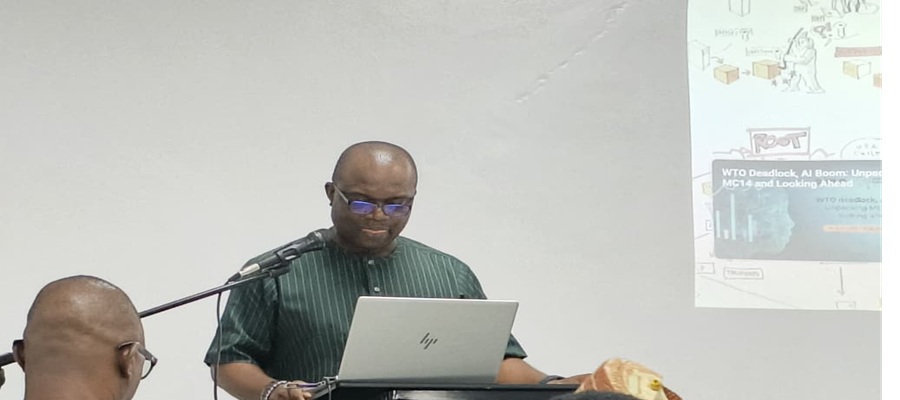
Adesola Akinsanya, President of the Nigeria Internet Registration Association, has called on the media to lead a nationwide campaign for the urgent adoption of the .ng domain to strengthen Nigeria’s digital identity.

Adesola Akinsanya, President of the Nigeria Internet Registration Association (NiRA)
Akinsanya made the call during the .ng Media Advocacy and Capacity Building Initiative held on Thursday at the association’s secretariat in Lagos.
He said the media had a strategic role to play, not only in reporting developments but also in shaping national priorities and influencing public understanding of digital infrastructure.
“The media does not just report events; it sets the agenda. We need you to lead the campaign for the urgent adoption of .ng and help Nigerians understand why it matters,” he said.
Akinsanya emphasised that Nigeria’s digital identity must be deliberately constructed and protected, noting that domain names remain a critical component of national presence in the global digital ecosystem.
According to him, many Nigerian businesses and institutions continue to operate on foreign domains such as .com and .org, thereby placing their digital assets outside the country’s jurisdiction.
“Thousands of Nigerian organisations are effectively operating on rented digital land, where control, security, and governance are subject to foreign regulations,” he said.
He explained that the .ng domain, managed by NiRA under the global coordination of the Internet Corporation for Assigned Names and Numbers, represents an important layer of Nigeria’s digital infrastructure.
He described domain names as digital real estate that determine visibility, credibility, and economic value creation within the digital economy.
The NiRA president warned that reliance on foreign domains contributes to a trust deficit, economic leakage, and increased security vulnerabilities.
“In an era where users are increasingly concerned about authenticity, locally identifiable domains provide stronger assurance and alignment with national systems,” he said.
Akinsanya added that while technological improvements such as DNS Security Extensions are strengthening the .ng ecosystem, widespread adoption remains essential.
He noted that the initiative was designed to bridge the gap between technical complexity and public understanding, particularly in areas such as internet governance, cybersecurity, and domain infrastructure.
According to him, Nigeria’s competitiveness in the global digital economy will depend on the alignment of infrastructure, adoption, and narrative.
He reaffirmed NiRA’s commitment to strengthening digital infrastructure and promoting the use of the .ng domain, while calling for sustained collaboration with the media.
“The story of Nigeria’s internet is still being written. Whether it reflects dependence or sovereignty will depend on the narratives we promote,” he said.
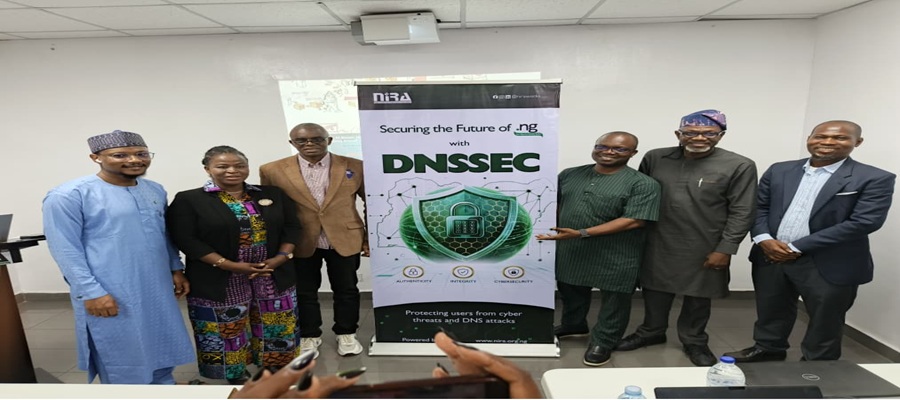
Nigeria has unveiled Domain Name System Security Extensions (DNSSEC) on its .ng domain, marking a major step toward strengthening national cybersecurity and enhancing trust in the country’s digital ecosystem.

NiRA
The deployment was carried out by the Nigeria Internet Registration Association, the body responsible for managing Nigeria’s country code top-level domain.
The development places Nigeria among countries adopting advanced technologies to secure their internet infrastructure and support a resilient digital economy.
DNSSEC is an internet security protocol designed to protect users from cyber threats such as redirection to fraudulent websites, by adding cryptographic verification to the domain name system.
Speaking at the unveiling, the President of NiRA, Adesola Akinsanya, described the deployment as a defining moment for Nigeria’s internet ecosystem.
“The successful deployment of DNSSEC on the .ng domain represents a major milestone. As more services move online, it is critical to ensure a secure and trusted digital environment for citizens, businesses, and government,” he said.
Akinsanya added that the initiative aligns with global best practices and underscores Nigeria’s commitment to building a secure and competitive digital economy.
He noted that strengthening trust in the .ng domain would create an enabling environment for innovation, investment, and growth in digital services.
According to him, a secure domain name system is fundamental to the development of the digital economy.
The NiRA president also urged organisations, particularly those operating critical services, to adopt DNSSEC as part of their cybersecurity frameworks.
The initiative is expected to benefit sectors such as financial services, telecommunications, e-commerce, and government platforms by offering enhanced protection against cyber threats including phishing and data interception.
Institutions regulated by bodies such as the Central Bank of Nigeria and the Nigerian Communications Commission are among those expected to gain from the improved security framework.
The deployment also aligns with Nigeria’s broader digital transformation agenda supported by agencies such as the National Information Technology Development Agency and the Office of the National Security Adviser.
The Chief Operating Officer of NiRA said the .ng domain had been fully signed and was currently in a monitoring phase to ensure stability and optimal performance.
He added that a phased rollout would allow accredited registrars and domain owners to adopt DNSSEC protection for their individual domains.
“This deployment is the result of extensive planning and collaboration. Our focus now is to ensure seamless adoption across the ecosystem,” he said.
NiRA called on businesses and organisations to leverage the new capability and embrace the .ng domain as a secure and trusted digital identity.
The association said it would continue to work with stakeholders to drive awareness, build capacity, and accelerate adoption nationwide.

MTN Suspends Data, Airtime Borrowing Service over New FCCPC Lending Rules

Nigeria Customs Deploys AI to Cover Revenue Leaks

Top 7 Reliable Virtual Cards for Running Ads in Nigeria

Nokia, Orange Partner on AI-native 6G Networks

NDPC Issues Critical Advisory as Hackers Target Nigeria’s Key Digital Systems

Kuda MFB Increases Kuda for Her Business Grants to ₦10 Million

Canal+ to Cut Jobs as Part Sweeping Restructuring

Nigeria tops global rankings for USDT, USDC ownership

NBC Boss Urges Content Ceators to Participate in DSO

NITDA Takes Over National Digital Architecture System




 General News3 days ago
Guinness Nigeria Surpasses ₦1Trillion Market Capitalisation, Signalling Strong Investor Confidence and Sustained Value Creation

 News3 days ago
CISA Asks NDPC, Police to Act on Alleged Data Breach by NIPSS

 Telecom3 days ago
Amazon Satellite to Challenge Starlink in Africa with Globalstar Acquisition

 E-Financial3 days ago
FG Investigates ‘Sharp Sharp’ Loan Operators over Alleged Privacy Violations

 News2 days ago
Lagos Targets Vulnerable Residents in Expanded Social Register

 News3 days ago
Kaspersky Reports Online Scam Exposure Remains Widespread Despite High Levels of Self-assurance

 Broadcasting3 days ago
Fela Makes History as First African to be Inducted into Rock and Roll Hall of Fame

 News3 days ago
Tinubu Tasks NRS to Restore Public Trust Amid Fiscal Changes