

General News
18,000 Killed in Nigeria, Others as Worldwide Cost of War Hit $14 Trn


More than $14 trillion was spent on international conflicts in the past year, according to a report by the Institute for Economics and Peace (IEP), which found that Syria, Iraq and Afghanistan were responsible for a surge in war deaths.
The report also indicated how those killed in conflicts had risen more than 350 per cent so far this decade, from 49,000 in 2010 to 180,000 in 2014.
This occurred amid a 61% increase in terror-related deaths in 2013 with 18,000 people killed. Most of these occurred in just five countries: Afghanistan, Iraq, Nigeria, Pakistan and Syria.
According to the report, the spending represents 13% of global GDP and is roughly the combined value of the economies of the United Kingdom, France, Germany, Canada, Spain and Brazil.
Steve Killelea, IEP Chief Executive, said reducing conflict was one way to help the world’s economic recovery.
“If global violence were to decrease by 10% uniformly, an additional $1.43 trillion would effectively be added to the world economy,” he said.
Published annually since 2008, the Global Peace Index uses 23 indicators and three key themes; “level of safety and security in society”, “the extent of domestic and international conflict” and finally “the degree of militarisation”.
This year saw overall levels of conflict unchanged. However, the picture was uneven around the world, with 86 nations seeing their peace index fall while 76 enjoyed increased peace.
The decline was mainly concentrated in the Middle East and Africa. Syria was the most dangerous country closely followed by Iraq and Afghanistan.
Libya recorded the biggest deterioration falling 13 places to 149th becoming the 14th least peaceful country whilst Ukraine recorded the second largest with around 6,000 recorded deaths since the start of the Civil War and 1 million people displaced.
Levels of peace in South America also declined in the midst of public protests in Brazil and Mexico as well as a surge in criminal violence in the region.
At the other end of the spectrum, Iceland and Denmark were recorded as the world’s most peaceful nations as Europe in general continued a long-term trend towards greater levels of peace with murder and crime rates at an all-time low.
North America, Europe, Central America, and the Caribbean all showed increases in peace with Sub-Saharan Africa’s score improving as Benin climbed 29 places putting the region ahead of Eurasia, Russia, the Middle East and North Africa and South Asia.
Mr Killelea added: “2014 was marked by two contradictory trends: on the one hand, many countries in the OECD achieved historic levels of peace while on the other, strife-torn nations, especially in the Middle East, became more violent.
“This is a real concern: as these conflicts become even more intractable they then spread terrorism to other states.


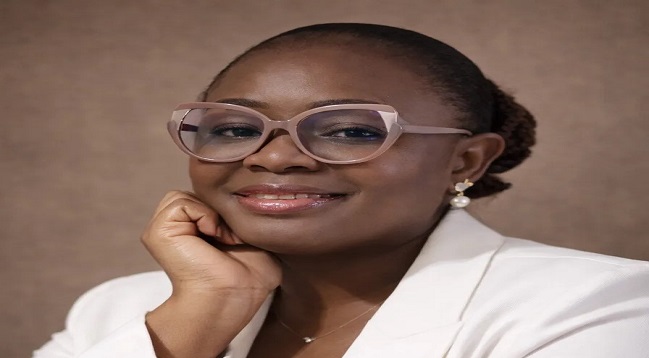
As the world marks International Women’s Day, Mojisola Sayo-Kazeem, Head of Finance, Jumia Nigeria & Ghana, reflects on how giving opportunity, mentorship, and support helps women thrive and strengthens organisations.

The future of work is digital, and for women it presents immense opportunities to innovate, lead, and shape the global economy. Yet thriving in a fast-paced, data-driven environment requires more than ambition or technical expertise. It requires opportunity and leadership that intentionally creates space for people to grow.
Reflecting on my own journey, I am reminded of how powerful those opportunities can be. I joined Jumia in 2012 as an accountant and, over time, grew into my current role as Head of Finance for Nigeria and Ghana.
Each stage of that journey came with new responsibilities and lessons that shaped my leadership perspective. One thing has become clear: growth rarely happens in isolation. It flourishes in environments where people are trusted, challenged, and supported to reach their full potential.
One of the most defining pillars of my career has been working within an organisation that invests in talent and encourages merit-based growth. At Jumia, a guiding principle is simple: let the best people and ideas grow. When organisations prioritise capability and innovation rather than bias, they create environments where individuals can thrive, and leadership potential can emerge naturally.
Leadership plays a crucial role in making this possible. Good leadership sharpens growth and experience, not only for the leader but for the teams they support. I have benefitted from leaders who shared knowledge, offered guidance, and entrusted me with meaningful responsibilities. Those opportunities challenged me to expand my skills, strengthen my judgement, and grow into larger leadership roles.
One experience that stands out was leading my team through the launch of a new business line under the guidance of our CFO. It demanded greater accountability, transparency, and strategic thinking. Looking back, it was more than a professional milestone, it was an opportunity to deepen my expertise and strengthen my leadership capacity.
Moments like these remind me that opportunity is one of the most powerful investments leaders can make in people. I also recognise and commend the many leaders who are already creating pathways for women to grow, lead, and contribute meaningfully. Their commitment to fairness, mentorship, and inclusion continues to open doors for others.
But there is still more to be done. As we mark International Women’s Day, this year’s theme, “Give to Gain,” invites leaders to reflect and to act. It challenges us to go beyond good intentions and intentionally create opportunities for women to grow and thrive based on merit, not favouritism or bias. This means sharing knowledge, investing in development, offering mentorship, and trusting capable women with meaningful responsibilities.
When we do this, we strengthen the people and institutions around us. Teams become more confident and capable, organisations become more resilient, and leadership pipelines become stronger and more diverse.
This year’s International Women’s Day theme, Give to Gain, reminds us that generosity is not subtraction, it is multiplication. When people, organisations, and communities give time, knowledge, visibility, advocacy, and support, opportunities for women expand. And when women thrive, industries, economies, and societies thrive with them.
When we give, we gain. The question for all of us is simple: What will you give to gain gender equality?
As Nigeria continues to grapple with the challenges of electoral transparency and voter trust, stakeholders in the blockchain industry are proposing a technological pivot.

In an X (formerly Twitter) Space hosted by the Stakeholders in Blockchain Technology Association of Nigeria (SiBAN) yesterday, themed ‘From Ballot to Blocks: Can Blockchain Fix Nigeria’s Elections?’, the experts argued that while blockchain is not a magic wand, it offers a robust framework to eliminate result manipulation and addresses voter apathy.
The discussion, featuring key industry figures including Oluwaseun Dania, CEO of Alpha-Geek Technologies, Harry Ugorji, CEO of Egoras Technology, Mela Claude Ake, President of SiBAN, Mr. Taiwo Gbadegesin, Head of Voter Education for INEC Lagos and others, highlighted a shift from traditional voting toward a more immutable and verifiable system.
Opening the floor, Oluwaseun Dania noted that while Nigeria’s electoral processes have improved, a crisis of confidence remains the primary hurdle, even as he identified voter apathy as a direct symptom of people feeling their votes are not counted during the transmission and collation stages.
“The real opportunity is actually much simpler. Blockchain is not there to change how Nigerians vote, but to technically protect the integrity of the votes that are cast. People will be more confident knowing that as they are casting their votes, the results are being recorded on the blockchain, visible to everybody all over the world,” Dania explained.
According to him, by providing a time-stamped and properly verified system without the possibility of manipulation, the blockchain technology could incentivize millions of disillusioned citizens to return to the polls.
Despite the enthusiasm, the experts maintained a level of cautious optimism, citing Nigeria’s unique challenges, such as low internet penetration and limited digital literacy.
Dania proposed a hybrid model instead of making an immediate jump to full e-voting, starting with foundational elements, such as moving National Identification Numbers (NIN) and voter registers onto a secure blockchain.
He also recommended using blockchain specifically for result transmission to record and audit votes, ensuring no data is altered between polling units and collation centers. Additionally, he advised building simplified, easy-to-use front-end tools so the average voter does not need to understand the underlying complexity of smart contracts.
Contributing to the technical feasibility, Harry Ugorji proposed leveraging existing party systems as a testing ground before a national rollout. He addressed the gas fee problem, suggesting an infrastructure where polling agents sign results with private keys without bearing the cost.
“They have to scan the EC8A form. Once they scan and upload, there should be an AI-based layer that extracts that information and transmits it to the smart contracts. This data can be saved using IPFS (InterPlanetary File System) so that at every point in time, everybody can verify that data,” Ugorji stated.
Ugorji envisioned a data-streaming electoral process where votes are calculated in real-time, removing the black box period where manipulation often occurs.
Also speaking, Mr. Taiwo Gbadegesin, Head of Voter Education for INEC Lagos, emphasized that election management is a continuous cycle involving critical behind-the-scenes work, such as monitoring party primaries and evaluating new political associations.
However, he highlighted the Continuous Voter Registration (CVR) process as the most vital touchpoint for the general public. This phase typically ramps up 18 to 24 months before a general election, specifically targeting citizens who have recently reached the voting age of 18 or those who need to update their registration status.
A significant focus of Gbadegesin’s address was the technological improvement of the registration process through online pre-registration. “This system allows Nigerians, including those currently abroad, to initiate their registration, request card transfers to closer polling units, or update personal details like marital name changes from their mobile devices,” Taiwo, who was represented by Mr. Ayopo Lawal, Head of Unit, Voter Education, explained.
According to him, by shifting the data entry to the user, INEC aims to eliminate clerical errors caused by staff fatigue or large crowds, ensuring that voters’ personal information is captured with 100% accuracy.
Furthermore, Gbadegesin stressed that these digital advancements are designed to maximize efficiency at physical registration centers. “For those who utilize the pre-registration portal, the final in-person visit is strictly limited to capturing biometric data, such as fingerprints and facial features.
This streamlined approach reduces the time spent at the center to under five minutes, significantly easing the burden on both the public and INEC officials while ensuring the electoral roll remains robust and up-to-date,” he added.
As SIBAN expressed a strong willingness to collaborate with INEC and serve in some advisory capacity if necessary, the discussion highlighted that this event is part of an ongoing series designed to keep the momentum of the conversation alive.
The overarching consensus among speakers was that Nigeria should adopt a test-run approach, implementing these digital tools at smaller scales, such as university student union elections or secondary school representative polls. By starting with these micro-elections, the country can build essential public trust and technical familiarity before scaling to a national level.
As the conversation concluded, the experts agreed that while the technology is ready, success depends on regulatory approval and a willingness from stakeholders to embrace a system where data, once recorded, is permanent and beyond the reach of any single authority.


Federal government has taken a significant step to enhance the integrity of Nigeria’s education system by deploying the Nigeria Education Repository and Data Bank (NERD), a national digital platform that secures, digitizes, and authenticates academic records across all tertiary institutions.

Forgery
Maruf Tunji Alausa, minister of Education, unveiled the initiative during the National Capacity Building Programme for institutional representatives, underscoring NERD’s importance as a critical national infrastructure for safeguarding academic credentials and strengthening education data governance.
“NERD is essential to our reform agenda under the leadership of President Bola Ahmed Tinubu,” Alausa stated.
“It ensures reliable digital preservation and verification of academic records, which is vital for maintaining the credibility of our education system.”
According to Alausa, in the brief span of four months since its implementation, NERD has made remarkable progress, successfully preserving nearly 100,000 digital student submissions and integrating over 250 tertiary institutions.
The platform has also enrolled more than 133,000 students and 6,800 lecturers, significantly enhancing the academic record-keeping process.
Alausa highlighted that the initiative is a proactive measure against certificate fraud, noting recent investigations that revealed cases involving fraudulent foreign credentials procured from unaccredited institutions.
This underscores the urgency of protecting the integrity of academic qualifications in Nigeria.
Furthermore, the Ministry announced that participation in the NERD system will soon become a prerequisite for either participation in or exemption from the National Youth Service Corps scheme, reinforcing the initiative’s impact on the educational landscape.
The Federal Government remains committed to building a transparent, digitally verifiable, and globally respected education system, ensuring that the integrity of academic records is upheld across the nation.

First Batch of Nigerian Undergraduates Emerged in Airtel Africa Foundation Scholarships Programme

Mojisola Sayo-Kazeem Reflects on Leadership, Opportunity, Women in Tech @ IWD

Experts Weigh Blockchain Option for Nigeria’s Elections Process

CBN Affirms Alpha Morgan Bank’s Capitalisation

Dimension Data Nigeria Seals N20bn Bond Deal to Bridge Digital Infrastructure Gap

Dr. Cairo Ojougboh Foundation Bolsters Nigeria’s Education Drive with ₦2.7m Student Support

Kaspersky Brings more Transparency to Threat Detection with New Hunt Hub

Kaspersky Discovers New Phishing Campaign Exploiting Google Tasks Notifications to Steal Corporate Credentials

esentry 2025 Report Shows Healthcare, Financial Services and Telecoms as Staging Grounds for Increased Cyberattacks in Africa

AfDB, UNDP Launch $10Bn AI Initiative for Africa




 E-Business2 days ago
Police Says Victims Enable Cyber Attacks Out of Ignorance

 E-Financial2 days ago
Quest Merchant Bank Achieves CBN Regulatory Recapitalisation Milestone

 Telecom2 days ago
Cassava Launches Sovereign Cloud for Africa’s Public Sector

 General News2 days ago
FG Launches NERD to Combat Certificate Fraud

 E-Financial2 days ago
Bank Accuses Magistrate, Lawyer of Using Fake Order to Steal N3.5m from Account

 General News2 days ago
Goodnews Naija Launches ‘Building in Nigeria’ Series on Entrepreneurs, Real Sector Builders

 News2 days ago
FG Can Now Track, Prosecute Visa Overstayers – Interior Minister

 Broadcasting2 days ago
South Africa’s Nomzamo Mbatha Appears on Glo-Sponsored African Voices