

News
2017: Employment, Business Start-Up Top Priority for Nigerians- Survey


Latest public opinion poll results released by NOIPolls have revealed some of the personal goals and aspirations that Nigerians have for 2017, such as the desire to secure employment or change existing jobs (37 percent), starting up new businesses (16 percent) and getting closer to God (14 percent) amongst others.
This finding further corroborates several media reports on unemployment and under-employment being one of the major problems that the government needs to tackle.
Furthermore, the efforts of the present administration to tackle the security issues in Nigeria has no doubt influenced the perception of Nigerians towards the security of the nation, as 87 percent asserted that they are hopeful that the security situation in the country will be better than it was in 2016.
The huge achievement by the security forces in recapturing the Boko Haram stronghold of Sambisa Forest may have played a role in the current perception on the state of security in Nigeria.
Also, 82 percent are optimistic that the economic situation of the country will improve; with 79 percent optimistic that more jobs will be created in 2017.

According to NOIPolls, this may not be unconnected with the Federal Government’s social investment program aimed at creating jobs for youths, tagged N-Power. Besides, the recent passage of the bill recognizing the National Peace Corps as a Federal Government Parastatal, under the Ministry of Interior, has become a veritable channel for job creation.
“Lastly, when Nigerians were asked what they would do to move the country forward, some said they will be more law abiding (29 percent), create employment through their various businesses (18 percent), become patriotic (11 percent) amongst others.
“Therefore, the federal government of Nigeria should uphold its tempo at reviving the economy of the country while its citizens should take the right steps towards the advancement of Nigeria. These were some of the key findings from the New Year special poll conducted in the week of January 9th, 2017”.
Every New Year brings a lot of excitement, hopefulness and aspiration, and as 2017 beckons, majority of people all over the world are full of expectations, so also are Nigerians.
NOIPolls writes: “There is hopefulness of a new dawn of possibilities since the nation has been faced with multitudes of challenges characterised by various issues in the preceding years such as the activities of Boko Haram insurgents in the North-East, recent Southern Kaduna killings in the North-West, activities of the Independent People of Biafra (IPOB) in the South-East as well as the Niger Delta Avengers in the South-South, and the herdsmen menace in the North Central, just to mention a few.
“Business activities have been grounded by these happenings in all those troubled spots and were also complemented by irregular power supply, unemployment, poor exchange rate against the dollar, kidnappings, economic recessions and other crimes which are capable of undermining the development and progress of Nigeria.
“The Federal government of Nigeria (FGN), during the presentation of its 2017 Appropriation Bill, nicknamed the budget of recovery and growth, to a joint session of the National Assembly had promised that it has taken necessary steps to stimulate the economy and gave assurances of various investments in key sectors and that those steps were taken to restore business confidence that will guarantee the country’s speedy recovery from recession in 2017.[4] In view of this, NOIPolls conducted its Annual New Year Special Edition Snap Poll survey to ascertain the personal aspirations of Nigerians in the New Year, as well as their optimism about the country and the necessary actions they would take for the purpose of developing the country”.
Survey Results
The survey results revealed that some Nigerians are either unemployed or are not satisfied with their current employment status as 37 percent, which formed the majority, mentioned that they are aiming at getting a job or to have a change of job as their personal goal for 2017.
Unemployment is one of the most serious problems facing developing nations today and Nigeria is no different. Being the most populous country in Africa with a population of over 170 million people, Nigeria is blessed with diverse human and material resources.
However, her resources have been left under-utilized leading to mass unemployment and abject poverty.
Poll findings also revealed that 16 percent of the respondents disclosed that they aspire to start a business and this could have been triggered by the theories by some economic experts that the year 2017 will be good for businesses to thrive in Nigeria.
Also, 14 percent asserted that they would be more religious and this supports a research that ascribed Nigerians as one of the most religious people on earth.
The current economic hardship that Nigerians are faced with also played out as 12 percent indicated that they would cut down their expenses, additionally, there is the quest to seek for added knowledge and qualifications as another 12 percent indicated that they would further their education. Some other mentions include ‘improving my business’ (8 percent), ‘get married this year’ (8 percent) and ‘build my own house and buy a car’ (7 percent) among others.
The poll also sought to find out the expectations of Nigerians for 2017 with regards to some issues that affect the wellbeing of the citizens including the economy, security and employment and findings revealed high expectation and optimism around these issues.
The larger proportion (87 percent) is optimistic that security will be better this year; similarly, 82 percent of the respondents are hopeful that the economy will be better than last year, while 79 percent stated that they look forward to the employment situation in Nigeria becoming better than it was in 2016.
Furthermore, to determine what Nigerians could do as individuals to contribute in moving the nation forward, the survey revealed some Nigerians (29 percent) especially respondents from the North-West (38 percent) and South-East (35 percent) zones aim to be more law abiding in 2017.
More findings revealed that 18 percent of the respondents basically from the South-West zone (26 percent) disclosed that that they intend to create employment through their businesses and this could go a long way in reducing unemployment in the country if it could be actualised. It is also worthy to note that this zone houses Lagos state which is the economic hub of the country.
In addition, a section of Nigerians (11 percent) stated they would be patriotic citizens whereas, another proportion (8 percent) believe that prayers will make a positive impact in the country among other positive contributions.
The recent poll results have revealed that 37 percent of adult Nigerians surveyed disclosed that they look forward to getting a job or to have a change of job as one of their personal goals in 2017 while 16 percent aspire to start a business so as to have multiple streams of income.
More findings revealed that most Nigerians are very optimistic of a very good living in 2017 as the vast majority of Nigerians are enthusiastic that the security (87 percent), economic (82 percent) and employment (79 percent) situations in Nigeria will be better than it was last year.
Finally, Nigerians have asserted that they will be more law abiding (29 percent) and that they will create employment through their various businesses (18 percent) as part of their contribution towards moving the nation forward.
Therefore, the federal government of Nigeria should uphold its tempo at reviving the economy of the country while citizens take the right steps towards the advancement of Nigeria.



The World Bank Group has announced the 31-month debarments of United Aviation Services Limited (UNASEL), a transportation services company based in Nigeria, and Air Vice Marshal Alkali Mamu, its owner and president, “in connection with fraudulent practices under the Enhancing Niger Northeastern Connectivity Project,” according to a press release issued by the multilateral development bank.

The statement said that the project aims to enhance connectivity and road safety along the Zinder-Agadez Road section and improve access to basic socioeconomic infrastructure for selected communities in that road section.
However, according to the statement: “UNASEL and Mr. Mamu presented false experience documents in a prequalification application to qualify for a contract under the project. This was a fraudulent practice under the World Bank’s sanctions framework.”
“The debarments make UNASEL and Mr. Mamu ineligible to participate in projects and operations financed by Bank Group institutions. The debarments are part of two settlement agreements under which UNASEL and Mr. Mamu admit culpability for the underlying sanctionable practices,” it added.
The statement further said: “Per the Bank Group Sanctioning Guidelines, the settlement agreements provide for a reduced period of debarment in light of UNASEL and Mr. Mamu’s cooperation.
As a condition for release from sanction under the terms of the settlement agreements, UNASEL and Mr. Mamu commit to developing and implementing integrity compliance measures that reflect the relevant principles set out in the Bank Group Integrity Compliance Guidelines, and Mr. Mamu further agrees to complete corporate ethics training.
UNASEL and Mr. Mamu also commit to continue to fully cooperate with the Bank Group’s Integrity Vice Presidency.
“The debarments of UNA SEL and Mr. Mamu qualify for cross-debarment by other multilateral development banks under the Agreement for Mutual Enforcement of Debarment Decisions that was signed on April 9, 2010.”

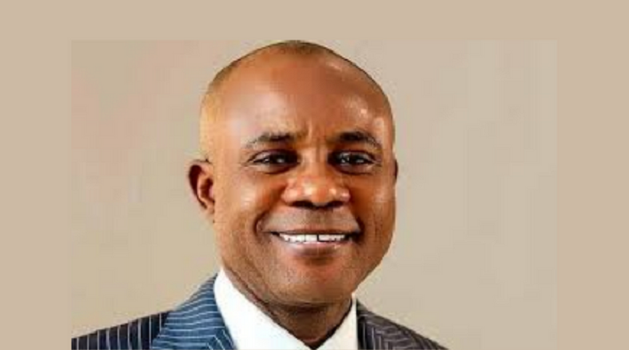
Governor Peter Mbah of Enugu State, has approved the allocation of a parcel of land in Enugu, the state capital, for the establishment of a state-of-the-art Digital Fabrication Centre by the Industrial Training Fund.

Mbah announced this while receiving a delegation from the Industrial Training Fund on a courtesy visit to the Government House, Enugu.
The ITF disclosed this on Friday in a statement signed by its Director of Press and Public Relations, Thomas Ngor.
According to the statement, Mbah described the proposed project as timely and aligned with his administration’s vision of transforming Enugu into a leading destination for investment, innovation and technology-driven industrial development.
He noted that the future of economic prosperity lies in deliberate investments in human capital and emerging technologies, adding that the state has continued to create an enabling environment for innovation, enterprise and sustainable growth.
The governor explained that his administration has made technical education compulsory in the state’s basic education system, with emphasis on digital literacy, robotics and mechatronics to prepare learners for the future of work.
According to him, many traditional trades are now driven by digital technologies, making it imperative to equip young people with relevant technical competencies that will enable them to compete globally and contribute meaningfully to economic development.
Governor Mbah further disclosed that his administration has built smart schools across the state, equipped with robotics centres, mechatronics laboratories and other modern learning facilities, to prepare youths for the evolving global economy.
He noted that artificial intelligence is expected to contribute about $20tn to the global economy in the coming years.
He therefore stressed that the state must be intentional about upskilling its citizens, adding that the establishment of the ITF Digital Fabrication Centre will significantly strengthen the state’s drive to build a knowledge-based economy, foster innovation, promote local manufacturing and create employment opportunities for its growing youthful population.
Earlier, Afiz Ogun, the Director-General of the ITF, who led the delegation, said that upon his appointment by President Bola Tinubu, he was mandated to upskill Nigerian artisans to international standards.
He explained that the Fund subsequently repositioned its technical and vocational skills development efforts through strategic initiatives, including the Skill-Up Artisans Programme, which is designed to train, certify and license Nigerian artisans to international standards.
Ogun disclosed that the Fund had already established a Digital Fabrication Centre in Ikeja, Lagos, with the capacity to produce more than 400 different products. He therefore requested the allocation of land in Enugu State to establish a similar centre with the same production capacity.
According to him, the initiative is aimed at promoting industrialisation, reducing dependence on imports and preparing Nigerians for opportunities in the Fourth Industrial Revolution.
He also reaffirmed the Fund’s readiness to enter into public-private partnerships that will transform Nigeria’s artisanal ecosystem.
Ogun further noted that digital technologies, including artificial intelligence, robotics and computer-aided manufacturing, are rapidly transforming the global economy, making it imperative for Nigeria to deliberately invest in upskilling its workforce to remain globally competitive.
The ITF delegation was later conducted on a guided tour of facilities at one of the smart schools established by the Enugu State Government.

Glovo, a multi-category tech company, has announced its integration into the generative AI ecosystem with the launch of its “Shopping Assistant” for ChatGPT and Claude. Users can now discover retail products, compare prices, and seamlessly order any item using natural conversational language with the AI systems.

The Glovo experience inside such platforms introduces a conversational commerce model that shifts from a search-based web to an intent-based web. Rather than navigating traditional app menus and filters, users can express needs, such as asking for a “last-minute gift for a coffee lover under ₦50,000”, and the assistant handles semantic search, location validation, and product curation.
A Seamless, Concierge-Like Experience
Once both platforms have been connected through either ChatGPT or Claude apps, the user will be able to have a multi-turn dialogue where the assistant remembers context and constraints, such as budget caps. Users receive a visual carousel of up to five highly customised product options available at local stores. Each product displays its image, name, store details and ratings, and price. While the search and discovery experience takes place directly on the Generative AI platforms, selecting a product via the “view on Glovo” button takes the user to the Glovo mobile or web app, where the payment and final purchase are exclusively completed.
Strategic Focus on Retail and Growth
Glovo is prioritising the retail and grocery sectors for this initial launch, capturing the established habit of using AI for product research. Generative AI has driven a significant jump in retail traffic globally, so this first-mover advantage aims to meet customers where they are meeting Gen AI daily, and ensure it captures high-intent organic traffic as search behaviours evolve.
“We’re always looking for ways to meet our customers where they already are. Being available on Claude and ChatGPT means people can discover what Glovo has to offer as part of a natural conversation, with no friction. Glovo has always been about being the everyday app that provides choice and convenience, and this is another step in that direction”, said Shiro Theuri, Chief Technology Officer at Glovo.
How to look for products in the Glovo app through ChatGPT or Claude
- The user must sync ChatGPT or Claude with the Glovo app with the plug-in.
- Once synced, the user must type in @glovo followed by their request.
- The AI platform displays a carousel with 5 available options for the user.
- If the user wants to purchase any of the products or continue searching within the Glovo app, they must click “View on Glovo”, which will redirect the user to the Glovo app or website.
- After the order is confirmed, the store will prepare the item(s) and the courier will head up to the pick-up location. The user will receive the order in minutes.

Fake Agency: ICPC Indicts NITDA, Others over Inadequate Due Diligence

Tax Reform Built on Taxing Prosperity, Not Poverty– Adedeji

UNESCO Taps Oguamanam,Nigerian Scholar to Advisory Body on Science, Tech Ethics

MTN Alerts Subscribers over Fake 25GB Anniversary MTN Data Giveaway

X Replaces Revenue Sharing wit New Creator Rewards Programme

EFCC Busts NIS Visa Overstay Racket, Uncovers N700m in an Account

Fact-Check: Elon Musk’s “Tesla Pi Phone” is Internet Rumor

NBC Tasks Broadcasting Stations over 2028 DSO Global Deadline

NBC Scraps Annual Digital Access Fee on DSO

Glo Sponsored African Voices to Feature Netflix’s “The Polygamist” Stars




 General News2 days ago
Guinness Rewards Consumers with ₦17 Million in First Week of ‘Open for More’ Promo Draw

 News3 days ago
Glovo Pioneers AI Quick-Commerce

 News2 days ago
World Bank Debars United Aviation Services, Owner over Fraudulent Activities

 E-Business2 days ago
NITDA Introduces Cloud Certification Boost Data Localisation Compliance

 Telecom2 days ago
NCC, Enugu Sign Deal to Operate Digital Industrial Park, Learning Centre

 E-Financial2 days ago
BOI Opens N250Bn Bond Offer to Fund Businesses

 News2 days ago
Enugu State Approves Land for ITF’s Digital Fabrication Centre

 General News2 days ago
Meta Hit With $567m US Court Order Over Alleged Harm to Children