

Broadcasting
28.1% Growth Rate, S-VOD Marketing Growing After Pay TV-Gartner


While pay TV is the biggest segment of the overall consumer video services market, accounting for 96.3 percent of total spending in 2014 and 94.2 percent by 2018, Gartner said that subscription video on demand (S-VOD) is a growing market.
Speaking on the trend the current and future state of the S-VOD market and how consumers’ behaviors may impact this type of service, Fernando Elizalde, principal research analyst at Gartner, said that of all the video media services that consumers pay directly to the service provider, the over-the-top S-VOD services have the strongest growth potential.
Gartner expects consumer spending on S-VOD services to grow 28.1 percent in 2014 and 18.2 percent in 2015.
He said that there are regional differences driven by the maturity of the S-VOD market itself, including availability of providers and content, the readiness of the broadband infrastructure and the consumer’s ability and willingness to pay.
While North America and Western Europe will drive overall spending on S-VOD services, they are the slowest growing markets globally – spending on S-VOD services in North America is on pace to grow 28.5 percent in 2014 and in Western Europe spending is expected to increase 18.6 percent.

In the emerging regions, where this type of services is more novel, we estimate S-VOD spending will grow 53 percent in 2014.
In Africa, particularly Nigeria, broadband availability and affordability are part of issues seeking solutions.
On the impact on pay-TV services, Elizalde, said that, S-VOD will not displace pay-TV services as a whole.
“It is, and will be, complementary to traditional pay-TV services such as cable TV, satellite TV or IPTV. Yet, consumers will increasingly spend less in additional premium services from the pay-TV provider and divert the spending to S-VOD.
“However, there will be a small segment of the population, particularly those who are starting a new household and haven’t yet subscribed to pay-TV services, which will only rely on online access to video and TV content.
Speaking on how much consumers spend on average on S-VOD and how often do they buy S-VOD, he said, Gartner estimates that households spend anywhere between $6 and almost $10 on average per subscription worldwide.
“The spending varies somewhat regionally with emerging Greater China, Sub-Saharan and Asia Pacific countries paying the least per subscription. Gartner estimates that “technology enthusiast” households, in other words, early adopters, are already subscribing to multiple S-VOD services in mature markets. In fact, technology enthusiasts in the US spend on average $15 a month on S-VOD services, while the same group in Germany spends $17.
On content provisioning, he said, “iTunes, Amazon and Netflix are doing well as their services become available in European countries. Before Netflix’s latest expansion into Austria, Belgium, Germany, France, Luxembourg and Switzerland, the company already amassed a subscription based of nearly 5 million customers in Western Europe.
“We also saw that within two weeks of service, Netflix allured around 100 thousand subscribers in France, with the first month being free. In addition, the entrance of international service providers fosters service awareness, competition and better services for the consumers”.
In Nigeria, music and Nollywood contents are trending among the youths too.
“From a content point of view, some of the content from international S-VOD service providers needs to be in local language to appeal to a broader audience, but it is not a necessity. In addition, the availability of European content is enforced by the European Audio Visual Media Service Directive.
“The directive requires the service providers to promote the production of European content and its access, by contributing financially to the production of European content, or by reserving a share and/or prominence for European content in their catalogue. Yet, not all countries have enforced this directive,” he said.


By Blaise Udunze
From a general observation, comparisons are powerful political tools. They simplify complex realities, inspire supporters and shape public perception. Another side of this is that they can also become misleading when symbolism replaces substance.

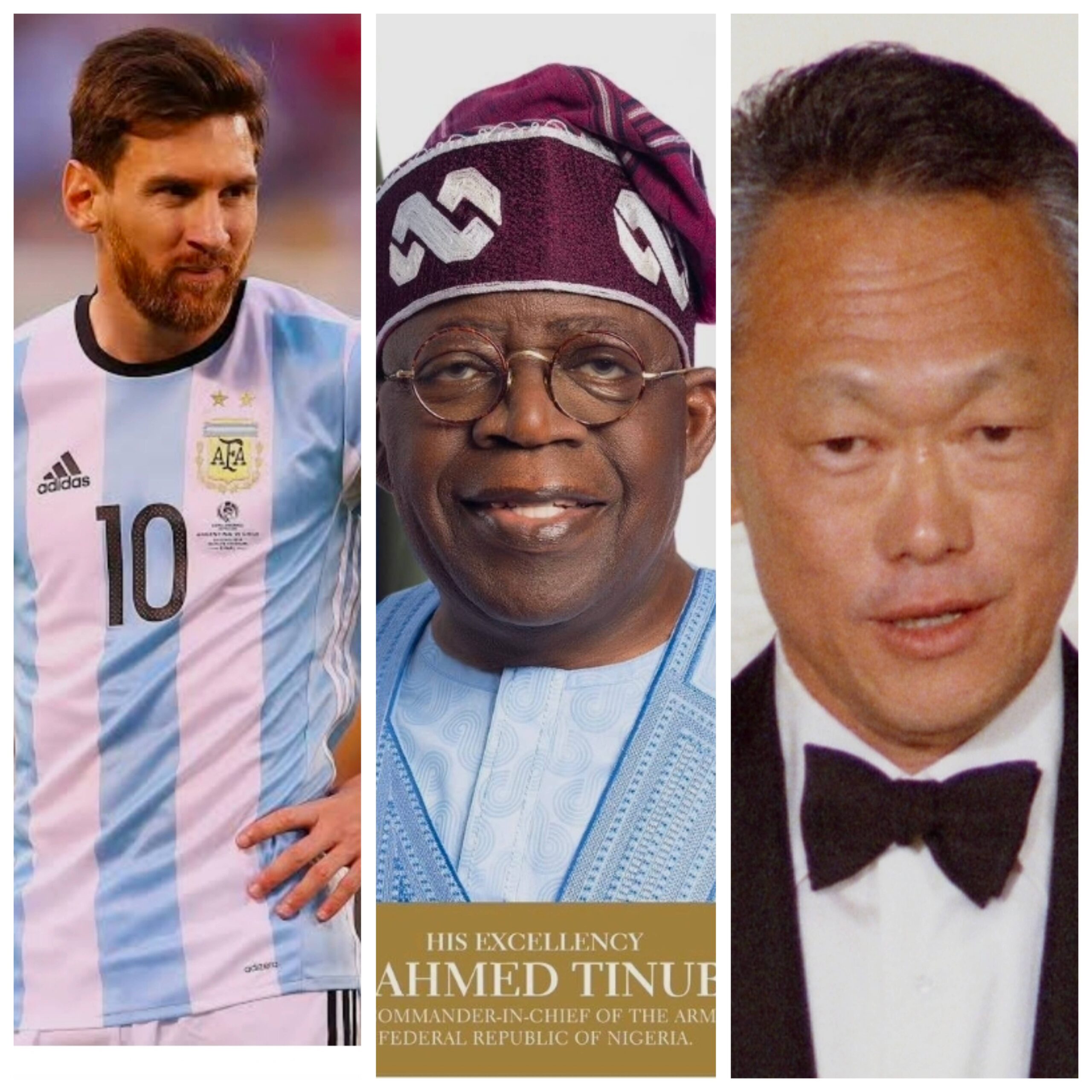
The latter appears to be the objective behind two recent interventions in defense of his excellency, President Bola Ahmed Tinubu. Respectfully, it was observed that veteran journalist Martin Oloja likened Tinubu’s political journey to that of football icon Lionel Messi. He portrayed him as a resilient strategist whose patience and tactical brilliance eventually produced victory. As this now appears to be a trend, Imo State Governor Hope Uzodimma further elevated the narrative, comparing Tinubu to Singapore’s founding Prime Minister, Lee Kuan Yew. He didn’t stop at that; rather further argued that today’s painful reforms would eventually transform Nigeria just as Lee transformed Singapore. They are compelling analogies.
Unfortunately, it was observed that both began to unravel once governance, not politics, was used as the standard of measurement.
It is a known fact to the world that Lionel Messi is celebrated not because he endured criticism or finally lifted the World Cup after years of disappointment. He is celebrated because his greatness is measurable. His goals are counted. His assists are recorded. His trophies are displayed and not just that, his records speak louder than the opinions of his admirers, which may have taken a different turn now after the outcome of the 2026 FIFA World Cup.
The same is also true of Lee Kuan Yew. History has shown that he is not revered because he introduced difficult reforms or enjoyed the support of loyal political allies. Governor Hope should be reminded that Lee is remembered because he fundamentally transformed Singapore. Amongst his achievements were transforming a poor trading port into one of the world’s richest, cleanest, safest and most efficiently governed nations.
Lee’s records speak for him because under his leadership, Singapore built world-class infrastructure, an incorruptible public service, globally competitive education, affordable housing, investor confidence and one of the highest standards of living anywhere in the world.
Neither Messi nor Lee Kuan Yew became legends through carefully crafted narratives. Yes, they became legends because the evidence became impossible to dispute. That is precisely where comparisons with President Tinubu become difficult.
It is an error to assume that winning elections is the same as winning governance and at the same time, political brilliance may secure power, but only effective leadership secures history’s approval.
For millions of Nigerians, governance is not measured by campaign strategy or political resilience. It is measured by the realities they confront every morning.
Can they afford food? Can they pay transport fares? Can they pay rent with the current landlords’ economy? Can they keep their businesses open? Can they sleep or travel freely without fear of kidnapping? Can they find jobs after graduation? Can they access reliable electricity and healthcare? These are the scoreboards by which governments are judged.
Supporters of the Tinubu administration frequently point to encouraging macroeconomic indicators. Foreign reserves have improved. Government revenues have risen. States now receive significantly larger allocations through the Federation Account Allocation Committee (FAAC). Well, these ‘achievements’ will be reviewed soon through the lens of news narratives. International financial institutions have welcomed several policy reforms. The removal of fuel subsidy and exchange-rate liberalisation are presented as courageous decisions that previous administrations avoided.
These developments deserve acknowledgement. Yet macroeconomic improvements are not the same as improvements in citizens’ welfare.
In reality, an economy cannot be declared successful merely because government revenues have increased while household purchasing power continues to deteriorate, as this would be a complete aberration.
Again, it is considered an anomaly that Nigeria reports stronger fiscal numbers, but millions of families continue to struggle with soaring food prices, rising transport costs, expensive housing, high electricity tariffs and shrinking disposable incomes.
Statistics may comfort policymakers. They rarely comfort hungry citizens. Messi never celebrated possession statistics after losing a match; rather, he cried and cried over losing the opportunity of winning the trophy at the concluded 2026 FIFA World Cup. To him, results mattered.
The reality is that governments should be judged by the same principle. This is open to dispute, but of a truth, Governor Uzodimma’s comparison to Lee Kuan Yew deserves even closer scrutiny because it raises an important question, though it may appear hard to answer.
If Tinubu is Nigeria’s Lee Kuan Yew, where is Nigeria’s Singapore? What exactly made Lee Kuan Yew exceptional? Was it simply his willingness to implement painful reforms? Certainly not.
Many leaders across the developing world have introduced painful reforms. Very few transformed their countries.
One thing stands out here: Lee’s legacy rests on outcomes, not intentions. Judging from all indications, it is obvious that his reforms dramatically reduced corruption, attracted investment, strengthened institutions, expanded industrialisation, improved education, guaranteed affordable public housing and steadily raised incomes across generations. Unlike Nigeria’s ongoing experience, Singapore’s rise was not a promise repeatedly postponed to the future. Citizens experienced tangible improvements in their daily lives. That is why history celebrates Lee Kuan Yew. Nigeria’s present reality tells a different story.
It is glaring and ironic that despite improved fiscal revenues, many Nigerians continue to grapple with rising inflation, worsening poverty, declining purchasing power, youth unemployment, struggling businesses and persistent insecurity. If they must know, these are not merely economic statistics; they are the lived realities by which citizens judge any government.
The Lee Kuan Yew comparison also overlooks perhaps the most important ingredient behind Singapore’s success, which is primarily the institutions.
It is obvious and practically doubtful if Governor Uzodinma’s kind of Singapore is the same as the one on which its transformation was built upon an efficient bureaucracy, disciplined public institutions, predictable regulation, meritocracy, uncompromising anti-corruption enforcement and consistent long-term planning as championed by Lee Kuan Yew. An honest question here is, can the same be said of Nigeria today?
The truth is not far-fetched; Nigeria is nothing close to it because the realities and lived experiences of Nigerians are that the country continues to grapple with weak institutions, policy inconsistency, bureaucratic inefficiency, corruption concerns and widespread insecurity.
His impeccable achievements are built on the institutions; hence, without institutional transformation, every effort to invoke Lee Kuan Yew risks confusing aspiration with achievement.
One common trend witnessed lately is that the supporters of the administration often argue that Nigerians must be patient because meaningful reforms require time. That argument deserves consideration.
Let it also be made known that patience should never become an endless substitute for accountability. Citizens are also entitled to ask whether the sacrifices demanded today are producing measurable improvements tomorrow.
History remembers leaders not because they prescribed hardship, but because that hardship ultimately produced prosperity for those alive and not for the dead.
Another weakness in both comparisons is the tendency to confuse political mastery with administrative excellence. These are totally two different things, because when it comes to winning elections, it requires coalition building, negotiation and political calculation. Whilst, running a nation demands competent institutions, sound economic management, transparency, public trust and measurable improvements in living standards.
Again, the two are not the same, and for this reason, many exceptional politicians have governed poorly. Many successful administrators never became political giants. Democracy ultimately rewards governance, not political mythology.
This is not to suggest that President Tinubu’s administration has achieved nothing. Tax reforms, infrastructure investments, fiscal restructuring and efforts to stabilise public finances represent important policy initiatives whose long-term impact remains to be seen. Well, acknowledging those initiatives is consistent with honest public discourse.
Equally important, however, is recognising that millions of Nigerians continue to judge the administration through the realities and their lived experiences rather than the promises they hear.
Football supporters judged Lionel Messi by the trophies in the cabinet. In like manner, history judges Lee Kuan Yew by the Singapore he built. The same measure should be applied in this nation, as Nigerians will judge President Tinubu by the Nigeria he leaves behind.
The key metric here is that if inflation falls sustainably, poverty declines significantly, insecurity is substantially reduced, electricity becomes more reliable, industries expand, jobs multiply and citizens regain confidence in the future, history will acknowledge those achievements without requiring comparisons to Messi or Lee Kuan Yew.
Neither Messi nor Lee Kuan Yew needed political allies to persuade the world of their greatness and that distinguishes both as the greatest of all time (GOAT).
Their records spoke for themselves. Political endorsements may dominate today’s headlines. History, however, listens only to evidence. Even Messi needed trophies. Lee Kuan Yew needed results. Nigerian leaders should be judged by no lesser standard.
Blaise, a journalist and PR professional, writes from Lagos and can be reached via: [email protected]

National Broadcasting Commission (NBC) and the Independent National Electoral Commission (INEC) are set to introduce a joint broadcast monitoring framework ahead of the 2027 general elections as part of efforts to curb unethical broadcasting and promote responsible election coverage.

Charles Ebuebu, director-general, NBC, who disclosed the plan recently, said the collaboration would strengthen election monitoring through the deployment of advanced technology and closer coordination between regulatory agencies.
According to him, the increasing influence of digital and online platforms has made it imperative for regulators to work together rather than operate independently.
“We have written to INEC, and we are going to have a joint monitoring outlook over the elections. Gone are the days when agencies work in silos. When we coordinate, we’re able to monitor more effectively,” Ebuebu said.
He explained that the partnership would enable both agencies to jointly identify and address violations of broadcasting regulations during the election period instead of handling such issues separately.
Beyond INEC, Ebuebu said the NBC is also partnering with other key regulators to strengthen oversight of election-related content across digital platforms.
According to him, the commission is finalising agreements with the Nigerian Communications Commission (NCC) and the National Information Technology Development Agency (NITDA) ahead of the polls to reinforce its monitoring capabilities.
“We are calling in other stakeholders to reinforce the election monitoring. We are signing agreements with the Nigerian Communications Commission and the National Information Technology Development Agency before the elections,” he said.
Ebuebu also revealed that the NBC is upgrading its monitoring infrastructure with artificial intelligence (AI)-powered tools to keep pace with the rapidly expanding media landscape.
He noted that the proliferation of online platforms has made traditional monitoring methods inadequate.
“With online platforms, there are thousands of them. You need more than staff; you need AI monitoring facilities,” he said.
The NBC chief added that the commission has significantly improved its monitoring capacity and can currently track nearly 50 broadcast channels from its monitoring centre in Abuja.
He said additional monitoring facilities would be established across the country in line with evolving broadcasting technologies.As part of preparations for the 2027 elections, Ebuebu announced plans for a sensitisation workshop in Ibadan that will bring together broadcasters, INEC officials, security agencies and other stakeholders.
He said the engagement had become necessary as political discussions surrounding elections continue to grow more heated, including on television, stressing the need for broadcasters to adhere to professional standards.
Ebuebu noted that the commission has had to issue several warnings to broadcast stations for violating the broadcasting code during election periods.
“We have had to write several of them because they simply forget what the code says,” he said

Mrs. Clementine Wamba, head, Digital Switch Over (DSO) at the National Broadcasting Commission (NBC), has stressed the need for broadcasting stations and practitioners nationwide to work towards meeting the 2028 global deadline for the switch over.

She made the call in her presentation titled, “DSO Big Picture: Free TV Audience Measurement and the Evolving Media Landscape”, at the 2026 NBC South West Summit held in Ibadan.
Wamba harped on the need for practitioners to adopt DSO in the transmission of news and other programmes in order to meet future challenges, stating that any country that fail to align with the DSO by 2028 will be shut out of practice.
This development, according to her, may result in job losses and other consequences that could hinder the growth of the industry in Nigeria, noting that Free TV is tailored towards the DSO, with provision for many channels in contrast to the age-long analogue system.
According to her, “The Digital Switch Over is a technological improvement on the age-long analogue style of broadcasting in the country. With the adoption of the DSO, practitioners will be in tune with global practice of broadcast journalism.
“Also, its benefits include efficient use of spectrum, changing of industry landscape, more access to national development programmes and better viewing experience.”

Nigeria Leads Africa in Online Gambling Regulation – GCI

CBN Has Not Published Annual Financial Statements Since 2022 despite Legal Requirement

ChatPay Unveils Public Waitlist for WhatsApp-Based Banking Platform

GSMA Says High Smartphone Costs Threatens Africa’s AI Future

Dangote Refinery Completes Landmark $2.5bn Private Equity Placement

NRC, Ponzi Scheme Collapses Resulting Loss of Billions of Naira

NASENI Moves to Digitize CCB’s 5m Assets Declaration and Operations

Lebara Nigeria Launches Lebara Play, Africa’s First Telecom-Owned Micro-Drama Platform

Tokenization, Blockchain Technology will Transform Financial Institutions – IMF

EFCC Busts NIS Visa Overstay Racket, Uncovers N700m in an Account




 General News2 days ago
FG Launches C.L.I.C.K.D., Consumer Credit Scheme for Tech Devices

 Telecom2 days ago
Airtel Nigeria Expands Retail Footprint to Strengthen Customer Access Nationwide

 Telecom2 days ago
MTN Nigeria Opens Applications for Next Afrobeats Star Season 2 with Bigger Prizes

 News2 days ago
NPC Opens Nationwide Digital Birth, Death Registration Platform

 Telecom2 days ago
Kaspersky Survey Highlights the Need for Smartphone Security

 E-Business2 days ago
Ovaloop Technologies Unveils Digital Tools to Formalize SMEs Operations Across Africa

 E-Financial2 days ago
CBN Retains Interest Rate at 26.5% as Cardoso Cites Global Uncertainty Despite Inflation Drop

 Telecom2 days ago
Why Africa’s Top ICT Ministers Are Gathering in Abuja This Week