

Broadcasting
28.1% Growth Rate, S-VOD Marketing Growing After Pay TV-Gartner


While pay TV is the biggest segment of the overall consumer video services market, accounting for 96.3 percent of total spending in 2014 and 94.2 percent by 2018, Gartner said that subscription video on demand (S-VOD) is a growing market.
Speaking on the trend the current and future state of the S-VOD market and how consumers’ behaviors may impact this type of service, Fernando Elizalde, principal research analyst at Gartner, said that of all the video media services that consumers pay directly to the service provider, the over-the-top S-VOD services have the strongest growth potential.
Gartner expects consumer spending on S-VOD services to grow 28.1 percent in 2014 and 18.2 percent in 2015.
He said that there are regional differences driven by the maturity of the S-VOD market itself, including availability of providers and content, the readiness of the broadband infrastructure and the consumer’s ability and willingness to pay.
While North America and Western Europe will drive overall spending on S-VOD services, they are the slowest growing markets globally – spending on S-VOD services in North America is on pace to grow 28.5 percent in 2014 and in Western Europe spending is expected to increase 18.6 percent.

In the emerging regions, where this type of services is more novel, we estimate S-VOD spending will grow 53 percent in 2014.
In Africa, particularly Nigeria, broadband availability and affordability are part of issues seeking solutions.
On the impact on pay-TV services, Elizalde, said that, S-VOD will not displace pay-TV services as a whole.
“It is, and will be, complementary to traditional pay-TV services such as cable TV, satellite TV or IPTV. Yet, consumers will increasingly spend less in additional premium services from the pay-TV provider and divert the spending to S-VOD.
“However, there will be a small segment of the population, particularly those who are starting a new household and haven’t yet subscribed to pay-TV services, which will only rely on online access to video and TV content.
Speaking on how much consumers spend on average on S-VOD and how often do they buy S-VOD, he said, Gartner estimates that households spend anywhere between $6 and almost $10 on average per subscription worldwide.
“The spending varies somewhat regionally with emerging Greater China, Sub-Saharan and Asia Pacific countries paying the least per subscription. Gartner estimates that “technology enthusiast” households, in other words, early adopters, are already subscribing to multiple S-VOD services in mature markets. In fact, technology enthusiasts in the US spend on average $15 a month on S-VOD services, while the same group in Germany spends $17.
On content provisioning, he said, “iTunes, Amazon and Netflix are doing well as their services become available in European countries. Before Netflix’s latest expansion into Austria, Belgium, Germany, France, Luxembourg and Switzerland, the company already amassed a subscription based of nearly 5 million customers in Western Europe.
“We also saw that within two weeks of service, Netflix allured around 100 thousand subscribers in France, with the first month being free. In addition, the entrance of international service providers fosters service awareness, competition and better services for the consumers”.
In Nigeria, music and Nollywood contents are trending among the youths too.
“From a content point of view, some of the content from international S-VOD service providers needs to be in local language to appeal to a broader audience, but it is not a necessity. In addition, the availability of European content is enforced by the European Audio Visual Media Service Directive.
“The directive requires the service providers to promote the production of European content and its access, by contributing financially to the production of European content, or by reserving a share and/or prominence for European content in their catalogue. Yet, not all countries have enforced this directive,” he said.


Broadcasting Organization of Nigeria (BON) has established six committees to help strengthen and modernize the country’s broadcasting industry.

The committees will focus on content creation, skills development, digital transformation, sustainability, policy and commercial opportunities
The initiative aims to support industry growth and improve collaboration between broadcasters, regulators and media experts
The official launch recently, was led by Tony Akiotu, president, BON and attended by media professionals, program directors, former journalists and heads of specialized media organizations.
The event brought together several prominent figures in Nigeria’s media industry, including veteran broadcaster and trainer Bimbo Oloyede, Tony Uyah of M4S TV, Kingsley Uranta of Channels Television, Ismael Sani of Platinum TV and Ibrahim Shehu of Trust TV.
Together, they are expected to help drive innovation and support the growth of Nigeria’s broadcasting sector.
According to Akiotu, the committees are intended both to help shape industry policy and to provide a forum for dialogue between BON and broadcasting experts.
Akiotu said the ad hoc committees were intended to strengthen BON’s work and ensure that the umbrella body for Nigeria’s broadcasters played a more direct and meaningful role in developing the country’s broadcasting sector.
The six committees reflect the sector’s main priorities. The first focuses on collaboration and innovation to promote content creation.
The second is dedicated to training and talent development, while the third focuses on industry sustainability by improving the sector’s long-term financial viability.
A fourth committee will focus on digital transformation and work with the National Broadcasting Commission (NBC) on regulatory issues.
The remaining two committees will oversee public policy advocacy and the development of sports and commercial rights to help broadcasters increase revenue and attract more investment. Together, the committees are expected to guide BON’s efforts to modernize and strengthen Nigeria’s broadcasting industry.
The committees, chaired by members of BON’s General Assembly and supported by the organization’s Secretariat, have an initial 12-month mandate that may be renewed if necessary.
They are required to submit a progress report within three months and implement approved recommendations within the following six months.
The arrangement is intended to ensure close oversight and the timely implementation of their work.
Akiotu also reminded committee members that Nigeria pioneered television broadcasting in Africa and urged them to carry out their work with greater effectiveness and efficiency.

Nigerian Education Loan Fund (NELFUND) says it is investigating about 34 tertiary institutions over allegations that they failed to refund students whose tuition fees were paid twice under the Federal Government’s student loan scheme.

The Managing Director of NELFUND, Mr Akintunde Sawyerr, disclosed this during an interview on Arise Television.
Sawyerr said the agency had deployed a five-member investigative team, including operatives of the Economic and Financial Crimes Commission (EFCC) and internal auditors, to examine the allegations.
According to him, the investigation was prompted by numerous complaints received from affected students.
“As of right now, there are 34 institutions that we are looking at closely with respect to this issue,” he said.
Sawyerr explained that the double payment issue arose because President Bola Tinubu directed that the student loan scheme commence in the middle of an academic session instead of at the beginning.
He said the decision compelled many students to pay their tuition fees to meet registration deadlines while awaiting approval of their loan applications.
“What happened is that a lot of schools got double payment; some from the students and some from us,” he said.
“The refund process is entirely out of our hands. It is the recipient of the double payments that is obliged to make refunds to the students.”
The NELFUND boss noted that many students had borrowed money from family members, friends and other sources to pay their tuition with the expectation of receiving refunds once the loans were disbursed.
He said while some institutions had promptly refunded affected students, others had failed to do so.
“Some have been very good at this. Others haven’t been so good at it,” Sawyerr said.
“I reserve judgement on the intentionality around it because, for some of them, they just didn’t have the process to make refunds.”
Sawyerr disclosed that NELFUND was exploring a tokenised payment system that would enable students to authorise tuition payments directly to their institutions, thereby reducing the likelihood of duplicate payments.
He said the agency deliberately chose not to disburse tuition loans directly to students to minimise the risk of fund diversion.
“Paying the funds to the students could really lead to the temptation for them to divert and do other things,” he said.
The managing director, however, acknowledged that NELFUND lacked the statutory powers to compel institutions to refund students or prosecute officials found culpable.
He added that many frustrated students had submitted complaints not only to NELFUND but also to anti-corruption agencies, including the EFCC and the Independent Corrupt Practices and Other Related Offences Commission (ICPC).
Sawyerr also expressed concern over increases in tuition fees by some institutions following the introduction of the student loan scheme.
He said NELFUND had declined to pay institutions that increased their tuition fees beyond acceptable levels.
“Some schools, because they get paid easily, started to put up their fees. We refused, point blank, to pay institutions who had hiked their fees beyond a certain level,” he said.
He reaffirmed the agency’s commitment to investigating every reported irregularity and strengthening the implementation of the student loan programme through continuous monitoring and internal reviews.
Broadcasting
Obi, NDC Presidential Candidate Faces N50Bn Defamation Claim over Alleged Podcast Remark

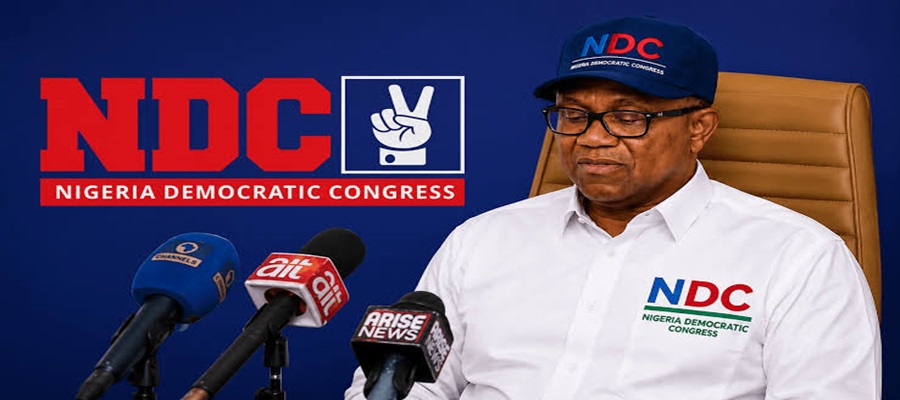
Abayomi Arabambi, national vice chairman (South-West) of the Labour Party, has demanded a public apology, a retraction, and N50 billion in damages from Peter Obi, presidential candidate of the Nigeria Democratic Congress (NDC), over an alleged defamatory statement made during a podcast interview.

The demand was contained in a letter issued by the law firm Neplus Ultra Attorneys and signed by Anderson U. Asemota, Peter O. Asimegbe, and Stanley C. Eziefulle on behalf of Arabambi.
According to the letter, the legal dispute arose from comments allegedly made by Obi during the interview, where he reportedly stated that Arabambi “does not have an address.”
Arabambi’s legal team described the statement as false, malicious, and defamatory, arguing that it portrayed their client as a faceless individual without legitimacy, credibility, or standing in public life.
The lawyers further claimed that the interview was widely circulated on television stations and digital platforms, exposing Arabambi to public ridicule and damaging his reputation.
“Our client has had a known residential and business address, maintains professional and political affiliations within Nigeria, and has never been a person whose whereabouts or identity were unknown,” the letter stated.
The legal team maintained that the alleged publication caused embarrassment and harmed Arabambi’s public image and political standing.
As part of their demands, the lawyers called for an unreserved public apology to be aired on national television, published on Obi’s verified social media platforms, and carried as full-page apologies in national newspapers.
They also demanded the payment of N50 billion as compensation for the alleged injury to Arabambi’s reputation, dignity, political standing, and public image.

Court Adjourns Alleged Binance Tax Evasion Case over Settlement Talks

Fixed Wired Internet Market Lags as Mobile Gains Ground

Xenophobic Attacks: OYC Threatens to Picket MTN Nigeria Offices

New NIMC Act Strengthens Data Protection, Privacy – Director

BON Establishes Six Ad Hoc Committees to Modernize Broadcasting

NASENI Moves to Digitize CCB’s 5m Assets Declaration and Operations

Mobile Internet Gender Gap Widest in Africa – GSMA

Nigeria Launches FreeTV Nationwide

CANAL+ Partners Samsung to Pre-Load DStv Stream on New Samsung TVs In Nigeria, Other African Countries

Lebara Nigeria Launches Lebara Play, Africa’s First Telecom-Owned Micro-Drama Platform




 News2 days ago
NRC, Ponzi Scheme Collapses Resulting Loss of Billions of Naira

 News2 days ago
NSITF Partners South African Insurer on Digital Transformation

 E-Financial2 days ago
FCT-IRS Unveils New Digital Platform, Taxporta

 General News2 days ago
KPMG Urges Africa’s Most Innovative Tech Entrepreneurs to Enter the Global Tech Innovator 2026 Competition

 E-Business2 days ago
FG Suspends New Internet Regulations to Prevent Overlapping Rules
 E-Business2 days ago
NIN Enrollment Hits over 136m as New ID Law Takes Effect

 E-Business2 days ago
Plateau PCC Collects Nigerians’ Data without Privacy Policy – FIJ

 Telecom1 day ago
NCC Seeks Cost-Based Pricing Framework for Ducts