

Broadcasting
47 African Countries Agree on Frequency Coordination for Digital Switchover

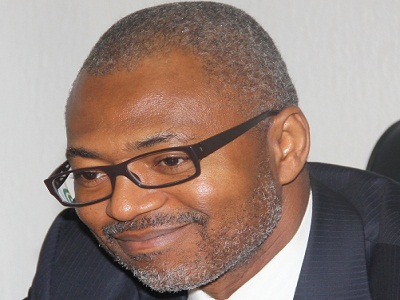
Frequency coordination negotiations have succeeded in setting up the mechanism to deploy digital television in 47 Sub-Saharan African countries.
The consolidation of national plans to implement the digital switchover in the African region is in conformity with the deadlines of June 2015 (for UHF) and June 2020 (for VHF in 33 countries) set in 2006 by ITU’s Regional Radio communication Conference (RRC-06), which adopted the GE06 TV Plan.
This landmark also makes Africa the first region to be in a position in 2015 to allocate bandwidth freed up by the transition to digital television – the so-called ‘digital dividend’ – to the mobile service for both the 700 MHz and 800 MHz bands.

Decisions of the World Radio communication Conference 2012 (WRC-12) to facilitate availability of the digital dividend to the mobile service will be effective with some technical refinements immediately after the next World Radio communication Conference in 2015 (WRC-15).
Hamadoun I. Touré, ITU secretary-general expressed his appreciation to the high level of cooperation extended to the process by African Telecommunications Union (ATU) and Mr Abdoulkarim Soumail, its secretary-general.
Mr François Rancy, director of ITU’s Radiocommunication Bureau, announced that sub-Saharan African countries have begun submitting official modifications to the GE06 Plan following the final frequency coordination meeting held in Nairobi, 17-19 July 2013 and the deadline of 31 August set for notifications.
“The objective was to enable African countries to allocate the digital dividend to mobile services in the band 694-862 MHz, as a regionally harmonized implementation of the decisions taken at the World Radio communication Conference in 2012,” Rancy said.
“This objective was reached by re-planning the spectrum requirements of television broadcasting in the 470-694 MHz frequency band.”
The meeting in Nairobi organized jointly by ITU and the African Telecommunications Union (ATU) and hosted by the Communications Commission of Kenya (CCK), attracted 124 participants from 35 Member States.
It was the third and last overall coordination meeting of African countries, after similar meetings in Bamako (March 2011) and Kampala (April 2011) and a number of other bilateral and multilateral meetings held in 2011 and 2012.


Uchenna Mbunabo, Nigerian filmmaker, has raised concerns over the alleged unauthorised broadcast of Nollywood films by some Ghanaian television stations, calling on Ghana’s National Film Authority (NFA) to strengthen the enforcement of copyright laws.

Uchenna Mbunabo, Nigerian filmmaker
Mbunabo made the remarks during a conversation with James Gardiner, deputy CEO of the National Film Authority (NFA) of Ghana.
He questioned whether it was permissible for television stations in Ghana to download Nigerian movies from YouTube and air them without obtaining permission from the producers.
“I noticed that Ghanaian TV stations, the way they are stealing our films and showing them for free with impunity. Is it legalised in your country for TV stations to go on YouTube, download people’s sweat and show it for free?”
According to Mbunabo, some Ghanaian television stations have been downloading newly released Nollywood films from YouTube and broadcasting them without authorisation, depriving producers of revenue generated through the platform.
He also stated that he had not witnessed Nigerian television stations engaging in similar practices and questioned what measures Ghana was taking to protect filmmakers’ intellectual property.
Responding to the concerns, Gardiner acknowledged that the issue exists and said the National Film Authority had begun engaging relevant stakeholders to address it.
He disclosed that the NFA has held discussions with the Ministry of Communications, the National Communications Authority (NCA) and the National Media Commission (NMC) on improving copyright enforcement.
Gardiner explained that while Ghana has copyright laws, enforcement remains challenging because many television stations now operate digitally and may not have physical offices within the country.
“There are copyright laws, but they are not effective because a lot of the TV stations don’t have offices. Most of them are now digital, so they operate from anywhere. They can even have a Ghanaian TV station but be operating from Austria simply because it is digital.”
He added that authorities are considering a new licensing framework that would require broadcasters to undergo a fresh licensing process to improve monitoring and enforcement.
According to Gardiner, television stations found guilty of illegally broadcasting copyrighted content would be required to compensate affected producers through fines.
He added that repeat offenders could face suspension of their broadcasting licences, while a third violation could result in the revocation of their licences.
Although he did not provide a specific timeline, Gardiner said the reforms were already underway and expressed hope that significant progress would be seen next year.
Mbunabo welcomed the proposed measures but urged the National Film Authority to expedite the process, stating that unauthorised broadcasts continue to affect filmmakers’ ability to recover production costs through legitimate distribution channels such as YouTube.
He also stressed that his comments were not directed at Ghana’s film industry, noting that he has worked with several Ghanaian actors over the years and supports collaborations between Nollywood and Ghallywood.


Broadcasting Organization of Nigeria (BON) has established six committees to help strengthen and modernize the country’s broadcasting industry.

The committees will focus on content creation, skills development, digital transformation, sustainability, policy and commercial opportunities
The initiative aims to support industry growth and improve collaboration between broadcasters, regulators and media experts
The official launch recently, was led by Tony Akiotu, president, BON and attended by media professionals, program directors, former journalists and heads of specialized media organizations.
The event brought together several prominent figures in Nigeria’s media industry, including veteran broadcaster and trainer Bimbo Oloyede, Tony Uyah of M4S TV, Kingsley Uranta of Channels Television, Ismael Sani of Platinum TV and Ibrahim Shehu of Trust TV.
Together, they are expected to help drive innovation and support the growth of Nigeria’s broadcasting sector.
According to Akiotu, the committees are intended both to help shape industry policy and to provide a forum for dialogue between BON and broadcasting experts.
Akiotu said the ad hoc committees were intended to strengthen BON’s work and ensure that the umbrella body for Nigeria’s broadcasters played a more direct and meaningful role in developing the country’s broadcasting sector.
The six committees reflect the sector’s main priorities. The first focuses on collaboration and innovation to promote content creation.
The second is dedicated to training and talent development, while the third focuses on industry sustainability by improving the sector’s long-term financial viability.
A fourth committee will focus on digital transformation and work with the National Broadcasting Commission (NBC) on regulatory issues.
The remaining two committees will oversee public policy advocacy and the development of sports and commercial rights to help broadcasters increase revenue and attract more investment. Together, the committees are expected to guide BON’s efforts to modernize and strengthen Nigeria’s broadcasting industry.
The committees, chaired by members of BON’s General Assembly and supported by the organization’s Secretariat, have an initial 12-month mandate that may be renewed if necessary.
They are required to submit a progress report within three months and implement approved recommendations within the following six months.
The arrangement is intended to ensure close oversight and the timely implementation of their work.
Akiotu also reminded committee members that Nigeria pioneered television broadcasting in Africa and urged them to carry out their work with greater effectiveness and efficiency.

Next Currency Crisis May Turn $300Bn in Stablecoins into National Currencies

NIHSA Warns States of Possible Flood within Seven Days

FG to Raise N1.2 Trillion via Fresh Bond Offer – DMO

Gigbanc Nigerian Fintech Startup Closes Shop after 3 Years

Mbunabo, Nigerian Filmmaker Accuses Ghana TV Stations of Pirating Nollywood Films

NRC, Ponzi Scheme Collapses Resulting Loss of Billions of Naira

Nigeria Launches FreeTV Nationwide

NASENI Moves to Digitize CCB’s 5m Assets Declaration and Operations

Lebara Nigeria Launches Lebara Play, Africa’s First Telecom-Owned Micro-Drama Platform

CANAL+ Partners Samsung to Pre-Load DStv Stream on New Samsung TVs In Nigeria, Other African Countries




 News3 days ago
Xora Finance, Fintech Firm Refuses to Hire Nigerians over Alleged Dishonesty

 Telecom3 days ago
NCC Advances Dig Once Policy, Engages Stakeholders on Cost-Based Framework for Duct Sharing

 Telecom3 days ago
NCC to Keynote Telecom Sector Sustainability Forum 7.0
 News3 days ago
How Ponzi Scheme Victims can Seek Legal Remedies — Lawyers

 General News3 days ago
FG Secures Fresh $208.3m World Bank Loan for Cash Transfer

 Telecom2 days ago
MTN Nigeria Slashes Cost of Broadband Internet Router, Unwraps New Data Bundles for Low-Budget Users

 News3 days ago
PalmPay Nigeria Appoints Samuel Oluyemi as Chief Operating Officer

 E-Financial2 days ago
Nigerians Accumulate $59Bn in Cryptocurrency Assets —FDC