

E-Business
5 Surprising Facts You Did Not Know About Facebook

Facebook is the biggest social media network in the world. With over a billion followers, many people can barely survive a day without visiting the platform.
It is now an important component in our lives. It has bridged the communication gap and provide real-time news unlike the past when traditional media was hugely relied upon for information dissemination.
Today, both Facebook (social media) and traditional media go pari-passu. Although Facebook has become a key feature in our lives, there is so much to know about the platform. Jovago.com, Africa’s No 1 hotel booking portal shares 5 proven facts you did not know about Mark Zuckerberg’s Facebook.
350 Million Photos Are Uploaded Daily
According to a research carried out by Nokia, over 350 million photos are posted on Facebook daily. In addition, as at last year December, more than 250 billion images have been uploaded also. In other words, 4,000 pictures are posted every second. An incredible feat for a company barely five years old.
Why is Facebook’s logo blue?
This is because Mark Zuckerberg is red and green colour blind. So, the brightest colour he can see is blue.
Facebook offers a reward for anyone able to point out a flaw
Recently, a 10-year-old boy was paid $10,000 for pointing out a security flaw on Instagram. Like many giant tech companies, Facebook also offers a cash reward to tech geeks who can identify any flaws on the site. The largest payout so far has been $33,500. This amount was paid to Brazilian computer engineer Reginaldo Silva who got $33,500 for reporting a major bug to Facebook.
Divorced? Blame Facebook
The rise in the rate of divorce can be laid at the footstep of Facebook according to a survey by Divorce Online. Statistics from the UK-based legal firm showed that more than one-third of divorce filings in 2011 referenced the social networking site as a trigger for marital conflict. This may due to the fact Facebook makes it easy to connect with your past.
The owner of Facebook barely uses Twitter
Twitter is Facebook’s competitor. This may not be surprising. Mark Zuckerberg-@finkd with 413k followers has only tweeted 19 times. His last tweet was in 2012.



Kaspersky has discovered a new phishing tactic used to evade traditional security controls that exploits Bubble, a platform that allows users to build web and mobile applications through a visual interface without writing code.

Attackers are increasingly adopting innovative tools designed for legitimate software development and repurposing them to boost phishing campaigns.
Traditional phishing attacks often rely on malicious links or obvious redirection techniques, which are typically flagged and blocked by modern security systems.
However, attackers are now leveraging Bubble’s no-code environment to generate intermediary web applications which are hosted on Bubble’s legitimate infrastructure and trusted domains such as *.bubble.io, which improves their credibility and helps them bypass security filters.
These applications function as disguised redirectors, silently forwarding victims to malicious credential-harvesting websites.
In the observed campaign, victims were ultimately redirected to a convincing imitation of a Microsoft login page, protected by a Cloudflare verification layer designed to further obscure malicious intent.
This technique is likely being integrated into broader phishing-as-a-service (PhaaS) platforms and phishing kits. These kits enable a wide range of malicious capabilities with ready-made tools, including real-time interception of session cookies, driving phishing campaigns through legitimate services such as Google Tasks and Google Forms, and carry out adversary-in-the-middle (AiTM) attacks that can bypass multi-factor authentication.
They also support the generation of phishing emails using AI, implement geo-filtering and anti-detection mechanisms to evade security crawlers and are often hosted on reputable cloud services like AWS to avoid blacklisting.
“The use of legitimate platforms like Bubble introduces a new level of trust abuse, making it harder for both users and automated systems to distinguish between safe and malicious content. This significantly increases the likelihood of credential theft, unauthorised access and potential data breaches,” comments Roman Dedenok, Anti-Spam Expert at Kaspersky.


Nigeria has taken a major step toward strengthening its digital governance framework as the National Information Technology Development Agency (NITDA) officially assumes control of the Nigeria Government Enterprise Architecture (NGEA) infrastructure.

The handover ceremony held in Abuja, marks the culmination of a high-level partnership with the Korea International Cooperation Agency (KOICA).
This transition signals a shift from fragmented IT projects to a unified, disciplined approach to national digital investment.
The NGEA initiative forms a core part of the e-Government Masterplan 2.0 (Ne-GMP 2.0), aimed at establishing a unified and structured approach to managing government IT investments and digital resources.
The framework is designed to ensure that technology deployment across public institutions aligns with national priorities while improving efficiency and accountability.
With the system now operational, government agencies are expected to adopt more integrated digital processes, allowing seamless data sharing and interoperability.
This is anticipated to reduce duplication, strengthen risk management, and translate policy objectives into measurable digital outcomes.
Over the past two and a half years, Nigerian technical experts worked closely with their Korean counterparts to develop the architecture framework, create reference models, and execute pilot programmes in key institutions.
These include the National Identity Management Commission, Nigeria Customs Service, Nigeria Immigration Service, and NITDA.
Officials say the NGEA represents a shift from fragmented digital efforts to a more coordinated, citizen-focused system.
The infrastructure is hosted by Galaxy Backbone Limited, providing a secure and reliable platform for nationwide deployment.
Looking ahead, NITDA is expected to work with government stakeholders to expand and sustain the system, while the Federal Ministry of Communications, Innovation and Digital Economy will provide policy guidance to ensure its adoption across the country.
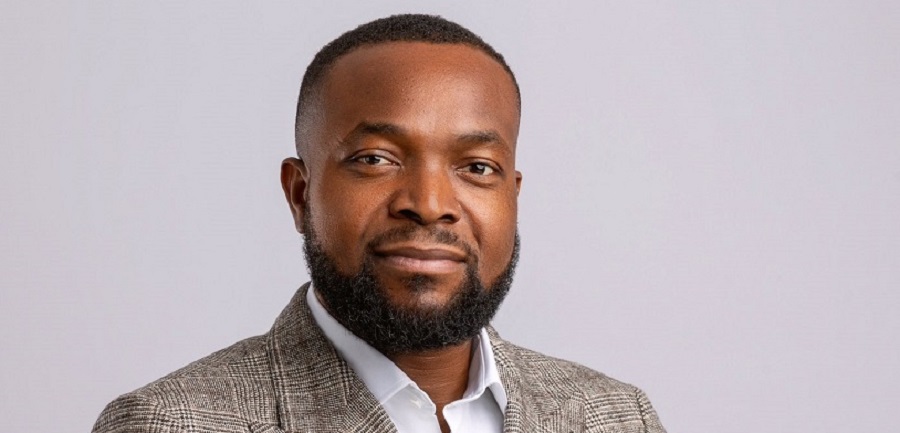
Bosun Tijani, minister of Communications, Innovation and Digital Economy, has said the government is shifting focus from expanding access to ensuring “meaningful connectivity” that drives economic growth and inclusion.

Bosun Tijani, minister of Communications, Innovation and Digital Economy
The minister made the statement on Friday while addressing stakeholders at the inauguration of board members of the Universal Service Provision Fund (USPF) in Abuja.
He said that although Nigeria had made significant progress since the introduction of GSM services, millions of people, particularly in rural and underserved communities, remain either unconnected or unable to fully benefit from digital services.
Dr Tijani highlighted ongoing investments in digital infrastructure, including plans to deploy 90,000 kilometres of fibre optic network and nearly 4,000 telecom towers nationwide.
He said initiatives under the USPF had improved access through projects such as rural connectivity and digital facilities in schools but stressed that the next phase must prioritise effective usage.
“It is not enough to connect a community. We must ensure that schools can teach with digital tools and that small businesses can access market opportunities,” he said, citing a pilot project in the Kura community where connectivity has enhanced access to communication, education and healthcare.
Aminu Maida, executive vice chairman, Nigerian Communications Commission (NCC) also called for a shift towards meaningful connectivity, noting that while data usage had grown significantly, it remained concentrated in urban areas.
According to him, recent data shows that telecom usage has increased by about 160% over the past two years, largely driven by urban demand.
“When we drill down, we see that a lot of that growth is actually in urban centres. So, the gap between those who are not connected or not meaningfully connected is growing,” he said.
Dr Maida added that the trend underscored the need for the USPF board to intensify efforts to bridge both access and usage gaps across the country.
Both officials emphasised the importance of collaboration, sustainable investment models and improved digital literacy to ensure that connectivity translates into real economic benefits for Nigerians.

How Recycled SIM Card Linked to N50m Kidnapping Nearly Landed me in Jail – Businesswoman

Senate Gives Tinubu Nod to Borrow Fresh $6Bn

FG Earmarks $2Bn to Launch 2 Satellites in 2028, 2029

CBN Directs Banks, Fintechs to Complete Cybersecurity Audit Tool

FG Launches CLHEEAN to Streamline Access to Government Services

Spotify’s Loud & Clear Report Reveals Over ₦60Bn Revenue for Nigerian Artists in 2025

Madonna University Taps Tech Guru Adote for Strategic Board Role

China Threatens to Shut Nigeria’s Satellite Over $11.44m Unpaid Debt

Jumia Tech Week 2026 Begins with Tech Deals on Smartphones, Electronics, and Everyday Technology

FCCPC Bans Lagos ‘No Refund’ Policy, Vows Fines and Shutdowns for Traders




 E-Financial2 days ago
CBN bars large‑ticket loan defaulters from banking services in tough new crackdown

 General News2 days ago
ARN Rejects Medical Bill over Attempt to ‘Scrap’ Profession

 Telecom2 days ago
NIGCOMSAT Supports Startups Growth with the Launch of Accelerator 3.0

 News2 days ago
Meningitis Kills a Quarter Million People a Year -Study

 Telecom2 days ago
FG Unveils Digital Economy Research Fund Scheme

 News2 days ago
Stakeholder says AI is Crucial to Nigerian Data Centres Amid Persistent Grid Collapse
- General News2 days ago
Nigeria Advances Digital Governance as NITDA takes over NGEA Portal

 General News2 days ago
Zarttech Reflects on Its Role in Changing Global Perceptions of Africa