

News
Dangote Refinery Debunks Speculations on IPO

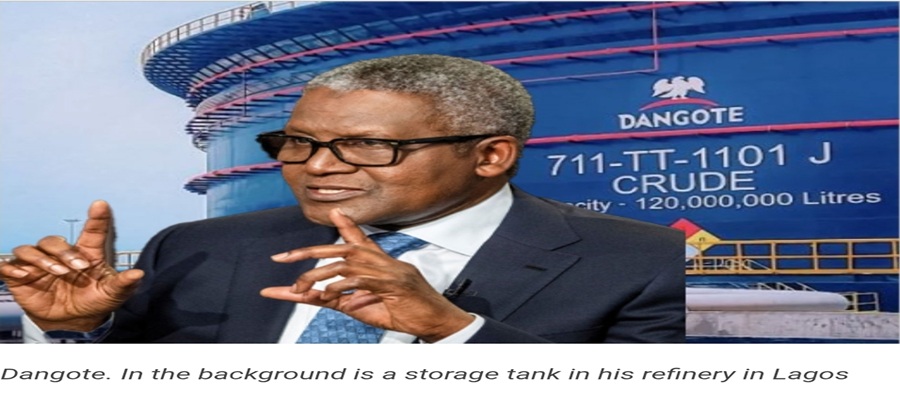
Dangote Petroleum Refinery and Petrochemicals (DPRP) has debunked recent circulation of unauthorised information regarding a potential Initial Public Offering (IPO).

In a statement, DPRP noted that several online platforms and unofficial sources have published unverified, and in some instances inaccurate, information relating to a potential offering.
“Such reports do not originate from DPRP and should be treated with caution. All official updates regarding any potential transaction will be communicated strictly through DPRP’s formal public disclosures and announcements issued by its appointed advisers, in line with applicable laws and regulatory requirements.
“Accordingly, the public, investors, and all market participants are strongly advised to disregard speculative commentary and rely solely on verified information formally issued by DPRP or its authorised representatives,” the statement said.
The firm assured stakeholders that, when appropriate, comprehensive, and accurate details regarding any proposed transaction will be made available through official channels, including regulatory filings, authorised press releases, and coordinated communications by the Enterprise and its appointed advisers.



World Bank has said Nigeria’s greatest fiscal challenge is weak revenue mobilisation rather than excessive borrowing, urging the Federal Government to strengthen revenue generation to support sustainable economic growth and meet its debt obligations.

The World Bank Country Director for Nigeria, Mr. Mathew Verghis, stated this during an interview on Channels Television on Friday.
According to him, Nigeria’s debt profile remains moderate by international standards and does not place the country among nations experiencing debt distress.
“From our assessment, Nigeria doesn’t have a high indebtedness problem; it has a low revenue problem,” Verghis said.
He explained that Nigeria’s debt-to-Gross Domestic Product (GDP) ratio is lower than that of many comparable economies, adding that the country’s fiscal challenge lies more in its limited revenue base than in the volume of its borrowing.
“When we looked at the numbers, Nigeria is a moderately indebted country, meaning it has less debt relative to its economy than most of its neighbours and many other countries.
“Nigeria is in a very different situation from Ghana, for example, which is going through a debt restructuring,” he said.
Verghis defended government borrowing, describing it as a legitimate tool for financing long-term investments capable of stimulating economic growth and improving citizens’ welfare.
“Nigeria borrows for the same reasons that all countries borrow. If you want to deliver results to people, the money available on an annual basis is not enough.
“So you borrow, deliver results, and that improves your ability to repay,” he said.
He cited electricity infrastructure as an example, noting that expanding access to power for millions of Nigerians would require substantial upfront financing.
“To be able to connect and provide energy to 32 million Nigerians, Nigeria needs to borrow money now.
“But with increased access to energy, the country will become wealthier and better positioned to repay the loans,” he added.
The World Bank official, however, warned that Nigeria’s low revenue generation poses a greater risk to fiscal sustainability than its current debt burden.
“Nigeria’s debt is not particularly high, and in fact, it is quite moderate by international standards.
“Its revenues are very low by international standards, and unless those revenues are raised, it will not be able to pay back debt,” he said.
Verghis said improving revenue mobilisation would enable the government to invest more in critical sectors such as infrastructure, healthcare, education and agriculture, while supporting job creation, strengthening human capital development and reducing poverty.
He noted that the World Bank’s recently unveiled Country Partnership Framework for Nigeria for 2026 to 2032 places job creation at the centre of its support for the country.
According to him, the framework will focus on investments in infrastructure, healthcare, agriculture and digital connectivity to promote inclusive and sustainable economic growth.
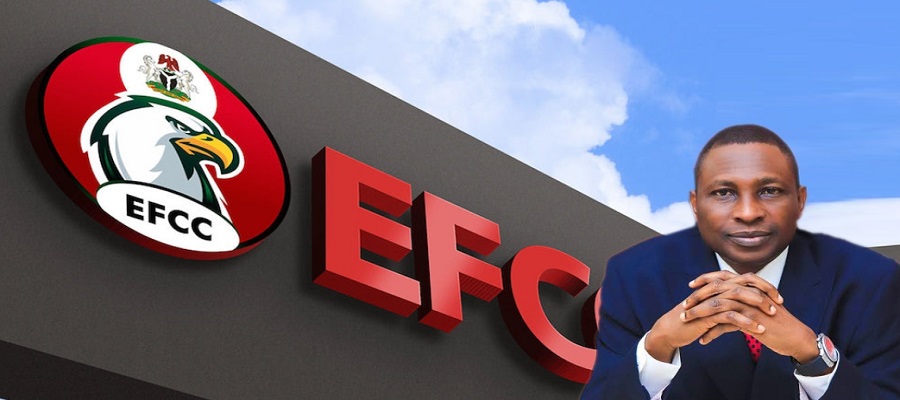
Ola Olukoyede, chairman of the Economic and Financial Crimes Commission (EFCC), has disclosed that the commission recovered more than N7.2 million stolen from the bank account of a serving judge by suspected internet fraudsters in a midnight cyberattack.

Ola Olukoyede, Chairman of the Economic and Financial Crimes Commission (EFCC).
Olukoyede made the disclosure at the public presentation of two books authored by retired High Court judge, Justice Alaba Omolaye-Ajileye.
He said the serving judge, who is from a South-South state, contacted him around 1:00 a.m. after receiving multiple debit alerts indicating that funds had been withdrawn from her account.
According to him, the stolen money represented savings the judge had accumulated over six years to finance her child’s education.
Olukoyede said the EFCC immediately swung into action and successfully recovered the entire sum before 6:00 p.m. on the same day.
He said the incident underscored the increasing sophistication of cybercriminals and the urgent need for stronger collaboration among law enforcement agencies, the judiciary and members of the public in tackling financial crimes.
The EFCC chairman also called for amendments to Nigeria’s legal framework to accommodate the use of artificial intelligence (AI) in criminal investigations and prosecutions.
According to him, existing evidence laws should be reviewed to recognise AI-generated evidence as technology continues to reshape crime detection and investigation.
Also speaking at the event, former Attorney-General of the Federation and Minister of Justice, Chief Kanu Agabi (SAN), urged anti-corruption agencies to intensify efforts to trace and recover public funds allegedly stolen and stashed in foreign countries.
Agabi stressed the need for sustained collaboration among relevant institutions to strengthen Nigeria’s anti-corruption efforts and improve accountability in public service.
In his remarks, a former President of the Nigerian Bar Association (NBA), Chief Wole Olanipekun (SAN), called for stricter enforcement of the country’s cybercrime laws to curb the growing menace of internet fraud.
Olanipekun said effective implementation of existing laws, alongside stronger institutional cooperation, would help address the increasing threat posed by cybercriminals to individuals and the nation’s financial system.

Federal Government has cleared nearly N39 billion in outstanding pension liabilities owed to retirees under the Defined Benefit Scheme (DBS), including former employees of the defunct Nigerian Telecommunications Limited (NITEL), Mobile Telecommunications Limited (MTEL), the Power Holding Company of Nigeria (PHCN) and other federal government agencies.

The Pension Transitional Arrangement Directorate (PTAD) disclosed this in a statement, saying the payments were in line with President Bola Tinubu’s Renewed Hope Agenda, which prioritises the settlement of inherited pension liabilities and improved welfare for retired public servants.
According to the directorate, the largest component of the payment, amounting to N25 billion, covered about 35 months of outstanding pension arrears owed to nearly 10,000 eligible retirees of the defunct NITEL and MTEL.
PTAD also said it disbursed about N9.5 billion as the first tranche of Back End Computation (BEC) arrears to eligible pensioners of the defunct Power Holding Company of Nigeria.
The Executive Secretary of PTAD, Mrs Tolulope Odunaiya, described the payments as a significant milestone in the Federal Government’s efforts to clear inherited pension obligations and strengthen confidence in the Defined Benefit Scheme.
Odunaiya said the settlement was made possible following presidential approval granted in 2025 and funding provided under the 2026 Appropriation Act.
She noted that the intervention had enabled the directorate to resolve long-standing pension liabilities affecting thousands of retirees.
“The successful settlement reflects the Federal Government’s commitment to sustaining pension reforms and ensuring that retirees receive their entitlements promptly in line with the objectives of the Renewed Hope Agenda,” she said.
Odunaiya thanked the affected pensioners for their patience while the liabilities remained outstanding and reaffirmed PTAD’s commitment to transparent, efficient and pensioner-focused service delivery.
She added that the directorate would continue to work towards improving pension administration and ensuring timely payment of retirees’ benefits.

Obi, NDC Presidential Candidate Faces N50Bn Defamation Claim over Alleged Podcast Remark

Airtel Africa Foundation Equips 200 Young Women with Digital Skills to Drive Nigeria’s Tech Economy

PufferPay CEO to Keynote Business Journal Fintech & Financial Inclusion Roundtable 2026

World Bank Sounds Alarm: Low Revenue, Not Debt, Is Nigeria’s Biggest Fiscal Threat

World Bank Okays New $1.25Bn Loan for Nigeria

Mobile Internet Gender Gap Widest in Africa – GSMA

Nigeria Launches FreeTV Nationwide

NASENI Moves to Digitize CCB’s 5m Assets Declaration and Operations

UK, Nigeria Launch £15m Growth Programme to Accelerate Economic Transformation

Court Deals Fresh Blow to NBC, Throws Out Appeal over Broadcast Fines




 E-Financial3 days ago
IMF Raises Concerns over N8.83 Trillion Unreported Spending in Nigeria’s Budgets

 Broadcasting2 days ago
Why We’re Partnering With NIHOTOUR To Bring Nigerians In South Africa Home – Steve Babaeko

 News3 days ago
Court Declares Keystone Bank Staff Wanted over Alleged N35m Fraud

 News2 days ago
FG Clears N39Bn Pension Arrears for NITEL, PHCN, Other Retirees

 News2 days ago
How Fraudsters Emptied a Judge’s Account of N7.2 Million in Midnight Attack

 Telecom2 days ago
MTN Nigeria Celebrates Volunteers at Y’ello Care Impact Showcase

 E-Financial2 days ago
SEC Grants Approval to Luno, Other Crypto Firms under Regulatory Sandbox

 Telecom2 days ago
MTN Takes ‘The Gathering on 100’ Youth Empowerment Initiative to Kano