

Telecom
5 Types of People to Expect at MTN’s Annual General Meeting

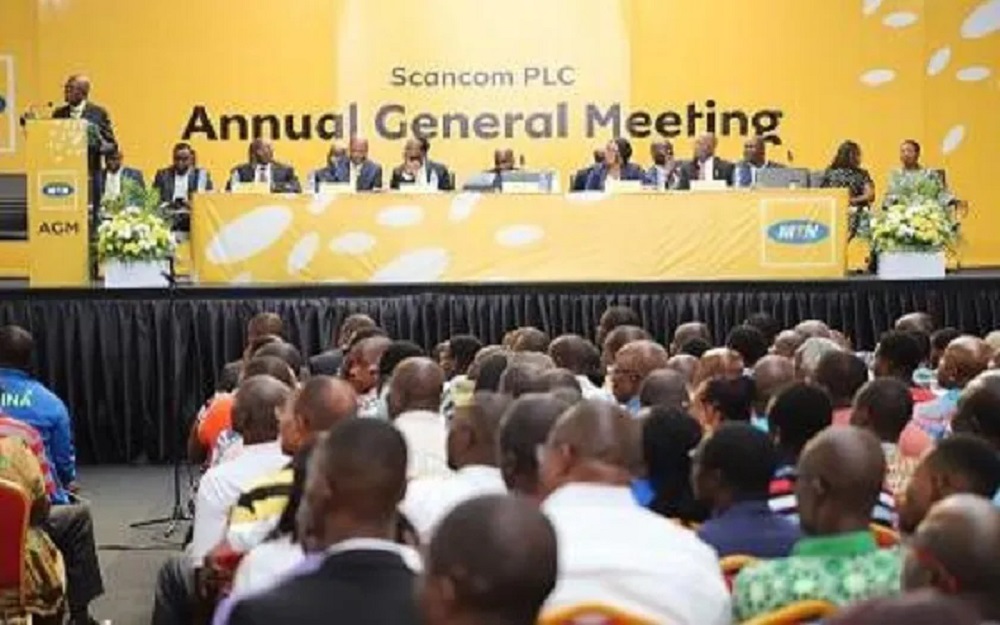
Annual General Meeting (AGM) of MTN Nigeria is scheduled to hold on the 18th of April at The Balmoral Convention Centre, Federal Palace Hotel. MTN’s shareholders will potentially get a dividends payout of 203.5 billion as their share of profits from the financial year 2022.

This is coming after qualified shareholders from the public offer also got incentive shares as promised during the public offer.
MTN Nigeria’s Chief Executive Officer, Karl Olutokun Toriola noted, “In 2022, we significantly increased our shareholder base through the MTN Group’s offer for sale of shares. The offer, which concluded on 31 January 2022, was the first in the series of transactions to increase Nigerian ownership of the company.
The qualified investors who held some or all the shares allotted to them for 12 months to 31 January 2023 have received the incentive shares totaling 3,977,418.”
For some, it’s a time to catch up on important business matters and network with fellow shareholders. For others, it’s a chance to grab some free refreshments and a comfy chair. Whatever your reason for attending, one thing is for sure: you’re bound to run into these five types of people.
- The “I Know Everything” Person
This person has read every report, every memo, and every email related to the AGM. They know every detail about the company and can recite the entire annual report from memory. They raise their hand for every question and offer lengthy, convoluted opinions on every matter. They’re convinced that their ideas are the best, even if they’re completely impractical.
- The “I Have a Complaint” Person
This person is here to air their grievances. They’ve been waiting all year for this moment to tell everyone about the problems they’ve encountered with the company. They don’t have any solutions or suggestions; they just want to complain. They’re usually the first to raise their hand for questions and the last to leave the room.
- The “I’m Here to Network” Person
This person is the ultimate networker. They know everyone in the room and they’re determined to meet everyone they don’t know yet. They’re handing out business cards left and right and making small talk with anyone who will listen. They’re not particularly interested in the AGM itself; they’re just using it as an excuse to make some new connections.
- The “I’m Too Important to Be Here” Person
This person walks in late, sits in the back, and spends the entire meeting scrolling through their phone. When it’s time for questions, they stand up, ask something completely unrelated to the agenda, and then leave without waiting for an answer. They’re usually high up in their company, but they have no interest in what’s going on at the AGM. They’re just there to make an appearance and then go back to their busy schedule.
- The “I’m Here for the Free Food” Person
This person doesn’t care about the agenda, the reports, or the speakers. They’re just here for the free coffee and snacks. They load up their plate with pastries and fruit and then sit back to enjoy the show. They’re not interested in contributing to the conversation; they’re just happy to have a reason to leave their desk for a while.
Look out for these people at the AGM and if you see any of them, ask them why they bought MTN shares if they won’t be paying any attention.
And there are proud shareholders like us who will not attend the AGM but glued to our phones on April 20th when the alert for dividends payout will start rolling in. That’s how you roll when you invest in a profitable company like MTN.



Federal Executive Council has approved the rollout of a nationwide alphanumeric digital postcode system, a move believe will modernise the country’s addressing framework and support growth in logistics, e-commerce and emergency services.

The approval, granted under president Bola Ahmed Tinubu, paves the way for the introduction of a Geographic Information System (GIS)-enabled postcode platform designed to provide more accurate and standardised location data across Africa’s most populous nation.
Bosun Tijani, the federal minister of Communications and Digital Economy of Nigeria, who disclosed this via X, said the reform, developed in collaboration with Nigerian Postal Service (NIPOST), would replace inconsistent and often manually described addresses with a structured alphanumeric format tied to geospatial coordinates.
Nigeria’s current addressing system has long posed challenges for postal deliveries, emergency response teams and e-commerce operators, particularly in densely populated urban areas and rapidly expanding peri-urban communities where street naming and house numbering remain irregular.
The new system is expected to improve the precision of mail and parcel sorting, reduce failed deliveries and shorten turnaround times for logistics firms serving a fast-growing online retail market.
Tijani affirmed that the digital postcode framework would extend beyond postal operations, describing it as a foundational layer for national planning and public service delivery. By embedding geographic intelligence into address identification, authorities expect better data integration across agencies responsible for health, security, taxation and urban development.
The reform aligns with Nigeria’s broader digital economy strategy, which aims to build core infrastructure to support fintech, e-commerce and government digitisation efforts.
Industry executives have repeatedly cited weak address verification systems as a bottleneck for expanding nationwide logistics coverage, particularly outside major commercial hubs such as Lagos and Abuja.
Under the new framework, each location will be assigned a unique alphanumeric code linked to geospatial data, allowing for machine-readable sorting and integration into mapping systems. Authorities say this will enable faster emergency response deployment and more efficient route planning for both public and private sector operators.
The government did not provide a timeline for full nationwide deployment but indicated that implementation would proceed in partnership with NIPOST and other relevant agencies.
Officials described the approval as part of efforts to create an enabling environment for a modern and inclusive digital economy, positioning accurate addressing as critical infrastructure in the same category as broadband connectivity and data centres.
For businesses and consumers alike, the shift could mark a structural change in how goods, services and public resources are delivered across the country.

A co-ordinated effort between the GSM Association (GSMA), six African operators and original equipment manufacturers (OEMs) will pilot $40 (R654) entry-level 4G smartphones in six African nations this year.

This, as 710 million of Africa’s population live close to a 4G broadband signal, but have never gone online, with a further 68% not owning a device.
On the continent, entry-level smartphones cost 26% of the average person’s income. For the poorest 40%, the cost jumps to 64% of their income, and for the next 20%, the cost reaches 87%, data from the GSMA has shown.
To address the cost-prohibitive hurdles, the industry body has been a strong advocate of bringing down the cost of devices. It believes that affordable 4G smartphones at scale could bring tens of millions of people online, unlocking access to education, healthcare, financial services, e-commerce and artificial intelligence (AI)-powered tools.
Angela Wamola, head of GSMA Africa, said that the pilots will launch in six countries: DRC, Ethiopia, Nigeria, Uganda, Tanzania and Rwanda.
She added that the pilots build on the minimum specifications for low-cost 4G devices unveiled at MWC Kigali in 2025 and represent a step forward in turning industry alignment into tangible, on-the-ground impact.
The specifications focus on screen size, battery life and storage for a meaningful device that creates utility, particularly in the age of AI, Wamola added.
“Affordability and access of the device is critical for us to resolve. At the same time, getting a device is also about a willingness to purchase, which is about utility. Creating utility relevant to people’s lives, be it in manufacturing, agriculture, information, health and education, etc. It’s about bringing that content and government services online.
“The cherry on top is about local languages. People want to consume relevant content, but it must be in their local language.”
“As the devices land in the hands of the people, the languages will be readily available. Our small, medium-sized entrepreneurs, developers, innovators can begin to create content and products for our population. This is the magic that needs to happen to close the usage gap in the shortest time possible.”
The announcement, made in Barcelona, moves a step further from MWC Kigali by solidifying the vendors and operators that responded to the minimum specifications for the $40 device call, according to Wamola.
The marketplace now consists of private sector operators, as well as original equipment manufacturers that are engaging the six countries where the pilots will take place, she stated.
“At the same time, the GSMA is working with the governments of those nations to understand what fiscal policy incentives can be placed for these $40 entry-level devices, so that they land at the hands of the customer at the same price point.”
Wamola also indicated the coalition is taking a page out of the South African government’s book. It removed the 9% ad valorem tax, commonly referred to as luxury tax, on smartphones within the below-R2 500 price range.
Ad valorem duties are taxes levied on commodities as a certain percentage of their value. For smartphones, the duties are charged at a flat rate of 9%, classifying them as luxury goods.
In May, National Treasury confirmed the luxury tax on entry-level smartphones had been removed.
The GSMA saw how the market responded to adopting those devices when the government of South Africa removed the 9% luxury tax, she stated. “For us, it’s about replicating those lessons across Africa, so that governments can also adopt those.”
Vivek Badrinath, director-general of the GSMA, added: “Affordable smartphones are the gateway to digital and financial inclusion, economic opportunity and innovation; 3.1 billion people have mobile coverage but are not connected to the mobile internet.
“Together with the G6 group of leading African operators, we are sending a clear demand signal to bring low-cost 4G devices to market. In a global context of rising memory costs, governments have an important role in bridging the usage gap. Removing taxes and import duties on entry-level 4G smartphones will be critical to achieving scale.”
Binance, the world’s largest cryptocurrency exchange, has reported a 96 per cent drop in direct exposure to illicit activities between January 2023 and June 2025, underscoring its commitment to regulatory excellence and user safety amid Nigeria’s growing digital finance sector.

Binance
The exchange highlighted investments in a robust compliance framework, including over 580 global compliance professionals and 970 staff in related roles, advanced transaction monitoring, stringent Know Your Customer (KYC) protocols, and anti-money laundering (AML) systems.
These measures align with evolving regulations across key markets, including Nigeria, where crypto adoption surges despite Central Bank of Nigeria (CBN) guidelines.
Binance’s Chief Compliance Officer, Noah Perlman, said: “At Binance we’ve built a system that doesn’t just react to threats, it anticipates them. A 96% reduction in illicit exposure is a testament to our infrastructure and the 1,500+ professionals working behind the scenes to protect our 300M users.”
Key achievements include a 96.8 per cent plunge in sanctions-related exposure—from 0.284 per cent in January 2024 to 0.009 per cent in July 2025.
In 2025 alone, Binance responded to over 71,000 law enforcement requests, helping seize more than $130 million (over ₦200 billion) in illicit funds.
Collaborations with agencies like Europol, DEA, UK’s NCA, and national cybercrime units have dismantled ransomware groups, darknet markets, and trafficking networks.
Binance co-CEO Richard Teng added: “Our mission has always been to increase the freedom of money, but that freedom is only sustainable if it is built on a foundation of trust. By integrating compliance into our product DNA, we are proving that the world’s largest exchange can also be the most secure.”
The platform engages regulators and policymakers to shape balanced rules supporting innovation while prioritising transparency and financial integrity. Since 2017, Binance has served over 300 million users, publishing regular compliance updates to build trust.
Industry watchers note Binance’s efforts resonate in Nigeria, where crypto trading volumes exceed $50 billion annually, but challenges like fraud and regulatory scrutiny persist. The exchange’s progress could bolster confidence as the CBN refines fintech policies.
Binance reaffirmed its dedication to a safer crypto ecosystem through ongoing investments and partnerships.

NAICOM Signs MoU with BPP to Deepen Insurance Compliance in Public Procurement

FG Approves GIS-enabled Digital Postcode to Tackle Logistics Gaps, Boost E-commerce

Firm Enhances its Security Awareness Platform with SCORM and PDF Support

GSMA, African Operators, Others to Launch Low-cost 4G Devices

Binance Cuts Illicit Activity Exposure by 96%, Leads Global Crypto Compliance Push
Kaspersky Brings more Transparency to Threat Detection with New Hunt Hub

Dr. Cairo Ojougboh Foundation Bolsters Nigeria’s Education Drive with ₦2.7m Student Support

NDPC Commits to Balancing Data Privacy, Protection Information

OADC Lagos Reinforces Commitment to Local Data Hosting and Digital Transformation @ NDPC’s National Privacy Week Summit

PwC Reveals AI Scaling Gap Slows Africa’s Digital Transformation




 Telecom2 days ago
Sunil Bharti Mittal Conferred GSMA Lifetime Achievement Award for Transforming Global Telecommunications

 Telecom2 days ago
Why Digital Trust Matters: Secure, Responsible AI for African SMEs?

 General News2 days ago
Krishnan Exits Africa Data Centre to Embark on Professional Chapter

 E-Business2 days ago
Jumia Tech Week 2026 Begins with Tech Deals on Smartphones, Electronics, and Everyday Technology

 General News3 days ago
Leo Stan Ekeh at 70; thanks Tinubu, Obasanjo, Nigerians, Global Tech Community

 Broadcasting2 days ago
NCAA Orders Overland Airways to Refund VAT Charged on 2025 Tickets

 E-Financial1 day ago
NRS Targets N40trillion in Tax, Royalty Revenue in 2026

 Telecom2 days ago
House Probes Fintech Regulation via Public Hearing on New Commission Bill