

Broadcasting
The Future is Messy, End of Pay-Tv as We Knew It

David Abraham, founder of Wonderhood Studios on the value chain of pay-TV has offered insights into the trends observed and how audiences across Africa are changing.
Abraham who spoke at the second day of the Digital Dialogue conference, a thought-leadership platform facilitated by MultiChoice, shared his varied experience running TV channels in the UK and the US between 2001 and 2017 – explaining how the environment for content and channel providers evolved from the early days of digital TV to the much more complex internet-based distribution environment we see today.
According to Abraham, the past used to be all about a battle between free TV and service providers’ intent on building pay-walls and maintaining exclusivity over key content in order to promote ‘big basic’ monthly subscriptions and minimise monthly churn of customers.

Then came broadband as an additional service to lock in customer loyalty, followed by mobile. “The old walls of traditional pay TV are now tumbling down and what’s coming next is infinitely more fragmented, and messy”, he remarked.
Telecoms providers compete with content platforms to build customer loyalty with original content and rights in a world where global digital competition is intensifying traditional competitive boundaries yet further. The question remains whether consumers will be able to navigate between so many different providers to find the best content in this more crowded forest of choice.
Abraham reviewed the key recent trends in UK, European and US pay TV and his talk offered a look into the future – looking at potential new models such as ‘quasi-linear’ and ‘post cable’ channels; the growth of emerging market platforms such as iflix and will consider what the long-term impact of blockchain technology could be on future models of pay TV consumption and distribution.
Abraham concluded his talk by stating that although the future is uncertain, there are many opportunities for content exploration amongst African audiences: “The African continent, with its younger populations and progressive use of mobile, can both build on and leapfrog Western markets in terms of future models of content creation and distribution”.
ENDS
Note to Editors:
- For more information, please visit www.multichoiceafrica.com and follow the social media conversation on the hashtag #DigitalDialogue2018 and tag Instagram: MultiChoice Africa; Twitter: MultiChoiceAF; Facebook: MultiChoice Africa.
Speaker Bio: David Abraham – Chief Executive of Wonderhood Studios
David has spent the past three decades working at the intersection of leadership, commerce and creativity in the UK and the United States. He is regularly cited as a prominent media executive in lists published by Variety, The Telegraph, Debretts, The Evening Standard and The Guardian. As Chief Executive of Channel 4 between 2010 and 2017 he led the organisation through a prolonged period of creative and brand renewal and public remit delivery – while also posting record revenues of £1bn in 2015 and 2016. During his tenure Channel 4 ended its reliance on Big Brother and delivered a diversified schedule including shows such as Gogglebox, The Last Leg and Educating Yorkshire. The Channel also successfully delivered the largest events in its history – the London and Rio Paralympic Games and began broadcasting Formula 1 and The Great British Bake Off while winning multiple BAFTAs and Channel of the Year Awards. David has many years of experience operating at the sharp end of editorial risk-taking in all genres of TV and film including investigative journalism, news, current affairs, comedy, drama and live events. Under his leadership Channel 4 also navigated through profound digital change by building an industry leading data strategy which today engages over 15m people across the UK via its All4 platform. Prior to Channel 4, David led UKTV where he launched its biggest Channel, Dave, (which is not in fact named after himself) and spent several years in the United States running TLC, a major cable network. David was also closely involved in the digital expansion of Discovery Channels in the UK and Europe in the early 2000’s. David has recently announced that he will be launching Wonderhood Studios in June 2018 in London.
About the Digital Dialogue Conference:
The 2018 Digital Dialogue Conference is a thought leadership platform facilitated by MultiChoice Africa in order to foster a better understanding of the future direction of the video entertainment industry in Africa. This is the 5th edition of the conference which was established in 2012 to create a better understanding of Digital Migration and its impact on Africa’s digital landscape. Since then, the independent and growing platform has been critical in fostering a better understanding and building knowledge on video entertainment and Digital terrestrial markets while creating necessary conversations with thought leaders about various industry-related issues.


Uchenna Mbunabo, Nigerian filmmaker, has raised concerns over the alleged unauthorised broadcast of Nollywood films by some Ghanaian television stations, calling on Ghana’s National Film Authority (NFA) to strengthen the enforcement of copyright laws.

Uchenna Mbunabo, Nigerian filmmaker
Mbunabo made the remarks during a conversation with James Gardiner, deputy CEO of the National Film Authority (NFA) of Ghana.
He questioned whether it was permissible for television stations in Ghana to download Nigerian movies from YouTube and air them without obtaining permission from the producers.
“I noticed that Ghanaian TV stations, the way they are stealing our films and showing them for free with impunity. Is it legalised in your country for TV stations to go on YouTube, download people’s sweat and show it for free?”
According to Mbunabo, some Ghanaian television stations have been downloading newly released Nollywood films from YouTube and broadcasting them without authorisation, depriving producers of revenue generated through the platform.
He also stated that he had not witnessed Nigerian television stations engaging in similar practices and questioned what measures Ghana was taking to protect filmmakers’ intellectual property.
Responding to the concerns, Gardiner acknowledged that the issue exists and said the National Film Authority had begun engaging relevant stakeholders to address it.
He disclosed that the NFA has held discussions with the Ministry of Communications, the National Communications Authority (NCA) and the National Media Commission (NMC) on improving copyright enforcement.
Gardiner explained that while Ghana has copyright laws, enforcement remains challenging because many television stations now operate digitally and may not have physical offices within the country.
“There are copyright laws, but they are not effective because a lot of the TV stations don’t have offices. Most of them are now digital, so they operate from anywhere. They can even have a Ghanaian TV station but be operating from Austria simply because it is digital.”
He added that authorities are considering a new licensing framework that would require broadcasters to undergo a fresh licensing process to improve monitoring and enforcement.
According to Gardiner, television stations found guilty of illegally broadcasting copyrighted content would be required to compensate affected producers through fines.
He added that repeat offenders could face suspension of their broadcasting licences, while a third violation could result in the revocation of their licences.
Although he did not provide a specific timeline, Gardiner said the reforms were already underway and expressed hope that significant progress would be seen next year.
Mbunabo welcomed the proposed measures but urged the National Film Authority to expedite the process, stating that unauthorised broadcasts continue to affect filmmakers’ ability to recover production costs through legitimate distribution channels such as YouTube.
He also stressed that his comments were not directed at Ghana’s film industry, noting that he has worked with several Ghanaian actors over the years and supports collaborations between Nollywood and Ghallywood.

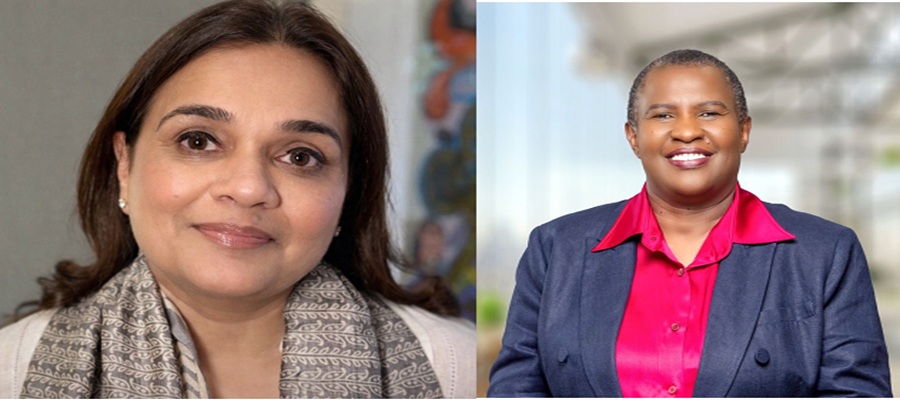

Broadcasting Organization of Nigeria (BON) has established six committees to help strengthen and modernize the country’s broadcasting industry.

The committees will focus on content creation, skills development, digital transformation, sustainability, policy and commercial opportunities
The initiative aims to support industry growth and improve collaboration between broadcasters, regulators and media experts
The official launch recently, was led by Tony Akiotu, president, BON and attended by media professionals, program directors, former journalists and heads of specialized media organizations.
The event brought together several prominent figures in Nigeria’s media industry, including veteran broadcaster and trainer Bimbo Oloyede, Tony Uyah of M4S TV, Kingsley Uranta of Channels Television, Ismael Sani of Platinum TV and Ibrahim Shehu of Trust TV.
Together, they are expected to help drive innovation and support the growth of Nigeria’s broadcasting sector.
According to Akiotu, the committees are intended both to help shape industry policy and to provide a forum for dialogue between BON and broadcasting experts.
Akiotu said the ad hoc committees were intended to strengthen BON’s work and ensure that the umbrella body for Nigeria’s broadcasters played a more direct and meaningful role in developing the country’s broadcasting sector.
The six committees reflect the sector’s main priorities. The first focuses on collaboration and innovation to promote content creation.
The second is dedicated to training and talent development, while the third focuses on industry sustainability by improving the sector’s long-term financial viability.
A fourth committee will focus on digital transformation and work with the National Broadcasting Commission (NBC) on regulatory issues.
The remaining two committees will oversee public policy advocacy and the development of sports and commercial rights to help broadcasters increase revenue and attract more investment. Together, the committees are expected to guide BON’s efforts to modernize and strengthen Nigeria’s broadcasting industry.
The committees, chaired by members of BON’s General Assembly and supported by the organization’s Secretariat, have an initial 12-month mandate that may be renewed if necessary.
They are required to submit a progress report within three months and implement approved recommendations within the following six months.
The arrangement is intended to ensure close oversight and the timely implementation of their work.
Akiotu also reminded committee members that Nigeria pioneered television broadcasting in Africa and urged them to carry out their work with greater effectiveness and efficiency.

Next Currency Crisis May Turn $300Bn in Stablecoins into National Currencies

NIHSA Warns States of Possible Flood within Seven Days

FG to Raise N1.2 Trillion via Fresh Bond Offer – DMO

Gigbanc Nigerian Fintech Startup Closes Shop after 3 Years

Mbunabo, Nigerian Filmmaker Accuses Ghana TV Stations of Pirating Nollywood Films

NRC, Ponzi Scheme Collapses Resulting Loss of Billions of Naira

Nigeria Launches FreeTV Nationwide

NASENI Moves to Digitize CCB’s 5m Assets Declaration and Operations

Lebara Nigeria Launches Lebara Play, Africa’s First Telecom-Owned Micro-Drama Platform

CANAL+ Partners Samsung to Pre-Load DStv Stream on New Samsung TVs In Nigeria, Other African Countries




 News2 days ago
Xora Finance, Fintech Firm Refuses to Hire Nigerians over Alleged Dishonesty

 Telecom2 days ago
NCC Advances Dig Once Policy, Engages Stakeholders on Cost-Based Framework for Duct Sharing

 Telecom2 days ago
NCC to Keynote Telecom Sector Sustainability Forum 7.0

 General News2 days ago
FG Secures Fresh $208.3m World Bank Loan for Cash Transfer
 News2 days ago
How Ponzi Scheme Victims can Seek Legal Remedies — Lawyers

 News2 days ago
PalmPay Nigeria Appoints Samuel Oluyemi as Chief Operating Officer

 General News2 days ago
SERAP Sues INEC over Alleged N800Bn 2027 Tinubu Campaign Fund

 Telecom1 day ago
MTN Nigeria Slashes Cost of Broadband Internet Router, Unwraps New Data Bundles for Low-Budget Users