

News
60 Hearty Cheers to Chioma Ekeh, Africa’s Leading Unusual Female Tech


The story has often been told in tech circles of how a relatively unknown Nigerian female student became a sensation of sorts among the international student population back in the early 80s in India owing to the unusual course of study she was undertaking.

Chioma Ekeh
Electing to study Mathematics at Bachelor’s degree level – a course that required not only battling differential equations, calculus, advanced algebra, and so on, but also pitting one’s wits against that of wizened professors – is not a task for the faint-hearted. But that was the path that this unusual lady took at Punjab University, located in the culturally rich and aesthetically pleasing city of Chandigarh, India.
It was a decision that would lead Chioma Ekeh (nee Emelonye) along the path of meeting the love of her life, a certain Leo Stan Ekeh and returning to Nigeria with him to play a leading role in shaping the course of technology distribution in Africa.
Undoubtedly, unusual may also be a word that defines Chioma and Leo Stan Ekeh’s remarkable journey together. A power couple and exemplary partners who have worked together for over 30 years building a successful technology empire is a rarity, one that is not often seen.
That sojourn to India and her subsequent career trajectory laid the groundwork for the impressive reputation Chioma Ekeh has built in the highly competitive technology space. Business associates and representatives of global brands never fail to cite her intellect and brainpower.
Job seekers who cross her path during interviews often recall being asked to solve a simple arithmetic problem. For those who eventually become employees, there is never-ending adulation.

Her husband, Leo Stan Ekeh, describes her as the integral analytics, the backbone behind the brilliant success of the Zinox Group where she has continued to support all the businesses across the board.
Such is the cerebral aptitude of this unusual woman that she is reported to have taken the stage once at a company-wide business review to present a financial report punctuated by humongous accurate numbers, figures and percentages, all from memory and without recourse to any notes, a device or an actual presentation document.
Born on April 25, 1964, the story of the impressive diffusion, accessibility, useability and affordability of cutting-edge technology devices and solutions in Nigeria and indeed, sub-Saharan Africa will be grossly incomplete without a detailed citation on Chioma Ekeh and the leadership role she has played – one she has continued to play as a silent innovator and disruptor–alongside her legendary spouse.
A Fellow of the Chartered Institute of Certified Accountants (FCCA, UK), Mrs. Chioma Ekeh is the brains behind TD Africa, a regional technology distribution powerhouse headquartered in Nigeria and with branches across Africa and in four other continents.
A company she led from start-up stage, TD Africa with Chioma Ekeh as CEO, pioneered ICT distribution in Sub-Saharan Africa and has remained the industry leader by market share in the region and the biggest provider of credit to resellers.
Founded in 1999, TD Africa is Africa’s leading distributor of technology and lifestyle products, boasting an unmatched and growing network of partnership with global brands like HP, Microsoft, Apple, Starlink, IBM, Dell Technologies, Ring (by Amazon), Cisco, Lenovo, APC by Schneider Electric, Samsung, Bosch, Phillips, Logitech, Vivo, among several others. Under Chioma’s exemplary leadership, the company has achieved numerous milestones, earned a long list of local and international awards/accolades and ensured Nigeria and indeed Africa is reckoned with at the global table of technology conversations and discussion-making.
However, this remarkable story may have turned out differently, had Chioma not returned to Nigeria under the guidance of her husband.
Armed with a formidable Mathematics degree after completing her studies in India, Chioma had the world at her feet and was the toast of leading companies the world over.
Moving to the United Kingdom at the invitation of her husband, Chioma joined the exalted league of Chartered Accountants and thereafter, bagged an MBA at the reputable Heriot Watts University.In 1987, she joined Sterling Deveraux as an Investment Analyst, engaging in researchand analyzing assets, such as stocks, bonds, currenciesand commodities.
Her acumen and exceptional skills were growing in demand and before long, she left Sterling Deveraux, joining the London Borough of Lewisham as an accountant in 1988.
Between 1988 and 1991, Chioma’s sterling work saw her rise swiftly through the ranks at the London Borough of Lewisham, moving from Accountant to Senior Auditor and then to Financial Auditor.
Certainly, Chioma Ekeh had a clear path to becoming CFO and possibly CEO at the London Borough of Lewisham or even going on immediately to taking up other elevated roles at other organizations. But the love of motherland and the call of her husband – Leo Stan Ekeh – to return home to Nigeria with him and build a technology legacy for Nigeria and Africa proved too strong.
Back home, Chioma Ekeh’s initial area of responsibility was with Task Systems Ltd., the first of many companies in the Zinox Group set up by Leo Stan Ekeh.
She took up the position of Financial Controller and spent six achievement-filled years at Task before driving the vision of technology distribution birthed by her husband in launching TD Africa where she became the company’s pioneer CEO.
A quiet, unassuming tech icon, Chioma Ekeh has acquired a well-deserved status as unarguably one of Nigeria’s top three leading Women-in-Tech, a female technology business leader with extensive years of proven capacity in building high-performing teams and transforming businesses beyond stakeholders’ expectations.
In partnership with her husband, Chioma Ekeh has played immense roles in growing and nurturing partner businesses, launching several thriving new businesses and successfully closing some of the biggest acquisitions in the technology space in Nigeria.
The Tech Experience Centre – Africa’s first technology experience centre – located at Yudala Heights, a sprawling edifice in the heart of Victoria Island – is another project that has Chioma Ekeh’s indelible signature on it.
The launch of the Tech Experience Centre in October 2020 received high praise from the Nigerian government and representatives of global Original Equipment Manufacturers (OEMs).
Under her guidance, Celebrating You, an annual showpiece celebratory event hosted by TD Africa has become unarguably the biggest year-end event in the Nigerian technology industry for over a decade.
Also, she has spearheaded several CSR projects, including The Herwakening – an empowerment programme for female entrepreneurs– and Girls in ICT – a project targeted at encouraging young girls to take up STEM (Science, Technology, Engineering, Mathematics) disciplines and considering careers in technology.
As she turns 60, Chioma Ekeh deserves rarefied mention and unmitigated encomiums. An amazon, this unusual female tech icon who has shattered several glass ceilings, knows no fatigue and has continued to innovate, effortlessly leading from the front.


The Chartered Institute of Bankers (CIBN) and the Association of Corporate Communication and Marketing Professionals in Banks (ACAMB) have enjoined banks to further deepen and prioritize financial inclusion, women’s empowerment and sustained growth through strategic mandates and frameworks, aimed at closing the financial gap and empowering more small, and medium enterprise (MSME) owners.

Both organisations made this call during a courtesy visit to the newly invested 24th President and Chairman of Council of the Chartered Institute of Bankers of Nigeria (CIBN), Dr. Dele Alabi, Ph.D, FCIB, as part of plans to congratulate him on his investiture as well as seek a stronger alliance between both bodies.
The visit followed Alabi’s investiture where he unveiled his “IMPACT” Vision, themed “Consolidating Our Local Impact, Enhancing Our Global Relevance.”
The vision rests on six pillars: Inclusion across geographic, gender, and generational lines; Membership growth and quality; Professionalism and ethics; Accountability; Competencies and skills development; Technology, automation, and innovation. Other areas of shared interest, include women empowerment, financial inclusion and literacy, as well as MSME clinics, all of which are top on his agenda.
Alabi explained that under him, the institute will be prioritising financial inclusion and women empowerment, because of its realisation that women are often the primary financial managers and caregivers in families. Access to savings, micro-credit, and insurance acts as a safety net during crisis and allows them to significantly improve living conditions.
He added that CIBN would be happy to drive joint knowledge sharing and exchange sessions with CBN and ACAMB across various platforms. “Educating the public through public awareness programmes, with ACAMB as the rallying point, is central to what we do,” he noted.
ACAMB President, Jide Sipe, who led the delegation, spoke in unison with the CIBN president, as he noted that, closing the inbalances in financial access help economies grow faster, reduces inequality, and encourages greater civic participation by all.

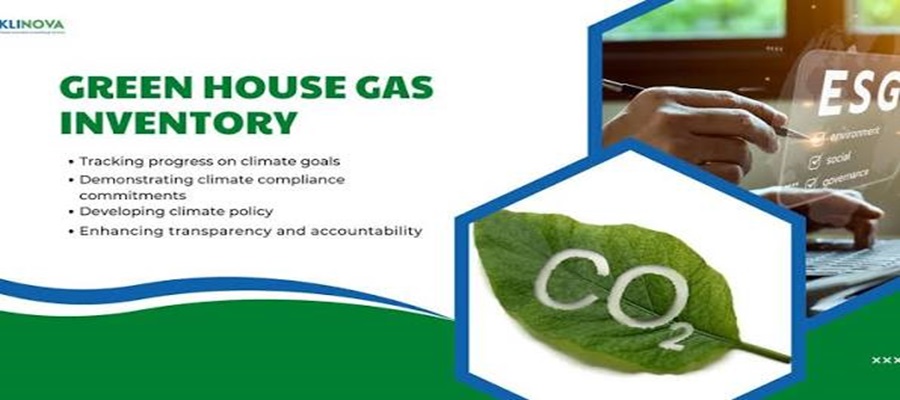
Lagos State has become the first sub-national government in Nigeria to establish a comprehensive Greenhouse Gas Registry, a move aimed at strengthening climate governance, improving emissions accountability and accelerating the state’s transition to a low-carbon economy.

The Lagos State Greenhouse Gas Registry (LGHGR) was unveiled at the Central Business District, Alausa, Ikeja, at a ceremony attended by Prof. Akin Abayomi, commissioner for Health, members of the State Executive Council, representatives of the Federal Ministry of Environment, development partners, TPHG Technologies, the diplomatic and business communities, academics, civil society organisations and the media.
Describing the initiative as a landmark achievement in the state’s environmental sustainability drive, Dr. Babatunde Ajayi, general manager of the Lagos State Environmental Protection Agency (LASEPA), said the Registry marks a defining moment in Lagos’ climate action journey and reflects Governor Babajide Sanwo-Olu’s commitment to building a resilient, climate-smart and environmentally sustainable economy.
According to Ajayi, the digital platform will enable the state to accurately measure, monitor, report and verify greenhouse gas emissions across key sectors, providing credible data to guide environmental policies and climate interventions.
He said the Registry would strengthen evidence-based decision-making, improve transparency and accountability, support national and international climate reporting obligations, unlock carbon market opportunities and boost investor confidence in Lagos’ environmental initiatives.
Ajayi also commended TPHG Technologies for providing the technical expertise that made the pioneering project possible.
Delivering the keynote address, Prof. Abayomi described the Registry as a major milestone that positions Lagos at the forefront of climate governance and emissions accountability in both Nigeria and Africa.
He noted that climate change has evolved into a significant public health and governance challenge, stressing that access to reliable emissions data would enable the state to formulate evidence-based policies, attract climate financing, strengthen resilience and accelerate its transition to a low-carbon economy.
Providing insights into the technical framework of the project, Dr. Mofoluso Fagbeja, lead consultant and chief executive officer, TPHG Technologies, explained that the Registry was developed from the greenhouse gas inventory jointly undertaken by LASEPA and TPHG Technologies in 2022, using 2019 as the baseline year for emissions assessment.
He said the platform is designed to close critical emissions data gaps, particularly within the industrial sector, while supporting effective climate policy implementation, emissions management and sustainable development.
Fagbeja also disclosed that the greenhouse gas inventory estimated that poor air quality contributes to about 35,000 premature deaths annually in Lagos, underscoring the urgent need for stronger emissions control measures and cleaner environmental practices.
In a goodwill message, Balarabe Abbas Lawal, minister of Environment, represented by Mrs. Adenaike Olunimpe Oludunni, federal controller of Environment in Lagos, commended Lagos State for pioneering the initiative, describing it as a significant contribution to Nigeria’s climate commitments.
He said the Registry aligns with the country’s Nationally Determined Contributions (NDCs) under the Paris Agreement and supports the Federal Government’s Energy Transition Plan, while reaffirming the ministry’s commitment to deeper collaboration with Lagos State on climate governance and environmental sustainability.

A recently released Henley Passport Index 2026, showed that Nigerian citizens can travel to at least 20 destinations outside the African continent where entry is allowed either visa-free, with a visa on arrival (VOA) at no extra cost, or via an e-visa.

This expanded access opens doors for Nigerian travellers to experience countries in the Caribbean, Asia, and beyond with greater ease.
Below is a comprehensive guide to countries outside Africa which Nigerian passport holders can visit without a traditional visa.
Visa-Free Countries outside Africa for Nigerian Passport Holders:
Barbados
Cambodia – Visa on arrival
Comoros Islands – Visa on arrival
Cook Islands
Dominica
Fiji
Haiti
Iran – Visa on arrival
Kiribati
Lebanon
Maldives – Visa on arrival
Micronesia
Montserrat
Niue – Visa on arrival
Palau Islands – Visa on arrival
Samoa – Visa on arrival
St. Kitts and Nevis
Timor-Leste – Visa on arrival
Tuvalu
Vanuatuul

Fact-Check: Elon Musk’s “Tesla Pi Phone” is Internet Rumor

Dangote Plans to Donate One-Third of Wealth to Charity as Legacy

NDPC Directs DCPMIs to Register with Agency or Face Legal Consequences

Malpass, Ex World Bank Chief Raises Alarm over Nigeria’s Secretive Debt Structures

How and Why Apps Deplete Data – ALTON

NRC, Ponzi Scheme Collapses Resulting Loss of Billions of Naira

EFCC Busts NIS Visa Overstay Racket, Uncovers N700m in an Account

Tokenization, Blockchain Technology will Transform Financial Institutions – IMF

From Scarcity to Scale: What Africa Can Learn from India’s Agricultural Transformation

BON Establishes Six Ad Hoc Committees to Modernize Broadcasting




 News2 days ago
See Verified 20 Countries Nigerian Passport Holders Can Travel Visa-Free

 E-Business2 days ago
Report Says Cybercriminals Deploy Malware to Hijack Crypto Wallets, Monitor Browsers Telegram

 Telecom2 days ago
Subscribers, Telcos Warn FCCPC over Airtime Lending Enforcement

 Telecom2 days ago
NCC, REA Partner to Cut Telecom Costs with Renewable Energy

 E-Business2 days ago
NPC Opens 131 Births, Deaths Registration Centres in Anambra

 General News2 days ago
AfDB, Nigeria Urge African Control of Mineral Resources

 General News2 days ago
Lagos Chamber Opposes 21 Percent Pension Contribution, Warns of Job Losses

 Telecom2 days ago
Nigeria Pushes for United African Front Ahead of Global Telecoms Elections