

News
7 Things Nigerian Students Can Do While ASUU is on Strike

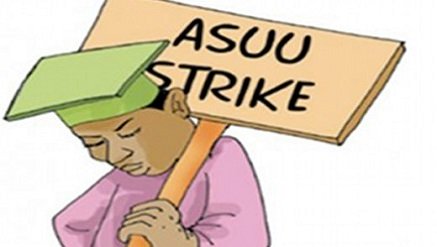
It has been a few years since students in Nigerians had to deal with long-term strikes; and just at the moment we thought the era of students having to stay an extra 2 to 3 years in school due to unnecessary strikes by championed by the Academic Staff Union of Universities (ASUU) was over, they strike again.
It certainly felt like Deja Vu when the National President Of The Union, Dr. Biodun Ogunyemi, announced this on Monday at a meeting of the National Executive Council (NEC) of ASUU in Abuja that there would be an indefinite strike and that during the strike, there will be no teaching, no examination and no attendance of statutory meetings of any kind in any of the union’s branches across the country.
There is some value in ASUU going on strike. They hope that issues such as payment of fractions/ non-payment of salaries, as well as Earned Academic Allowances (EAA); refusal to release the operational license of NUPEMCO; and the non-implementation of the provisions of the 2014 Pension Reform Act with respect to retired professors and their salaries, will be sorted.
It is easy for affected students to get into a lazy mode, where they sit around doing nothing or just meshing the entire time into one long continual nap fest…wasting valuable time and making no positive strides in their life all through the period of the strike.
If you are one of the affected students and you are wondering how you could possibly make this “indefinite” time worth your while, you may want to consider a handy list of helpful suggestions.

Start a Business
There is no age too young for becoming an entrepreneur. Use this period at home to start a small business. You could either sell products or render a service. The good thing is that you do not necessarily need a large capital to get yourself started. You also have the social media as a very important promotional tool.
You could start a home cleaning service or food delivery service…there are so many options.
Managing a business gives you a lot of opportunities to gain a lot of experience with will be beneficial when you eventually conclude your studies.
Learn a New Skill
You finally have the time to learn a new skill. It could be photography, jewelry making, learning to play an instrument like the saxophone or guitar, baking, writing and producing music or playing a sport like football, tennis or volleyball.
Take the time to learn it and get really good at it. Not only does it give you an edge and provide opportunities for a side hustle, it will help build your self-confidence and give you value for time invested.
Enroll For A Professional Certification Course
The university might be closed but there are other avenues for learning. You can enroll in short courses online or for professional classes that will grant you certain qualifications that may become relevant in future.
Even if you do not have the money to pay for these courses, you can go for free ones on portals like Coursera or Edx.
You don’t necessarily have to get a certificate; the idea is to acquire new knowledge that will be relevant to your career goals or aspirations.
Get A Job
While you are at home, you might as well make a little money. Get a job as an intern or assistant in an office or company. You can even get a job as a paid apprentice at a salon or creative studio. Even more, you may decide to go for something freelance like writing or blogging.
The beauty of the internet is that you can get connected to so many job opportunities without necessarily breaking a sweat. The money made may not be the kind that will set you up for life, but it may be enough for extra chills…and then again, working would be fun and educational. You learn the value of time and money and attain the essence of work ethic and work culture.
Volunteer
Volunteering is a great way to give back to the society or just do some good with your time. You can volunteer at NGOs or religious organizations, where the aim is to help others and better the society.
You could also get involved in a number of empowerment programs tailored for young people where certain skillsets you possess may be needed.
There is a measure of accomplishment and sense of fufilment that comes with serving humanity. It also exposes you to great opportunities like training, travel e.t.c.
Travel
There is never a bad time to travel. As a student, you may not have a lot of resources available for long leisurely trips, but you can visit another state within the country or just other cities within your state. Travelling can be fun and educational at the same time for students.
It is also a great way for students to learn more about the world around you and open yourself to alternative cultures tradition and lifestyles. You could travel to other African cities or continents if you can afford it or you have a sponsor as well. The important thing though, is that you keep your ear on the ground while on your travels, so you are well informed when the strike is called off.
Attend Seminars And Personal Development Events
The period at home maybe offer a great opportunity to improve on your social skills. Attend conferences and seminars as well as events.
It does not have to be professional or vocational seminars or events. It could be events that offer opportunities to explore your hobbies or just enjoy yourself. Also, it offers opportunities for networking and exposes you to new connections. It could be book readings, slam poetry competitions, meetups, concerts e.t.c
The truth is that being on an “indefinite” strike sucks; however, being positive about how you spin it, could make the time really worth your while. Can you think of other ways students can engage themselves pending when ASUU calls off the strike?



Union Bank of Nigeria has secured certification under the Payment Card Industry Data Security Standard (PCI DSS) version 4.0.1, a global standard for protecting payment card data.

The certification took effect on August 11, 2026, confirming that the bank’s systems for storing, processing and transmitting customers’ credit and debit card information meet stringent international security requirements.
PCI DSS certification is designed to reduce the risk of payment card data breaches and financial fraud while strengthening customer confidence in electronic payment systems.
The assessment covered key areas of Union Bank’s operations, including network infrastructure, card issuance, ATM and POS transactions, payment processing, reconciliation, settlement, chargebacks, dispute resolution and retail banking.
Union Bank was assessed and certified under the Service Provider category.
The certification process lasted a full year and involved quarterly assessments, with support from departmental, business and functional heads across the bank. Digital security firm Digital Encode supported the process, while the final independent audit was conducted by CyberCube, an accredited Qualified Security Assessor.
Yetunde B. Oni, Managing Director and Chief Executive Officer of Union Bank, said the certification demonstrates the bank’s commitment to protecting customer information.
“The security of our customers’ information is central to everything we do at Union Bank. This certification reaffirms that our payment systems and processes meet a rigorous global standard, and it reflects the discipline of colleagues across the Bank who work every day to keep customer data safe.”
The renewal also ensures that Union Bank maintains continuous PCI DSS certification, in line with the Central Bank of Nigeria’s requirement for banks to sustain compliance without interruption.
New data from CFA Society Nigeria is reshaping how the country’s financial sector thinks about talent development, with Access emerging as the single largest source of CFA candidates in Nigeria, distinction industry watchers say signals a deeper shift in how leading institutions are building investment expertise from within.

In its Where Nigeria’s Finance Professionals Work series, published in a national daily, CFA Society Nigeria placed Access first among employers of CFA candidates nationwide, with 82 candidates enrolled in the programme, more than double the 38 recorded at the next-placed institution and well ahead of every other bank or financial services firm on the list.
Access also ranked second among employers of CFA charterholders, with 11 professionals who have completed all three levels of the Programme and met its experience and ethics requirements.
For an industry that has long measured itself by balance sheet size and branch count, the rankings point to a different kind of competition: one over who is building the deepest bench of certified, globally credentialed talent.
CFA Society Nigeria compiled the data from its Salesforce Membership Database as at June 2026, and described the exercise as a way of recognising employers whose people “bring rigour, integrity and global best practices into the workplace every day.”
Analysts following the sector say the outcome is notable less for the ranking itself than for what it suggests about talent strategy across Africa’s financial services industry. A single institution developing more aspiring charterholders than the rest of the market combined raises the floor for professional standards nationally, not just within one balance sheet.
Every candidate who advances through the CFA Programme adds to a shared pool of ethics-trained, analytically rigorous professionals that Nigeria’s capital markets, pension funds and asset managers all eventually draw from.
Access Holdings Group Chief Executive Officer Innocent C. Ike, commenting on the rankings, framed the achievement in terms of institution-building rather than recruitment: “Every candidate on that list represents our commitment to building institutions and professionals that endure.”
The remark echoes a broader thesis increasingly voiced by market observers, that talent depth, not scale alone, is what will determine which African financial institutions earn lasting global credibility.
That distinction sits at the centre of Access’s stated ambition to become the World’s Most Respected African Financial Services Group. If the CFA numbers are any indication, the Group’s route to that goal runs less through square metres of branch network and more through the calibre of the people sitting inside it, a bet that Nigeria’s finance professionals, and the institutions that will one day hire them, are already placing alongside Access.


Nigeria Civil Aviation Authority (NCAA) has announced plans to introduce Radio Frequency Identification (RFID) baggage tracking technology across domestic and international airport terminals to tackle the growing problem of delayed, misrouted and missing luggages

Michael Achimugu, director, Public Affairs and Consumer Protection, NCAA, disclosed this at a stakeholder engagement forum in Lagos.
Achimugu said the RFID-enabled system would replace the traditional barcode-based baggage tracking framework and provide airlines and passengers with real-time visibility of checked luggage from check-in to final collection.
According to him, the technology would improve baggage traceability, reduce mishandling and strengthen accountability across the baggage-handling chain.
Unlike conventional barcode systems, RFID technology allows baggage to be automatically scanned at multiple points without requiring direct line of sight, enabling real-time tracking of luggage throughout its journey.
Achimugu said issues involving short-landed, missing, lost or damaged baggage had remained among the major complaints from air travellers, alongside flight delays.
He said the introduction of RFID technology was therefore aimed at improving baggage-handling standards and restoring passenger confidence in the aviation sector.
The NCAA said the initiative also aligns with IATA Resolution 753, which requires airlines to track baggage at key points during the passenger journey.
The authority expects the technology to provide more accurate information on the location of luggage, facilitate quicker resolution of baggage-related complaints and improve the overall passenger experience.
The NCAA said the initiative would also strengthen accountability among airlines and other stakeholders involved in baggage handling at Nigerian airports.

FG Seeks to Half Burkina Faso’s Internet Cost while Nigerians Pay more

Cyberthreat: New Malware, Turns Phones into Tools for Card Fraud- Report

SEC Clears Blockchain for Accelerated Regulatory Incubation Programme

Union Bank Secures Global Payment Data Security Certification

NLNG, NCDMB Boost Engineering Research with Innovation Centre

EFCC Busts NIS Visa Overstay Racket, Uncovers N700m in an Account

Fact-Check: Elon Musk’s “Tesla Pi Phone” is Internet Rumor

NBC Tasks Broadcasting Stations over 2028 DSO Global Deadline

Glo Sponsored African Voices to Feature Netflix’s “The Polygamist” Stars

NBC, INEC, Plan Joint Broadcast Monitoring Framework ahead of 2027 Elections




 News3 days ago
NCAA to Introduce RFID Technology to Tackle Missing Luggages

 General News3 days ago
Nigeria Not Making Progress in Fiscal Transparency –US

 Telecom3 days ago
GSMA Industry Services Unveils Circularity Services to Help Operators Reduce E-Waste and Unlock Value

 Telecom2 days ago
Airtel Nigeria Adds Over 1,000Cell Sites in Nationwide Expansion to Surpasses 17,000

 Telecom3 days ago
MTN Nigeria Unveils Y’ello Street Museum to Mark 25 Years of Connectivity

 News3 days ago
Firm Urges MSMEs to Increase Digital Payments Adoption for Growth

 E-Financial3 days ago
SEC Directs Operators to Subscribe to NigSac Alerts, Freeze Terrorists-Linked Funds

 E-Financial3 days ago
AFC Raises $430m in Digital Bond to Deepens Digital Financial Infrastructure