

News
Leo Stan Ekeh – the Iconic ICT Entrepreneur @ 65

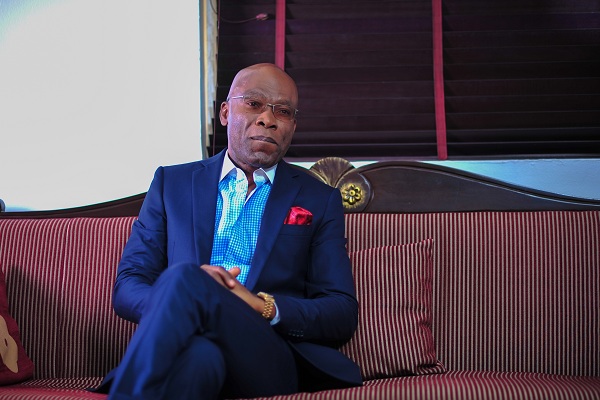
The man, Leo Stan Ekeh arguably Nigeria’s foremost tech guru and serial digital entrepreneur has championed many firsts in the Nigerian ICT sector.

Leo Stan Ekeh
Mr. Ekeh is the Chairman of Zinox Group, Sub-Saharan Africa’s biggest integrated technology conglomerate which includes viable concerns such as Zinox Technologies Limited, Task Systems Ltd., Technology Distributions Limited (TD Africa) and TD Mobile, among others, through which he deployed some of the biggest ICT projects on the continent.
Mr. Ekeh has also inspired several generations of budding entrepreneurs and startups, many of whom are currently disrupting the technology space in Nigeria and beyond.
On the Nigeria’s Independence anniversary on October 1st 2001, Ekeh enjoyed the rare privilege of being honoured as an Icon of Hope by former President, Chief Olusegun Obasanjo for his sustained pioneering efforts in the area of Information Technology and also as a pride to modern Nigeria.
His ground breaking strides in the Nigerian technology ecosystem recorded another major achievement in 2018 when he made a bold return to e-Commerce (a vertical he pioneered in Africa many years ago through BuyRight Africa Dotcom) with the addition of Konga after acquiring the company from previous majority investors, Naspers and AB Kinnevik.
Barely two years after its acquisition, Ekeh transformed the composite e-Commerce giant into Nigeria’s leading player, with the brand on the cusp of dominating Africa’s biggest market and making inroads into other neighbouring African markets.
Today, this Icon of ICT in Nigeria turned 65 years old, born on February 22, 1956 in Ubomiri Mbaitoli, Imo State to a middle-class family with three brothers and two sisters.
He attended Holy Ghost College, Owerri for his secondary education, after which he went to India for his university education, where he received a Bachelor of Science degree in economics from Punjab University.
Ekeh, however, believes that studying in India was a great turning point in his life, according to him, he found the Indian economy a realistic economy.”
In addition, he is a Global Advisor to Microsoft. He also holds a Post Graduate Degree in Risk Management from Nottingham University, England.
Ekeh equally holds several honorary doctorate degrees from highly respected universities for his enviable record of incisive entrepreneurship and pioneering efforts in the field of Information Technology.
Leo Stan as he is popularly known is a renowned digital democrat and philanthropist has also quietly touched so many lives through the Leo Stan Foundation – his personal foundation.
Among these are charitable works such as donation of N100m to Internally Displaced Persons (IDPs) in the North-East, donation of N50m to victims of the demolished Eke-Ukwu market in Imo State, scholarships to hundreds of indigent students across Nigeria to study both at home and abroad, as well as the set-up of a N1.5bn revolving loan scheme for disadvantaged students and entrepreneurs of Imo origin, among several others.
Furthermore, Ekeh has silently invested in education, provided Medicare to the needy and supported churches and other religious organizations through the Foundation.
During the lockdown occasioned by the COVID-19 pandemic, the Leo Stan Foundation leveraged on staff of the various companies in the Zinox Group to feed over 7000 families across Nigeria for two weeks. He has also regularly supported state governments in Imo, Lagos and other parts of the country through the donations of patrol vehicles to improve security, among other donations.
Indeed, the story of Ekeh’s legendary strides is one of many firsts amid a series of landmark achievements in his chosen field of Information and Communications Technology.
He pioneered Desktop Publishing and Computer Graphics in Nigeria in 1987 with his first Company – Task Systems Ltd.
In addition, Mr. Ekeh launched the first ICT support Company in Nigeria – ITEC Solutions Ltd.
More so, he pioneered the deployment of digital dispensing pumps for petrol and gas stations in Nigeria in partnership with Elf Oil (now Total Plc.) after he was cheated by an attendant at a fuel station.
He also pioneered ICT Distribution in West Africa with the launch of Technology Distributions Ltd. (today known as TD Africa) which has remained the biggest technology, lifestyle and cutting-edge solution distributors in the West African sub-region.
Furthermore, Ekeh holds the rare status of manufacturing the first internationally certified computer brand in Sub-Saharan Africa: Zinox Computers.
Equally, the biometric digital revolution in Nigeria can be attributed to Mr. Ekeh after he singlehandedly delivered to the Independent National Electoral Commission (INEC) data capturing machine for voters’ registration when foreign contractors could not deliver after months of promises.
Four years later, he again supervised the biggest single ICT digital rollout in Africa with INEC in 2010 valued back then at over $170m, as well as the largest single e-Library and Wireless Cloud rollout project on the continent through one of his companies – Zinox Technologies Ltd.
Today, Ekeh’s contributions and sterling work with INEC have gone a long way in giving Nigeria a credible database of voters and reduced post-election litigations by over 45 per cent.
Mr. Ekeh has also been involved with companies such as ICT Brokers, TD Plus, ICT Connect and, as earlier stated, the launch of Africa’s first ever e-commerce outfit, Buyright AFRICA Dotcom.
A major advocate of digital literacy for all, Ekeh holds the enviable record of donating cutting-edge and well-equipped digital centres to several secondary and tertiary institutions in Nigeria.
Significantly, Ekeh’s Zinox Group pioneered the unheralded but highly commendable practice of paternity leave in Nigeria to reduce stress on young male staff and enable them to support their spouses when they welcome a new baby.
The tech enthusiast is one of the foremost champions of gender equality in Nigeria. He has consistently advocated for and also empowered women and the girl child, whom he regularly addresses and challenges to aspire to greatness at various public events and fora.
His passion for gender equality can be seen at first hand in the Zinox Group where women, led by his wife, Mrs. Chioma Ekeh, occupy the first four executive management positions at TD Africa, the biggest company by revenue in the Group. Also, he had recently appointed another female as Managing Director of Zinox. The Group’s Human Resources Unit is also headed by a female.
Mr. Ekeh’s unerring zeal for productivity and excellence was recently rewarded by the current administration of President Muhammadu Buhari with the National Productivity Merit Award (NPOM) in November 2019.
A distinguished member of the Nigeria Economic Summit Group and Fellow of the Nigeria Computer Society, Ekeh is a recipient of one of the country’s highest National Honours – Order of The Federal Republic (OFR).
Applauded by professionals as a global digital giant and a man whose vision and performance shore up credibility for the indigenous capacities in the ICT sector, Leo Stan Ekeh’s unmatched interventions have seen him receive over 60 local and international awards. He has also served on a good number of Federal Government Committees, which includes the Presidential Committee for Job Creation, Nigeria Thinkers, ICT Roadmap, among many others.
He is happily married to Mrs. Ekeh, a Mathematician, Fellow of the Association of Chartered Certified Accountants (ACCA) and CEO of TD Africa.
The union is blessed with successful children.


Consumer advocates, health professionals and policymakers have called for urgent regulatory reforms to eliminate added sugars in infant foods, warning that current standards may be exposing Nigerian babies to avoidable long-term health risks.

Chiso Ndukwe-Okafor, Executive Director of CADEF
The call was made on Thursday at a high-level stakeholders’ meeting in Abuja organised by the Consumer Advocacy and Empowerment Foundation (CADEF) in partnership with Public Eye, where new findings on sugar content in baby foods triggered widespread concern.
Public Eye’s research focused on Cerelac, Nestlé’s widely consumed infant cereal across Africa. Laboratory tests on nearly 100 samples purchased in over 20 African countries revealed that 94 per cent contained added sugar. On average, products recorded about 6 grams of added sugar per serving equivalent to roughly one and a half sugar cubes with some markets reaching between 7 and 7.5 grams. Nigerian samples averaged 5 grams, with peaks of 6.1 grams.
The figures refer strictly to sugar added during manufacturing and exclude naturally occurring sugars present in ingredients such as grains, fruits and milk.
Nestlé however maintained that its products comply with local regulations and are fortified to address nutritional deficiencies.
However, the company has not explained why sugar-free formulations are available in Europe while African markets receive variants containing added sugar.
Opening the session, Chiso Ndukwe-Okafor, Executive Director of CADEF, stressed that the advocacy is not targeted at any single company but aimed at safeguarding children’s health and advancing a zero-added-sugar standard for infant foods in Nigeria.
“African babies are being fed sugar Europe would never accept,” she said, highlighting disparities in product formulations across regions.
Citing the findings, she noted that some cereal-based infant foods contain “over four grams, almost five grams of sugar,” but clarified that manufacturers are not breaching existing laws.
“They are complying with current regulations, which are based on Codex standards developed over 30 years ago,” she said, pointing to the outdated nature of the framework as the core issue.
She urged regulatory authorities to align national standards with current global health recommendations.
CADEF warned that early exposure to added sugars can shape children’s taste preferences and increase their risk of obesity, diabetes, dental disease and other non-communicable conditions later in life echoing guidance from the World Health Organization, which advises against added sugars in infant foods.
While acknowledging that existing sugar levels fall within Nigeria’s Codex-based standards, the organisation argued that the framework is no longer sufficient to protect infant nutrition.
It clarified that its concerns relate specifically to sugars deliberately added as sweeteners or enhancers, not naturally occurring sugars in raw ingredients.
Stakeholders at the meeting called on key regulators including the Standards Organisation of Nigeria (SON) and the National Agency for Food and Drug Administration and Control (NAFDAC) to review existing standards and enforce clearer, more transparent labelling requirements.
CADEF emphasised that parents deserve accurate, easy-to-understand information when making nutritional choices, noting that Nigerian consumers should enjoy the same level of product quality and protection available in other markets.
Among its recommendations is the introduction of mandatory front-of-pack labelling that clearly identifies and distinguishes sources of sugar, alongside policies to drive reformulation toward zero added sugar.
“We need front-of-pack labelling in simple language that separates the source of sugar on each product,” Ndukwe-Okafor said, adding that regulators and paediatric stakeholders expressed support for reform.
Also speaking, Adeyemo Adebayo of the Nutrition Division at the Federal Ministry of Health stressed that policy reforms must be complemented by sustained public advocacy to achieve meaningful impact.
He called for broader health education efforts beyond formal legislation, including engagement with traditional and religious leaders to drive grassroots awareness that infants do not require added sugar.
Jubril Mohammed, representing the Standards Organisation of Nigeria, said the agency’s role is to facilitate consensus-driven standards rather than impose unilateral decisions.
He noted that proposals such as eliminating added sugar must be backed by evidence and stakeholder agreement, adding that review processes can take up to a year.
He, however, expressed the agency’s willingness to collaborate with CADEF.
From a clinical perspective, Dr. Anthony Bawa, representing the Paediatric Association of Nigeria (PAN), called for stronger multi-sector collaboration involving academia, health institutions and lawmakers to address the risks associated with added sugars in infant diets.
He emphasised the importance of National Assembly involvement in enacting effective legislation to protect children’s health.
The meeting also highlighted international precedents. In India, sustained advocacy and regulatory pressure have compelled manufacturers to introduce multiple no-added-sugar variants of infant foods, demonstrating that reform is achievable.
As interim guidance, advocates urged parents to limit processed foods, avoid sugary drinks and sweets for young children, and prioritise natural options such as fruits.
“Don’t give children soft drinks. Don’t give them sweets,” Ndukwe-Okafor advised, recommending healthier alternatives like bananas and mangoes.
The coalition said it will engage senior policymakers and the National Assembly to push for stricter regulations, including a zero-added-sugar benchmark for infant foods in Nigeria.
Stakeholders agreed that a combination of regulatory reform, industry accountability and consumer education will be critical to safeguarding infant health and securing a healthier future.
News
UK–Nigeria Skills and Schools Trade Mission Concludes with Strong Foundations for Education Partnership

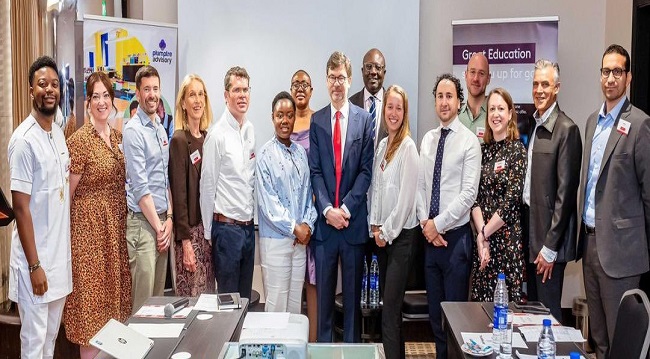
A high-level UK delegation has concluded a week-long skills and schools trade mission to Nigeria, marking a significant step forward in education and skills cooperation between the two countries.

Running from 19-23 April 2026 across Abuja and Lagos State, the mission brought together leading UK private schools, skills providers, and education institutions with Nigerian partners, schools, and the Honourable Minister of Education Dr Tunji Alausa.
The mission follows the high profile and well received state visit to the UK in March, which also included education engagements. Supported by the UK’s Department for Business and Trade (DBT), the mission forms part of its new International Education Strategy, under which Nigeria has been identified as one of five priority education markets, spearheaded by Professor Sir Steve Smith, who is looking forward to visiting the country again this year.
The mission focused on in-country delivery of education, the establishment of world-renowned UK schools in Nigeria, and the development of skills and Technical and Vocational Education and Training (TVET) systems aligned with industry demand.
In Abuja, the delegation met with Nigeria’s Honourable Minister of Education, Dr Tunji Alausa, securing strong political backing for UK–Nigeria education partnerships and set the groundwork for ongoing institutional collaboration across both schools and skills.
In Lagos, delegates engaged further with potential partners and investors. In both cities the delegation was thrilled to visit local British curriculum schools and colleges to further enable them to experience first-hand the teaching and learning environment.
British Deputy High Commissioner, Jonny Baxter, said: “The UK and Nigeria share a deep and longstanding relationship, and opportunities in education are one of its most exciting frontiers.
“This mission has demonstrated the strong appetite on both sides to deepen collaboration in education and skills.”
“By bringing together UK schools and skills providers with Nigerian partners and policymakers, we are laying the foundations for even more long-term partnerships that support Nigeria’s education priorities, strengthen skills aligned to industry needs, and create opportunities for sustainable, in-country delivery as well as positioning Nigeria as the regional hub for high quality education.”
DBT Head of International Education, Sarah Chidgey, said: “This mission is a perfect example of the International Education Strategy being put into action, building on multiple two-way visits and the UK and Nigeria’s warm relationship. It has been heartening to see all the progress in UK Nigeria education collaboration since my first visit to Nigeria, as part of a wider delegation, in 2022.”
DBT’s mission concluded with a strong pipeline of follow-up activity, including targeted one-to-one meetings, MoU discussions, and agreed next steps between UK and Nigerian counterparts.

President Bola Tinubu has requested Senate approval for a $516.3 million foreign syndicated loan to fund key sections of the Sokoto-Badagry superhighway, a cornerstone of his Renewed Hope Agenda.

Tinubu
In a letter read by Senate President Godswill Akpabio during Thursday’s plenary, Tinubu invoked Sections 16 and 21 of the Debt Management Office Act, 2011, to secure financing via Deutsche Bank AG for Sections 1, Phase 1A, and 1B. The 1,000-kilometre project will span Sokoto, Kebbi, Niger, Kwara, Oyo, Ogun, and Lagos states, linking Illela to Badagry and boosting trade, connectivity, and goods movement.
The nine-year loan, with a three-year grace period and interest at SOFR plus 5.3 per cent, includes a partial risk guarantee from the Islamic Corporation for the Insurance of Investment and Export Credit (ICIEC). The Federal Government will provide over ₦265 billion in counterpart funding for land acquisition and infrastructure.
Akpabio referred the request to the Senate Committee on Local and Foreign Debts for a one-week turnaround report. He endorsed the borrowing, stating it advances road safety and national integration.
The highway aims to cut travel times and stimulate economic corridors, with the Federal Executive Council already approving the plan.

NCC Blames Growing Data Demand Network Quality Issues

EFCC Detains Ayeni, Ex-Skye Bank Chairman over Alleged N36.5Bn, $30m Fraud

Bank Customers to Pay N1,500 for ATM Card Issuance, Replacement – CBN

Summit Factory Opens in Ogun, Targets Hygiene Market Expansion

Kaspersky Discovers Vulnerability in Qualcomm Snapdragon Chips that can Lead to Data Loss & Device Compromise

NITDA Takes Over National Digital Architecture System

FG to Gift Nigerians over 100 Free TV Channels from May 15

FG Shifting Focus to “Meaningful Connectivity” to Drive Inclusion – Minister

Microsoft Revamps Copilot in Workplace AI Push

Dangote Refinery Debunks Speculations on IPO




 Telecom3 days ago
NCC Orders Telcos to Give Users Free Airtime for Poor Network Service

 Telecom3 days ago
MTN to Pay Subscribers After NCC Cracks Down on Service Failures

 E-Financial3 days ago
EXPLOSIVE: How Titan Trust Bank Allegedly Used Union Bank’s Own Assets to Fund Its Takeover
 E-Financial2 days ago
Bank Customers to Pay N1,500 for ATM Card Issuance, Replacement – CBN
 Telecom2 days ago
NCC Blames Growing Data Demand Network Quality Issues

 E-Financial2 days ago
ATM Card Fees Jump to ₦1,500 as CBN Scraps Maintenance Charges

 General News3 days ago
Airtel Africa Foundation Calls for Applications for “DigiLeap” Tech Training for Young Women

 Telecom3 days ago
From Malta to Marriott: IPv6 Council Nigeria Inauguration Solidifies 16-Year Path to Digital Sovereignty