

E-Business
Mobile Malware Attacks Decline in Africa in 2021


While analysing the threat landscape of African countries, Kaspersky experts saw a steady decline in attacks on mobile devices in the region, as cybercriminals consolidated their efforts to focus on more complicated, dangerous and profitable threats instead. These and other findings are featured in Kaspersky’s Mobile Threats in 2021 report.

Overall, in 2021, Nigerian users faced 59% mobile malware attacks, while other countries in the region have seen even more dramatic changes of their mobile threat landscape: Mozambique saw a 48% decrease, followed by Botswana (58%), South Africa (38%), Ethiopia (69%) and Ghana (76%). The only countries where the share of attacks increased was Angola, where mobile malware actually grew by 12%.
This dynamic is a reflection of the global trend, as cybercriminals tend to invest less and less into the mainstream threats that are successfully neutralised by modern security solutions.
Instead, they choose to invest more into new mobile malware that has become increasingly complex, featuring new ways to steal users’ banking and gaming credentials, as well as other strands of personal data.
For instance, in 2021 Kaspersky detected more than 95,000 new mobile banking Trojans in the world, but the number of attacks using such malware remained similar. Additionally, the share of Trojans – malicious programs capable of executing remote commands – doubled, reaching 8.8% in 2021.
In addition to the strategic changes on the mobile threat landscape, experts also attribute the overall decline of mobile malware in 2021 to the enormous wave of attacks seen at the beginning of lockdown in 2020 as users were forced to work from home.
That period also saw increased use of various video conferencing and entertainment apps, increasing the volume and spread of attack opportunities. Now that the situation has stabilised, cybercriminal activity declined as a result.
“Indeed, there have been fewer mobile attacks in general, however, the attacks we are still seeing have become more complex and harder to spot. Cybercriminals tend to mask malicious apps under the guise of legitimate applications, which can often be downloaded from official app stores.
“On top of that, with mobile banking and payment apps becoming even more widespread, there is a higher chance of cybercriminals targeting these more actively.
“Staying cautious and careful on the Internet and avoiding downloading unknown apps is good practice, but I also strongly recommend using a reliable solution. When it comes to the security of finances in particular, it is better to be safe than sorry,” comments Tatyana Shishkova, security researcher at Kaspersky.
To protect yourself from mobile threats, Kaspersky shares the following recommendations:
- It is safer to download your apps only from official stores like Apple App Store, Google Play or Amazon Appstore. Apps from these markets are not 100% failsafe, but at least they get checked by shop representatives and there is some filtration system — not every app can get onto these stores.
- Check the permissions of apps that you use and think carefully before permitting an app, especially when it comes to high-risk permissions such as Accessibility Services. The only permission that a flashlight app needs is to the flashlight (which doesn’t even involve camera access).
- A reliable security solution helps you detect malicious apps and adware before they start behaving badly on your devices. Conveniently, you can get protection, like Kaspersky consumer products, directly from mobile operators.
- If you are a business, consider taking a holistic approach to the protection of your security perimeter, selecting the most appropriate one for your company.
- iPhone users have some privacy controls provided by Apple, and users can block app access to photos, contacts and GPS features if they think these permissions are unnecessary.
- A good piece of advice is to update your operating system and important apps as updates become available. Many safety issues can be solved by installing updated versions of software.
Kaspersky calls on the mobile industry to enhance cyber protection at all levels, including security for their users, by providing tailored cybersecurity services. Kaspersky Consumer Business Alliances enable companies to offer their customers complete cybersecurity portfolios by backing them with Kaspersky’s global support and expertise.


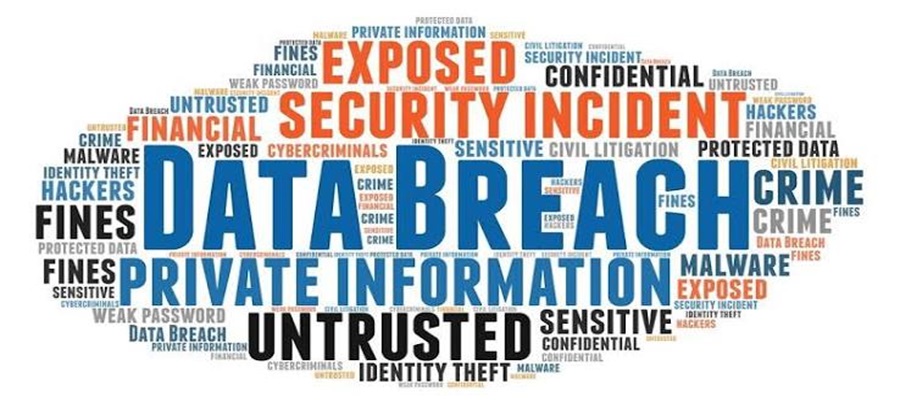
Nigeria’s weak data protection guardrails may undermine the recent directive by Central Bank of Nigeria (CBN) to banks, fintech firms, and other payment service providers to store payment transaction data generated within the country local servers.

CBN said that the new rule will start from January 1, 2027, as part of new measures to strengthen oversight of the fast-growing digital payments ecosystem.
This will also provide the country greater control over critical data infrastructure, allowing authorities to easily access records, conduct audits, enforce compliance, and investigate, especially in cases where criminal offenses are involved, reducing delays often caused by intermediation between local and foreign entities.
Apart from data sovereignty, the CBN added that moving transaction records from foreign servers will help drive investments in local data centers and cloud storage capacity.
Though reliable estimates are hard to come by, it is believed that Nigeria loses over N60 billion in hosting data in foreign servers.
But a coalition of civil society organizations (CSOs), has raised concerns over safety measures in place to protect data of Nigerians, despite having data protection laws in place.
The coalition, comprising Media Rights Agenda, Paradigm Initiative, Digital Rights Lawyers Initiative, and Accountability Lab Nigeria, among others, released the “Protected From the State, Not By It: Nigeria’s Data Protection Crisis Is a Crisis of Implementation,” where they criticized regulators’ failure to effectively enforce data protection laws, which led to rising cases of digital fraud and rampant illegal sale of sensitive information.
There have been leaks of sensitive voter, financial, and personal records.
For instance, there was alleged unauthorized access to the Continuous Voter Registration (CVR) database of the Independent National Electoral Commission (INEC) during a nationwide CVR exercise.
INEC earlier released the preliminary findings of its investigation into the matter, saying that it found no external breach of its systems and that the personal information of over 90 million registered voters was not compromised.
Despite this, CSOs argued that the incident underscored the lack of oversight, adding that it showed that while data privacy laws are in place, sensitive information can be easily moved from a secure government database and into the hands of private political entities.
The coalition also pointed out regulators’ failure to conduct human rights impact assessments on public surveillance systems before related programs were deployed, urging the government to act on these issues by subjecting public institutions to the same compliance requirements as private organizations.
“This is the asymmetry at the heart of the crisis: citizens are under-protected from data abuse and over-exposed to state monitoring and punishment,” the CSOs stated.
Additional report by coingeek

Visa, a multinational firm into payment card services says Artificial intelligence enabled scams have emerged as the fastest-growing source of consumer payment fraud globally as cybercriminals increasingly target people.

Visa stated this in its Mid-year 2026 Biannual Threats Report released on Wednesday in Lagos.
The report said scammers were increasingly using AI tools and social engineering tactics to manipulate consumers into authorising fraudulent payments themselves.Premier League Fixtures
It indicated that from July to December 2025, Visa identified nearly one billion dollars in scam-related activity, making scams the largest category of consumer payment fraud.
According to the report, fraudsters now impersonate trusted brands and institutions, create a sense of urgency and deceive victims into completing seemingly legitimate transactions.
The report said stronger network-level security had reduced opportunities for direct system compromises, forcing criminals to shift their focus to exploiting human trust.
It revealed that fraud involving device tokens declined by 9.6 per cent between July and December 2025, compared with the same period in 2024.
The report identified accelerating scams, growing use of AI in fraud, migration of attacks from technology to people, and evolving ransomware trends as key developments shaping payment security.
It stated that global ransomware activity rose by 26 per cent during the review period compared with the corresponding period in 2024.
However, only 23 per cent of ransomware victims paid ransoms, the lowest level on record, reflecting improved resilience and recovery capabilities, according to the report.
Commenting, Mr Paul Fabara, chief Risk and Client Services officer, Visa, said that payments at network level continued to get safer, but threats were evolving faster than ever
Fabara said criminals were increasingly using deception, urgency and AI-enabled tools to exploit trust, requiring stronger collaboration across the payments ecosystem.
Also, Andrew Uaboi, vice president and Cluster head, Visa West Africa, said AI had significantly lowered the barriers to entry for fraudsters.
“What once required deep technical skill can now be executed with a prompt,” Uaboi said.
He said intelligence-driven defence and coordinated action across the ecosystem were becoming increasingly critical to protecting consumers from emerging threats.

Kaspersky has released its Sustainability Report for 2024–2025, outlining how the company is working toward a safer and more resilient digital future.

The report reflects Kaspersky’s broader commitment to responsible business — protecting people and organisations from cyberthreats, supporting law enforcement cooperation, investing in secure technologies, and helping strengthen the digital resilience of societies and economies.
In 2024-2025, the company continued advancing digital sustainability and strengthening global cyber resilience, reducing thedisruption, financial losses and social risks caused by cyber incidents, and enabling safer and more stable conditions for digital adoption across economies and societies.
Over the period, the number of detected advanced persistent threat (APT) groups and operations has increased significantly — by 74% compared to 2023, supported by intelligence gathered through five dedicated Expertise Centers.
Building a safer cyberworld
A significant part of Kaspersky’s social impact comes from the company’s cooperation with global law enforcement agencies. During the reporting period, the company contributed to joint operations with INTERPOL and AFRIPOL that resulted in the arrest of more than 2,600 suspected cybercriminals.
From a sustainability perspective, this shrinks the opportunities attackers can exploit — making digital environments safer for governments, businesses and individuals, and lowering the long-term economic and social costs associated with cyber incidents.
During the reporting period, Kaspersky formalised its collaborations with AFRIPOL, signing a five-year cooperation agreement, and delivered cybersecurity training to law enforcement representatives from 23 African countries, covering the fundamentals of Security Operations Center (SOC) operations and advanced threat hunting techniques.
This capacity-building work has a compounding effect: as local teams become more capable of independently detecting and responding to threats, the overall resilience of the digital ecosystem increases, while the cost and duration of cyber incidents decrease over time.
Implementing future tech
To effectively protect people, businesses and public institutions from evolving cyberthreats, Kaspersky constantly improves its security solutions and conducts cybersecurity research to stay one step ahead of attackers.
In 2024–2025 the company was granted 155 patents, including 135 AI-related ones. Its global R&D team of around 3,000 employees also produced 373 research publications. Together, these efforts help advance the baseline of secure technologies available to the market.
This reduces systemic vulnerability in digital infrastructure and supports more stable technological adoption at scale.
Responsible innovation frameworks further reinforce this effect. By joining the European Commission’s AI Pact and supporting the UN Global Digital Compact, Kaspersky has aligned its development practices with emerging global governance standards.
This contributes to sustainability by helping reduce the risks of unsafe AI deployment, such as misuse, bias or system exploitation, which could otherwise undermine trust in digital transformation.
The company’s Cyber Immunity approach, implemented through KasperskyOS, adds another layer of long-term sustainability impact by shifting security from reactive protection to architectural resilience.
Instead of repeatedly patching vulnerabilities, systems are designed to be inherently resistant to compromise, which reduces maintenance overhead, lifecycle risk and resource inefficiency in securing digital environments.
Among the new product launches, the Kaspersky eSIM Store expanded the company’s offering beyond cybersecurity into mobile connectivity. By reducing reliance on physical SIM cards and making global mobile access more seamless, the solution supports more sustainable travel and digital lifestyles.
Together with that, Kaspersky also released Kaspersky Cloud Workload Security for protecting cloud workloads wherever they reside: on servers or virtual machines, or in private, public, or hybrid clouds, etc.
“At Kaspersky, we see cybersecurity not only as a technology issue, but as a social one. Every day, people rely on digital services to work, communicate, study, receive services and manage their lives and they need to be able to do this safely.
“That is why our sustainability agenda starts with our core expertise: protecting people, organisations and critical systems from cyberthreats. But it also goes further — through responsible innovation, transparency, partnerships and support for communities.
“This report shows how our technologies, research and cooperation with partners translate into practical impact: fewer risks, stronger resilience and a safer digital environment for everyone,” said Maria Losyukova, Head of ESG & Sustainability at Kaspersky.

Privacy Crisis May Undermine Local Hosting of Data by Banks, Fintechs

AI-Powered Scams are Biggest Payment Fraud Threat -Visa Report

How to Build a Safer Cyberworld for People, Business, and Society

Nestlé Commits to Boosting West Africa Solar Rollout Through Partnership

Airtel Africa Foundation Launches Airtel Green Schools to Promote Sustainability Education in Nigeria

CBN Extends PoS Geo-Fencing Enforcement Deadline to August 2026

London Strengthens Global Investment Ties with Africa @ First Ever London-Africa Business Summit

FG Targets Alleged N3tn Capital Flight, Opens Airtime Credit Market to Nigerian Fintechs

Mobile Internet Gender Gap Widest in Africa – GSMA

Japan, UNESCO Boost Digital Learning in 15 CoEs with Donation of ICT Equipment




 E-Business3 days ago
Kaspersky Discovered a Malware Campaign Targeting Steam Users Through Infected Wallpaper

 Telecom3 days ago
Big Tech Shake-Up: Zuckerberg Announces Sudden WhatsApp Leadership Change

 Broadcasting3 days ago
CANAL+ Partners Samsung to Pre-Load DStv Stream on New Samsung TVs In Nigeria, Other African Countries

 General News3 days ago
Fiona Ahimie Launches LEADHER Mentorship Session to Inspire the Next Generation of Female Leaders

 News3 days ago
NESREA Defends Plastic Waste Rules, Says Policy Targets Pollution

 E-Financial3 days ago
FG Engages Banks on RevOp, New Digital Platform for Revenue Generation

 News3 days ago
CredibleVoteNG Opens Free Access to all Polling Units in Nigeria after INEC Demanded N1.Bn for Register

 News3 days ago
Arridex Floats West Africa’s First Multi-tech 3D Industrial Omnifactory in Lagos