

E-Financial
Fidelity Bank Trains Exporters on AfCFTA Opportunities, Non-oil Export Growth

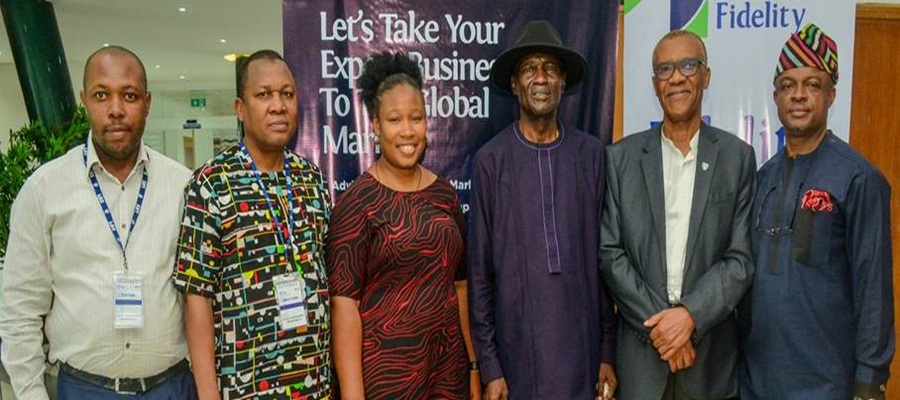
Fidelity Bank Plc has reaffirmed its commitment to supporting Nigeria’s economic diversification agenda through capacity building and export development, as it hosted the 19th edition of its Export Management Programme (EMP) at the Lagos Business School (LBS), Ajah, Lagos recently.

L-R: Relationship Manager, Fidelity Bank Plc, Murtala Muhammed Road Branch, Kano, Victor Ngwu; Export Management Programme (EMP 19) participant, Abayomi Adewuyi; Facilitator, Gemma Ejiofor; Senior Fellow and Head, Department of Organisational Behaviour and Human Resources Mgt., Lagos Business School (LBS), Dr. Uche Attoh; Director, Export Management Programme, LBS, Prof. Frank Ojadi; and Team Lead, Export & Agriculture, Fidelity Bank Plc, Emmanuel Nwalor, during the closing ceremony of the 19th edition of the Fidelity Bank Export Management Programme (EMP 19) held recently at Lagos Business School, Lagos.
Tagged EMP 19, the programme is an intense hands-on export management workshop, organized as a partnership between Fidelity Bank, Lagos Business School and Nigerian Export Promotion Council, brought together entrepreneurs, professionals, regulators and aspiring exporters for intensive training designed to equip participants with the knowledge, skills and networks required to compete successfully in international markets.
Speaking at the closing ceremony, Divisional Head, Export and Agriculture, Fidelity Bank Plc, Isaiah Ndukwe, said the bank remains focused on empowering Nigerian businesses to leverage emerging opportunities under the African Continental Free Trade Area (AfCFTA) and expand the country’s non-oil export base.
“At Fidelity Bank, we recognize that capacity building is critical to unlocking Nigeria’s export potential. Through the Export Management Programme, we are equipping businesses with practical knowledge, market intelligence and strategic insights required to compete successfully in regional and global markets,” Ndukwe said.
“As AfCFTA continues to open new frontiers for trade across Africa, our goal is to ensure that Nigerian exporters are adequately prepared to seize these opportunities and contribute meaningfully to the country’s economic diversification agenda,” he added.
Nwalor further noted that the bank remains committed to providing exporters with the financial solutions, advisory support and strategic partnerships necessary to expand their businesses beyond Nigeria’s borders.

Also speaking, Director of the Export Management Programme at Lagos Business School, Professor Frank Ojadi, highlighted the need for continuous capacity development as international trade continues to evolve.
“The export market is always evolving. There are changes in policies, improvements in processes and increasing interest from businesses. These developments make it necessary to build the capabilities of our people to compete effectively in export markets,” Ojadi said.
According to him, this year’s programme placed significant emphasis on AfCFTA, exposing participants to both the fundamentals and practical aspects of leveraging the continental trade agreement for business growth.
“Many businesses are still learning how to take advantage of AfCFTA. Through this programme, participants gained practical insights that will help them navigate opportunities across African markets and beyond,” he added.
In his remarks, Senior Fellow and Head of the Department of Organisational Behaviour and Human Resources Management at Lagos Business School, Dr. Uche Attoh, emphasized the importance of negotiation and dispute resolution skills in international trade.
“It is negotiation that enables businesses to establish deals, while arbitration helps resolve disputes when they arise. Once participants understand the principles, they can apply them in any business environment, whether in Africa, Europe or America,” Attoh said.
Participants described the programme as impactful and transformative. Assistant Director at the Nigerian Shippers’ Council, Obinna Oforum, said the training strengthened his resolve to become an “export champion”.
Similarly, Chief Superintendent of Customs, Orji Samuel, praised Fidelity Bank and Lagos Business School for subsidizing the programme and creating an enabling platform for practical learning, noting that the knowledge gained would help participants navigate export challenges and unlock new business opportunities.
The Export Management Programme is Fidelity Bank’s flagship capacity-building initiative aimed at developing export-ready businesses and professionals capable of driving Nigeria’s non-oil export growth. Through strategic partnerships and targeted interventions, the Bank continues to play a leading role in supporting businesses, facilitating trade and creating pathways for sustainable economic development.
Ranked among the best banks in Nigeria, Fidelity Bank Plc is a full-fledged Commercial Deposit Money Bank serving more than 10 million customers through digital banking channels, its 255 business offices in Nigeria and United Kingdom subsidiary, FidBank UK Limited.
The Bank is a recipient of multiple local and international awards, including the 2025 Development Bank of Nigeria (DBN) Innovation Award for MSME support; Best Retail and SME Bank Award from Independent Newspapers; Best Bank for Export & Trade Finance and Most Innovative Bank of the Year at the 2025 BusinessDay Banks and Financial Institutions (BAFI) Awards; and Nigeria’s Best Private Bank at the 2025 Euromoney Awards. The Bank also received the inaugural Most Improved Commercial Bank of the Year award by Nairametrics, the SME Bank of the Year award by NewsDirect, and the Straight-Through Processing (STP) Excellence Award by Citi Group, in addition to recognition by Global Brands Magazine for Excellence in Community Empowerment.


Mastercard and TeamApt Ltd., a subsidiary of Moniepoint Inc. and a provider of financial infrastructure and payment solutions, have entered a strategic collaboration to strengthen digital payment capabilities for businesses and financial institutions across Africa.

As part of this collaboration, TeamApt will operate directly on Mastercard’s global payments network as a non-bank acquirer, enhancing its ability to onboard credible and licensed entities to deliver seamless payment acceptance, transaction processing and acquiring services. This will further expand its card acceptance infrastructure, allowing more merchants to accept Mastercard payments across in-store, online and mobile channels.
The collaboration integrates TeamApt’s switching infrastructure with Mastercard’s network to facilitate secure, high-volume transactions across online and in-store channels. With Nigeria being home to more than 40 million micro, small, and medium-sized enterprises (MSMEs), and small businesses identifying digital solutions as vital to scaling, according to Mastercard’s 2026 SME Confidence Index, expanding payment acceptance remains an important opportunity for growth.
By combining TeamApt’s deep local market expertise with Mastercard’s global scale, businesses and individuals will benefit from more reliable transactions, stronger security and faster, safer and more accessible digital payment experiences.
“Expanding digital payment acceptance is one of the fastest ways to support small businesses across Africa to compete, grow, and reach more customers. By working with TeamApt, we are equipping MSMEs and informal sector businesses in Nigeria with robust, secure infrastructure to seamlessly process transactions across multiple channels. This collaboration brings more businesses into the digital economy, unlocking vital new opportunities for growth, credit access, and cross-border trade,” said Folasade Femi-Lawal, country manager, West Africa at Mastercard
“This collaboration with Mastercard represents an important step forward in our commitment to removing barriers within the payments ecosystem. For years, TeamApt has focused on building infrastructure that helps financial institutions and businesses grow with confidence. By working closely with Mastercard, we are extending those capabilities, enabling businesses to accept payments more seamlessly and giving users the freedom to transact securely both locally and internationally,” said Dennis Ajalie, Chief Executive Officer of TeamApt.
The collaboration also delivers international value, enabling Mastercard cards supported by TeamApt’s infrastructure to be used across millions of merchant locations worldwide. Customers gain the convenience of secure global payments, while merchants can more easily serve both local and international customers.
A Central Bank of Nigeria (CBN)-licensed switching and processing company, TeamApt has, for over a decade, built and operated critical financial infrastructure that powers banks, fintechs and other institutions. The company’s technology supports secure and reliable transaction processing across multiple payment channels, enabling businesses and consumers to participate more easily in the digital economy.
This collaboration further underscores the strength of Moniepoint’s ecosystem. With operations and agent coverage across all 774 local government areas in Nigeria, Moniepoint has established one of the nation’s most extensive financial services networks, positioning the group to drive meaningful scale and adoption of digital payment solutions.


Securities and Exchange Commission (SEC) has issued an urgent directive requiring all capital market-regulated entities (CMREs) to immediately subscribe to Nigeria’s Sanctions (NigSac) Alerts system.

Effective immediately, failure to comply with this, or other AML/CFT regulations, may result in severe fines, suspension of operations, or revocation of registration.
This follows fresh designations by both local and international authorities of individuals and Bureau de Change operators for alleged direct involvement in terrorism financing and material support to the Islamic State West Africa Province (ISWAP).
The directive, according to three circulars issued by the apex capital market regulator, requires a mandatory compliance measure with threats of fines, operational suspension, or outright registration revocation for non-compliance.
The directive, pursuant to the implementation of Financial Action Task Force (FATF) statements on high-risk jurisdictions, signals an escalation in Nigeria’s anti-money laundering and counter-terrorism financing regime.
The SEC’s broader circular implementing FATF high-risk jurisdiction statements reflects Nigeria’s heightened exposure to international scrutiny. SEC, in line with directives from Central Bank of Nigeria (CBN), now requires CMREs to terminate all correspondent banking relationships with listed high-risk jurisdictions, business entities and individuals.
“In line with the provisions of the Terrorism Prevention and Prohibition Act (TPPA), 2022, the Nigeria Sanctions Committee (NSC) has designated six (6) Individuals and three (3) Entities as terrorist financiers and subsequently added them to the Nigeria Sanctions List,” SEC stated in circular to all market operators.
The circular mandated all capital market regulated entities and individuals to do the following:
“Immediately, identify and freeze, without prior notice, all funds, assets, and any other economic resources belonging to the designated persons and entities in their possession and report same to the Secretariat of the Nigeria Sanctions Committee;
“Report to the Secretariat of the Nigeria Sanctions Committee any assets frozen or actions taken in compliance with the designation, including attempted transactions;
“Immediately file a suspicious transactions report to the Nigerian Financial Intelligence Unit (NFIU) for further analysis on the financial activities;
“Report as a suspicious transactions report to the NFIU, all cases of name matching in financial transactions prior to or after receipt of this Sanctions List;
“Subsequently prohibit dealings with the designated persons and entities; and continue to check for transactions relating to the designated persons and entities and report findings to the Nigeria Sanctions Committee through [email protected]”, SEC stated.
“Take Note that at all times, any unusual or suspicious transactions shall be promptly reported to the NFIU,” SEC warned.
According to the capital market apex regulator, the circular takes immediate effect and failure to comply with the directives constitutes a violation of the Investments and Securities Act, 2025, and the SEC AML/CFT Rules and Regulations and such failure would attract appropriate regulatory sanctions, including fines, suspension of operations, or revocation of registration.
The directive implies that capital market operators should immediately audit their AML/CFT technology stacks to ensure NigSac Alerts subscription and automated flagging capability.
CMREs are required to file suspicious transactions reports with the Nigerian Financial Intelligence Unit (NFIU) for any name matching with designated individuals and entities, whether such matches occur pre- or post-transaction.
The obligation extends to reporting all funds frozen and actions taken in compliance with designations to the NSC Secretariat via [email protected].
The designations also create secondary compliance obligations: CMREs must now maintain watchlists that incorporate designations from both the NSC and US Treasury, as regulatory expectations implicitly track international sanctions coordination.
For institutional investors and fund managers, this translates to enhanced due diligence on counterparty relationships, particularly where transactions flow through informal financial infrastructure or jurisdictions flagged under FATF increased monitoring status.
The Africa Finance Corporation (AFC) has raised CHF350 million, about $430 million, through a five-year digital bond, marking a major step in the use of regulated digital financial infrastructure by an African institution.

The transaction is the first time an African institution has issued a digital bond that is listed, traded and settled on a regulated digital exchange. It is also the largest digital bond ever issued in the Swiss franc market, according to AFC.
The deal strengthens AFC’s access to international investors as the Lagos based development finance institution seeks to diversify its sources of funding and raise more long-term capital for infrastructure and industrial projects across Africa.
The bond carries a coupon of 1.4925 percent and forms part of AFC’s wider $500 million benchmark funding programme issued in June 2026. Despite a difficult global environment marked by geopolitical tensions, the transaction attracted strong investor demand.
AFC is rated A with a positive outlook by S&P Global Ratings and A3 with a stable outlook by Moody’s Ratings, giving the institution an investment grade profile in international debt markets.
Swiss investors accounted for about 90 percent of demand, while international investors made up the remaining 10 percent. Banks and other financial institutions accounted for 57 percent of the order book, followed by asset managers at 37 percent and hedge funds at 6 percent.
“This transaction is about far more than achieving competitive pricing. It marks another significant milestone in AFC’s funding journey and underscores the confidence global investors continue to place in our strategy, credit strength, and development impact,” Samaila Zubairu, President and Chief Executive Officer of AFC, said.
Zubairu said continued diversification and innovation in AFC’s funding strategy would be important to mobilising the long term capital needed to support Africa’s industrialisation and economic transformation.
The transaction is AFC’s fourth and largest Swiss franc denominated issuance. It follows a CHF150 million green bond issued in 2020, which was the corporation’s first green bond transaction.
Banji Fehintola, Executive Board Member and Head of Financial Services at AFC, described the latest issuance as an important milestone for the corporation’s funding programme.
“Pricing the largest digital bond ever issued in the Swiss Franc market reflects not only the strength of AFC’s credit but the depth of trust that Swiss and international investors have placed in our strategy over time,” Fehintola said.
The bond was issued under AFC’s $5 billion Global Medium Term Note Programme and is structured as a tokenised security using distributed ledger technology. Ownership is recorded on a regulated digital register, while settlement takes place through regulated digital market infrastructure.
The notes are listed and admitted for trading on the SIX Swiss Exchange and deposited with SIX Digital Exchange. Clearing and settlement are handled through SIX SIS AG.
The structure gives AFC access to an alternative form of capital markets infrastructure while showing how distributed ledger technology can be used in institutional debt markets under established regulatory standards.
The proceeds will be used for AFC’s general funding needs, supporting its capacity to finance infrastructure and industrial projects across Africa.
Commerzbank AG acted as technical lead for the transaction, while Deutsche Bank AG London Branch, through its Zurich branch, also participated in arranging the deal.
For AFC, the issuance adds to a series of capital markets transactions designed to broaden its funding base and reduce dependence on a narrow group of financing sources.
The strong demand also points to continued investor appetite for African development finance institutions with established credit profiles, particularly those capable of accessing international markets while using new financial technology within regulated frameworks.

Airtel Nigeria Adds Over 1,000Cell Sites in Nationwide Expansion to Surpasses 17,000

MacOS Users Report More Cyber Threats than Windows Users – Survey Reveals

Mastercard, TeamApt Collaborate to Expand Digital Payments Across Africa

Access Holdings Sets New Benchmark in Nigeria’s Finance Talent Pipeline

Anambra Seeks Digital Inclusion in Rural Communities

EFCC Busts NIS Visa Overstay Racket, Uncovers N700m in an Account

Fact-Check: Elon Musk’s “Tesla Pi Phone” is Internet Rumor

NBC Tasks Broadcasting Stations over 2028 DSO Global Deadline

NBC Scraps Annual Digital Access Fee on DSO

Glo Sponsored African Voices to Feature Netflix’s “The Polygamist” Stars




 Telecom2 days ago
ipNX Joins Calls for Innovation-Friendly Ecosystem and Stronger Local Opportunities at Regenesys AI Summit

 E-Business2 days ago
NDPC Probes UNILAG, Lotus Bank, Hackerbella over Alleged Students’ Data Misuse

 E-Financial2 days ago
KudiWave Asks for Clarification over N750m Transfer from PalmPay Account

 News2 days ago
PalmPay Reinforces Commitment to Youth Empowerment on International Youth Day

 Telecom2 days ago
NCC Reports over 5,000 Fibre Cuts in 6 Months

 Telecom2 days ago
Google Selects Six Nigerian News Creators for Emerging Voices Growth Lab

 E-Financial2 days ago
Nigerians Borrow More to Buy Homes as Mortgage Demand Climbs – CBN

 General News2 days ago
NUPRC Warns of Counterfeit, AI-Generated Appointment Letters