

Broadcasting
Afro Dancers Thrill on Glo Battle of the Year Nigeria

Afro dancers put up a superlative performance on Episode 5 of the Glo Battle of the Year Nigeria reality TV show aired last Saturday on GloTV, Globacom’s streaming app.

The exciting show kept viewers glued to their seats as they watched talented young men and women slug it out for a chance to win mega millions and represent Nigeria at this year’s Battle of the Year world championship in Japan.
Fans who missed it on GloTV can watch repeat broadcasts on DSTV AFMG urban (Ch. 153) on Sunday at 3p.m; NTA (Ch. 251) on Sunday at 8p.m; DSTV AFMG Show case on Tuesday at 5p.m; AIT on Tuesday at 9p.m; and Africa Magic Family on Tuesday at 10p.m.
The contestants clearly understood the assignment because as Judge Pinky Debbie said, they were not “just looking for exciting dance steps”. To win, the contestants must go the extra mile to show versatility, be entertaining, have mad skills and be full of energy.
The judges got what they were looking for as they travelled across the six venues for the qualifying and elimination rounds. Unlike with break dancing, the first episode of the Afro dance stage was a no-holds-barred and thrilling episode with dancers going the extra mile to make the cut.
In Abuja, Angel brought her celestial dance steps to make mince-meat of her competition leading one of the judges to note that “Angel came on stage and blessed us with her moves.”
Angel was not the only female to show that when it comes to Afro dance, there are no female or male dancers, just dancers, period.
In Port Harcourt, Joy exuded mirth and confidence as she went to battle against Vibe and Teddy Kodak showing that she came battle-ready as she made quick work of her opponent.
In a contest that exemplified the power of dreams and self-belief, Progress Dance showed that though he might be a school drop-out, dropping out of the competition was not on his agenda as he beat off competition from Afro Dance Vibes.
After going to pray in church, DcVorious went on stage and decimated the opposition to keep alive his dream of winning and setting up a business for his mum.
In Episode 6, we will see how the winners and qualifiers in the Afro Dance category fare when they meet other winners and qualifiers in the next round with judges Poco Lee, Izzy Odigie and Pinky Debbie helping pick winners.
But their decisions, while valid, will not be final. Viewers can decide who makes it to the finals by voting for their wild cards.
Viewers and fans who can dance also stand a chance of winning N200,000 weekly just by sending in a video of themselves dancing along to the Glo Battle of the Year Nigeria theme song.
Last week, winners from the first week of the fans’ challenge received their cash prizes. The lucky fans were picked from social media and had the highest number of views. The four lucky winners are @justonesunmi, @vicdel, @yomilyt01 and @henrynathan11.


Broadcasting
CANAL+ Partners Samsung to Pre-Load DStv Stream on New Samsung TVs In Nigeria, Other African Countries
Following an expanded partnership between CANAL+ and Samsung Electronics, the DStv Stream app will now be pre-installed on new Samsung Smart TVs sold in Nigeria and 17 other African countries.

The agreement covers English and Portuguese-speaking African markets, including Nigeria, Kenya, Angola, Tanzania, Uganda, Zambia, Zimbabwe and South Africa. It marks the first pre-installation rollout of a MultiChoice Group streaming application on Samsung Smart TVs.
The development comes after the completion of the combination between CANAL+ and MultiChoice Group. It also extends an existing relationship between both companies that already spans 40 markets across Europe, French-speaking Africa, and Asia.
Through the integration, Samsung customers can now access DStv Stream directly from the television home screen. The app provides access to premium sports and entertainment content, including coverage of the FIFA World Cup 2026, English Premier League football, domestic and international rugby, and local and international television programming.
With the introduction of this connected television which kicked off on June 1, televisions can now connect to the internet, allowing users to stream content directly without requiring a separate decoder or satellite dish. The pre-installation of the app removes the need for users to search for and download it themselves, reducing friction and improving content discoverability.
The rollout is one of the first major distribution initiatives following the integration of CANAL+ and MultiChoice. The combined group has identified streaming growth and enhanced digital distribution as key priorities across Africa, where connected television adoption continues to increase.
David Mignot, CEO of CANAL+ Africa and CEO of MultiChoice Group, affirmed, “We are delighted to extend our longstanding partnership with Samsung across new English and Portuguese-speaking African countries. It marks a significant milestone in the synergies created by the combination of CANAL+ and MultiChoice Group.
“Mignot added, “As viewing habits continue to evolve rapidly across the continent, strengthening the accessibility and discoverability of our content offer on connected devices is key. By expanding the availability of our applications on Samsung Smart TVs across key African markets, we are making it even easier for millions of MultiChoice Group’s subscribers to seamlessly access the content that define the uniqueness of the CANAL+ and MultiChoice Group experience.”
This extended partnership is expected to strengthen Samsung’s position as a key distribution partner for streaming services globally while providing CANAL+ and MultiChoice with a broader route to market as competition intensifies among international and regional streaming platforms across Africa.

The Court of Appeal in Abuja has dismissed an appeal filed by the National Broadcasting Commission (NBC) challenging a Federal High Court judgment that restrained the commission from imposing fines on broadcast stations.

Delivering judgment, Justice Jane Esienanwan Inyang held that the appeal was fundamentally defective and therefore incompetent.
The appeal stemmed from a Jan. 17, 2024 judgment delivered by Justice Rita Ofili-Ajumogobia of the Federal High Court, Abuja, which barred the NBC from enforcing N5 million fines imposed on several broadcast stations in 2022.
The sanctions had been issued over allegations that the stations aired documentaries on banditry and insecurity considered by the commission to be capable of undermining national security.
The affected broadcasters included Multichoice Nigeria Limited, owners of DStv, TelCom Satellite Limited, Trust TV Network Limited and NTA StarTimes Limited.
The suit was instituted by Media Rights Agenda (MRA), which challenged the legality of the fines imposed by the commission.
In her ruling, Justice Inyang pointed to a discrepancy in the appeal documents, noting that the respondent before the Federal High Court was listed as the “National Broadcasting Commission,” while the notice of appeal identified the appellant as the “Nigerian Broadcasting Commission.”
According to the court, the inconsistency was substantial enough to deprive it of the jurisdiction required to entertain the appeal.
“The notice of appeal is the foundation of an appeal and a condition precedent to the exercise of appellate jurisdiction by this court,” the judge held.
Consequently, the appeal was struck out without consideration of the substantive issues raised by the commission.
The ruling represents another setback for the NBC in its efforts to defend its authority to sanction broadcast organisations through administrative fines.
In April 2026, the Court of Appeal similarly dismissed a separate appeal by the commission against another judgment that restricted its powers to impose fines on broadcasters.
Earlier, in May 2023, the Federal High Court in Abuja ruled that the NBC lacked the judicial authority to impose penalties on media organisations without recourse to the courts.
The controversy over the commission’s sanctioning powers dates back to March 2019 when the NBC imposed N500,000 fines on 45 broadcast stations for alleged violations of the Nigerian Broadcasting Code during the general elections.
At the time, the then Director-General of the commission, Is’haq Kawu, said the sanctions were imposed for ethical breaches and violations of broadcasting regulations.
Legal analysts say the latest judgment reinforces previous court decisions limiting the commission’s authority to impose fines on broadcasters without judicial intervention.

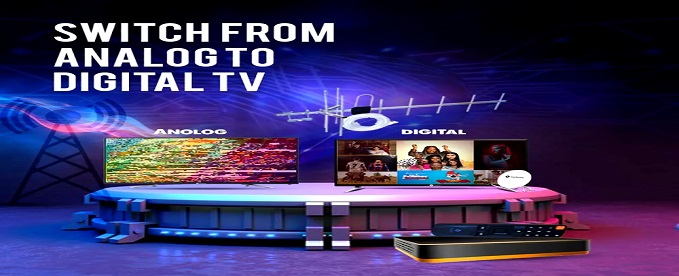
Nigeria has launched FreeTV, a broadcasting platform, designed to provide households across the country with free access to digital broadcasting, improved picture quality, and a wide range of local and international content without subscription fees.

The announcement was made in a post on the official X handle of the Presidency, describing the initiative as part of President Bola Ahmed Tinubu’s Renewed Hope Agenda, which prioritises inclusion, expanded access to opportunities, job creation, support for local enterprise and the use of technology to improve daily life for citizens.
According to the statement, FreeTV forms part of Nigeria’s Digital Switch-Over (DSO) programme and is intended to ensure that no Nigerian is excluded as the country transitions fully from analogue to digital broadcasting.
The platform will offer access to more than 100 national, regional and state-owned channels, covering news, sports, films, music, children’s programming, educational content, as well as dedicated Yoruba, Hausa and Igbo language channels.
The Presidency noted that the service will be accessible through satellite, terrestrial transmission and a dedicated FreeTV mobile application, enabling coverage for users in urban centres, rural communities and previously underserved areas that were not fully captured in earlier DSO pilot phases.
It also clarified that Nigerians will not need to purchase new television sets to access the service. Existing televisions can work with compatible DVB-T2 or DVB-S2 decoders, while users with already compatible free-to-air devices may not require additional equipment.
Speaking ahead of the launch, Charles Ebuebu, director-general, National Broadcasting Commission (NBC), said the initiative reflects the administration’s broader digital inclusion strategy.
“FreeTV speaks directly to President Bola Ahmed Tinubu’s vision of Renewed Hope towards expanding access, creating opportunity and ensuring that every Nigerian, regardless of location or income, can benefit from the digital economy. With FreeTV, families across Nigeria can enjoy quality digital television without a monthly subscription, while our local content producers, technicians and young creatives gain new platforms and new jobs,” he said.
The statement added that the platform will also strengthen Nigeria’s creative and broadcast industry through regional production hubs in Lagos, Abuja, Port Harcourt, Enugu, Kano and Benin, creating employment opportunities for content creators, editors, camera operators, sound engineers and other media professionals.
The Presidency further disclosed that the final analogue switch-off remains scheduled for December 31, 2028, urging Nigerians to begin preparations by confirming decoder compatibility and downloading the FreeTV mobile application ahead of rollout.

CredibleVoteNG Opens Free Access to all Polling Units in Nigeria after INEC Demanded N1.Bn for Register

NESREA Defends Plastic Waste Rules, Says Policy Targets Pollution

FG Engages Banks on RevOp, New Digital Platform for Revenue Generation

Kaspersky Discovered a Malware Campaign Targeting Steam Users Through Infected Wallpaper

Fiona Ahimie Launches LEADHER Mentorship Session to Inspire the Next Generation of Female Leaders

CBN Extends PoS Geo-Fencing Enforcement Deadline to August 2026

London Strengthens Global Investment Ties with Africa @ First Ever London-Africa Business Summit

FG Targets Alleged N3tn Capital Flight, Opens Airtime Credit Market to Nigerian Fintechs

Japan, UNESCO Boost Digital Learning in 15 CoEs with Donation of ICT Equipment

Mobile Internet Gender Gap Widest in Africa – GSMA




 Telecom2 days ago
MTN Nigeria Commits to Ethical Conduct with IFRS S1, S2 Compliance

 E-Financial2 days ago
FG Moves to End Double Taxation

 News2 days ago
BoI’s EIB-Backed Financing Accelerates Fidson’s Pharmaceutical Manufacturing Growth

 General News2 days ago
ALTON Backs CBN on Local Data Hosting Rule for Banks, Fintechs

 E-Business2 days ago
NDPC to Review Data Law to Address AI, Privacy Concerns

 Telecom2 days ago
NCC, CAC Move to Block Unapproved Ownership Changes in Telecom Sector

 E-Business2 days ago
Galaxy Backbone @ 20, Unveils New Identity
 E-Business23 hours ago
Kaspersky Discovered a Malware Campaign Targeting Steam Users Through Infected Wallpaper