

Telecom
Mobile Money Records Huge Growth in Sub-Saharan Africa in 2021


Mobile money adoption and use saw continued growth in 2021, processing a record US$1-trillion annually. The industry enjoyed a substantial increase in the number of registered accounts, up 18% since 2020 reaching 1.35 billion globally. The volume of person-to-person transactions were up to more than 1.5 million every hour.

This is according to the GSMA’s annual ‘State of the Industry Report on Mobile Money’ released this week
The report reveals that one of the most significant drivers of growth was merchant payments, which almost doubled year on year. It also highlights how mobile money continues to act as a core pillar of financial and economic inclusion, particularly for women.
While the research provides a global view of the mobile money milestone of US$1-trillion in processed transactions, it also breaks down the contribution of the different global regions including Africa.
Growth hugely evident in Sub-Saharan Africa in 2021
The organisation stated that globally, mobile money growth was hugely evident in Sub-Saharan Africa in 2021, the mobile money industry had 316 live services, 1.35bn registered accounts, 346 million active accounts, US$53.9-billion in transaction volume and US$1-trillion in transaction value.
“Regionally, Africa contributed the following to the overall 2021 mobile money figures: 173 live services, 621 million registered accounts, 184 million active accounts, $36.7bn in transaction volume and US$701.4-bn in transaction value.”
The GSMA added:
- Eastern Africa contributed 59 live services, 296 million registered accounts, 102 million active accounts, US$24-billion in transaction volume and US$403.4-billion in transaction value.
- Western Africa contributed 69 live services, 237 million registered accounts, 58 million active accounts, US$9.3-billion in transaction volume and US$239.3-billion in transaction value.
- Central Africa contributed 19 live services, 60 million registered accounts, 19 million active accounts, US$2.9-billion in transaction volume and US$50.1-billon in transaction value.
- Southern Africa contributed 14 live services, 13 million registered accounts, 4 million active accounts, US$335-million in transaction volume and US$4.9-billion in transaction value.
- Northern Africa contributed 12 live services, 15 million registered accounts, 1 million active accounts, US$77-million in transaction volume and US$3.7-billion in transaction value.
Providing significant growth in merchant payments
Mobile money diversified its value proposition beyond person-to-person transfers and cash-in/cash-out transactions in 2021. It is now playing an important role in the daily lives of people and businesses, especially in low and middle-income countries (LMICs).
The growth of ecosystem transactions such as merchant payments, international remittances, bill payments and bulk disbursements, together with interoperable transactions, are accounting for a more significant share of the global mobile money transaction mix.
Merchant payments were instrumental in the growth of the mobile money industry in 2021.
The value of merchant payments almost doubled, reaching an average of US$5.5-billion in transactions per month.
Providers are demonstrating that they can attract businesses to their platform with better incentives, such as efficient remote on-boarding processes. For example, since Safaricom’s M-Pesa began allowing companies to register for an account online in Kenya, more than 18% of new merchants are self-on-boarding.
“2021 was the year mobile money started to really diversify to B2B services. Beyond traditional person-to-person transactions, such as transferring money to family or friends, the industry is now central in helping small businesses operate more efficiently, and serve their customers better” said Max Cuvellier, Head of Mobile for Development, GSMA.
According to the GSMA during the last decade, the mobile money industry has transformed from being a money transfer service to financially empowering people.
Research shows that since 2012, the number of mobile money deployments has almost doubled, increasing from 169 in 71 countries, to 316 in 98 countries.
The GSMA stated: “Despite the ongoing pandemic, the industry achieved double-digit growth across all key indicators, signalling sustained momentum and growth in the industry. In 2021, the mobile money industry processed a record US$1-trillion … (and) a substantial increase in the number of registered accounts, up 18% since 2020 reaching 1.35 billion globally.”
Increasing financial inclusion for women
Mobile money has also been a driving force for financial inclusion for the world’s most vulnerable, particularly women. Mobile money is empowering women to take more control over their finances and purchase goods that they urgently need.
Additionally, 44% of providers responding to the GSMA Global Adoption Survey now offer credit, savings or insurance products, creating opportunities for underserved individuals to invest in their livelihoods and futures.
With the gender gap in mobile money account ownership raging from 7% in Kenya to 71% in Pakistan – there remain some barriers to vulnerable people benefitting from mobile money.
The GSMA has found that owning a mobile phone is an obvious pre-requisite to using mobile money, and women across LMIC’s are 7% less likely than men to own a mobile phone. Overall, 143 million fewer women own a mobile than men. Additional barriers to mobile money access include a lack of awareness of mobile money and a deficit in perceived relevance, knowledge and skills.
While some progress has been made, the report makes clear that more must be done to address the mobile money gender gap across LMICs.
Concerted action is required from policymakers, the private sector, donors and other stakeholders to learn from success stories, address the issue and ensure that existing gender inequalities are not further entrenched, especially in light of the COVID-19 pandemic.
Access to humanitarian aid
As highlighted in the report, in 2022, the number of people needing humanitarian assistance is predicted to soar to 274 million. Mobile money is expected to play an increasingly important role in both donations – where it makes delivery systems more efficient and transparent for humanitarian actors and donors – and the receipt of aid.
The UN Refugee Agency sent US$700-million in cash and value assistance (CVA) to 8.5 million recipients in 100 countries in 2020. They have set up digital payment programmes in 47 countries,15 of which use mobile money. In many humanitarian settings, the digitisation of CVA via mobile money has the potential to promote agency and dignity, and foster financial inclusion.


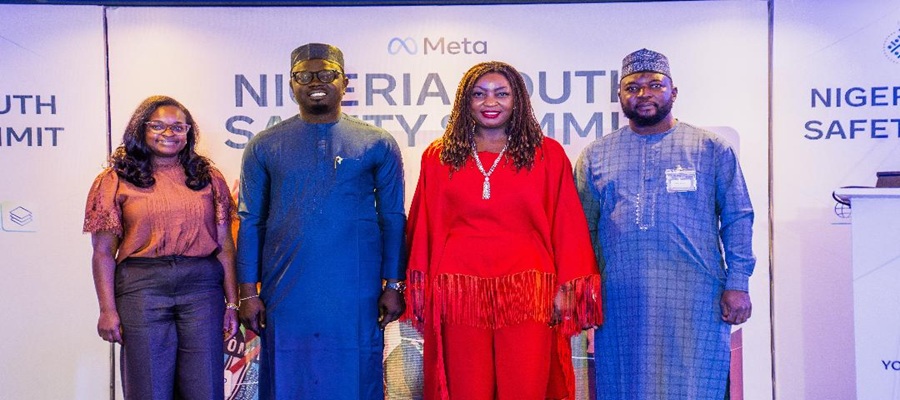
Meta on Thursday convened the Nigeria Youth Safety Summit in Abuja, bringing together government officials, civil society organisations, parents, educators, content creators and youth leaders to strengthen collaboration on digital wellbeing and safer online experiences for young people.

L-R: Sylvia Musalagani, Head of Safety Policy, Europe, Middle East and Africa (EMEA), Meta; Ayodele Olawande, Honourable Minister of Youth Development; Sade Dada, Head of Public Policy, Anglophone West Africa, Meta; and Ahmed Yusuf Tanbuwal, Ag Director, Digital Literacy and Capacity Building Department, National Information Technology Development Agency (NITDA), during the Nigeria Youth Safety Summit organised by Meta on Thursday, June 25, 2026, in Abuja.
The summit, held at the Transcorp Hilton Hotel and co-hosted with the Federal Ministry of Youth Development, highlighted Meta’s investments in youth online safety through built-in protections, parental supervision tools and digital literacy resources aimed at helping teenagers navigate the digital space safely.
The event featured keynote presentations, panel discussions and a Parents Learn and Brunch session organised in partnership with the Federal Ministry of Women Affairs and Social Development.
Participants explored practical approaches to promoting safer online engagement while emphasising the importance of partnerships among government, technology companies, parents, schools and civil society in advancing digital wellbeing.
Speaking at the summit, Meta’s Head of Safety Policy for Europe, the Middle East and Africa (EMEA), Sylvia Musalagani, said the company remained committed to providing teenagers with age-appropriate and safe online experiences.
“At Meta, our goal is to provide teens with safe, age-appropriate online experiences, and events like the Nigeria Youth Safety Summit reflect our commitment to promoting safer and more positive digital experiences for teens.
“With products such as Teen Accounts, Meta is putting the right protections in place so teens can explore their interests and express their creativity in a safe, age-appropriate space.
“We will continue to build the safety features and tools that families need to support young people online,” she said.
Musalagani explained that Teen Accounts represent a redesigned experience across Meta’s platforms specifically for teenagers.
She said the accounts are automatically enabled for all teenagers and include built-in safety features such as private accounts, the strictest messaging settings, restrictions on sensitive content, limited tagging and mentions to people they follow, daily time reminders after 60 minutes of use, and sleep mode between 10 p.m. and 7 a.m.
According to her, teenagers under the age of 16 require parental approval before making any changes that would reduce the default safety settings.
The Minister of Women Affairs and Social Development, Hajiya Imaan Sulaiman-Ibrahim, described child online safety as one of the ministry’s key priorities.
She said children require informed parental guidance to safely navigate the digital environment, stressing that online safety is a shared responsibility involving parents, technology companies and government.
“Child online safety is one of our central pillars and we are steadfast in our mandate to safeguard the Nigerian child from technology-enabled violence.
“Children cannot navigate the complexities of the online world without informed adults guiding them because safety begins with the parents.
“Safety is a shared tripartite responsibility between parents, technological industries and government.
“That is the fundamental premise of today’s summit, a hands-on walk through of parental supervision tools and Teen Accounts.
“We appreciate Meta for the collaboration and for creating a platform for these important conversations,” she said.
Meta also highlighted its parental supervision tools, which allow parents to receive notifications when teenagers report content, gain insights into who they communicate with, set daily usage limits, schedule breaks and monitor age-appropriate content interests.
The Minister of Youth Development, Ayodele Olawande, commended Meta for the initiative and noted its alignment with the ministry’s National Youth Data Protection and Awareness Training Programme.
“I want to thank Meta for this great achievement.
“At the ministry, one of the things we provide to all Nigerians is the skills to succeed in this digital world while making sure we protect them against emerging threats.
“We see a strong connection between the objectives of this summit and the goals of our National Youth Data Protection and Awareness Training Programme.
“We believe that keeping young people safe online is a shared responsibility.
“Government, technology companies, schools, parents, social organisations, community groups and young people themselves all have a role to play.
“We encourage Meta to make the tools, guides and learning materials from this initiative more widely available so that young people across Nigeria can continue to benefit from this laudable summit,” he said.
The summit concluded with discussions focused on strengthening partnerships, promoting digital literacy and advancing a shared vision for youth online safety across Nigeria.
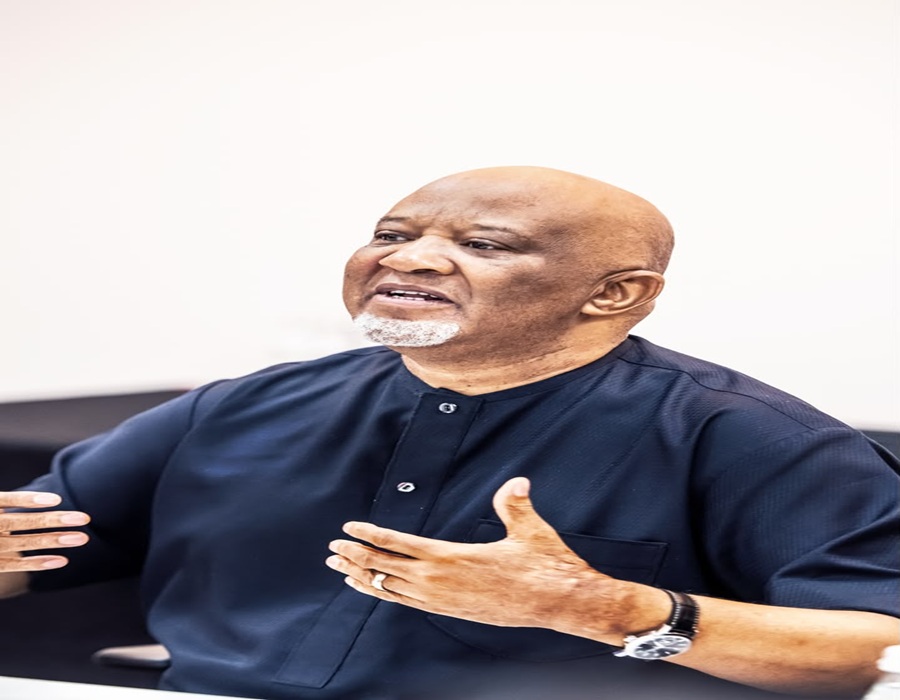
Mcebisi Jonas, MTN Group Chairma,n has used the funeral service of Zimbabwean-born activist and public servant Thokozani Damasane to mount a sweeping attack on xenophobia, ethnic politics and state failure in South Africa, warning that the country’s crisis cannot be solved by blaming foreigners.

MTN Group Chairman, Mcebisi Jonas
Delivering what many described as one of the most forceful interventions yet by a senior African business leader on South Africa’s immigration debate, Jonas said the persistence of anti-foreigner sentiment was a symptom of deeper governance failures, political opportunism and the erosion of a shared moral vision.
He argued that inequality, unemployment, corruption and weak institutions would remain even if all foreigners left the country, insisting that the real problem lay in the failure of the state to govern effectively.
“Foreigners can leave tomorrow – inequality will be with us,” he said. “Foreigners will leave tomorrow – unemployment will be with us. Foreigners will leave tomorrow – our police will remain corrupt.”
Jonas, a former South African Deputy Minister of Finance, made the remarks at a funeral service that had drawn mourners from civic, political and business circles. His speech, which blended philosophy, memory, political critique and grief, has since circulated widely across South Africa and beyond.
Jonas said a central question had stayed with him as he drove to the service: what home meant to Damasane, a man who had been born and educated in Zimbabwe before moving to South Africa during the post-apartheid period.
“I was thinking, what is home to Damasane?” he told mourners. “Because I understand, and I understood very early in life, that home is where humanity is. Home is about humanness. It is about the good of humanity and striving for the good of humanity.”
He described Damasane as someone who arrived in South Africa “as an outcast” but chose to immerse himself in the struggles of the country and its people.
“He immersed himself deeply into the struggles, into the pains of South Africans, and he became one of us,” Jonas said. “In Damasane’s strength, our strength as South Africa and South Africans are reflected. And in his weaknesses, our own weaknesses are reflected.”
The sharpest portion of Jonas’ speech came when he turned to the wave of xenophobic rhetoric that has repeatedly flared in South Africa, particularly against migrants from Zimbabwe, Mozambique, Nigeria, Malawi and other African countries.
He dismissed the argument that foreigners were responsible for the country’s social and economic hardship, saying that such claims merely masked the failures of political leadership and public institutions.
“The problem is the failure of the state,” he said. “The state doesn’t manage immigration. It doesn’t manage its borders. It doesn’t enforce law enforcement. It doesn’t manage education. What are you expecting?”
Jonas accused politicians of exploiting public frustration for electoral gain, warning that communities under pressure are easily manipulated by leaders who offer scapegoats instead of solutions.
“When people feel the burn, they become vulnerable to politicians whose sole purpose is to be elected and re-elected,” he said. “Some of them have no credibility whatsoever. But they lead marches and tell our people that the problem is not us – it is foreigners.”
Jonas also used the occasion to offer a sustained critique of tribalism and ethnic identity politics, describing them as colonial constructs that have survived into the present through political manipulation.
“The tribe is a product of colonial powers,” he said. “You would notice that it is so dominant in areas where the English conquered, because they used something called the principle of indirect rule.”
According to him, colonial administrations deliberately sharpened differences between communities in order to divide and control them.
“You have got to divide these people by psychologically enhancing the notion that one is different from the other. That’s how the notion of tribe was born,” he said.
Jonas argued that the same logic now fuels xenophobic violence and exclusion, with people increasingly persecuted not because of what they have done but because of who they are perceived to be.
He said liberation movements were also guilty of keeping ethnic identities alive for political convenience.
“Liberation movements still sustain this thing of tribes – Zulu and Xhosa – and we sustain this thing as if it is real,” he said. “It is in our heads. We’re creating it because it makes us feel big. Identity politics – we must banish them in our country. Ethno-nationalism is something in this country we must banish.”
In explaining Damasane’s significance, Jonas drew on the writings of Frantz Fanon, the anti-colonial thinker and psychiatrist whose work shaped liberation struggles across Africa and the Global South.
He compared Damasane to Fanon, noting that both men were born outside the societies they later helped shape and serve.
Fanon, he said, was “born elsewhere” and was “not a Muslim,” yet became one of the most respected theorists of the Algerian Revolution. The parallel, Jonas suggested, was deliberate: Damasane, too, had chosen commitment over comfort.
“Each generation must, out of relative obscurity, discover its mission, fulfil it, or betray it,” Jonas quoted Fanon as saying. “Damasane understood the mission. And he did not betray it.”
He also recalled a conversation Damasane had once had with a young man who questioned the presence of foreigners in South Africa. Damasane’s reply, Jonas said, had remained with him.
“Damasane said to this guy: just wait fifteen or twenty years. You will also be wanting to leave your country.”
Jonas said those words now sounded prophetic in light of worsening inequality, exclusion and corruption.
“As I stand up today, I look at South Africa. The level of oppression and inequality, the level of exclusion of our people, the level of corruption, the betrayal of the dream of liberation – those words of Damasane ring very loud in my ears,” he said.
Jonas ended on a note of continental solidarity, saying South Africa’s future was inseparable from Africa’s future.
“We are a nation embedded in Africa,” he said. “And without Africa, our growth as a country – economically – our fortune is intertwined with the growth of Africa. South Africa is nothing without Africa. And Africa is nothing without South Africa.”
He also urged mourners to rethink the way success and dignity are measured, saying merit should not be reduced to wealth alone.
“Sometimes this thing called meritocracy is measured in wealth. No. It is values, it is principle, it is integrity. And your father had all of that,” he said.
Jonas further stressed that a person’s legal or social worth should not be judged by their origin.
“We cannot judge people by their origin,” he said. “We cannot determine the legal status of people by their origin.”
Jonas’ intervention comes at a time when xenophobia remains one of South Africa’s most combustible social and political issues, with periodic attacks on foreign nationals continuing to draw outrage across the continent.
The consequences have often extended beyond South Africa’s borders, triggering diplomatic tensions, travel advisories and boycott calls in parts of Africa. For pan-African companies like MTN, whose operations depend on cross-border trust and political stability, the debate is not only moral but commercial.
That context made Jonas’ decision to speak so directly at a funeral especially notable. Rather than a corporate forum or policy panel, he used a farewell to make a wider argument about belonging, leadership and the future of the continent.
In doing so, he turned Damasane’s burial into something larger than a memorial: a warning against the politics of fear, and a plea for a South Africa that remembers its place in Africa.


Telecom operators in Nigeria recorded a sharp decline of 33,153,633 subscribers in three years (May 2023 – April 2026), according to the Nigerian Communications Commission’s (NCC) latest industry statistics.

According to the telecom industry statistics, the figure showed that 4,270,285 of mobile subscribers were lost between May 2023 (220,931,688) and April 2024 (216,661,403), while the sector had repeat of the negative record with a huge drop of 46,338,623 subscribers between May 2024 (219,005,878) and April 2025 (172,667,255).
There was a significant positive increase between May 2025 (172,474,626) and April 2026 with 187,778,055 subscribers as of the latest figure issued by NCC.
The period recorded a huge increase of 15,303,429 subscribers.
In May 2023, when the current government came into power, the telecom sector had 220,931,688 subscribers. But as at April 2026 which marks exactly three years, the sector has a record of 187,778,055 subscribers.
This indicates a decline of 33,153,633 subscribers during the period under review.
Overall, according to the NCC’s figures, MTN, the largest operator with a subscriber figure of 88,675,062 as at April 2023, was a major factor in the statistics.
It gained 7,716,357 subscribers during the period under review which currently pulls 96,391,419 subscribers as at April 2026, while Airtel which had 60,331,845 subscribers in April 2023 recorded an increase of 4,338,173 subscribers, bringing its current subscriber base to 64,670,018.
On the flip side, Glo, which was trailing MTN with an impressive figure of 60,927,963 subscribers, suffered a massive loss of 37,749,366 subscribers. The development reduced its figure to 23,178,597 it currently has.
In the same vein, T2 (formerly 9mobile) which was accommodating 13,403,345 subscribers in May 2023, lost 9,865,324 subscribers.
The network, according to NCC’s April 2026 statistics, has only 3,538,021 subscribers on its base.
Despite the sharp decline recorded in the period, market stability has slowly returned.
Latest NCC figures indicate that by early 2026, telcos had started recovering lost ground, even rolling out large-scale compensation programmes to over 75 million customers due to poor network quality.
The reduction in the telcos’ active subscriptions between 2023 and 2026 can be attributed to the disconnection of SIMs that were not linked with the National Identification Number (NIN) as mandated by the government.
The development resulted in the decline of subscriptions for mobile services in the country.
During the period which witnessed the impact of foreign exchange (FX) unification and the removal of the premium motor spirit subsidy, the biting economic pressures reduced consumer purchasing power which led many Nigerians to give up multiple or redundant SIM cards to cut back on monthly data costs.
The service providers lost most subscribers as a result of the Federal Government, through the industry regulator, relevant agencies and institutions like banks which came up with poicies that demanded Subscriber Identification Module (SIM) updates and verifications. A change in the minimum age requirement for SIM registration (from 16 to 18 years) also contributed to a decline in gross new connections.
During the period, the industry regulator, NCC, issued new guidelines to telecommunication companies, directing them to deactivate phone lines unused for six consecutive months for Revenue Generating Event (RGE).
The new rule took a toll on the telecom operators, as many subscribers who are using more than one phone line could not be able to retain the others due to the harsh economic environment of the country.
According to the regulator, “A subscriber line may be deactivated if it has not been used, within six months, for a Revenue Generating Event (RGE), and if the situation persists for another six months, the subscribers may lose their numbers, except for a network-related fault inhibiting an RGE.”
It is common knowledge that some Nigerians are migrating to other countries of the world, and most of them may likely not continue to use their Nigerian networks’ SIM either voluntarily or perhaps any policy that needs revalidation comes up.
There was also a standing order for those who had issue(s) with their SIM cards, as the National Identity Number (NIN) in the registration of Subscriber Identity Module (SIM) cards by all mobile telecommunication network operators was mandatory.
The development undoubtedly interrupted the growth trend of telecom subscribers as indicated in the three years’ statistics by NCC.

FCMB Turns Normal Banking into Rewards with New Mobile App Upgrade

Despite Warnings, FG Draws Down $1.5Bn as First Tranche of FAB $5Bn Loan Deal

PalmPay Strengthens Data Protection Culture with Employee Privacy Workshop and Privacy Champions Programme

Paystack Unveils AI-powered Payments Tools

NRS, CITN Deepen Partnership to Strengthen Tax Awareness

CBN Extends PoS Geo-Fencing Enforcement Deadline to August 2026

London Strengthens Global Investment Ties with Africa @ First Ever London-Africa Business Summit

FG Targets Alleged N3tn Capital Flight, Opens Airtime Credit Market to Nigerian Fintechs

Mobile Internet Gender Gap Widest in Africa – GSMA

Japan, UNESCO Boost Digital Learning in 15 CoEs with Donation of ICT Equipment




 Broadcasting3 days ago
Lebara Nigeria Launches Lebara Play, Africa’s First Telecom-Owned Micro-Drama Platform

 E-Business2 days ago
Privacy Crisis May Undermine Local Hosting of Data by Banks, Fintechs

 Telecom2 days ago
NITDA Unveils Bold Vision to Make Nigeria an AI Powerhouse

 E-Financial3 days ago
SEC Bars Dangote Refinery IPO Adverts

 Telecom2 days ago
GSMA Launches Global Satellite Regulatory Playbook to Help Policymakers Build Future-Ready Connectivity Frameworks

 Telecom1 day ago
6 Easy Ways to Enjoy the 2026 World Cup with Google and Gemini

 E-Business2 days ago
How to Build a Safer Cyberworld for People, Business, and Society

 General News2 days ago
Nestlé Commits to Boosting West Africa Solar Rollout Through Partnership