

Broadcasting
Zulum, Sanwo-Olu, Emmanuel, Emerge ‘The Industry Governors of the Year’ as Emefiele, Shobanjo, Onyeali-Ikpe, Odigbo, others Win

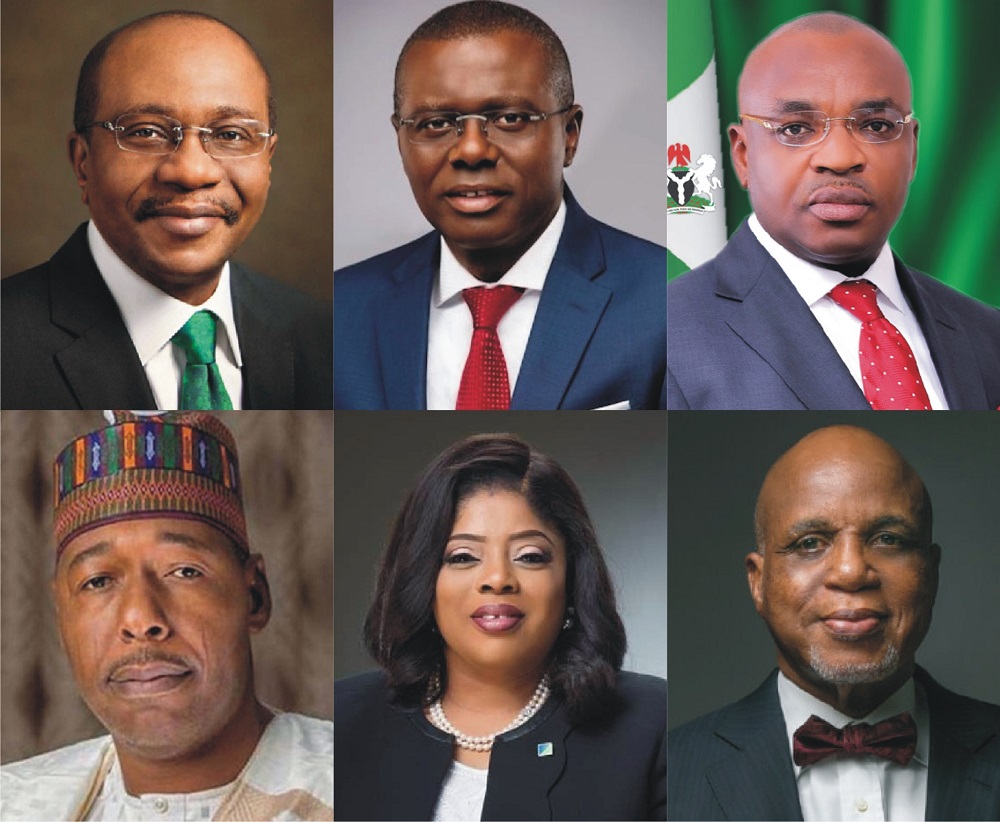
The Industry Newspapers, organisers of The Industry Summit/Awards, formerly The Industry Evening Summit, has announced Governor of Borno State, Prof, Babagana Zulum, Governor of Lagos State, Mr. Babajide Sanwo-Olu and Governor of Akwa Ibom State, Mr. Udom Emmanuel as The Industry Governor of the Year- Overall, Job Creation and Infrastructure respectively.

The Industry Awards team of assessors led by the Leadership Newspaper, South West General Manager, Mr. Chima Akwaja also named the Central Bank of Nigeria Governor, Mr. Godwin Emefiele, Chairman, Troyka Holdings- Dr. Biodun Shobanjo, Chief Executive Officer of Fidelity Bank Plc- Mrs. Nneka Onyeali-Ikpe, as Regulatory Officer of the Year, Doyen of Advertising in Africa, Banker of the Year respectively.
According to the Mr. Akwaja, the decision was reached after the team of assessors of The Industry Summit/Awards had painstakingly reviewed the impact of governance by these Governors in Nigeria on their states and adjudged finally settled on these three governors.
The award will be conferred on all the recipients, during this year’s edition of The Industry Summit/Awards. This year’s event which is in its third edition, with the theme: “Financial inclusion, digital payment and the challenges of banking the unbanked” is scheduled to be held at the Banquet Hall of Sheraton Hotel & Tower, Ikeja, Lagos, Nigeria on 26th of April, 2022 starting with the Summit by 10am and Dinner/Awards ceremony by 6pm.
In a statement made available to newsmen recently in Lagos, the convener of the Summit, and the Editor-in-chief of The Industry Newspapers, Mr. Goddie Ofose revealed that, “the event is envisioned to bring together leaders of thoughts in Nigerian business landscape in order to rev up conversations that would deepen financial inclusion and proffer solution to the challenges of banking the unbanked.

According to him, Nigerians who have access to financial services are reported as having a lack of basic resources and the financial knowledge necessary to carry out transactions, stressing that, lack of education around financial services has likely contributed to low financial inclusion.
He pointed out that, “in a quest to extend financial services to the unbanked, particularly those in remote and rural regions, it is critical that we engender conversation about the viability of agents. Agents are retail storefront operators representing financial services providers with the delivery of financial services.”
“According to EFinA’s 2018 Access to Finance Survey, financial exclusion is highest in rural areas. This is because the traditional model of delivering financial services — the bank branch — is not sustainable in these areas.” He noted.
He also stated that, the Keynote Speaker for this year’s event is the Governor of Central Bank of Nigeria (CBN), Dr. Godwin Emefiele, while CEO Financial Institution Training Centre (FITC), Mrs. Chizor Malize will deliver a lead paper.
The year panel is consisted of Chioma Afe, Group Head, Retail Marketing & Analytic, Access Bank Plc, Cherry Eromosele, Group Chief Marketing & Corporate Communications Officer, Interswitch Nigeria, Chuma Ezirim, Group Executive, e-Business & Retail Products, FirstBank, Mr. Kenny Joda, CEO, FibreOne, Mrs. Bola Atta, Group Director for Communication, UBA Plc, David Okeme, Divisional Head Payment Solutions & Vertical Market Systemspecs, Olugbenga Agboola, CEO Flutterwave, Mr. Oti Ukubeyinje, Senior Vice President, Products and Product Marketing, Terragon Babs Ogundeyi, CEO Kuda Microfinance Bank.
The Moderator for the session is Alhaji Mojeed Jamiu, Seasoned financial journalist/publisher of Upshot Reports.
Also, the Awards ceremony will witness conferment of awards on six first ladies from each geopolitical zone with best PET projects, among others.


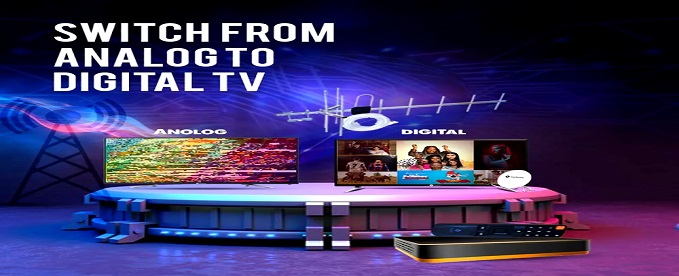
National Broadcasting Commission (NBC) has said that Nigerians will no longer pay annual Digital Access Fees under the renewed Digital Switch Over (DSO) project.

Charles Ebuebu, director-general, NBC, disclosed this in an exclusive interview with the News Agency of Nigeria (NAN) on Wednesday in Abuja,
Ebuebu said viewers only need to purchase an approved decoder and satellite dish which cost below N20,000 to enjoy free television permanently.
“Previously, users paid an annual digital access fee of about N1,500, described as an administrative charge.
“The new system removes that annual fee. It provides free access to free-to-air television channels without any payment.
“Premium channels will be introduced later. Viewers who want those additional channels will be able to access them through paid services.
“Nigerian content on free-to-air channels remains free to watch. Unlike Pay TV, this platform does not require monthly subscriptions for its basic service,” he said
Ebuebu said approved decoders for the FreeTV will cost less than N20,000 and authorised sales outlets will soon be announced.
He urged Nigerians to wait for official information on approved dealers for the DSO decoders, warning that unauthorised sellers are exploiting growing public demand.
He reiterated that people only need a free-to-air decoder, along with a satellite dish instead of the old antenna system to receive the DSO signal.
“Once the equipment is installed, viewers can access all available channels across the country without paying any subscription fees,” he stressed
The DG dismissed claims by some retailers that there are different categories of decoders sold at varying prices, stressing that such sellers are not authorised by the commission.
According to him, the NBC will soon publish the list of approved dealers, official prices, and locations where genuine decoder boxes and accessories can be purchased.
The NBC boss said the DSO project is designed not only to improve television broadcasting but also to stimulate economic growth by creating jobs, attracting investment, and opening up opportunities for businesses that support the broadcasting industry.
Ebuebu noted that content producers and broadcasters stand to benefit significantly from the nationwide reach of the DSO platform.
Unlike the previous system, where many stations had limited regional audiences, he said the new platform will make their channels available to viewers across Nigeria.
He added that the introduction of audience measurement technology will provide scientific and reliable data on television viewership.
Ebuebu added that audience measurement technology will give advertisers greater confidence in placing adverts and enable broadcasters to demonstrate the true size and reach of their audiences nationwide.
Uchenna Mbunabo, Nigerian filmmaker, has raised concerns over the alleged unauthorised broadcast of Nollywood films by some Ghanaian television stations, calling on Ghana’s National Film Authority (NFA) to strengthen the enforcement of copyright laws.

Uchenna Mbunabo, Nigerian filmmaker
Mbunabo made the remarks during a conversation with James Gardiner, deputy CEO of the National Film Authority (NFA) of Ghana.
He questioned whether it was permissible for television stations in Ghana to download Nigerian movies from YouTube and air them without obtaining permission from the producers.
“I noticed that Ghanaian TV stations, the way they are stealing our films and showing them for free with impunity. Is it legalised in your country for TV stations to go on YouTube, download people’s sweat and show it for free?”
According to Mbunabo, some Ghanaian television stations have been downloading newly released Nollywood films from YouTube and broadcasting them without authorisation, depriving producers of revenue generated through the platform.
He also stated that he had not witnessed Nigerian television stations engaging in similar practices and questioned what measures Ghana was taking to protect filmmakers’ intellectual property.
Responding to the concerns, Gardiner acknowledged that the issue exists and said the National Film Authority had begun engaging relevant stakeholders to address it.
He disclosed that the NFA has held discussions with the Ministry of Communications, the National Communications Authority (NCA) and the National Media Commission (NMC) on improving copyright enforcement.
Gardiner explained that while Ghana has copyright laws, enforcement remains challenging because many television stations now operate digitally and may not have physical offices within the country.
“There are copyright laws, but they are not effective because a lot of the TV stations don’t have offices. Most of them are now digital, so they operate from anywhere. They can even have a Ghanaian TV station but be operating from Austria simply because it is digital.”
He added that authorities are considering a new licensing framework that would require broadcasters to undergo a fresh licensing process to improve monitoring and enforcement.
According to Gardiner, television stations found guilty of illegally broadcasting copyrighted content would be required to compensate affected producers through fines.
He added that repeat offenders could face suspension of their broadcasting licences, while a third violation could result in the revocation of their licences.
Although he did not provide a specific timeline, Gardiner said the reforms were already underway and expressed hope that significant progress would be seen next year.
Mbunabo welcomed the proposed measures but urged the National Film Authority to expedite the process, stating that unauthorised broadcasts continue to affect filmmakers’ ability to recover production costs through legitimate distribution channels such as YouTube.
He also stressed that his comments were not directed at Ghana’s film industry, noting that he has worked with several Ghanaian actors over the years and supports collaborations between Nollywood and Ghallywood.


FAAN to Replace Physical ID Check with V-Pass Biometric Verification

World Bank Says 79 Percent of Nigerians Still Trapped in Poverty despite Reforms

SEC Begins Drive to Recover Unclaimed Dividends

ntel Plays Down Calls and Data Services, Moves to BET Agenda

Nigeria Facing Rising Cybercrime Losses – Report

NRC, Ponzi Scheme Collapses Resulting Loss of Billions of Naira

Nigeria Launches FreeTV Nationwide

NASENI Moves to Digitize CCB’s 5m Assets Declaration and Operations

Lebara Nigeria Launches Lebara Play, Africa’s First Telecom-Owned Micro-Drama Platform

CANAL+ Partners Samsung to Pre-Load DStv Stream on New Samsung TVs In Nigeria, Other African Countries




 E-Business3 days ago
TD Africa Sponsors Check Point Secure 360 Summit to Boost Cybersecurity in Nigeria

 Telecom3 days ago
MTN Foundation, MUSON Celebrate Emerging Music Talents at 2026 Graduation Ceremony

 Telecom3 days ago
NITDA Calls for Digital Infrastructure Expansion to Drive Nigeria’s Industrialisation

 E-Financial2 days ago
Next Currency Crisis May Turn $300Bn in Stablecoins into National Currencies

 News3 days ago
Guinness Rolls Out Nationwide Consumer Rewards Promotion

 General News3 days ago
First Trustees Advocates Estate Planning as an Essential Tool in Every Wealth Creation Strategy

 E-Financial3 days ago
Gigbanc Nigerian Fintech Startup Closes Shop after 3 Years

 Broadcasting3 days ago
Mbunabo, Nigerian Filmmaker Accuses Ghana TV Stations of Pirating Nollywood Films