

Telecom
International Girls in ICT Day 2022: Microsoft Africa Development Center Inspires Schoolgirls on STEM Education

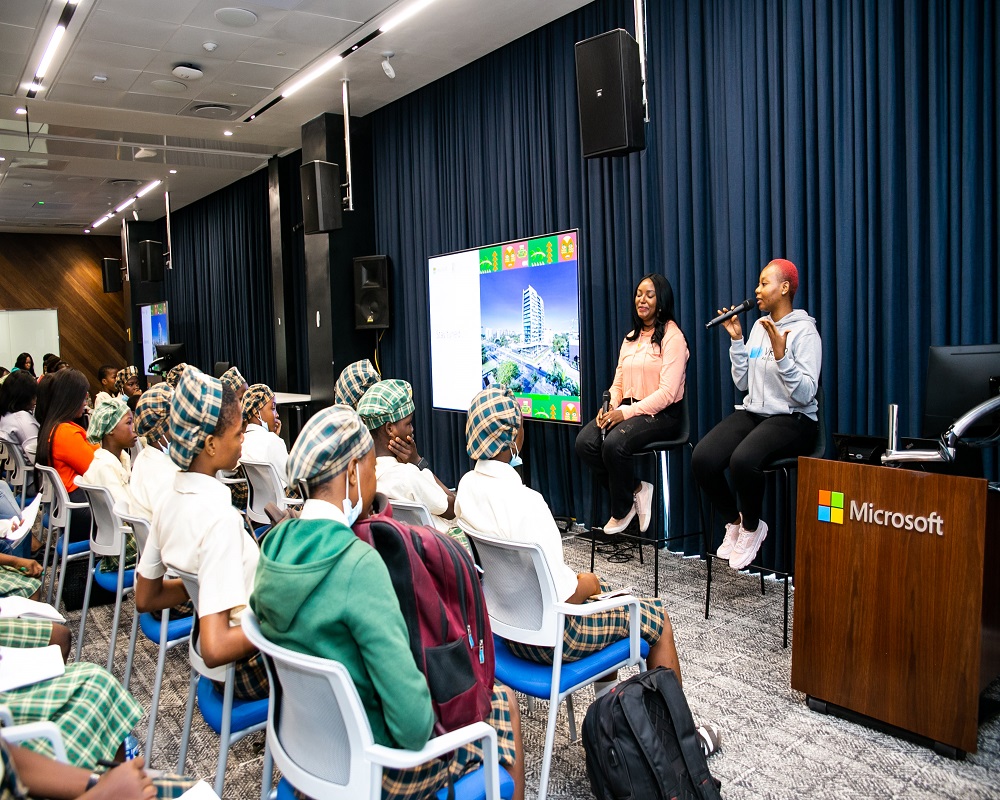
The International Girls in ICT Day was celebrated globally on April 28th, 2022, and the team at the Microsoft Africa Development Center (ADC), West Africa, celebrated the day at an intimate event with schoolgirls and female tech enthusiasts.

Themed “Access and Safety,” the day was marked to reinforce the safety for girls and young women to thrive in science, technology, engineering, and mathematics (STEM), and the need for safe and reliable access to the internet and digital tools.
This year and every year, the International Telecommunications Union (ITU) and partners work together to develop solutions and ideas for lowering barriers to access and improving safety online for girls and young women.
The event held at the newly launched Microsoft facility in Lagos with young girls from Girls Senior Secondary Grammar School Obalende, Ikoyi Lagos, female tech enthusiasts as well as 30 ladies under 30 with no prior tech knowledge all in attendance. This audience were treated to inspiring conversations, one-on-one sessions with mentors, a tour of the office facility, and an introduction to skilling pathways in technology.
On their part, the 30 ladies under 30 who attended the observance without an academic degree or career in tech left with renewed energy willing to pursue careers in tech and software engineering.
Hosted by Sefunmi Wande-Durojaye, Lead Ecosystem and Program Development at Microsoft ADC-West Africa, the observance sparked conversations in ICT for girls during the day-long event, with a keynote address delivered by Bolanle Olumekor, Knowledge Management Assistant at United Nations Information Centre Nigeria.
Participants had the opportunity to hear inspiring and insightful speeches from the speakers during the sessions.
Paula Wigwe, Business Manager at Microsoft ADC-West Africa, shared a relatable story of how she got into tech even though her first degree was in Estate Management. Her story had a lot to do with her curiosity, resilience and being focused.
Beyond the significance of internet access and safety for young women, the day was leveraged as another channel to inspire young women interested in STEM to dream and believe in a future at Microsoft like many women, they had the opportunity to meet. Jacquelyn Ekwueme, Senior Program Manager in the Governance, Risk, and Compliance (GRC), and Adora Nwodo, Software Engineer in Mixed Reality, shared their experiences on ways to become a voice and remain relevant within the tech industry.
Per opportunities in skill advancement, Microsoft ADC West Africa partnered with Utiva and Skillup Africa to help the females in skilling up toward their career journey in tech.
Other notable sessions during the day included a career session anchored by Tejumade Olaniyi, Recruiter at the ADC West Africa and an experience at the Garage led by Lydiah Karanja, Program Manager of the Garage, ADC East Africa.
The Garage session gave the participants the opportunity to try their hands on a few projects, bringing home how very accessible and fun tech can be for young women.


Telecom
Mobile Technologies Boost Africa’s Economy by $240B in 2025, Commences a New Phase of Digital Transformation


Mobile technologies and services contributed $240 billion to Africa’s economy in 2025, equivalent to 7.8% of GDP, according to the GSMA’s Mobile Economy Africa 2026 report.

The sector also supported approximately 13 million jobs and generated $45 billion in public revenues, underlining the growing role of mobile connectivity in powering economic growth, innovation and digital transformation across the continent.
The report finds that Africa’s mobile industry is entering a new phase of development. Having spent the last decade expanding connectivity, operators are increasingly focused on unlocking the full value of digital networks for consumers, businesses and governments.
Across the continent, operators are evolving beyond their traditional role as connectivity providers to become digital transformation partners, deploying artificial intelligence (AI), expanding digital services and opening network capabilities to developers through standardised APIs. According to GSMA Intelligence research, 79% of operators in Africa identify becoming a digital transformation partner as a primary enterprise objective.
By 2030, mobile technologies and services are expected to contribute $290 billion to Africa’s economy as digital adoption deepens and connectivity continues to support productivity, innovation and economic development across the region. Today Africa’s digital challenge has shifted from expanding network coverage to ensuring people, businesses and governments can fully benefit from the connectivity already in place.
Vivek Badrinath, Director General of the GSMA, said: “Africa’s mobile industry is entering a new phase of development. Having connected millions of people and businesses over the last decade, the focus is increasingly shifting towards unlocking greater value through AI, digital services and new forms of innovation.
Realising this opportunity will require continued investment, policies that encourage innovation and a shared commitment to ensuring that everyone can benefit from the opportunities digital technologies create.
“We also call on the broader technology supply chain – including those who manufacture the components that make devices possible – to reflect on how their own success is tied to a connected world, and to join us in closing the usage gap and making that world more accessible and affordable for all.”
Across the continent, operators are increasingly deploying AI to improve network performance, strengthen customer experiences and support new digital services.
However, Africa is home to more than 30% of the world’s languages, while today’s leading AI models remain predominantly trained on English and other high-resource languages.
Through initiatives such as the GSMA’s “AI language models in Africa, by Africa, for Africa” programme, industry stakeholders are working to strengthen the data, compute, talent and policy foundations needed for African-led AI development.
The report also highlights growing momentum behind GSMA Open Gateway, which enables operators to provide standardised network APIs to developers and enterprises. These capabilities are helping unlock new digital services while supporting fraud prevention, identity verification and digital trust across sectors including financial services, e-commerce and digital government.
Policy choices will play a critical role in determining whether Africa can fully capture this next wave of digital growth. Investment incentives, spectrum availability, affordability measures and regulatory certainty will all influence the pace of innovation, digital adoption and infrastructure deployment across the continent.
Despite this progress, the report warns that Africa’s greatest digital challenge is no longer network coverage, but adoption. While mobile broadband networks now cover the vast majority of the population, approximately 63% of Africans live within coverage but are not using mobile internet. By comparison, only 9% remain outside mobile broadband coverage.
Affordability remains the single largest barrier to mobile internet adoption across much of the continent, alongside digital skills gaps and other social barriers. The report highlights the importance of initiatives aimed at improving device affordability, expanding digital skills and creating a more inclusive digital ecosystem.
To support the next phase of digital growth, the GSMA is calling for policies that encourage investment, improve affordability and accelerate digital adoption. Mobile operators across Africa are expected to invest over $76 billion in network infrastructure between 2024 and 2030.
Evidence from several African markets also demonstrates that reducing taxes on devices and digital services can help accelerate adoption and expand access to the benefits of the digital economy.
Key findings from the Mobile Economy Africa 2026 report:
- Mobile technologies and services contributed $240 billion to Africa’s economy in 2025, equivalent to 7.8% of GDP.
- Mobile’s economic contribution is forecast to reach $290 billion by 2030.
- The mobile ecosystem supported approximately 13 million jobs in 2025.
- The sector generated $45 billion in public revenues.
- Mobile operators are expected to invest over $76 billion in network infrastructure between 2024 and 2030.
- Approximately 63% of Africans live within mobile broadband coverage but are not using mobile internet, compared with a coverage gap of 9%.
- 5G adoption is expected to reach 21% of total mobile connections by 2030.
Telecom
Telecom Regulator, NCC, Digital Encode, AfriGoPay Support eBusinesslife Girls In ICT Campaign
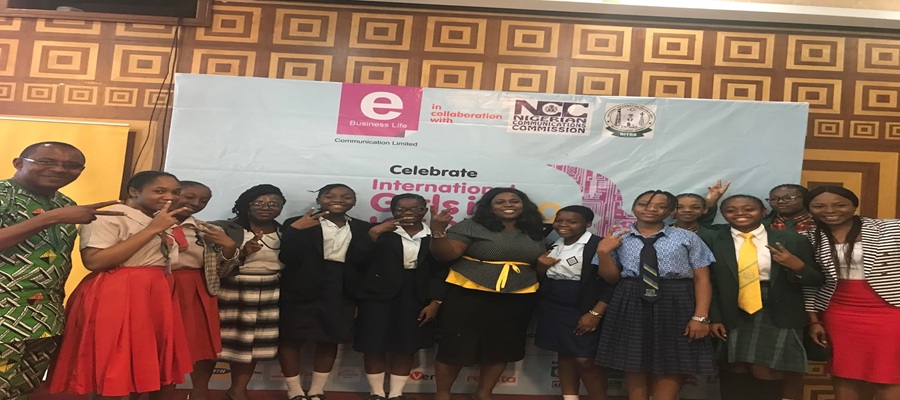
The nation’s telecommunications regulator, the Nigerian Communications Commission (NCC) has reaffirmed its commitment towards ensuring that the gender disparity in the ICT career sector is bridged.

eBusinesslife
This statement was made with its backing of the 2026 edition of the International Girls in ICT Day campaign being organised by eBusiness Life Communication Limited.
The event which will hold at the Lagos Oriental Hotel on Thursday June 25, 2026 is part of an annual campaign initiated by the International Telecommunications Union (ITU) to sensitise and encourage young girls to delve into ICT and related careers, which is seen to have been dominated by the male gender. The 2026 theme is “AI For Development: Girls Shaping The Digital Future”.
Digital Encode Limited, an award-winning, cybersecurity consulting and integration firm has also indicated interest in being part of this year’s campaign.
Digital Encode specialises in enterprise network security, digital forensics, and Governance, Risk, and Compliance (GRC). The firm is well-known for its vendor-independent approach and for providing digital trust and threat mitigation solutions across Africa
The firm is a trusted advisor for many organizations in Africa, offering a broad suite of information security services.
Digital Encode Founder and Chief Visionary Officer (CVO), Dr. Obadare Peter Adewale had been an advocate of youth skills empowerment, and the chairman, Advisory Board of Cybersafe Foundation, promoters of Cyber Girls Initiative.
AfriGOpay Financial Services Limited has also joined the partnership train.
AfriGOpay Financial Services Limited is the company behind AfriGO, Nigeria’s first domestic card scheme, launched by the Central Bank of Nigeria (CBN) and the Nigeria Inter-Bank Settlement System Plc (NIBSS).
The domestic card scheme is designed to provide secure, cost-effective, and localized payment services, including debit, credit, prepaid, and virtual cards.
By processing transactions locally, AfriGO ensures “data sovereignty,” meaning Nigerian payment data remains within the country, which improves security and reduces dependency on foreign exchange.
With the support for girl in ICT, AfriGOpay has committed to ensuring that the gender disparity in ICT career is bridged.
Citing ITU’s estimate of skills shortfall of over two million jobs in the ICT sector by 2030, Convener, Girls-In-ICT/CEO, e-Business Life Communication Limited, Mrs. Ufuoma Emuophedaro (‘Daro), said girls and young women who learn coding, apps development and computer science will not only be well-placed for a successful career in the ICT sector, but ICT skills that are rapidly becoming a strong advantage for students in just about any other field they might choose to pursue. “Girls with ICT skills can expect to earn good salaries and enjoy plenty of career opportunities.
Girls in ICT Day reminds us that ICTs help to improve the lives of people everywhere – through better health care, better environmental management, better communications, and better educational systems that transform the way children and adults learn.”
Referencing the 2026 theme, Mrs. Daro noted: “Artificial Intelligence, in all of its forms, is the development vehicle. While there is a gender gap in every industry, the largest gaps are found in the STEM fields.
Women in ICT often find themselves in junior or support roles rather than in managerial roles, with little opportunity for advancement.
They are also less likely to hold an executive position, become ICT entrepreneurs, or be represented among science and technology policymakers.
To thrive in STEM, girls and young women must be exposed to women in leadership positions, fostering inspiration and breaking down barriers that hinder their progress.
The Girls in ICT Day 2026 theme aims to address these challenges, encouraging empowerment and skills development for a more equitable future in STEM.”
The 2026 International Girls in ICT celebration event will feature different competitions among female students from widely selected private and public secondary schools.
These include STEM Quiz and practical tech competitions. Other features of the day will include Student’s Roundtable Discussion; interactive and motivational talk from renowned women ICT professionals.
Awards and gift prizes will be given to winning schools and students of the Quiz and Tech competitions. Also Awards will be given to deserving women that have exemplified themselves in the ICT industry.
The International Girls in ICT Day is an initiative launched through ITU Resolution 70 with the idea of creating a global environment that will empower and encourage girls and young women to consider careers in the field of information and communication technologies.
The Union declared the 4th (fourth) Thursday in April every year as a day to highlight the annual campaign to encourage girls and young women to consider careers in ICT, and society is reminded to support them in their choice.
At the end of the event, it is expected that the young students should be able to introspect and pursue any desired career path in ICT, technical or not, without bias, or being gender conscious.
This year’s event will have top government and private sector executives in attendance.

Nigeria’s fast-rising youth culture and innovation community, The Gathering on 100, is heading to Enugu, with registration now open for gamers, performers, DJs, creatives, and culture enthusiasts.

MTN
The Enugu edition will take place on June 19, 2026, at ICC Hall, Okpara Square, and will bring together a new audience for the platform’s signature blend of music, gaming, live performance, community engagement, and youth-driven entertainment.
The Gathering on 100 first gained national attention in Lagos, where it transformed the National Stadium, Surulere, into a continuous 100-hour ecosystem of activity from April 22–26, 2026.
The event combined culture, commerce, entrepreneurship, gaming, fashion, and live entertainment, attracting thousands of young participants and creating opportunities for emerging talent and businesses.
The movement most recently arrived in Aba, where thousands of young people gathered for a weekend of culture, commerce and entrepreneurship, reinforcing the platform’s growing appeal across different communities and audiences.
The move to Enugu is being framed by organisers as a deliberate expansion into one of Nigeria’s largest student and youth populations. Home to major institutions including the University of Nigeria, Nsukka (UNN), Enugu State University of Science and Technology (ESUT), the Institute of Management and Technology (IMT), Godfrey Okoye University and Coal City University, Enugu attracts thousands of young people from across the country each year, creating a vibrant community shaped by education, creativity, entertainment and entrepreneurship.
This concentration of young talent has helped fuel a growing ecosystem of creators, performers, gamers, digital entrepreneurs and small business owners.
In recent years, the city has hosted an increasing number of technology, entertainment and youth-focused events, reflecting the growing demand for platforms that bring together creativity, opportunity and community.
These dynamics make Enugu a natural next stop for The Gathering on 100, a platform built around showcasing talent, fostering connections and creating opportunities for young Nigerians.
Registration for the Enugu edition is now open through The Gathering’s official website, with participation available across multiple categories including gaming, rap battles, DJ competitions, dance, live performances and entrepreneurship.
A key highlight of the event will be the Pitchathon, where emerging founders and business owners will have the opportunity to present their ideas before a panel of judges for a chance to secure grant funding and support for business growth.
The gaming segment will feature competitive tournaments and interactive experiences designed for both casual and serious players, while rap battles and DJ showdowns will spotlight rising talent from Enugu and neighbouring states.
Attendees can also expect a large scale rave experience, live entertainment and community driven activities designed to bring together different corners of the region’s youth culture under one roof.
Beyond the entertainment, organisers say The Gathering on 100 is designed to create real opportunities for young people to connect, collaborate and gain visibility for their talents, ideas and businesses.
As the movement continues its expansion across Nigeria, the Enugu edition is expected to showcase the city’s unique blend of creativity, ambition and cultural influence while providing a platform for the next generation of innovators, performers and entrepreneurs.

Police Uncovers N7.7Bn Telecom Data Fraud Syndicate, Recovers Assets Worth Millions

How Fraudsters Stole N134Bn from Banks, Customers in 6 Years – CBN

AfreximBank Urges Nigeria, Others to Strengthen Continental Trade

FG Issues Transition Guidelines for Tax Acts 2025

Mobile Technologies Boost Africa’s Economy by $240B in 2025, Commences a New Phase of Digital Transformation

CBN Extends PoS Geo-Fencing Enforcement Deadline to August 2026

NCC Drafts New Rules for Virtual Mobile Operators

FG Targets Alleged N3tn Capital Flight, Opens Airtime Credit Market to Nigerian Fintechs

London Strengthens Global Investment Ties with Africa @ First Ever London-Africa Business Summit

Easybuy Partners WAWUAfrica to Upskill 10 Million Youths and Women, Boosting Nigeria’s Economic and Financial Inclusion




 Telecom2 days ago
MTN Foundation Commits N32Bn in Projects across Nigeria

 E-Financial2 days ago
IMF Warns of New Risks for Monetary Policy over $59Bn Crypto Inflows into Nigeria

 E-Financial2 days ago
AI-Powered Loan Recovery Pilot Rakes in N69m for VeendHQ

 E-Business1 day ago
NIPOST Plans Digital Postcodes for Every Building in Nigeria

 Telecom2 days ago
NCC Begins Review Telecom Termination Rates after 8 Years

 Telecom2 days ago
Airtel Africa Foundation Completes Year One Scholarship Disbursement for 100 Tech Scholars in Nigeria

 E-Business2 days ago
The Case for a Holistic AI-Led Approach to Cybersecurity in the Fintech Ecosystem

 News2 days ago
Nigeria’s Apapa, Tin Can Ports Make Global Top 20 Improvement List