

Broadcasting
BBC to Sack 1,000 in Digital Transformation


The BBC is to axe 1,000 jobs and scrap some broadcast channels in traditional form as it prioritises digital and copes with a funding freeze, the British public service broadcaster said on Thursday.

Aiming to “build a digital-first public service media organisation”, the BBC said it would “change in step with the modern world, giving audiences the content they want… in the ways they want it”.
The network will create a single 24-hour television news channel serving the UK and abroad, absorbing BBC World.
Channels including children’s channel CBBC, BBC Four and Radio 4 Extra will stop traditional broadcasting, while “a number” of World Service language services will become digital only.
Tim Davie, director-general made a speech to BBC staff on Thursday in which he hailed “a fresh, new, global digital media organisation which has never been seen before.
“We need to evolve faster and embrace the huge shifts in the market around us,” he told them.
The first phase of the changes, including job cuts, will save £500 million (585 million euros, $630 million) a year, £200 million of which will help offset the £285 million funding gap caused by the government earlier this year freezing the television licence fee.
“The BBC will also reinvest £300 million to drive a digital-first approach, through changes to content and output and additional commercial income,” a statement said.
Further details are to be announced in the coming months, said the BBC, which marks its centenary this year.
The broadcaster has faced increasing claims from right-wingers since the UK’s divisive Brexit referendum in 2016 of political bias, and pushing a “woke”, London-centric liberal agenda.
The BBC, founded by Royal Charter and operating independently of government, has faced similar accusations from the political left.
Critics accused Culture Secretary Nadine Dorries of “cultural vandalism” and wrecking a world-renowned British institution when she announced the licence-fee freeze.
The fee — payable by every household with a television set — funds BBC television, radio and online services, as well as programming, many of which are exported commercially worldwide.
Supporters maintain the fee — currently £159 for a colour TV — provides excellent value for money, and a range of services from news and current affairs to wildlife documentaries, children’s output, drama and music.
But opponents, including rival commercial broadcasters, have long complained the guaranteed funding model, which criminalises non-payers, is unfair.


MTN Group has begun rolling out MTN One TV, a new entertainment proposition designed to make digital video content more accessible, relevant, and flexible for customers across African markets.

Introduced in line with MTN’s Ambition 2030 strategy, MTN One TV brings together local storytelling, live channels, international programming, and market-specific viewing options tailored to how customers across the continent access and pay for digital entertainment.
The proposition is designed to give customers greater choice in how they watch content, with viewing models that may vary by market and can include free-to-view content, advertising-funded experiences, pay-as-you-watch access, and subscription offerings.
Depending on local availability, customers may also be able to pay through airtime, Mobile Money, and other locally supported payment methods, helping to reduce common barriers to streaming access.
Beyond enhancing customer experiences, MTN One TV creates new opportunities for African creators, broadcasters, advertisers, and ecosystem partners by helping connect content to wider audiences through MTN’s scale across connectivity, payments, and digital services.
By bringing together a broad mix of content experiences under a single proposition, MTN aims to support greater content discovery, broader audience reach, and sustainable growth across Africa’s digital entertainment ecosystem.
Anchored in MTN’s strategic platforms of Connectivity, Fintech, and Digital Infrastructure, MTN One TV forms part of the Group’s broader ambition to build digital experiences that create value for customers while enabling participation and growth across Africa’s digital economy.
“Entertainment is increasingly becoming an important gateway to digital participation,” said Selorm Adadevoh, MTN group chief commercial, strategy and transformation officer.
“Through MTN One TV, we are leveraging the scale of our connectivity, fintech, and digital capabilities to make relevant content more accessible while creating new opportunities for Africa’s creative and digital economies. This is aligned with our ambition to deliver digital solutions for Africa’s progress.”
MTN One TV is being introduced progressively across MTN markets through a phased rollout approach that reflects local market needs, existing services, and partnership opportunities.
Over time, MTN will bring together a combination of video capabilities, content partnerships, and customer experiences under the MTN One TV brand to create a more consistent and scalable entertainment proposition across its footprint.
Through MTN One TV, MTN continues to extend its role beyond connectivity by combining entertainment, payments, and digital services to deliver experiences tailored to the needs of African consumers.
The rollout supports MTN’s Ambition 2030 vision of leading digital solutions for Africa’s progress while expanding access to digital entertainment across the continent.

International Air Transport Association (IATA) has identified Nigeria as one of the most expensive countries in the world for airline operations, citing high taxes, charges and operational costs that continue to weigh heavily on local carriers.

IATA’s Regional Vice President for Africa and the Middle East, Kamil Al-Awadhi, disclosed this during the association’s Annual General Meeting held in Rio de Janeiro.
Al-Awadhi said that although Nigeria’s Minister of Aviation and Aerospace Development, Festus Keyamo, had been pursuing reforms aimed at improving the aviation sector, airlines operating in the country still faced enormous cost pressures.
According to him, the high-cost operating environment has continued to affect the profitability and competitiveness of Nigerian airlines, making it difficult for the industry to realise its full potential.
He noted that excessive taxes, regulatory charges and other operating expenses remained major obstacles to airline growth across the region, with Nigeria ranking among the most challenging markets from a cost perspective.
Al-Awadhi urged member states of the Economic Community of West African States to adopt a proposed 25 per cent reduction in aviation taxes and charges to ease the burden on airlines and passengers.
According to him, lowering taxes and charges would reduce airfares, stimulate passenger traffic and strengthen the competitiveness of carriers operating within West Africa.
He stressed that a more supportive policy environment was critical to unlocking the economic benefits of aviation, including increased trade, tourism and regional integration.
Industry stakeholders have consistently advocated lower taxes and regulatory fees, arguing that the current cost structure makes air travel less affordable and limits the growth of the sector.
IATA’s latest remarks add to calls for governments in West Africa to implement policies that will promote a more sustainable and competitive aviation industry across the region.
Broadcasting
NASENI Trains 50 Women in Kano on Renewable Energy Technologies Under She-Powers Initiative

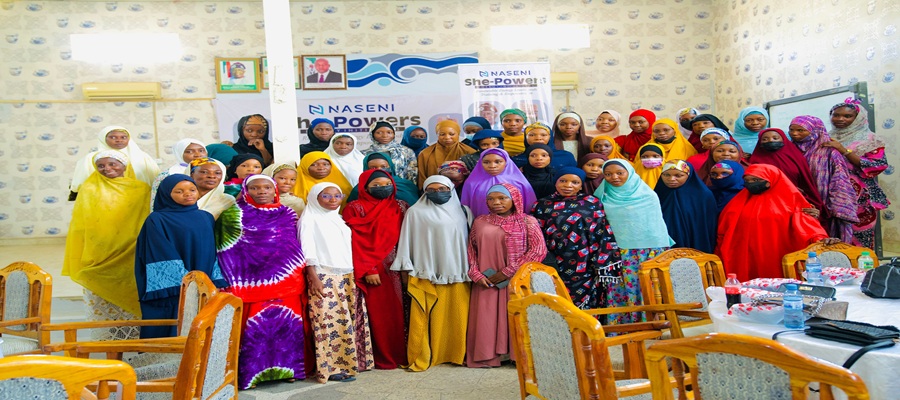
The National Agency for Science and Engineering Infrastructure (NASENI), under the leadership of its Executive Vice Chairman/CEO, Khalil Suleiman Halilu, has trained 50 women in Kano State on inverter and battery technologies through its She-Powers Energy Initiative.

The three-day programme, held at the Technology Incubation Centre, Farm Centre, Kano which ended yesterday, was designed to equip participants with practical renewable energy skills, promote women-led enterprises, and enhance sustainable livelihoods.
The initiative forms part of NASENI’s broader commitment to empowering women, creating economic opportunities, and expanding participation in Nigeria’s growing clean energy sector. It also aligns with the Renewed Hope Agenda of President Bola Ahmed Tinubu by supporting job creation, entrepreneurship, and inclusive economic development.
Through targeted interventions such as the She-Powers Energy Initiative, NASENI continues to demonstrate its commitment to leveraging technology and innovation to improve lives and drive sustainable development across the country.
Photos: Participants at the She-Powers Energy Initiative training organised by the National Agency for Science and Engineering Infrastructure (NASENI) held at the the Technology Incubation Centre, Farm Centre, Kano yesterday.

MTN Launches One TV with Free-to-View, Pay-as-You-Go

Telcos Compensate 75m Subscribers over Poor Network Quality – NCC

IMF Warns Nigeria of Risks in $5Bn Swap Deal with First Abu Dhabi Bank

Senate Moves to Regulate Crypto Sector, Seeks Investor Protection

Kaspersky Report Shows Early 2026 Witnessed an Increase in Cyberattacks on the Manufacturing Sector

CBN Extends PoS Geo-Fencing Enforcement Deadline to August 2026

FG to Launch Nationwide Free Digital TV Platform June 17

MTN, Airtel, Glo Under Pressure as FG Demands Better Service Delivery

Jumia Nigeria Records Strong Q1 2026 Growth as Technology-Led Strategy Drives Market Expansion

Metro Digital, Nigerian Firm Accuses Multichoice Of Refusal to Obey Court Judgements




 E-Financial3 days ago
BOI Wins Dual Honours @ EMEA Finance Awards for Sustainability and Social Impact Leadership

 E-Financial3 days ago
CBN Imposes N100m Penalty on Dealing Bank Inadequate Processing of Forex Documents

 E-Business3 days ago
NITDA Okays NiRA’s Annual, Business Report

 Telecom3 days ago
Price of Data in Nigerian Mobile among Top Four Cheapest Globally – MTN CEO

 Telecom3 days ago
NAIFF Returns for 2026, Expands Focus on AI-Powered Storytelling in Africa

 Telecom3 days ago
FCCPC Refutes Airtime Market Takeover Claims

 General News3 days ago
SSDC Warns Businesses against Cyber, Election-Related Risks

 E-Financial3 days ago
Reps Committee Recovers N521m Unremitted VAT from CBN