

Telecom
IATA Urges Governments, Aviation Sector Collaboration in Deploying 5G Networks


The International Air Transport Association has urged the Federal Government of Nigeria and the governments of other countries to work closely with the aviation industry to ensure that aviation and incumbent aviation safety systems can safely co-exist with new 5G services.

The organisation spoke against the backdrop of flight disruptions caused by the recent deployment of 5G services by telecommunication companies in the United States and plans by Nigeria and other countries to deploy 5G services in the coming months.
While IATA recognises the economic importance of making spectrum available to support next generation commercial wireless telecommunications, it posited that maintaining current levels of safety of passengers, flight crews, and aircraft must continue to be one of governments’ highest priorities.
The call came as the global airline industry met in Doha, Qatar for its 78th IATA Annual General Meeting.
A statement by IATA, the Geneva-based body representing over 290 international airlines in over 120 countries, quoted its Director-General, Willie Walsh, as saying, “We must not repeat the recent experience in the United States, where the rollout of C-band spectrum 5G services created enormous disruption to aviation, owing to the potential risk of interference with radio altimeters that are critical to aircraft landing and safety systems.
In fact, many countries have successfully managed to facilitate the requirements of 5G service providers, while including necessary mitigations to preserve aviation safety and uninterrupted services. These include, for example, Brazil, Canada, France and Thailand.”
He added, “before deciding on any spectrum allocations or conducting spectrum auctions, IATA called for governments to ensure close coordination and mutual understandings between national spectrum and aviation safety regulators so that each frequency allocation/assignment is comprehensively studied and is proven not to adversely impact aviation safety and efficiency.”
According to IATA, robust testing in coordination with aviation subject matter experts is critically important in providing necessary information.
It said measures that had already been used by some governments include ensuring thorough testing, sufficient spectrum separation between 5G C-band deployments and 4.2-4.4 GHz frequency band used by existing radio altimeters.
It listed others as clearly codifying and enforcing the maximum power limit for 5G C-band transmission and downward tilting of 5G antennae particularly in the vicinity of flightpaths; and establishment of sufficient 5G C-band prohibition and precautionary zones around airports.
The statement added, “IATA noted that airlines operating to/from and within the US continue to contend with the effects of the rollout of 5G, including a pending airworthiness directive from the Federal Aviation Administration requiring them to retrofit/upgrade radio altimeters at their own expense to enable the respective aircraft to continue to utilize CAT II and CAT III low-visibility approaches at many US airports where 5G C-Band service is currently or will be deployed in future.
The timely availability of upgraded altimeters is a concern, as are the cost of these investments and the lack of certainty regarding the future spectrum environment. Furthermore, 19 additional telecommunications companies are scheduled to deploy 5G networks by December 2023.”
The International Civil Aviation Organisation and the International Telecommunications Union have both recognised and reminded their member states and administrations of the importance of ensuring that existing aviation systems and services are free from harmful interference.
“This will become even more critical as more and more spectrum is being allocated to new generation telecommunications services,” IATA added.


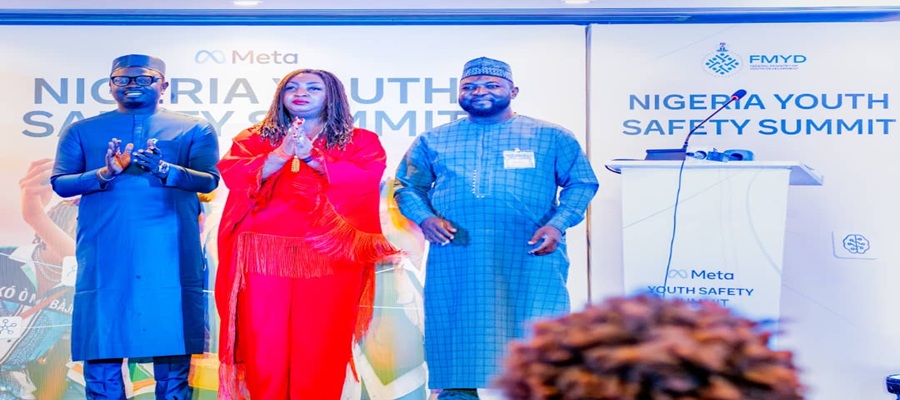
National Information Technology Development Agency (NITDA) has reaffirmed its commitment to strengthening youth online safety and digital literacy through strategic collaboration with Meta, as part of broader efforts to build a digitally inclusive economy and enhance trust in Nigeria’s digital ecosystem.

Group photo of Minister of Youth Development, Comrade Ayodele Olawande (left), Head of Public Policy, Anglophone West Africa Connectivity and Innovation Policy Manager, Meta Africa, Mrs Sola Dada (middle) and DG NITDA’s rep, Ag. Director, DLCB department, Dr Ahmed Tambuwal at the event
This commitment was reiterated by the Director General of NITDA, Kashifu Inuwa, CCIE, during the Youth Safety Summit organised by Meta at the Transcorp Hilton Hotel, Abuja.
The Summit convened stakeholders from government, industry, civil society organisations, and the education sector to advance collaborative efforts aimed at ensuring young Nigerians enjoy safe, age-appropriate, and positive online experiences.
A major highlight of the event was the launch of the Youth Online Safety Campaign and My Digital World (MDW) 2.0, initiatives developed by Meta in partnership with NITDA and the Federal Ministry of Youth Development.
Represented by the Acting Director of Digital Literacy and Capacity Building Department, Dr Ahmed Tambuwal, the NITDA DG noted that the Agency’s collaboration with Meta aligns strongly with President Bola Ahmed Tinubu’s Renewed Hope Agenda, particularly the priority areas of Reforming the Economy for Sustained Inclusive Growth and Strengthening National Security through robust cybersecurity measures that enhance digital trust and confidence.
He explained that building a digitally skilled population capable of safely navigating the online environment is fundamental to unlocking innovation, entrepreneurship, job creation, and economic opportunities in the digital age.
Speaking on the significance of the Summit’s theme, “Advancing Youth Online Safety Through Collaborative Action,” Inuwa stressed that protecting young people online requires collective responsibility from all stakeholders.
“Today’s theme is both timely and compelling. It reminds us that while digital technologies have created unprecedented opportunities for learning, innovation, entrepreneurship, and social connection, ensuring that young people can benefit from these opportunities safely is a shared responsibility,” he said.
The DG emphasised that digital literacy cannot be separated from online safety, noting that the ability to use digital tools must be accompanied by the knowledge and skills needed to navigate the digital space responsibly.
“At NITDA, we believe that digital literacy and online safety are inseparable. Equipping citizens with digital skills without teaching them how to navigate the digital world safely, responsibly, and ethically would leave our work incomplete,” he stated.
According to him, this philosophy is embedded in NITDA’s National Digital Literacy Framework (NDLF) and the Agency’s flagship Digital Literacy for All (DL4ALL) initiative, through which it aims to achieve 70 per cent digital literacy by 2027 and 95 per cent by 2030.
He further disclosed that online safety, digital citizenship, privacy, digital wellbeing, critical thinking, and Artificial Intelligence (AI) literacy have become core competencies within the framework.
“Within this framework, online safety, digital citizenship, privacy, digital wellbeing, critical thinking and, increasingly, Artificial Intelligence literacy are treated not as optional topics, but as essential competencies for every Nigerian,“ he noted.
The DG highlighted the growing partnership between NITDA and Meta, describing it as a model for effective public-private collaboration in driving Nigeria’s digital transformation agenda.
Over the past year, both organisations jointly implemented the Youth Online Safety and Wellbeing Campaign, which reached more than 94 million people and generated over 216 million impressions across Facebook and Instagram. The campaign provided millions of Nigerians with practical guidance on online safety, privacy protection, digital wellbeing, and responsible internet use.
The partnership also extended to activities marking Safer Internet Day, where members of the National Youth Service Corps (NYSC) were engaged and empowered to become advocates of responsible digital behaviour within their communities. More recently, both organisations reaffirmed their commitment to advancing Nigeria’s digital economy through innovation and inclusion at the Nigeria Digital Economy Forum.
While expressing optimism about the launch of My Digital World 2.0 and describing it as a strategic platform, Inuwa said, “We believe MDW 2.0 presents an excellent opportunity to institutionalise online safety education within Nigeria’s broader digital literacy ecosystem.”
He revealed that NITDA intends to integrate the programme into its teacher capacity-building initiatives, strengthen the resources available to its nationwide network of Digital Literacy Champions, and expand awareness campaigns through partnerships with state governments, traditional institutions, faith-based organisations, and community stakeholders.
According to him, ensuring children’s safety online requires more than secure platforms; it requires informed families, empowered educators, and digitally aware communities.
“Our shared ambition should be to ensure that every Nigerian child is supported not only by safer digital platforms, but also by informed parents, empowered teachers, and digitally confident communities,” he remarked.
Describing the launch as a significant step forward, Inuwa said the initiative marks the beginning of a deeper partnership between government and industry aimed at preparing a new generation of Nigerians for the digital future.
“Today’s launch is more than the unveiling of another programme. It is the beginning of a deeper strategic collaboration between government and industry to build a generation of Nigerians who are digitally skilled, digitally responsible, and digitally resilient,“ he stated.
He reaffirmed NITDA’s commitment to working with Meta and other stakeholders to build a secure and inclusive digital ecosystem where innovation thrives, opportunities are accessible to all, and every Nigerian can participate confidently in the digital economy.
Also present at the event were the Minister of Youth Development, Comrade Ayodele Olawande, and the Minister of Women Affairs, Mrs Imaan Sulaiman-Ibrahim. Both ministers reaffirmed their ministries’ commitment to collaborating with relevant stakeholders to develop and implement policies that foster a safe, inclusive, and enabling digital environment, particularly for young Nigerians, to navigate the internet responsibly and securely.
If there is one thing that brings everyone together across the country, it is the beautiful game of football. The energy is always on a different level. From the passionate debates in local viewing centers to the excitement shared across social media, football is more than just a sport for us—it’s a major part of how we connect and share moments with friends and family.

Google and Gemini
As the FIFA World Cup 2026™ kicks off across North America, the excitement is already building up everywhere. But let’s be honest: life moves fast, and keeping up with every single goal and update can feel like a full-time job. You don’t want to be the one asking for the score long after the game is over.
The good news is that technology has made it easier than ever to stay in the loop. Google and Gemini have introduced some very useful tools to bring you right into the heart of the action, whether you’re a serious analyst or just here for the fun. From pinning live scores to your phone screen to using AI to see yourself as a pro player, here are 6 ways to experience the World Cup like a boss.
1. Get Match Updates “Sharp-Sharp” on Your Screen
We’ve all been in that situation where we are busy with other things but dying to know the latest score. You don’t need to keep searching and refreshing heavy pages that drain your data. Now, when you search for soccer, it’s much faster to see real-time information about the game, including visuals for live scores, lineups, and current standings.
The best part is the pinning feature. You can actually pin a match’s live score directly to your Android or iOS device’s lock screen just by following that match or team. This means you can see the score at a glance without even needing to unlock your phone. You’ll even get updates before the match starts and after it ends.
How to set it up: Search for your favorite team or a specific match on Google and tap the option to “follow” them. This pins the score to your lock screen so you get updates automatically before and after each game.
2. Settle the Arguments with AI
Arguments about football rules or player stats are a huge part of the fun. Instead of going back and forth with friends, let AI Mode in Search give you the facts. You can use AI Mode for all sorts of things, from asking complex questions about specific rules to finding deep details about players and teams.
If you’re trying to understand a coach’s strategy, you can ask AI Mode to create an interactive visual for you—for instance, a breakdown of soccer formations and when a coach might use them. While these interactive features are for Pro and Ultra subscribers now, they will be free for everyone in Search by the summer.
How to use it: Open Google Search and type your deep football questions directly into the prompt bar. You can then specifically ask it to “create an interactive visual” to help explain things like team formations.
3. Find the Perfect Place to Watch with “Ask Maps”
Sometimes the best way to watch a match is at a viewing party with other fans. If you’re looking for a great spot to join the fun, the Ask Maps feature is here to help. You can just type something like, “Find me a reservation for 4 at 7:30 p.m., somewhere I can watch the World Cup match and meet other fans.”
To help you get there on time, Google Maps and Waze provide the latest information on road closures and transit routes so you can navigate the games with confidence. Also, for the first time on Waze, you can see live score updates at a glance whenever your car is at a stop.
How to use it: In the Google Maps app, use the “Ask Maps” feature to request a reservation at a place specifically for watching the match. If you are driving with Waze, simply bring your car to a stop to see live scores on your dashboard.
4. Catch Up on the Latest Gist Every Morning
For those who can’t stay up late to watch every game, there’s a perfect way to wake up to the news. If you have a Gemini Plus, Pro, or Ultra subscription, you can use Scheduled Actions to receive a daily summary of international soccer news.
This summary is completely tailored to you. You can customize the briefing to focus only on your favorite teams and players, and choose exactly when you want it delivered.
How to set it up: Open Gemini Settings, tap “Scheduled actions,” and select the soccer news digest template. Customize it with your team names and your preferred time to receive your summary every day.
5. Become the Star of Your Own Match Photos
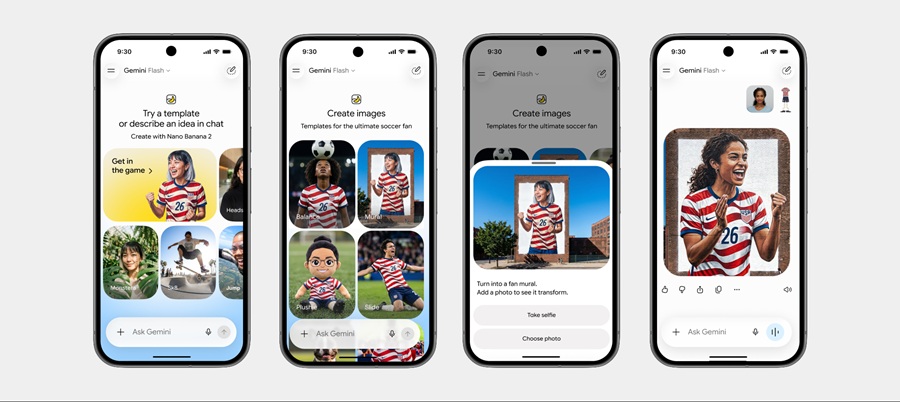
Ever wondered what you would look like as a professional football star? The new Nano Banana templates in the Gemini app let you put yourself right into the action. You just upload a photo of yourself to these custom scenes, and you can see yourself celebrating in a massive stadium or making a hero’s diving goal-line save.
The generated image will even show you wearing your country’s colors or the official jersey. These fun templates are rolling out in the “Images” tab in Gemini.
How to use it: In the Gemini app, go to the “Images” tab, tap the “+” icon, and click “Create image.” Upload your photo to one of the custom soccer scenes to see yourself repped in the official jersey.
6. Get the Full Match Experience in One Place
Finally, Gemini can now act as your personal dashboard for the entire tournament. The app references live match information and news to give you the latest scores, highlights, and standings as they happen.
For many topics, Gemini goes beyond just text by creating visual elements like stats, images, and videos. This transforms a simple response into a dynamic “Matchday Hub” where you can see all the action at once.
How to use it: Ask Gemini for a match update or current standings to automatically open your “Matchday Hub.” The app will immediately show you a mix of live scores, highlights, and stats for the game you asked about.
The World Cup is all about sharing the excitement, and with these Google and Gemini tools, you won’t miss a beat. Whether you’re pinning live scores to your screen or seeing yourself in the official jersey, there’s a tool for every fan. Set up your updates, grab your friends, and get ready for a month of pure football magic. No stress, just vibes!
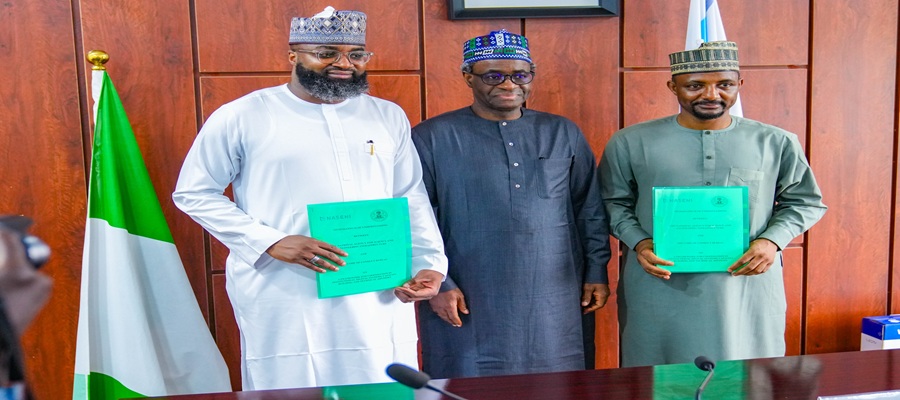
National Agency for Science and Engineering Infrastructure (NASENI) and the Code of Conduct Bureau (CCB) has signed a Memorandum of Understanding (MOU), a framework for cooperation in institutional digital systems, capacity building and technical advisory.

L-R: The Executive Vice Chairman/CEO, National Agency for Science and Engineering Infrastructure (NASENI), Mr. Khalil Suleiman, Halilu: the Director-General, Budget Office of the Federation, Alhaji Tanimu Yakubu Kurfi and the Chairman, Code of Conduct Bureau, Dr. Abdullahi Usman Bello, during the Memorandum of Understanding signing between National Agency for Science and Engineering Infrastructure (NASENI) and Code of Conduct Bureau (CCB) at the NASENI Headquarters Abuja on Wednesday, 24th June, 2026.
The agreement which was signed at NASENI headquarters, Idu, Abuja took place on Wednesday, June 24, 2026, would see both agencies work together more closely, strengthen their operation and improve service delivery in line with their respective mandates.
Welcoming the delegation, the Executive Vice Chairman/Chief Executive Officer of NASENI, Khalil Suleiman Halilu, noted that discussions between both institutions had crystallized into the MoU agreement and emphasized the importance of ensuring a sustainable framework for collaboration.
In his response, the Chairman, Code of Conduct Bureau, Dr. Abdullahi Usman Bello, expressed appreciation to NASENI for embracing the partnership, noting that it would significantly support the Bureau’s modernization efforts, particularly in the digitization of asset declaration processes and deployment.
Dr. Bello mentioned that the Bureau faces significant challenges in administering asset declaration forms to more than five million public servants across the country, noting that digitizing the processes would improve accessibility and efficiency. He described the MoU implementation as a potential game changer for the Bureau.
Also speaking at the event, the Director-General of the Budget Office of the Federation, Mr. Tanimu Yakubu, commended both institutions for pursuing a partnership that would strengthen transparency, accountability, and effective governance. He observed that the Code of Conduct Bureau’s mandate requires modern reliable technological systems capable of managing large volumes of information and expressed confidence that NASENI’s expertise would provide valuable support in this regard.
The high point of the ceremony was the formal signing of the Memorandum of Understanding by the Executive Vice Chairman/CEO of NASENI, Khalil Suleiman Halilu, and the Chairman of the Code of Conduct Bureau, Dr. Abdullahi Usman Bello.

FG Proposes Africa-Wide Payment Card without Conversion through US Dollar

Providus, Unity Bank Begin Integration Phase after Supreme Court Nod

EFCC, CAC Raise Concerns over Unregistered PoS Operators

NITDA, Meta Roll Out New Programme to Keep Nigerian Youths Safe Online

6 Easy Ways to Enjoy the 2026 World Cup with Google and Gemini
CBN Extends PoS Geo-Fencing Enforcement Deadline to August 2026

London Strengthens Global Investment Ties with Africa @ First Ever London-Africa Business Summit

FG Targets Alleged N3tn Capital Flight, Opens Airtime Credit Market to Nigerian Fintechs

Mobile Internet Gender Gap Widest in Africa – GSMA

Japan, UNESCO Boost Digital Learning in 15 CoEs with Donation of ICT Equipment




 News2 days ago
PalmPay MD Seeks Stronger Infrastructure, Access to Finance for SMEs @ Digital Pay Expo 2026

 Telecom2 days ago
Africa Projected to Lead Global 5G Growth

 Broadcasting2 days ago
Lebara Nigeria Launches Lebara Play, Africa’s First Telecom-Owned Micro-Drama Platform

 News2 days ago
Kaspersky Identifies over 336 Unique Domains Impersonating the Official World Cup Website

 General News2 days ago
Paystack Launches Programme to Support Nigerian Businesses

 Telecom1 day ago
NITDA Unveils Bold Vision to Make Nigeria an AI Powerhouse

 E-Financial2 days ago
SEC Bars Dangote Refinery IPO Adverts

 General News1 day ago
Nestlé Commits to Boosting West Africa Solar Rollout Through Partnership