

Telecom
Benefits of SATCOM Tools & Resources

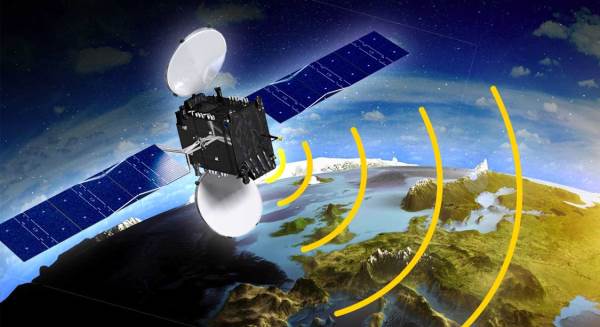
By Andrew Aroh
For satellite communications, we need tools and resources to enable us maximize capacity utilization, optimize system design, and reduce costs. Such tools and resources must be useful in all phases of communications, satellite development, and operations including:
- Requirements specification
- Long-range planning
- Satellite network design
- Operational transmission planning
- Capacity management
- Troubleshooting

Features of a typical packaged tools and resources:
- Accurately models thermal noise, adjacent carriers and co-channel interference, inter-modulation noise and propagation impairments
- Recently updated to include very comprehensive modeling of adjacent satellite interference (ASI) on both the uplink (uplink ASI) and downlink (downlink ASI).
- Uses the latest nonlinear amplifier model. Computes complex nonlinear effects.
- Uses the COMSAT PAP, ITU, and crane Two Component rain models: and includes databases of digitalized rain zone maps and rainfall statistics.
- Provides drag-and-drop carrier frequency assignment.
- Interfaces with commercial Communication System Monitoring (CSM) systems.
- Interfaces with the Satellite System Database (SSDB)
Additional Features:
- Plans saved in XML standard file format and can be viewed/modified by publicly available tools.
- Ability to retrieve and save plans from/to the database.
- Ability to model entire satellite and plan a large number of links simultaneously.
- Models extensively verified in the laboratory, field test, and customer-site measurements.
- Extremely fast computation utilizing sophisticated algorithms
- Can be used to perform sophisticated trade-off analyses, complex system studies, and optimal design of satellite-based networks.
- Approved by the Government as benchmark for validating other systems.
SATELLITE SYSTEM DATABASE CONTAINS:
- Space segment information:
Detailed satellite communications payload information for multiple satellite fleets:
- Satellite orbital parameters and orientation
- Antennas and antenna coverage patterns
- Amplifier and non-linear characteristics
- Possible and actual connectivity
- Possible and actual gain settings
- Frequency layout and transponder characteristics etc.
- Ground segment information:
- Thousands of earth stations with their transmit and receive characteristics and rainfall statistics.
- Modem characteristics for several different manufacturers.
- Plan information:
Save and retrieve plans to enable work-sharing between planners, and to provide plan information to other systems.
- MINIMUM SYSTEM REQUIREMENTS:
- Windows 95/98/ NT 4.0/2000
- 50MB free hard drive space
- 300-MHz Pentium 2
- SVGA video adapter
- 128 MB RAM
- 1024 x 768 res./256 colors
- CD-ROM Drive
- 8 MB video RAM
- BENEFITS OF TOOLS & RESOURCES PACKAGE:
- Reduce costs by maximizing space-segment capacity utilization
- Perform trade-off analyses to minimize ground-segment infrastructure costs
- Design complex satellite-based networks with ease
- Manage and efficiently plan large scenarios with hundreds or thousands of links in multiple transponders.
- Achieve orders-of-magnitude increase in productivity of satellite planners
- Track power and bandwidth utilization, and discover ‘’hidden’’ ‘’capacity’’
- Troubleshoot operational plans and easily identify complex problems
- Evaluate future satellite systems and assess long-term capacity requirements.
Plan with confidence using the most accurate, laboratory and field verified models that serve as benchmarks for validating other planning systems.
REPORTS & PLOTS:
- Accurately models and analyzes impairments for C-band, Ku-band, X-band and Ka-band transponders, and automatically optimize carrier power to meet user-specified quality of service, both in clear weather and rain-degraded conditions.
- Extensive set of reports and plots in ASCII, word, Excel, and PDF
- Saw tooth transmission plan plots
- Noise, margin, and power summary reports
- Rain analysis, predicted link availability, and required rain margins
- Intermediation power spectral density plots and reports
- Carrier power spectrum plots
- Receive co-pol and cross-pol power spectra at earth stations
- Carrier power spectrum plots
SUMMARY
Satellite Tools and Resources Include:
- The Antenna Coverage Program (ACP)
- The Link Budget Calculator (Link)
- The Propagation Analysis Program (PAP)
- The Coverage Analysis Program (CAP)
- Custom reports (easily generated from the SSDB)
- These tools are combined with the Satellite System Database (SSDB)-a comprehensive relational database of satellite system parameters-and powerful calculators for pattern advantage analysis, beacon calculations, and general satellite conversion calculations.
- Utilities to compute pointing angles, beta factors, and look angles are also included.
Andrew Aroh is President SSPI Nigeria



Nigerian government has opened a high-stakes window of opportunity for international tech investors, offering direct presidential intervention and sweeping economic waivers for hardware companies that anchor their manufacturing hubs in Nigeria by November 2026.

Chief Idris Ibikunle Olorunnimbe
Chief Idris Ibikunle Olorunnimbe, the Chairman of the Governing Board of the Nigerian Communications Commission (NCC), made this groundbreaking declaration during his ministerial-level address at the Digital Africa Summit Roundtable in Shanghai.
Highlighting the government’s total dedication to backing these new factories, Olorunnimbe stated: “Whatever it takes to get the plant standing, we will pursue it together, because every factory that rises in Nigeria grows our economy, employs our young people, and brings the price of a phone closer to what an ordinary Nigerian can pay”.
The offer is designed to stimulate immediate foreign direct investment and create sustainable employment for Nigeria’s teeming youth population.
The economic logic underwriting this regulatory ultimatum is both practical and urgent. Currently, the Nigerian telecommunications ecosystem is highly vulnerable to external economic shocks, with foreign-exchange swings and import duties constantly pushing genuine, formal devices out of reach for average citizens.
By localising the supply chain, the NCC seeks to anchor device pricing to the local currency, stripping away the pricing volatility tied to the US Dollar.
Olorunnimbe candidly stated that the administration is ready to deploy massive executive support, viewing connectivity infrastructure as the central engine of President Tinubu’s Renewed Hope agenda, which treats “connectivity as productive infrastructure for the whole economy rather than a luxury for a few”.
This infrastructural push is designed to directly fuel the NCC’s highly praised initiative to transition Nigeria into an era of digital free education through the zero-rating of educational portals.
Drawing inspiration from classic free education philosophies, Olorunnimbe has previously stated that asking a child to buy data to look at a textbook is the modern equivalent of charging tuition at the gates of a public school.
To operationalise this vision, the proposed locally assembled smartphones, MiFi units, and home routers will come pre-configured with embedded access to these zero-rated educational platforms. This ensures that digital literacy tools are structurally hardwired into the technology from the factory floor.
Additionally, these indigenous devices will come pre-installed with core government application portals, simplifying access to digital identity verifications, public health services, and agricultural extensions. By embedding these essential state services directly onto affordable, locally produced hardware, the NCC is solving the double dilemma of device cost and data expenses simultaneously.
This holistic blueprint bridges the digital divide and accelerates financial inclusion, as verifiable identity frameworks, like the NIN and BVN, will allow citizens to seamlessly transition into credit-linked device-financing schemes. Olorunnimbe noted that by pairing “verifiable identity with credit history and secure device technology, then the phone itself becomes the on-ramp: to a credit record, and then to the wider financial system”.
The visionary posturing of Chief Olorunnimbe and the executive leadership of the NCC mark a paradigm shift in how government agencies foster industrial growth. Rather than relying solely on traditional, rigid enforcement against informal markets, the Commission is actively building a structured, credible marketplace via policy incentives and strategic executive support.
Through this aggressive, forward-looking roadmap, the NCC is firmly establishing Nigeria as the digital powerhouse of the African continent, demonstrating that true digital inclusion is achieved when national infrastructure serves human development.

President Bola Tinubu has assented to the National Identity Management Commission (NIMC) Act, 2026, replacing the 2007 law with a new legal framework aimed at strengthening Nigeria’s digital identity system, data protection and electronic trust services.

The new Act is expected to enhance the country’s digital identity ecosystem by improving identity management, securing personal data and promoting interoperability across government and private sector platforms.
According to a statement, the legislation aligns Nigeria’s identity management framework with the provisions of the Nigeria Data Protection Act (NDPA) and international best practices on privacy and data protection.
The Act introduces stronger safeguards for the collection, processing, storage and protection of citizens’ personal information.
It also designates the National Identity Management Commission as Nigeria’s root certification authority for the National Public Key Infrastructure (PKI) and Digital Public Infrastructure (DPI).
The designation empowers the commission to provide secure digital identity, authentication and electronic trust services across the country.
The Act further authorises NIMC to facilitate secure and interoperable data exchange among Ministries, Departments and Agencies (MDAs), private organisations and other authorised entities.
It also provides for the deployment of the NIMC General Multipurpose Card as a unified identity credential for nationwide identity verification under the initiative tagged “One Card, Multiple Possibilities.”
The Federal Government said the implementation of the law would create a trusted, secure and interoperable digital identity ecosystem capable of improving access to services in both the public and private sectors.
It added that Nigerians, including those living in the diaspora, would benefit from easier access to identity services, stronger protection of personal data, enhanced cybersecurity and more secure digital transactions.
The government also said the law would provide a stronger foundation for digital governance, economic growth and long-term national development by enabling faster and more reliable identity verification and authentication processes.

Meta on Thursday convened the Nigeria Youth Safety Summit in Abuja, bringing together government officials, civil society organisations, parents, educators, content creators and youth leaders to strengthen collaboration on digital wellbeing and safer online experiences for young people.

L-R: Sylvia Musalagani, Head of Safety Policy, Europe, Middle East and Africa (EMEA), Meta; Ayodele Olawande, Honourable Minister of Youth Development; Sade Dada, Head of Public Policy, Anglophone West Africa, Meta; and Ahmed Yusuf Tanbuwal, Ag Director, Digital Literacy and Capacity Building Department, National Information Technology Development Agency (NITDA), during the Nigeria Youth Safety Summit organised by Meta on Thursday, June 25, 2026, in Abuja.
The summit, held at the Transcorp Hilton Hotel and co-hosted with the Federal Ministry of Youth Development, highlighted Meta’s investments in youth online safety through built-in protections, parental supervision tools and digital literacy resources aimed at helping teenagers navigate the digital space safely.
The event featured keynote presentations, panel discussions and a Parents Learn and Brunch session organised in partnership with the Federal Ministry of Women Affairs and Social Development.
Participants explored practical approaches to promoting safer online engagement while emphasising the importance of partnerships among government, technology companies, parents, schools and civil society in advancing digital wellbeing.
Speaking at the summit, Meta’s Head of Safety Policy for Europe, the Middle East and Africa (EMEA), Sylvia Musalagani, said the company remained committed to providing teenagers with age-appropriate and safe online experiences.
“At Meta, our goal is to provide teens with safe, age-appropriate online experiences, and events like the Nigeria Youth Safety Summit reflect our commitment to promoting safer and more positive digital experiences for teens.
“With products such as Teen Accounts, Meta is putting the right protections in place so teens can explore their interests and express their creativity in a safe, age-appropriate space.
“We will continue to build the safety features and tools that families need to support young people online,” she said.
Musalagani explained that Teen Accounts represent a redesigned experience across Meta’s platforms specifically for teenagers.
She said the accounts are automatically enabled for all teenagers and include built-in safety features such as private accounts, the strictest messaging settings, restrictions on sensitive content, limited tagging and mentions to people they follow, daily time reminders after 60 minutes of use, and sleep mode between 10 p.m. and 7 a.m.
According to her, teenagers under the age of 16 require parental approval before making any changes that would reduce the default safety settings.
The Minister of Women Affairs and Social Development, Hajiya Imaan Sulaiman-Ibrahim, described child online safety as one of the ministry’s key priorities.
She said children require informed parental guidance to safely navigate the digital environment, stressing that online safety is a shared responsibility involving parents, technology companies and government.
“Child online safety is one of our central pillars and we are steadfast in our mandate to safeguard the Nigerian child from technology-enabled violence.
“Children cannot navigate the complexities of the online world without informed adults guiding them because safety begins with the parents.
“Safety is a shared tripartite responsibility between parents, technological industries and government.
“That is the fundamental premise of today’s summit, a hands-on walk through of parental supervision tools and Teen Accounts.
“We appreciate Meta for the collaboration and for creating a platform for these important conversations,” she said.
Meta also highlighted its parental supervision tools, which allow parents to receive notifications when teenagers report content, gain insights into who they communicate with, set daily usage limits, schedule breaks and monitor age-appropriate content interests.
The Minister of Youth Development, Ayodele Olawande, commended Meta for the initiative and noted its alignment with the ministry’s National Youth Data Protection and Awareness Training Programme.
“I want to thank Meta for this great achievement.
“At the ministry, one of the things we provide to all Nigerians is the skills to succeed in this digital world while making sure we protect them against emerging threats.
“We see a strong connection between the objectives of this summit and the goals of our National Youth Data Protection and Awareness Training Programme.
“We believe that keeping young people safe online is a shared responsibility.
“Government, technology companies, schools, parents, social organisations, community groups and young people themselves all have a role to play.
“We encourage Meta to make the tools, guides and learning materials from this initiative more widely available so that young people across Nigeria can continue to benefit from this laudable summit,” he said.
The summit concluded with discussions focused on strengthening partnerships, promoting digital literacy and advancing a shared vision for youth online safety across Nigeria.

FCMB Turns Normal Banking into Rewards with New Mobile App Upgrade

Despite Warnings, FG Draws Down $1.5Bn as First Tranche of FAB $5Bn Loan Deal

PalmPay Strengthens Data Protection Culture with Employee Privacy Workshop and Privacy Champions Programme

Paystack Unveils AI-powered Payments Tools

NRS, CITN Deepen Partnership to Strengthen Tax Awareness

CBN Extends PoS Geo-Fencing Enforcement Deadline to August 2026

London Strengthens Global Investment Ties with Africa @ First Ever London-Africa Business Summit

FG Targets Alleged N3tn Capital Flight, Opens Airtime Credit Market to Nigerian Fintechs

Mobile Internet Gender Gap Widest in Africa – GSMA

Japan, UNESCO Boost Digital Learning in 15 CoEs with Donation of ICT Equipment




 Telecom2 days ago
6 Easy Ways to Enjoy the 2026 World Cup with Google and Gemini

 News2 days ago
MTN ASAP Enugu Stakeholders’ Conference Rallies More Action Against Youth Drug Abuse, Unveils N33Bn ASAP Impact
 E-Financial2 days ago
EFCC, CAC Raise Concerns over Unregistered PoS Operators

 E-Financial2 days ago
Providus, Unity Bank Begin Integration Phase after Supreme Court Nod

 E-Financial2 days ago
FG Proposes Africa-Wide Payment Card without Conversion through US Dollar

 Telecom2 days ago
NITDA, Meta Roll Out New Programme to Keep Nigerian Youths Safe Online

 Telecom2 days ago
NCC Launches Maiden Women’s Leadership Mentorship Programme
 E-Financial1 day ago
NRS, CITN Deepen Partnership to Strengthen Tax Awareness