

General News
British Airways Open ‘Man vs Plane’ Challenge Against New A380

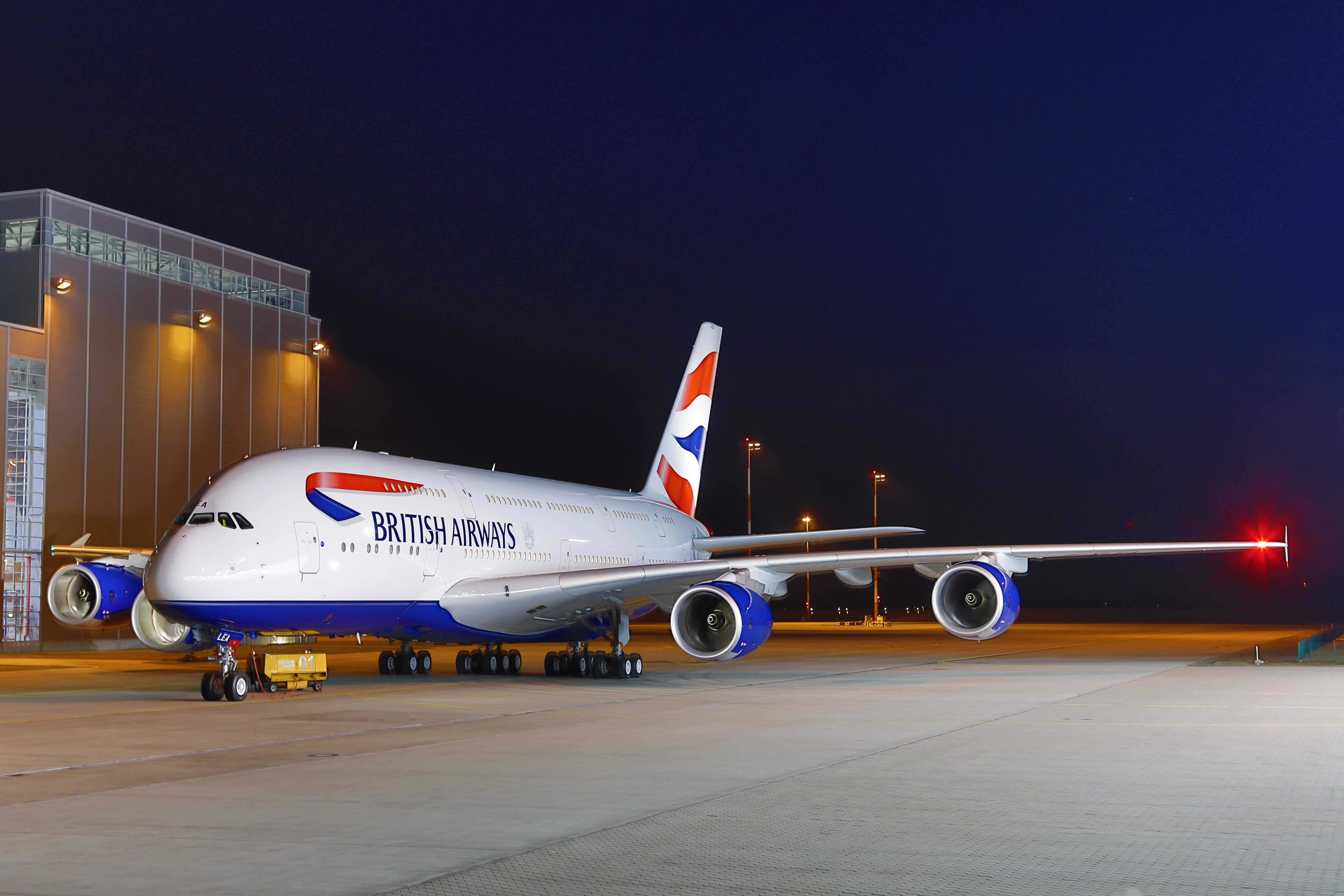
British Airways, leading global airline, has thrown open a challenge to anyone who thinks they can win a race against its newly acquired Airbus A380.
The challenge comes after South African rugby legend, Bryan Habana’s sprint against the aircraft grabbed global attention to become one of the top 10 most-watched YouTube videos of 2013.
Anyone, anywhere in the world can enter the #Man vs Plane challenge. Five winners will be selected to fly to Durban in February and get the chance to pit their physical prowess against British Airways’ largest and most modern aircraft.
The runner with the quickest time will win two return tickets in Club World (business class) on one of British Airways’ A380 services.
Johannesburg to London is just the third of these services to be announced. The other two are London/ Los Angeles and London/ Hong Kong.
“Last year I accepted the challenge to race the A380 and won, but it wasn’t easy,” says Bryan Habana, the Springbok winger and top try scorer. “To take this on you will have to be physically fit and have plenty of strength, stamina and speed.”
To see Bryan’s insights on racing the A380 see http://www.youtube.com/watch?v=QCufB8As64k and to accept the challenge, visit www.ba.com/ManVsPlane between Monday 13 and Monday 20 January and meet the entry requirements.
The speediest challenger won’t be the only winner on the day. When the Man vs Plane clip reaches two million views, which it’s currently just short of, British Airways will donate two Club World tickets worth R60 000 to FoodBank.
Habana is a patron of FoodBank South Africa, which is leading a co-ordinated effort to establish food banks around the country in communities with the highest concentrations of hungry or malnourished people. It rescues and procures food and essential groceries centrally and distributes these to depots from where its agencies are able to get it to people in need.
Kola Olayinka, British Airways’ Regional commercial manager for West Africa, said the runaway success of the video prompted the airline to offer the donation.
“We were slightly taken by surprise by how well the video has done, so we thought we’d ask Bryan if we could make a gesture to acknowledge the huge following it had garnered. We’re thrilled that what started out as a bit of fun has enabled us to help and organisation doing such important work,” he said.
British Airways will start A380 services between London and Johannesburg from 12 February. Initially it will operate three flights a week, increasing to six weekly services by March.



Corporate Affairs Commission (CAC) has announced that it will begin enforcing statutory requirements on the contents of company business letters from August 1, 2026, warning that defaulting companies will face sanctions.

The commission disclosed this in a public notice signed by its management and posted on its X handle on Wednesday.
Recall that under the Companies and Allied Matters Act 2020, company business letters are required to clearly display key details, including the company’s registered name, registration number, directors’ present forenames or initials and surnames, any former forenames and surnames, and the nationality of every non-Nigerian director.
The requirement applies to all company business letters, including invoices, quotations, official correspondence and other business documents.
According to the CAC, the enforcement will cover the full application of Sections 304(1), 304(2) and 304(1)(c) of the Companies and Allied Matters Act 2020.
The commission said, “Commencing the 1st day of August 2026, the Commission shall enforce the full application of the requirements of sections 304(1) & (2) and (1)(c) of the Act with respect to company business letters with attendant sanctions for non-compliance.”
It reminded companies registered under the Act “to state in legible characters on its business letters, the present forename or initials and surname; any former forename and surname; and nationality of every non-Nigerian director as well as the company’s name and registration number.”
The commission urged affected companies to comply with the provisions before the enforcement date to avoid sanctions.
“The Commission remains committed to transparency, accountability and customer satisfaction as it strives to build a more resilient and responsive corporate regulatory environment,” the statement added.


Using Artificial intelligence (AI) for travel planning saves time and simplifies trip prep but poses significant data security risks, as almost 86 percent of users report privacy concerns, according to Kaspersky’s latest findings.

For instance, sharing sensitive details like your passport number or credit card can expose you to data breaches and identity theft.
Hackers can also use AI to imitate airlines or hotels to steal your money.
However, data security risks awareness is also high, which security experts call a good sign.
Kaspersky global research, revealed what drives active AI users to charge chatbots and AI-powered tools with the important responsibility of travel planning and how they estimate the security of such services.
The survey shows that the primary motivation for turning to AI in travel planning is to save time and simplify preparation, with 73 percent of users globally pointing out these benefits.
Other important advantages of AI in traveling, named by 65 percent of respondents, are the search for information about the main attractions in the chosen location and personalised recommendations tailored to individual preferences. Additionally, 63 percent leverage AI to find the most favourable offers, while 61 percent trust it to uncover information that would otherwise be hard to find.
In fact, nowadays with the help of AI, an individual travel itinerary, matching all the requests and budget of a particular traveller, can be created in just a few clicks.
However, information provided by chatbots always needs to be double checked.
There have already been several instances where tourists encountered issues because they trusted AI too much and did not conduct their own research for the trip.
What is more, not only the information, but even links provided by AI need to be checked, as there may be malicious and phishing links among them.
Before clicking on a link from an AI chatbot it is recommended to check it with a cybersecurity solution, such as Kaspersky Premium, empowered with phishing detection.
AI and security
Apart from setting a route and searching for information, AI in travel planning in many cases is also responsible for booking hotels and even tickets, which inevitably requires sharing personal data.
The Kaspersky global survey revealed that not all travellers are ready to entrust AI with their personal information.
Almost half (48%) of global respondents see security risks in AI usage and try not to share any sensitive data with it.
Together with those, 37% who do not have many security concerns about AI still try to be careful while working with it.
86% of those who use AI for travel planning think about data security while working with these tools. Only 14% of travellers are confident that sharing any data with AI is totally secure.
According to the survey, travellers in Spain, the United Kingdom, Indonesia, Malaysia, and South Africa express the greater concerns about AI-related risks, while those in China, the United Arab Emirates, and Saudi Arabia in contrast display higher confidence in the security of AI systems.
“The survey highlights a noteworthy level of caution among travellers who use AI, which is a promising sign. A rational attitude is crucial for any type of online interactions, especially when we talk about personal data sharing. After all, your ‘private’ conversations with AI can still be exposed to cyber threats, or a favourable offer discovered by a chatbot may turn out to be nothing more than a scam.
This doesn’t mean you should abandon these digital tools altogether. Instead, stay mindful, avoid oversharing personal information, and think carefully while choosing which task you can assign to the AI. By doing so, AI-powered services can evolve into reliable assistants that help you tackle a wide range of challenges safely and effectively,” commented, Vladislav Tushkanov, Group Manager at Kaspersky AI Technology Research Center.

Justice Yellim Bogoro of the Federal High Court in Lagos has declared the N60 billion fine imposed by the Advertising Regulatory Council of Nigeria (ARCON) on Facebook Nigeria Operations Limited Illegal.

Justice Bogoro stated that ARCON regulator exceeded its legal authority and breached the company’s constitutional right to a fair hearing.
He, who made the declaration while delivering judgment in Suit marked, FHC/L/CS/2205/2024, declared ARCON’s Notice of Violation/Demand for Compliance dated 21 October 2024, unconstitutional, unlawful, null, and void, and barred the agency from taking further steps to enforce it.
The judge also held that ARCON lacked the statutory power to impose fines for alleged criminal violations under the Advertising Regulatory Council of Nigeria Act, 2022, without first obtaining a conviction from a court or other competent tribunal.
The dispute arose from ARCON’s claim that Facebook Nigeria displayed advertisements on Facebook and Instagram to Nigerian audiences without prior approval from the Advertising Standards Panel, contrary to provisions of the ARCON Act and the Nigerian Code of Advertising.
Following these alleged breaches, the regulator ordered the company to cease displaying the advertisements and imposed an N60 billion penalty.
Apparently dissatisfied with the development, Facebook Nigeria, through Mofesomo Tayo-Oyetibo (SAN), its lawyer, challenged the action, arguing that ARCON lacked the legal authority to determine criminal liability or impose punitive sanctions via an administrative notice without allowing the company to defend itself.
The company also argued that it does not own or operate Facebook or Instagram, claiming both platforms are owned and controlled by Meta Platforms Inc., a separate foreign entity.
But ARCON, represented by Akinlolu Kehinde (SAN), contended that Facebook Nigeria acts as Meta’s operation in Nigeria and should therefore be held responsible for regulatory violations related to advertisements on the platforms.
The regulator further argued that the notice was simply a compliance directive, allowing the company the option to comply, pay the specified violation fee, or face prosecution.
However, Justice Bogoro dismissed the regulator’s arguments.
The judge stated that Facebook Nigeria is a distinct legal entity from Meta Platforms Inc. and that ARCON failed to present credible evidence showing that the Nigerian company owns, operates, or controls Facebook or Instagram.
The court maintained that the argument that Facebook Nigeria represents Meta’s interests in Nigeria was insufficient to establish liability for the alleged advertising infractions.
Regarding fair hearing, the court ruled that ARCON violated Section 36 of the Constitution by accusing the company of misconduct and imposing a N60 billion fine without first hearing its defence.
Justice Bogoro also held that Section 57(4) of the ARCON Act explicitly requires the regulator to provide a fair hearing before imposing any penalty.
The court further found that the alleged violations were criminal because Section 34 of the ARCON Act designates the unlawful exposure of advertisements as an offence.
The judge also held that, since the Act stated that punishment can only be imposed “upon conviction,” ARCON had no authority to impose the N60 billion fine through an administrative process.
He insisted that, regardless of what ARCON called it, the demand was a fine that could only be imposed by a court following proper judicial procedures.
As a result, the court invalidated the Notice of Violation/Demand for Compliance.
It declared ARCON lacked authority to impose fines for breaches of Sections 34(3), 54, or other criminal provisions of the ARCON Act.
Justice Bogoro also issued a perpetual injunction preventing ARCON, its officers, agents, and associates from enforcing the October 21, 2024 notice against Facebook Nigeria.

CAC to Sanction Companies with Incomplete Business Letters From August 1

BVN Enrollments Hit 69.55m- NIBSS

CBN Warns against Rejection of N100 Banknotes

Data Protection Industry Hits N16.3Bn in 3 Years- NDPC

NCC Seeks Cost-Based Pricing Framework for Ducts

NASENI Moves to Digitize CCB’s 5m Assets Declaration and Operations

Mobile Internet Gender Gap Widest in Africa – GSMA

Nigeria Launches FreeTV Nationwide

CANAL+ Partners Samsung to Pre-Load DStv Stream on New Samsung TVs In Nigeria, Other African Countries

CredibleVoteNG Opens Free Access to all Polling Units in Nigeria after INEC Demanded N1.Bn for Register




 General News2 days ago
IHS Nigeria, FCT-HSES Concludes Clean Cooking Energy Campaign “Project Breathe Clean Air” in Abuja

 News1 day ago
NRC, Ponzi Scheme Collapses Resulting Loss of Billions of Naira

 E-Business2 days ago
Kaspersky Transforms Threat Intelligence Reporting into an Interactive Content Hub

 News2 days ago
Microsoft to Lay Off 4,800 Workers

 Telecom2 days ago
Airtel Africa Cuts Diesel Dependence by 9.1m Litres

 Telecom2 days ago
A New Blueprint – How Strategic Collaboration is Rewriting the Narrative on Youth Drug Abuse

 Broadcasting2 days ago
NELFUND Investigates 34 Universities Over Students’ Missing Tuition Refunds

 News2 days ago
Access Bank, Fifth Chukker and UNICEF Renew Commitment to Expanding Educational Opportunities for Nigeria’s Most Vulnerable Children