

General News
Online Vehicle Insurance Initiative Offers Convenience-Kadri

Deji Kadri, chief executive of ZeeSoft, has a passionate believe in the empowerment and development of local IT talent.
With more than a decade experience spanning various areas of IT, Kadri has transformed ZeeSoft into the last word in software solutions.
He spoke to hilary okeke
Businesses and Web, Mobile, Intranet and Extranet Solutions
Basically, businesses are always looking for more convenient ways of delivering at the barest minimum cost. In the case of hawking, you move from door to door and there are limited numbers of people you can reach. Looking at the fact that Nigeria has more than 60 million mobile users, which is more than the population of some countries, and the fact that we have over 12 million internet users; leveraging on integrated solutions would help businesses reach a larger market. Look at the way banking has been transformed using the mobile phone to send SMS alerts on account status. Before now, you have to go to the banking hall to get such information. That is part of what we are talking about.
Foreign Versus Local Software

Most Nigerians do not just favour foreign software – they favour anything foreign. Our dependency on foreign products is ridiculous. What we need to do as local software developers and manufacturers, is to prove our mettle and show that we can really do these things even better and cheaper. India is a good example; they have done it and succeeded. They used to be like Nigeria but are globally recognized today. There government indicated interest in that area and it is a success story today. The whole world now outsources software to India and theirs have dominated the Nigerian banking sector. We need to compete with them and prove our mettle so that we can grow, by bringing out our solutions and making sure they are running.
Nigeria and e-Government Solution
Internet penetration in Nigeria is not like in most of the advanced countries but to a large extent, e-Government could work. Even in America, internet penetration is not 100per cent. e-Government is very helpful because if there are government services that are available electronically, most corporate bodies will gain from that; most people online will gain from that – certain demography of people will gain. Services via e-channels usually reduce the burden on an organization to deliver efficiently. It reduces the burden on government to serve those it cannot serve electronically. Even if e-government is not accessible to everybody, it would make government accessible to everybody – if government is supposed to serve 100 people manually and now just have to serve 60 and the remaining 40 electronically, it would be convenient for government to render services since the burden on it has been reduced.
Ensuring Websites Stay Active at Peak Periods
It is a matter of infrastructure. You know the number of people who are going to use your portal, and you should build your infrastructure to serve those peak periods. You do not do that to serve averagely. If you expect a hundred hits a day during peak periods and five hits a day off peak, you prepare the infrastructure for one hundred hits. If you see any site that is packing up or going down because of maximum hits, you should know that it is just planning issue, which needs to be addressed with the right infrastructure. Think of a fast food joint – you know that on a normal day, ten people walk in every minute but at peak periods, a hundred people walk in every minute, you should then have a standby staff to be able to cushion the pressure. Same thing happens in the electronic world. A good infrastructure should be built into the cost of the project. I would rather provide a high quality service than a cheap low quality one, if you ask me.
Gains of Online Vehicle Insurance Initiative
Well, it is a private initiative but both sides would gain since the owners of the site would get additional revenue and the additional honour that would be bestowed upon them as a company that has started to use information technology to deliver services. Then for the users, it is the convenience. You know this is a statutory requirement which must be met. But we know that we all have busy days and to go to your insurance company and wait in their office is really tedious. But now from the convenience of your office, you can do your registrations. There are an estimated 28 million ATM cards available; 12 million internet users and 7 million vehicles in Nigeria. Put all these figures close together and you have a super solution. People who have not been able to adopt this strategy should embrace it. There is a lot to be gained from it and it can be done here today. One thing I have noticed is that when we deliver some of these solutions to clients or make proposals, they become surprised and ask if this can be done in Nigeria. At least, it has been proven that it can be done; it is working and running now, which is a good thing.
Unpopularity of Disaster Recovery in Nigeria
Well, some people do it but it is not popular like you said. People have not begun to understand that data is much more important than the hardware which holds it. You could buy a good hard disk for about N8, 000; if it crashes and you need to recover the data, you could be charged up to N40, 000. That shows you that the data is much more important than the hard disk. It is like having a house and what you have in it is usually more dear to you than the house itself. It is something we hope companies would embrace because it simply means that if something happens to your data – a disaster, accident or whatever – business can still go on; you can still have access to data. Imagine a bank or the Nigerian Stock Exchange losing all transaction data, it would be very ugly because you would not know who owns what. So, data is very important and people should make sure that it is adequately backed up or replicated. I think the reason why people are not enthusiastic about backing up their data is lack of sensitization about the whole thing. Some companies have not even realized the value of IT. There are lots of big companies here that do not have an IT manager that partakes in management meetings. So, you cannot even push such ideas. When you talk to most of them, they realize what they nust do but do not have the power of budget. But notably the banks, you find that there is an executive director of technology, there is a CIO who participates in top level meetings and has his own budget and is in the position to authorize multi million Naira IT purchases.
Dearth of Human cCapacity in the IT Industry
When I hold carrier talks with young people, one feedback I usually get is that they find it difficult securing jobs; that jobs are scarce in Nigeria. But friends that are into consulting and recruitment tell me that they find it difficult to fill IT positions. So, jobs might be scarce but there is still shortage of good IT skills. Many people claim to be IT professionals but when you interview them, they cannot defend what is on their resume. But once you are good and can defend your resume, job is sure. We are employers of IT labour and we are aware of this. Large companies like MTN and the banks hold job fairs in the UK to fill these positions. I advice that youths should go into IT – it is so worldwide. Well, if we see this as a major problem, organizations should look inwards and encourage people who wish to change careers. Secondly, there are lots of unemployed non-IT graduates, and big organizations can afford to take the plunge, employ the brilliant ones among them as graduate-trainees and train them on IT. There are lots of IT training facilities all around, if they do not want to do it here in the country, they can do it abroad; they can also bring people who have the expertise from outside and within Nigeria to train their staff. If they are willing to commit to human capacity building, they should train their people to have the necessary IT expertise.
And ZeeSoft
Well, it is the people within ZeeSoft. They are enthusiastic, brilliant, and they love what they do. Without our people, we are nothing. It is not just technology; it is the people; and of course, power has been a major challenge. This is a call on the federal government to do something and address the power situation because Lagos is the commercial hub of black Africa and power failure is highly detrimental to business here.



Federal government has secured a fresh $208.3 million financing from the World Bank to strengthen Nigeria’s cash transfer programme targeted at poor and vulnerable households as the country continues to grapple with the economic impact of ongoing reforms.

President Bola Tinubu’
The new facility is expected to bolster the government’s social protection initiative by providing direct cash support to millions of low-income Nigerians affected by rising living costs following the removal of petrol subsidy and the liberalisation of the foreign exchange market.
The funding forms part of the World Bank-backed social safety net programme aimed at cushioning the impact of economic reforms while improving the country’s social protection system.
It is also expected to support efforts to enhance the National Social Register, strengthen payment systems and ensure that financial assistance reaches eligible beneficiaries more efficiently.
The latest financing adds to a growing list of World Bank-supported projects approved under President Bola Tinubu’s administration.
Since the administration assumed office in May 2023, Nigeria has secured more than $11.4 billion in World Bank loan approvals across key sectors, including power, agriculture, healthcare, education, digital infrastructure, financial inclusion and social protection.
However, only part of the approved funding has been disbursed, with several projects still at various stages of implementation.
Government officials have maintained that expanding the cash transfer programme is essential to protecting vulnerable Nigerians from the short-term effects of economic reforms while laying the foundation for long-term economic stability.
However, the fresh borrowing has renewed concerns among economists and policy analysts over Nigeria’s rising debt burden and increasing dependence on external financing.
Critics have called for greater transparency in the utilisation of borrowed funds and improved monitoring of social intervention programmes to ensure that the intended beneficiaries receive the support.
According to data from the Debt Management Office (DMO), Nigeria’s total public debt stood at approximately ₦159.28 trillion as of December 31, 2025, with multilateral lenders, particularly the World Bank, accounting for a significant portion of the country’s external debt portfolio.
Despite the concerns, analysts note that World Bank loans are generally concessional, offering lower interest rates and longer repayment periods than commercial loans.
They argue that the ultimate value of the new financing will depend on effective implementation, accountability and the successful delivery of cash support to vulnerable households across the country.
Socio-Economic Rights and Accountability Project (SERAP) has filed a legal action against the Independent National Electoral Commission (INEC) for allegedly failing to investigate claims that governors under the All Progressives Congress (APC) diverted N800 billion from public funds to finance President Bola Tinubu’s re-election bid.

The lawsuit, marked FHC/ABJ/CS/1426/2026, was filed last week before the Federal High Court in Abuja.
SERAP is asking the court to issue an order of mandamus directing INEC to investigate the allegations and compel the commission to obtain full disclosure from the APC and the governors on the alleged campaign fund, including the identities of donors and the lawful sources of the funds.Campaigns & Elections.
The organisation is also seeking an order directing INEC to commence a formal review into compliance with Section 91 of the Electoral Act by political parties and candidates, particularly regarding the sources and scale of campaign financing in the current political cycle.
According to SERAP, the allegations raise serious concerns about political finance transparency, electoral integrity and Nigerians’ constitutional right to participate freely in governance.
In the suit filed on its behalf by lawyers Kolawole Oluwadare and Kehinde Oyewumi, the organisation argued that the reported diversion of public funds for political purposes poses a significant threat to the credibility of the 2027 general elections.
It maintained that opaque political financing remains a major gateway for corruption and undermines public confidence in democratic institutions.
“The abuse of state resources for electoral advantage undermines democratic integrity and public trust. Fairness, transparency, and accountability in political or campaign finance are essential safeguards against corruption, state capture, and undue influence in democratic processes,” SERAP stated.
The organisation argued that Section 91 of the Electoral Act empowers INEC to regulate political donations, require disclosure of campaign contributions and enforce sanctions where donation limits are exceeded.
It noted that political parties found to have exceeded donation limits are liable to a fine of up to N10m and forfeiture of excess funds, while individuals who exceed the legal threshold face fines amounting to five times the excess contribution.
SERAP further contended that the commission has constitutional and statutory obligations to ensure transparency in political financing and prevent the misuse of public resources for electoral advantage.
According to the group, allegations involving large-scale public funds and opaque financial arrangements fall squarely within INEC’s investigative and monitoring responsibilities under the Constitution and the Electoral Act.
The suit also cited Sections 13, 14(2)(c) and 15(5) of the 1999 Constitution (as amended), arguing that they impose obligations on public institutions, including INEC, to safeguard democratic participation, prevent corruption and uphold constitutional principles.
SERAP further relied on international legal instruments, including the African Charter on Human and Peoples’ Rights, the International Covenant on Civil and Political Rights and the United Nations Convention against Corruption, which it said require transparency in political financing and accountability in the management of public resources.
The organisation argued that any diversion of public funds for campaign purposes would amount to a violation of both domestic and international legal obligations and would undermine the principle of a level playing field in elections.
No date has been fixed for the hearing of the suit.

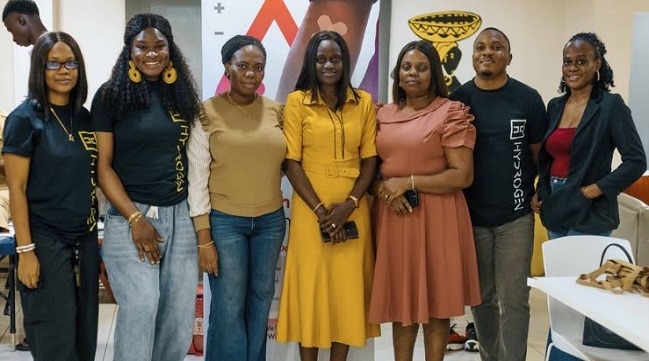
Hydrogen Payment Services Company Limited has reinforced its commitment to community impact through an employee-led blood donation drive in partnership with the Lagos State Blood Transfusion Service (LSBTS) and Gbagada General Hospital.

Held recently, the initiative extended this year’s World Blood Donor Day campaign, themed “One Drop of Humanity. Give Blood. Save Lives.” It brought together Hydrogen employees in a collective effort to strengthen blood reserves for patients across Lagos State.
The drive recorded strong participation, with employees voluntarily donating blood to support critical healthcare needs, including emergency care, surgical procedures, maternal health, sickle cell treatment, and assistance for accident victims. The contributions will help bolster the state’s blood bank and improve access to life-saving interventions.
Medical teams from LSBTS and Gbagada General Hospital supervised the exercise and engaged participants on the importance of regular voluntary blood donation. They also addressed common misconceptions, reinforcing the role of consistent donors in maintaining a safe and adequate blood supply.
Dr. Folashade Tawak, Senior Medical Practitioner with the Lagos State Government, commended the initiative.
“Voluntary blood donation remains one of the most impactful ways individuals can contribute to saving lives. We commend Hydrogen for driving this initiative and encouraging active employee participation. Efforts like this are critical to sustaining the blood reserves needed for patients in urgent need,” she said.
Fiyinfoluwa Olorunsola, Acting Chief Executive Officer of Hydrogen, said the initiative reflects the company’s broader purpose.
“At Hydrogen, our responsibility goes beyond building payment infrastructure. We are committed to making a meaningful difference in the communities we serve. This drive brings our people together around a cause that directly saves lives, and I am proud of the culture we are building, defined by purpose, compassion, and service,” she noted.
Also speaking, Obinna Ojekwe, Head of Marketing and Communications, highlighted the personal impact of the initiative: “While we enable the seamless movement of value every day, this initiative allowed us to give something more personal. Knowing that a simple act can save lives makes this deeply meaningful, and it reflects the kind of organisation we are proud to be part of.”
The blood donation drive underscores Hydrogen’s commitment to creating value beyond financial transactions by empowering its employees to contribute meaningfully to society. It forms part of the company’s broader 2026 employee volunteering and CSR programme, with additional community-focused initiatives planned throughout the year.
Hydrogen Payment Services Company Limited Hydrogen Payment Services Company Limited (Hydrogen) is Africa’s institutional payments infrastructure partner, enabling financial institutions and large organisations to process, move, and settle payments at scale with trust and operational integrity.
Through resilient, Africa-focused infrastructure, Hydrogen helps institutions manage payment complexity, improve efficiency, and deliver reliable services across the continent.

Xora Finance, Fintech Firm Refuses to Hire Nigerians over Alleged Dishonesty

FG Secures Fresh $208.3m World Bank Loan for Cash Transfer

How Ponzi Scheme Victims can Seek Legal Remedies — Lawyers

SERAP Sues INEC over Alleged N800Bn 2027 Tinubu Campaign Fund

Kaigama,Catholic Archbishop of Abuja Warns against Misuse of AI

Nigeria Launches FreeTV Nationwide

NASENI Moves to Digitize CCB’s 5m Assets Declaration and Operations
NRC, Ponzi Scheme Collapses Resulting Loss of Billions of Naira

Lebara Nigeria Launches Lebara Play, Africa’s First Telecom-Owned Micro-Drama Platform

CANAL+ Partners Samsung to Pre-Load DStv Stream on New Samsung TVs In Nigeria, Other African Countries




 Telecom2 days ago
DStv, GOtv Owner MultiChoice Officially Joins Canal+ Group

 News2 days ago
Police Busts Syndicate Who Allegedly Stole N3Bn from Financial Institution

 Telecom2 days ago
MTN Accelerates Network Expansion to Meet Surging Telecom Demand

 E-Financial2 days ago
SEC Unveils Plans to Enforce Mandatory ESG Reporting for Large Firms Next Year

 Telecom2 days ago
Airtel Africa to Connect 5,000 Schools to Free Internet by 2027

 Broadcasting2 days ago
From Scarcity to Scale: What Africa Can Learn from India’s Agricultural Transformation

 E-Business2 days ago
TeKnowledge, Equinix Partner to Advance Nigerian Digital Infrastructure

 General News2 days ago
NSIB Faults Runway Identification, Reveals Cockpit Disagreement in Asaba Jet Incident