

General News
Savannah Energy Announces Completion of ExxonMobil Transaction in Chad, Cameroon

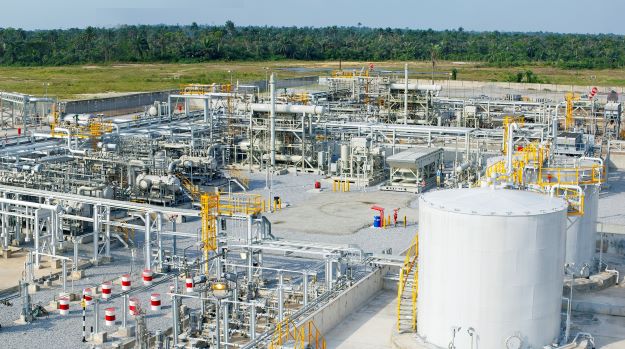
Savannah Energy PLC, the British independent energy company focused around the delivery of Projects that Matter in Africa, is pleased to announce the completion of its acquisition of ExxonMobil’s entire upstream and midstream asset portfolio in Chad and Cameroon, including operatorship of the upstream assets (through the acquisition of the former operator, Esso Exploration and Production Chad, Inc.) (the “ExxonMobil Transaction”).

Savannah is also pleased to announce the publication of a Supplemental Admission Document (the “Document”) in relation to the ExxonMobil Transaction.
This announcement follows Savannah’s 13 December 2021 announcement of the signing of a Share Purchase Agreement (“SPA”) with ExxonMobil, which has an economic effective date of 1 January 2021, and the publication of its 31 December 2021 Admission Document containing details on, inter alia, the ExxonMobil Transaction.
The ExxonMobil Transaction constituted a reverse takeover transaction pursuant to AIM Rule 14 and, accordingly, was subject to, inter alia, shareholder approval which was granted on 24 January 2022. The ExxonMobil Transaction has now been completed.
Re-admission of the share capital of the group as enlarged by the ExxonMobil Transaction is scheduled to take place at 8.00 a.m. on 13 December 2022.

Transaction Highlights
Following the completion of the ExxonMobil Transaction, Savannah now owns a 40% interest in the Doba Oil Project and an effective c. 40% indirect interest in the Chad-Cameroon export transportation system:
The Doba Oil Project comprises interests in seven producing fields – Kome, Miandoum, Bolobo, Moundouli, Maikeri, Nya and Timbre – with a combined gross 2P Reserve base of 142.3 MMbbls as at 1 October 2022 and expected 2022 gross production of 28.0 Kbopd; and
The Chad-Cameroon export transportation system comprises a 1,081 km pipeline and the Kome Kribi 1 floating storage and offloading facility, offshore Cameroon (along with all associated facilities).
The Chad/Cameroon pipeline is 30” in diameter with a nameplate capacity of 250 Kbopd and an estimated pipeline throughput in 2022 of 124 Kbopd, from more than 15 fields;
The Company’s proposed acquisition of PETRONAS (E&P) Overseas Ventures SDN. BHD.’s interests in the same assets in Chad and Cameroon is not a condition of the ExxonMobil Transaction.
Andrew Knott, CEO of Savannah Energy, said: “We are delighted to announce the completion of our US$407 million acquisition of ExxonMobil’s upstream and midstream businesses in Chad and Cameroon.
I would like to warmly welcome our new employees to the Savannah family and look forward to building our in-country businesses with them as we embrace the multiple growth opportunities available to us.
In Chad, our focus will immediately turn towards making the investments we believe the Doba Oil Project needs to significantly increase production volumes from current levels and the advancement of our up to US$500m/500 MW of renewable power projects.
We expect our investments in these projects to provide significant increased tax revenues and electricity access for the people of Chad. In Cameroon, we hope to see the COTCo and TOTCo businesses grow further over the course of the coming years through additional third-party customer throughput volumes. We are also actively considering investments in other opportunities to pursue Projects that Matter in country.
Outside of Chad and Cameroon, we expect that, in the coming months, we will further augment our corporate growth profile through the announcement of additional hydrocarbon asset acquisitions and the initiation of new utility-scale renewable energy projects (in addition to our existing up to 750MW project pipeline).
Lastly, I would like to the opportunity to express my gratitude to all those who contributed to the successful completion of this transaction and, in particular, our host country stakeholders, my incredibly dedicated and passionate colleagues and the ExxonMobil deal and in-country teams. Thank you all.”
Re-Admission and Total Voting Rights
The Company’s issued share capital currently comprises 1,306,098,819 ordinary shares. Application has been made to the London Stock Exchange plc for re-admission of the Company’s 1,306,098,819 ordinary shares to trading on AIM, which is expected to take place at 8.00 a.m. on 13 December 2022.
As the Company does not hold any shares in treasury, this figure of 1,306,098,819 Ordinary Shares may continue to be used by shareholders in the Company as the denominator for the calculations by which they will determine if they are required to notify their interest in, or a change in their interest in, the share capital of the Company under the FCA’s Disclosure Guidance and Transparency Rules.
Board Appointments
Further to the Company’s announcement of 7 June 2022, the Company is pleased to announce that the proposed appointments of Sarah Clark and Dr Djamila Ferdjani as Non-Executive Directors of the Board will become effective on completion of the ExxonMobil Transaction. The appointment of Sylvie Rucar has been delayed due to personal reasons and is now anticipated to become effective during early 2023.
Sarah Clark
Sarah was an elite level athlete for 18 years and is a former British, European and Commonwealth champion in the sport of judo, who competed at three Olympic Games for Great Britain. She is currently CEO of Edinburgh, Judo one of the UK’s largest, most successful and fastest growing judo clubs catering for beginners to Olympic medallists. Sarah currently serves as a Non-Executive Director of JudoScotland (the governing body for judo in Scotland).
Sarah has worked extensively in mentor, role model and leadership positions with organisations such as the Dame Kelly Holmes Trust, the Youth Sport Trust and the Winning Scotland Foundation. In these roles, her focus has been to deliver personal and group development programmes to young people from disadvantaged backgrounds and communities. She has also worked extensively with individuals and companies delivering programmes around the positive learnings businesses can take from the elite level sport world.
Dr Djamila Ferdjani
Dr Ferdjani is a medical doctor, entrepreneur and social activist. She founded the Pro-Santé Polyclinic in Niger, of which she was President and CEO. Djamila formerly served as a technical consultant to the Islamic Development Bank and as a Professor of Health Prevention and Promotion at the African Development University.
She is a founding Board member of Afrikajom (the leading Pan African human rights focused think tank) and is the founder and President of MedCom NGO (a Niger focused medical and educational NGO). She is a former a member of the executive committee of the Orange Niger Foundation.
She regularly speaks at African focused Human Rights events, including those organised by the World Bank, Oxfam, Plan International, the G5 Sahel, The Open Society Initiative for West Africa, the National Democratic Institute and TEDx. Dr Ferdjani has been named by the United Nations Population Fund as one of the 100 women leaders in Niger and by Facebook as one of 19 African LeadHERs breaking boundaries in the fields of media, entertainment, education and business.



Police in Abuja have uncovered a criminal group making fake diplomatic and government number plates.

Ahmed Sanusi, commissioner of Police FCT, stated this during a press briefing on Friday.
He explained that criminals use these fake plates to dodge security checks and enter restricted areas.
The investigation started soon after Sanusi took office.
He noticed too many unauthorized cars driving around with official government and diplomatic tags.
“I immediately ordered a comprehensive investigation into this disturbing trend,” Sanusi said. He noted that these individuals use the plates as a cover to commit crimes and avoid arrest.
The police have already arrested several people caught using the fake plates.
They have also figured out who is making them.
The manufacturers operate outside Abuja, and police are actively hunting them down.
Sanusi kept their names secret so they would not flee.
He stressed that this is a highly profitable illegal business.
Buyers pay between N500,000 and N1.7 million for a single fake plate.
“This will tell you that they are making such huge expenditure because they have an agenda,” Sanusi explained.
“Now they will face punishment that is bigger than both the cost they incur and the agenda they are planning.”
The commissioner urged residents to report any cars with suspicious diplomatic plates.
He reminded the public that real diplomatic tags follow a very specific format.
A diplomatic number plate in Nigeria is a special vehicle identification tag issued to foreign embassies, high commissions, and accredited international diplomats.
Gavi has approved $500 million to strengthen Nigeria’s immunisation programme, primary healthcare services and long-term vaccine financing.

The move followed high-level discussions between Professor Muhammad Ali Pate, coordinating minister of Health and Social Welfare, ]and Dr. Sania Nishtar, chief executive officer, Gavi in Abuja.
The funding, approved under the Gavi 6.0 programme, will support Nigeria’s efforts to accelerate routine immunisation, sustain polio eradication, expand HPV vaccination, strengthen primary healthcare services, and improve long-term vaccine financing.
Speaking during the meeting, Pate said Nigeria was strengthening its partnership with Gavi to accelerate immunisation, expand primary healthcare services, and ensure sustainable financing for vaccines.
He welcomed Gavi’s country-focused reforms, including the introduction of a predictable five-year funding envelope.
Pate said the US$500 million allocation will enable Nigeria to plan more effectively and deliver life-saving vaccines to more children and vulnerable populations.
The minister also revealed that quarterly visits to primary healthcare centreshad increased from about 10 million in 2023 to more than 45 million, reflecting significant progress in revitalising the country’s primary healthcare system.
Pate welcomed the announcement of a US$600 million pledge by the United States government to Gavi, describing it as a strong endorsement of the alliance’s leadership and the global value of vaccines.
He also commended Nishtar for prioritising Nigeria and praised the closer coordination among Gavi, World Health Organisation (WHO), UNICEF, World Bank, Gates Foundation, and other development partners, describing it as a model that has improved efficiency and aligned support with Nigeria’s health sector reforms.
The minister expressed appreciation to Gavi and its partners for their continued technical and financial support, while calling on state governments to invest more in healthcare and immunisation to complement federal efforts.
For many women, financial independence means the freedom to provide for their families and build a better future. Yet, this remains out of reach due to limited access to opportunities, business support, and secure payment solutions.

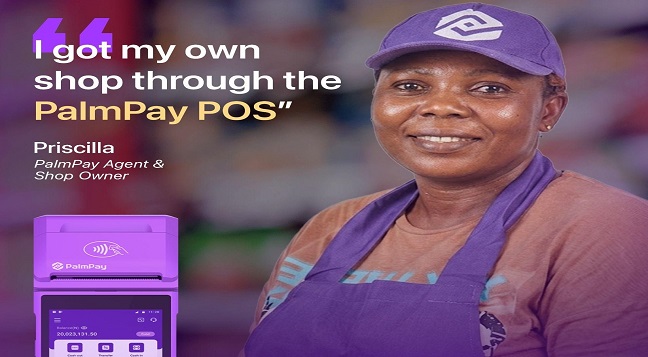
Like millions of women in Nigeria determined to be financially independent, Pricillia started with a single PalmPay POS terminal, and as an agent, every successful transaction provided a commission which brought her one step closer to achieving her dream.
Through consistency, discipline, and support from the payment platform, she reinvested her earnings and eventually opened her own provision store.
“I started as just a PalmPay agent with one POS. The consistency of the platform gave me the confidence to expand. With the income I earned, I was able to open my own provision shop.” Priscilla said.
For Priscilla, PalmPay was more than a payment platform. Its secure payment infrastructure gave her the confidence to serve her customers, build trust, and grow her income.
Today, Pricillia has joined the statistics of SMEs powering Nigeria’s economy and PalmPay continues to support her daily operations, helping her receive payments, as she works towards her next business milestone. Her journey is a reminder that when women have access to secure financial tools and opportunities, they can build lasting economic independence.
Speaking on Pricillia’s journey, Femi Hanson, Head of Marketing, PalmPay said: “Providing a secure platform that users can trust, whether for everyday payments or high-value transactions, is central to our vision of advancing financial inclusion. Priscilla’s story reflects our commitment to supporting the ambitions of Nigerians by providing a platform they can rely on to grow their finances. After all, seamless banking begins with security, and every successful transaction reinforces the trust our users place in us.”
Priscilla stands among thousands of PalmPay agents nationwide who are helping to expand financial access across Nigeria while earning commissions to create sustainable sources of income for themselves.
Every payment tells a story. It begins with trust, the confidence that your money is secure and that financial services are accessible. And when that opportunity reaches women, it creates ripple effects that transform families, strengthen communities, and drive economic growth.

Police Uncover Fake Diplomatic Number Plate Syndicate in Abuja

Davido Shares Past Suicidal Thoughts, Drops Oriadé Album

Gavi Okays $500m for Vaccines, PHCs in Nigeria

82% of Organizations Concerned about AI Risks Even as Adoption Accelerates – Survey Reveals

The Journey to Financial Freedom: Priscilla, a PalmPay Agent Now Owns a Store

NRC, Ponzi Scheme Collapses Resulting Loss of Billions of Naira

EFCC Busts NIS Visa Overstay Racket, Uncovers N700m in an Account

From Scarcity to Scale: What Africa Can Learn from India’s Agricultural Transformation

Tokenization, Blockchain Technology will Transform Financial Institutions – IMF

BON Establishes Six Ad Hoc Committees to Modernize Broadcasting




 E-Financial3 days ago
Access Bank Debunks Shutdown Report, Vows Action against Perpetrators

 E-Business3 days ago
Kaspersky Uncovers Cyber Threats Defining the First Half of 2026 in Nigeria, Others

 General News3 days ago
MENXTT TECH NG Offers Affordable Dell Laptops with Flexible Payment Plans

 Telecom3 days ago
ATU Summit Ends in Abuja with Landmark Declaration to Eradicate Continental Digital Divide

 Telecom3 days ago
Hon. Minister Dr. Kingsley T. Udeh and ASUS To Unveil First of a Kind Flagship Store in West Africa

 E-Business2 days ago
How Temu Helped a Madagascan Vanilla Family Business Sell Direct to Consumers Across Europe
 Broadcasting2 days ago
Davido Shares Past Suicidal Thoughts, Drops Oriadé Album

 E-Financial3 days ago
$40Bn Net Reserves, Record Wealth, Relentless Poverty: Who Is Nigeria’s Economy Serving Today?