

News
Report Finds Finance App Installs Grow Across Africa


AppsFlyer and Google have launched a new report looking at how mobile apps are transforming finance in Africa. Data reveals a significant increase in finance app installs across the African continent, as people turn to apps and technology as a way of managing finances, navigating economic uncertainty, and moving towards financial freedom.

The report analyzed more than 140 million installs, across 3,000 finance apps, and found that installs across the continent grew 25%.
Ghana, Nigeria, Kenya & South Africa were the main contributors to this rise in finance app installs, with the former largely bolstering this by a massive 200%; followed by Nigeria, which saw an increase by 33%. Kenya’s growth was recorded at 5%, while South Africa witnessed a decline by 11%.
Financial Google search increase in Africa
Google search trends between May 2021 & May 2022 showed that lending and currency conversions dominated in terms of interest related to finance – an indication of exactly how uncertain the economic situation has become for most people on the continent, particularly post-pandemic.
Key countries contributing to this increase include South Africa, who led the way in “grant status” and “loan application searches”, recording 700% & 51% increases in search intent, respectively.
“They also led the way in “payment date” searches, with a 700% increase in search intent. There was also a large increase in South Africans searching for “currency conversions”, with a 74% increase in search intent for “euros to rands conversion rates”.
Nigeria topped the list in terms of “loan app” searches, with an increase in search intent of 68% in the country. In Kenya, the majority of people searched for “currency conversion”, with a 52% increase in search intent for “USD to KSH” searches.
How Marketers are responding
According to the report, app install ad spend for finance represented approximately 87% of total spend across the continent between January 2021 and September 2022, confirming exactly how dominant the finance industry is.
This figure represents the amount of money invested in advertising campaigns aimed at driving users to app stores to download an app.
Indeed, there was a 45% increase in finance app install ad spend across Africa on Android devices between H1 2021 & H2 2022.
Marketers have been forced to up their budgets in order to run marketing campaigns to acquire new customers, as well as re-engage dormant users. As a result of this, installs from remarketing campaigns tailored to re-engage customers surged 55% between H1 2021 and H1 2022.
Commenting on findings gathered from the report, Otávio Tranchesi, Industry Lead Finance, AppsFlyer stated, “Once again, we are thrilled to collaborate with Google, exploring one of the most exciting industries across the continent.
The tech sector in Africa has experienced tremendous growth over the last few years, but one industry that stands out is the financial sector – and with smartphone penetration increasing, mobile is crucial for success. We’re proud to be working alongside so many companies spearheading this growth.”
Lizzie Kondowe, Africa Apps Lead, Google added “When we look at Google’s search trends, it’s clear that financial uncertainty is weighing heavily on many people across the continent.
“We’re seeing more and more apps come to market that aim to solve these problems, and so it’s no surprise to see installs rising. We’re proud to be working alongside AppsFlyer, to bring marketers the insights and tools they need to grow their apps.”



A Nigerian development scholar, Evans Woherem, has argued that Africa’s slow pace of development is rooted less in the capabilities of its people and more in the weakness of its institutions, systems, and governance culture.

In a sweeping article titled *_“Institutions, Culture, and the African Development Question: Why Systems Matter, and How Africa Can Leapfrog Development,”_* Woherem said “human beings are broadly similar biologically and intellectually across races and geographies,” stressing that the real difference between prosperous and struggling societies lies in “systems, institutions, cultures, incentives, and historical environments.”
According to him, one of the clearest demonstrations of this reality is the conduct of Africans living abroad.
“Individuals who, within certain African environments, may tolerate disorder, circumvent rules, participate in patronage systems, or adapt to corruption often relocate to countries such as the United States, Germany, Japan, Singapore, or Canada and quickly become highly compliant with laws and institutional expectations,” he wrote.
Woherem, a former Executive Director at both First Bank Plc and Unity Bank Plc, noted that such individuals suddenly obey traffic regulations, respect public infrastructure, pay taxes, and operate efficiently within merit-based systems, insisting that “the human material did not suddenly change. The surrounding institutional architecture did.”
He lamented that many African countries still approach development through what he described as a “project-based conception of development” rather than a systems-driven model capable of sustaining progress across generations.
The author of best-selling books- “Building a New Africa,” and “Information Technology in Africa,” criticised the nature of governance conversations across the continent, saying public discourse often centres almost exclusively on visible infrastructure projects such as roads, bridges, schools, and empowerment schemes, while deeper institutional questions are ignored.
“What institutions have been strengthened? What systems have been redesigned to outlive the present administration? What governance mechanisms now function automatically regardless of who occupies office?” he asked.
The scholar argued that sustainable development cannot be measured merely by the number of projects completed but by whether nations are building durable institutions capable of continuously producing results irrespective of political transitions.
“A nation does not become advanced merely because it constructs roads,” he stated. “It becomes advanced when it builds systems capable of continuously producing, maintaining, financing, regulating, and improving those roads across generations regardless of changes in leadership.”
Woherem further blamed Africa’s institutional fragility partly on colonial structures that were designed primarily for extraction rather than national development.
He said many post-independence governments inherited centralized but weakly accountable systems and merely “localized the machinery of extraction” instead of transforming the state into a developmental institution.
The information technology expert also highlighted the absence of what he called “developmental consciousness” across many African societies, noting that issues such as industrial policy, bureaucratic reform, technological sovereignty, manufacturing competitiveness, and state capacity rarely dominate mainstream public debate.
Drawing comparisons with countries such as Japan, Singapore, South Korea, and China, Woherem said successful industrialisation was driven by strong institutions, disciplined bureaucracies, educational excellence, and long-term planning.
“Their rise was not accidental, nor was it merely infrastructural. It was deeply institutional and civilizational,” he wrote.
The development expert also challenged African media organisations to move beyond “cosmetic” reporting of governance performance by interrogating structural reforms instead of simply celebrating project commissioning ceremonies.
“Instead of merely asking how many roads were constructed, they should ask whether procurement systems have become more transparent, whether regulatory agencies function independently, whether educational outcomes are improving systematically, and whether industrial policies are producing measurable manufacturing expansion,” he said.
Woherem further stressed the importance of “Developmental Industrialists,” pointing to African billionaire Aliko Dangote as an example of economic actors whose contributions extend beyond personal wealth accumulation to building industrial ecosystems and national productive capacity.
He maintained that Africa’s future depends on stronger bureaucracies, impartial legal systems, technologically enabled governance, industrial strategy, educational reform, and a civic culture that rewards competence over patronage.
“Roads alone do not produce civilization. Systems do,” Woherem declared.
He concluded that Africa’s greatest challenge is not a lack of human potential but the absence of institutional structures strong enough to consistently bring out the best in its people.
“And until systems become the centre of African developmental thinking,” he warned, “progress will remain slower, more fragile, and more reversible than it ought to be.”

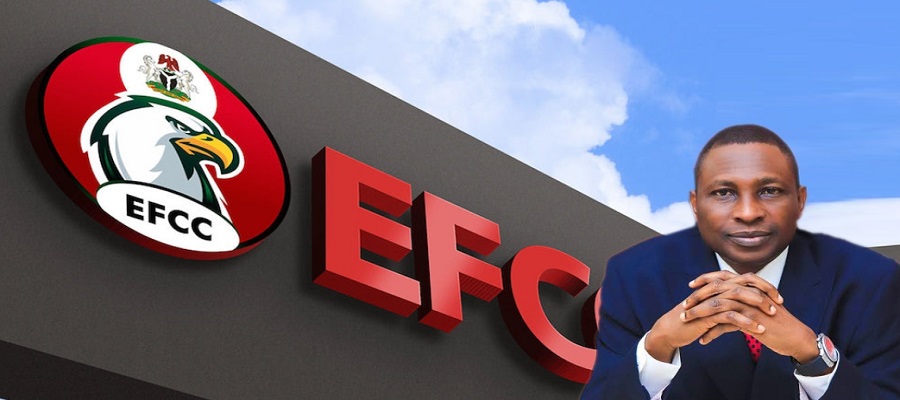
Economic and Financial Crimes Commission (EFCC) does not currently maintain a public privacy policy on www.efcc.gov.ng, its official website.

Ola Olukoyede, EFCC chairman, EFCC
This is despite partnering with the Nigeria Data Protection Commission (NDPC) to ensure data compliance according to findings by Foundation for Investigative Journalism (FIJ)
As a law enforcement agency, the EFCC handles highly sensitive personal data and financial records, but its main web portal does not currently provide a formal, publicly available privacy policy detailing how user data is collected, stored, or processed.
According to the National Information Technology Development Agency (NITDA), all government websites are mandated to have privacy policies.
Section 10.4 (i, ii) of the NITDA Privacy Policy mandates all government websites to exercise diligence when collecting personal details or information about visitors to their websites.
It equally requires all government websites to incorporate prominently displayed privacy statements clearly stating the purpose for which information is being collected where the government institution seeks to or collects personal information from visitors through its website.
In addition, the Nigeria Data Protection Act (NDPA) 2023 requires every data controller to make a privacy notice available to citizens before or at the point of collecting their personal data.
That notice must state the specific lawful basis of processing, the purposes of the processing, the categories of recipients of the personal data, the existence of data subject rights, and the right to lodge a complaint with the Commission.
The law further states that such information must be contained in a privacy policy and expressed in a clear, concise, transparent, intelligible and easily accessible format, taking into consideration the class of data subjects targeted by the data processing.
However, on Monday, FIJ checked the anti-graft agency’s website and found that it had no privacy policy or privacy notice informing users how their personal data is collected, processed, stored or shared.
FIJ found that Nigerians can submit petitions to the EFCC on the website.
During this process, the website compulsorily collects personal data such as names, National Identification Numbers (NIN), email addresses, local government areas (LGAs), phone numbers and residential addresses.
Also, organizations and financial institutions (such as commercial banks) are legally mandated to share customer information and suspicious transactions with the EFCC to prevent financial crimes.
However, the website collects this information without specifically informing users what happens to the data they provide.
Ironically, in September 2024, the EFCC and the Nigeria Data Protection Commission (NDPC) agreed to forge a partnership and collaboration towards strengthening cyber data protection in the country.
The agreement was reached in Abuja on September 18, 2024, when Vincent Olatunji, national commissioner and chief executive officer of the NDPC, led a delegation of management staff on a courtesy visit to Ola Olukoyede, EFCC chairman, at the commission’s corporate headquarters.
Despite partnering with Nigeria’s data protection regulator, the EFCC still has no privacy policy on its website.
At press time, the EFCC met none of the privacy policy requirements stipulated by both NITDA guidelines and the NDPA 2023.
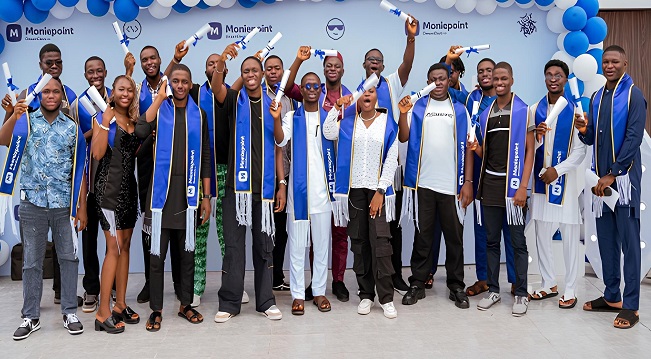
Moniepoint is proud to announce that the second cohort of its flagship DreamDevs Bootcamp is set to culminate in a Demo Day celebration on May 26, 2026, at its Ikeja facility. The event, themed “Training Done! Demo Up!”, will showcase the capstone projects built by participants following nine weeks of intensive, industry-grade software engineering training.

The DreamDevs Bootcamp is Moniepoint’s commitment to identifying and developing the brightest engineering talent across Africa. The nine-week intensive programme is designed to immerse participants in real-world, practical software engineering through a curriculum spanning Java OOP Foundations, Data Structures & Algorithms, Testing, MySQL & JDBC, Spring Boot APIs & System Design, Docker & Messaging Queues, Frontend UI & Cloud Infrastructure, and core Practical Software Engineering Concepts. In recognition of their commitment and effort, cohort participants are paid monthly throughout the duration of the programme.
The curriculum was developed by the Engineering Unit at Moniepoint and delivered in partnership with Semicolon, a leading technology education institution. Admission to the DreamDevs Bootcamp is highly competitive, with only top performers advancing through multiple stages of assessment, including a HackerRank technical test and an in-person code challenge, before earning a place in the programme.
Felix Ike, Co-Founder and CTO of Moniepoint, reflected on what the programme means to the company and the country, “Engineering excellence is a curated and intentionally built process that requires the right systems, resources, and time. The DreamDevs Bootcamp is our way of taking that responsibility seriously.
“We designed a programme that does not just teach syntax or frameworks, but develops engineers who can think, solve, and build at the highest level. Seeing graduates from our first cohort already thriving within our engineering team tells us we are on the right track, and we are excited to see what this second group brings to Demo Day.”
Some of the first cohort’s successful graduates are now active members of the Moniepoint engineering team, a testament to the programme’s effectiveness and its role as a genuine pipeline for world-class engineering talent.
The DreamDevs Bootcamp reflects Moniepoint’s broader mission to invest in Nigeria’s talent and build engineering capacity that can compete and lead on a global stage. Moniepoint looks forward to welcoming the second cohort to the fold and witnessing the innovative solutions they have built.

Systems, Not Skin Colour, Hold the Key to Africa’s Development, Says Evans Woherem

Maida, EVC NCC to Lead Speakers @ 17th Africa’s BoICT Merit & Leadership Lecture

Court Orders Globus Bank to Pay Firm N256m for Breach of Contract

WASPAN Drags Bello, FCCPB Boss to Court over Alleged Disobedience of Order

Pantami, Ex Minister of Communication Withdraws from Gombe APC Governorship Primaries over Alleged Electoral Violations

MTN, VDT, Zoracom, Digital Realty Back 2026 Girls in ICT Campaign

Vitel Wireless Partners Fintechs to Expand Access to Services

Kaspersky Discovers Vulnerability in Qualcomm Snapdragon Chips that can Lead to Data Loss & Device Compromise

Bank Customers to Pay N1,500 for ATM Card Issuance, Replacement – CBN

FCCPC Licenses 5 Firms for Airtime, Data Lending as Telcos Step Aside




 General News3 days ago
Xenophobic Attacks: Anonymous Nigeria Threatens to Leak South African Stolen Data

 Telecom3 days ago
MTN Targets 8m Homes in Fibre Expansion Drive

 E-Financial2 days ago
FG Says All Taxable Nigerian Must Obtain Taxpayer ID

 E-Financial3 days ago
Chapel Hill Denham Says Banks Lose N2.5 Trillion Annually to High CRR in New Report

 E-Financial3 days ago
Lagos Sanctions 15 Money Lending Firms for Operational Violations

 Telecom3 days ago
GBB Says Cross-border Partnerships Key to Africa’s Digital Transformation

 E-Financial3 days ago
AfDB Approves $200m for BoI to Support MSMEs

 News3 days ago
WHO Says Ebola Outbreak Worse than Reported