

General News
4 Methods for Meeting Customers at their Pain Points Instead of Just Selling

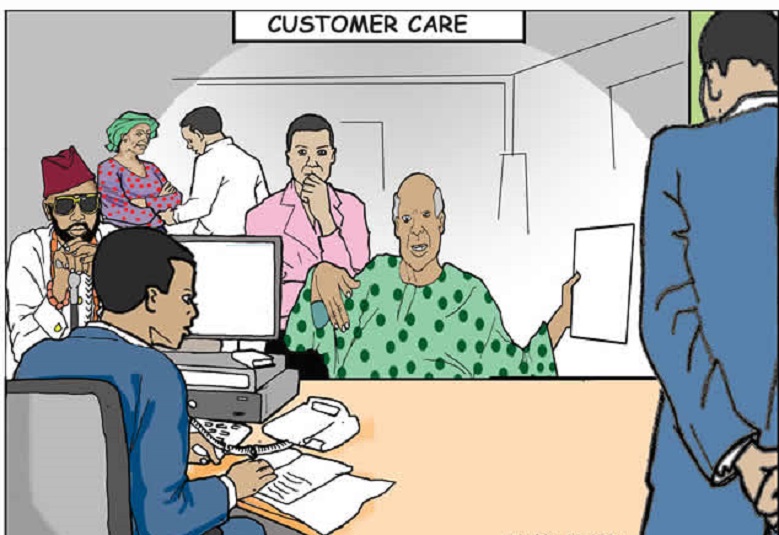
Every business is founded to solve a customer problem, and the vast majority of products and services are designed to alleviate a specific customer pain point. But it is still important to let each customer know how their specific problems are being solved.

One of the best ways to build brand credibility is to understand a customer’s journey and build long-term relationships with them. In this article, we ask industry professionals how they meet the needs of their customers.
Build engagement with customers
It’s no secret that we live in a time of unprecedented technological acceleration. Nowhere is that more true than in the customer experience space. Things that ten years ago seemed completely impossible are now commonplace and almost expected.
“Many organisations want to make changes in line with accelerations in technology and customer experiences, but the range of options available out there stops them from even starting, or worse, they settle for an option that they deem to be “good enough,” comments Brent Haumann, Managing Director at digital communications firm, Tilte.
Importantly, however, is that as technology accelerates, so do customer expectations, and what was considered good enough yesterday is not good enough for tomorrow. It is critical that organisations aim to meet and even exceed these expectations, because if they don’t, their competitors will happily oblige. “The problem is that engaging customers is not about sending an email or introducing a chatbot.” Anyone can do that. It’s about how to get your customers to actually engage with your brand and build a loyal relationship that will see their customer lifetime value grow. This is a lot more difficult and requires expertise in these spaces.” concludes Haumann
Enhance the user experience
While the use of technology to streamline customer-facing processes is an integral part of SME growth, the user experience of such technology can often become a pain point for the business if the right tool is not chosen. “While SMEs need technology to reduce manual tasks and automate repetitive processes, complicated software packages and platforms can be more of a hindrance than a help. “In fact, as many as 70% of startups fail within the first five years, according to research from the University of the Western Cape, because they don’t have the technical support they need to get the basics done,” says Andrew Bourne, Regional Manager, Africa – Zoho Corporation.
Integrated, seamless solutions need to meet the needs of the user, regardless of the scale of the business. This means having a full-featured Customer Relationship Management (CRM) system that will improve the user experience and enhance customer service.
Provide access across borders
It’s no secret that mobile money has revolutionised the financial services industry, allowing individuals to transact within and across borders – opening up a world of possibility for small business owners on the continent. However, consumer pain points such as a lack of access to financial services, high transaction costs, and regulatory requirements still hurt interoperability and the cross-border payments innovations that are key for scaling access across Africa.
Remittances, as an example, are important to African countries, but the cost of intra-African money transfers still remains high. In South Africa, the average cost of sending remittances was 8.14% in 2020 as against the global average remittance fee of 6.01%. Not only are billions lost to high transaction costs, but they also limit financial inclusion and aid to the vulnerable.
MFS Africa has been driving the next step in this revolution, addressing this pain point by bringing more possibilities, more connections and more interoperability to the mobile money user. The organisation’s full-service digital payments network now connects over 400 million mobile money wallets, over 200 million bank accounts and over 150,000 agents in Nigeria.
Harness technology to enhance the experience
“Solving the customer’s pain point is the foundation of a great customer experience. And experience is everything. We know that more consumers and business buyers are noting that the experience companies offer matters as much as their products.” says Zuko Mdwaba, Area Vice President Salesforce South Africa
This is all about meeting the customer where they are. Today, customers’ use of social media, knowledge bases, and live chat is near parity with phone and email. With the decline of in-person service since 2020 showing little sign of recovery, the use of mobile apps, online communities, and video support have seen massive expansion over the past two years.
Mdwaba continues that “Given the rising importance of digital channels, strengthening partnerships between service and IT departments is often key to breaking down data silos, saving on software cost, agent empowerment and resulting in faster time-to-market for new technology solutions.”
By investing in advanced technology, organisations can address customer pain points effectively to achieve greater customer satisfaction, which ultimately boosts engagement and revenue.



Abuja Zonal Directorate of the Economic and Financial Crimes Commission (EFCC), has arraigned Blessing Gozi-Anyaokei, managing director, Viscount Microfinance Bank, over allegations of unlawful conversion of investment funds amounting to N19 million and $30,000.

Blessing Gozi-Anyaokei, managing director, Viscount Microfinance Bank
Gozi-Anyaokei was brought before Justice Y. Halilu of the Federal High Court, Maitama, Abuja, on a two-count charge bordering on alleged illegal conversion and obtaining money under false pretence.
According to a statement issued on Thursday by Dele Oyewale, EFCC spokesperson, the defendant allegedly received N19 million from one Ernest Terkula Jor in 2022 for investment purposes while serving as the Managing Director of the bank.
The anti-graft agency accused her of diverting the funds for personal use, contrary to the provisions of the Penal Code Act.
In the second charge, the EFCC alleged that she also received $30,000 from the same individual for investment purposes but dishonestly converted the money for her personal benefit.
The commission stated that the alleged offences contravene Section 311 of the Penal Code Act Cap 532, Laws of the Federation of Nigeria (Abuja) 1990, and are punishable under Section 312 of the same Act.
The defendant pleaded not guilty to the charges when they were read before the court.
Following her plea, prosecution counsel, S.N. Robert, requested a date for the commencement of trial.
Justice Halilu subsequently granted the defendant bail with two sureties who must possess landed property within Abuja.
The court also ordered her to surrender her travel documents and barred her from travelling outside the country without court approval.
The matter was adjourned until July 19, 2026, for commencement of trial.

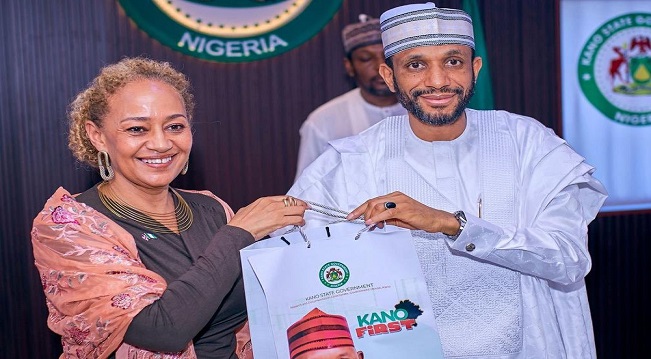
Ms. Cynthia Rowe, the Head of Development Cooperation at the British High Commission Abuja, has completed high-level engagements with Kano and Jigawa States, reaffirming the United Kingdom’s long-term commitment to development and reform in northern Nigeria.

The engagements with state governors, senior government officials and civil society leaders, underscored the UK’s modern approach to development as a genuine partnership with Nigeria. This approach prioritises state led ownership and sustainable development that delivers lasting impact through strengthening systems and partnerships grounded in investment, trade, climate financing, technical expertise and joint accountability.
Nigeria remains one of the United Kingdom’s most significant development partners, and the engagements underlined the strength and ambition of the bilateral relationship reaffirmed during the recent UK-Nigeria State Visit.
Kano State
In Kano, Head of Development Cooperation, Cynthia Rowe, met with Deputy Governor Alhaji Murtala Sule Garo and senior officials including the newly confirmed Head of Civil Service and Secretary to the State Government. The visit recognised Kano’s progress on climate finance, health system reform and private sector investment supported through UK technical assistance.
Jigawa State
In Jigawa, she met with Governor Umar Namadi and heads of key ministries, departments and agencies. The meeting celebrated more than 25 years of UK-Jigawa partnership, one of the most longstanding bilateral development relationships at the subnational level in Nigeria. Discussions covered the state’s continued progress on health systems reform, agriculture, and governance and the path forward under UK-technical assistance.
Since 2022, PLANE has supported Kano, Kaduna and Jigawa to strengthen state-led education delivery systems, working through Ministries of Education, SUBEB and key agencies. Its RANA+ foundational learning packages have reached 1.4 million pupils across the three states, alongside wider system strengthening.
At the end of the visit, the Head of Development Cooperation, Cynthia Rowe said: “For more than 25 years, we have worked side by side with state governments including Jigawa and Kano states, their communities, and civil society to build stronger health systems, improve learning outcomes for millions of children, support farmers to grow their businesses, and help states attract the investment they need to thrive.
These visits have reinforced our confidence in what this partnership can achieve. We are working together to deliver lasting change, and deepening a relationship built on genuine mutual respect and shared ambition for Nigeria’s growth and development.”

The Green Finance Investment Facility (GFiF), a blended finance platform to mobilise large-scale private and institutional investment into distributed renewable energy infrastructure across Nigeria, has officially launched.

The facility, led by Barton Heyman Limited in partnership with the Rural Electrification Agency (REA), UK PACT, First City Monument Bank (FCMB), and ARMHIIL, aims to raise $188 million to finance 191 megawatts of distributed solar capacity for households, communities, and businesses across Nigeria.
The initiative also supports the Distributed Access through Renewable Energy Scale-Up (DARES) programme, a national effort to expand electricity access through decentralised renewable energy solutions.
Launched on May 7, 2026, in Lagos, the platform brought together financial institutions, renewable energy developers, policymakers, and development finance stakeholders. Its goal is to unlock financing solutions that accelerate energy access, reduce financing gaps, and support Nigeria’s transition to cleaner, more sustainable energy systems.
Speaking at the launch, the Managing Partner of Barton Heyman Limited, Olumide Lala, described the facility as a market-driven model capable of unlocking private capital at scale for Nigeria’s energy transition.
“The Green Finance Investment Facility is more than a financing arrangement; it represents direct support for over one million Nigerians. Nigeria’s distributed renewable energy sector can be financed using a private-sector framework that leverages sovereign pipelines, results-based funding, and commercial loans to attract private capital at the national level. This is our initial step to raise $40 billion to finance 20 gigawatts of distributed renewable energy,” he said.
Also speaking, Anthony Feyitimi, Senior Partner, Barton Heyman, said: “The Green Finance and Investment Facility is not simply about clean energy. It is about what reliable, distributed power makes possible for Nigeria’s economy. Every megawatt we finance is a business that can operate, a supply chain that can function, a community that can compete.
“We have structured a blended finance platform that brings together sovereign pipelines, results-based funding, and commercial capital into a single, replicable facility. The GFIF Pilot is our first $188 million step. The platform’s ambition is $40 billion and 20 gigawatts. We are building it from Nigeria, for Nigeria.”
The Managing Director of the REA, Abba Aliyu, said the initiative directly addresses one of the sector’s most pressing constraints — access to finance.
“The Green Finance Investment Facility can tackle access to finance, one of the main barriers to renewable energy deployment. Today’s launch is the outcome of a strategic partnership created to ensure communities lacking reliable power can access electricity. We are proud of what this facility signifies for Nigeria’s energy future,” he stated.
Speaking on behalf of FCMB, George Ogbonnaya, Senior Vice President and Divisional Head, Business Banking Group, highlighted the Bank’s expanding role in renewable energy financing and inclusive infrastructure development.
“FCMB has established itself as a leading renewable energy financing institution, serving as a first-time lender to many players driving growth in the sector. We have committed ₦100 billion in debt financing for DARES. Currently, we are funding over eight developers under the DARES isolated mini-grid Performance-Based Grant programme and finalising funding for another seven developers.
“We will continue to support developers in scaling and meeting electrification targets, improving quality of life in rural and peri-urban communities. This aligns strongly with our purpose of fostering sustainable growth within the communities we serve,” he said.
He further disclosed that FCMB has financed more than 42 mini-grid projects and is supporting efforts to connect over 2 million households, in line with Nigeria’s national electrification objectives.Nigerian politics analysis
Derek Chime, Chief Investment Officer at ARM Harith Infrastructure Investment Limited (ARMHIIL), called for deeper collaboration across the ecosystem to unlock more investment into renewable energy infrastructure.
Simon Field, Deputy Head of Mission at the British High Commission in Lagos, reaffirmed UK PACT’s commitment to strengthening green finance frameworks and expanding renewable energy adoption in Nigeria.
Titilayo Oshodi, Special Adviser on Climate Change and Circular Economy to the Governor of Lagos State, stressed the importance of coordinated investment, innovation, and policy support in accelerating sustainable energy access.
Nigeria continues to face significant challenges in electricity access, with millions of households and businesses lacking a reliable power supply. Stakeholders at the launch noted that initiatives like GFiF are critical to mobilising long-term capital, reducing investment risk, and accelerating the deployment of clean energy solutions to power communities nationwide.

Gozi-Anyaokei, Bank MD Arraigned over Alleged N19m, $30,000 Fraud

NDIC Drags Wema Bank to Court over N125.38Bn Banana Island Assets

Chamber Raises Alarm over Increasing Telecoms Infrastructure Vandalism

UK Reaffirms Development Partnership with Kano, Jigawa States

The Nigeria Prize for Science & Innovation Records New Height as 2026 Edition Attracts 237 Entries

Vitel Wireless Partners Fintechs to Expand Access to Services

MTN, VDT, Zoracom, Digital Realty Back 2026 Girls in ICT Campaign

Kaspersky Discovers Vulnerability in Qualcomm Snapdragon Chips that can Lead to Data Loss & Device Compromise

MTN Suspends Data, Airtime Borrowing Service over New FCCPC Lending Rules

Bank Customers to Pay N1,500 for ATM Card Issuance, Replacement – CBN




 General News3 days ago
PalmPay, LASUBEB Deepen Efforts to Keep More Children in School

 News3 days ago
National Assembly to Review National Data Protection Act

 E-Financial3 days ago
CBN Warns Non-Interest Banks against Governance, Compliance Risks

 E-Business3 days ago
Firm Shares Insights into Ransomware Trends and Tactics @ International Anti-Ransomware Day-2026

 E-Financial3 days ago
FG Seeks Fresh $1.25Bn Loan from World Bank to Create Jobs, Others

 E-Financial3 days ago
Fidelity Bank Hits N1trn Milestone as Earnings Surge 45%

 E-Financial3 days ago
Ecobank Group Announces $3b Trade Finance Commitment to Boost Intra African Trade

 Telecom2 days ago
NCC Says Telecom Industry on Course to Improve Quality of Service