

General News
Stakeholders Restate Importance of 5G Services @NDSF 2023

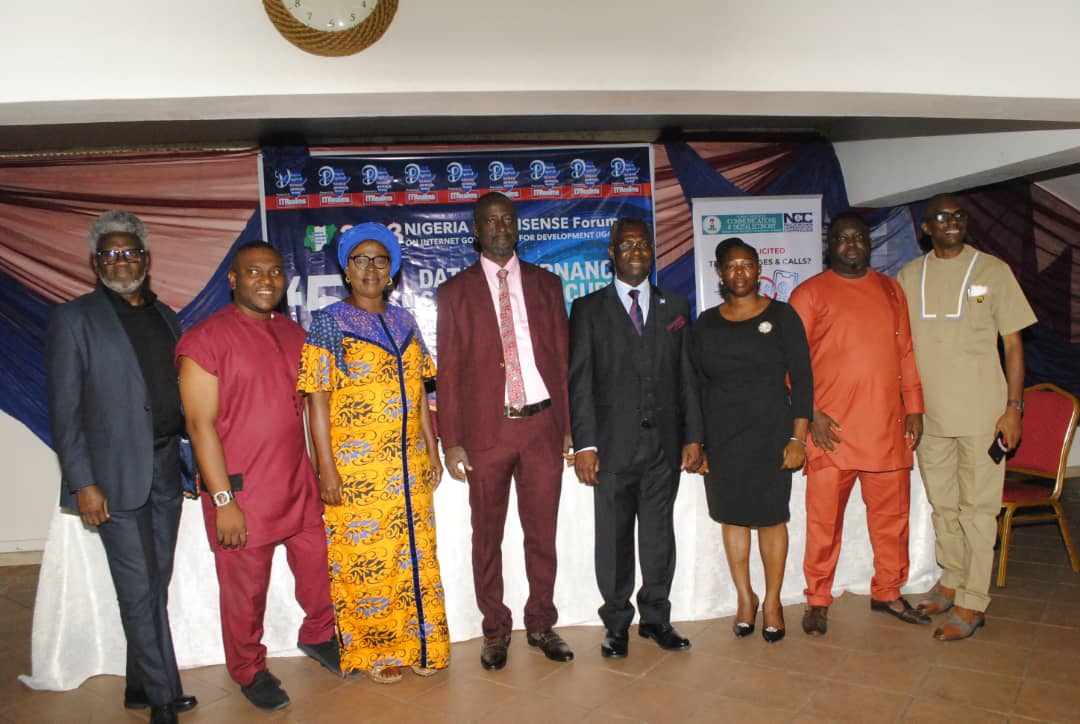
Stakeholders in the Information and Communication Technology (ICT) have restated the value of the Fifth Generation (5G) services, especially on the positive use of the internet to ease connectivity.

From left: Representative of Director, Public Affairs, NCC and Head, Media Relations Management, Dr Omoniyi Ibietan; Business Development Executive, WizzHub Technology Ltd, Mr. Francis Uzor; Executive Director, Domain Name System Women (DNS Women Nigeria), Mrs Nkem Nweke; Chairman, 2023 NDSF & President, Nigeria Computer Society (NCS), Prof. Adesina Simon Sodiya; representative of Executive Vice Chairman, NCC, Dr. Chidi Diugwu, Tinuade Oguntuyi of Internet Society (ISOC Nigeria), Principal Consultant, CyberCode, Mr Olatunji Igbalajobi, and Lead Consulting Strategist at DigitalSENSE Africa and Group Executive Editor, ITREALMS Media Group at the 2023 Nigeria DigitalSENSE Forum on ‘5G: Data Governance Safety and Security in Nigeria’ held in Lagos.
They also noted that 5G technology has enhanced capabilities that will provide superior communications services for the socio-economic development of Nigeria and facilitate attainment of a national digital economy.
Speakers at the 2023 Nigeria DigitalSENSE Forum (NDSF) on Internet Governance for Development (IG4D) with the theme “5G Data Governance, Safety and Security in Nigeria,” organised by ITRealms Media Group, made these assertions.
Leading expert speakers at the forum in his keynote, the Executive Vice Chairman/Chief Executive Officer (CEO), Nigerian Communications Commission (NCC), Prof. Umar Garba Danbatta said that data is critical to the digital economy, and assured that NCC is building robust legal frameworks for data governance.
“As we embrace the transformative potential of 5G, we must also prioritize safety concerns,” he asserted.
Danbatta, who was represented by the Head of New Media, NCC, Dr. Chidi Diugwu, said that the amount and speed of data generated using 5G technology is unprecedented and beckoned on citizens to embrace it and use it to the fullest.
As such, he pointed out the need to always prioritize consumer privacy, transparency and ethical data use. Maintaining that by cultivating trust and handling data responsibly, would unlock the full potentials of 5G technology and promote innovation in Nigeria.
“To ensure the security and protection of networks and consumers, the Nigerian Communications Act mandates its licensees to prevent their network facilities or services from being used in, or in relation to, the commission of any offence under any law in operation in Nigeria. In this regard, licensees are required to assist the Commission and other Law Enforcement Agencies in preventing crime in Nigeria,” he said.
The chairman of 2023 Nigeria DigitalSENSE Forum (NDSF) and President, Computer Society of Nigeria (NCS), Prof. Simon Adesina Sodiya, said the internet is a global connection of networks, that provides opportunity for people to share information in order to connect to one another.
Also, Sodiya said, the internet is like an open space, which any body could use for communication, connection, sharing resources, hence most organisations, individuals are connected to internet.
On the internet, Sodiya explained that the importance of data security and governance cannot be over emphasized, thus the essence to come up with guidelines, procedures, rules, for realistic usage of internet.
“It will not be done by government alone, it is multi-stakeholders efforts, which include government agencies, civil society organisations, individuals, and ICT professionals among others,” Sodiya said.
The chairman of 2023 NDSF equally noted that internet governance is very important because there are lots of criminal activities going on in the internet, however people who fall victims are not aware of these cyber criminals.
“Apart from criminal activities, we should not forget that our children are in schools and have been given opportunity to use internet. They should use it for something meaningful that will develop their life positively and not negative aspects. For instance, I have seen a father who said he found his 12-year old child watching porn videos,” he said.
What government needed to do, according to Prof Sodiya is to educate parents on how to provide use of internet for their children. Advising that parents should block some aspects of internet that might endanger the life of their children.
The Business Development Executive, Wizzhub Technology Limited, Mr. Uzor Francis, said he educated participants on benefits of 5G, such as speed carrying capacity, how much integral benefits and inter-connectivity of the devices that internet offers, as 5G enables most of these things.
About challenges of 5G, especially on security, Uzor said that will require enlightened participants on some of the measures, urging Nigerians to mitigate the challenges they may face while using 5G mobile services.
“It is important that 5G goes round not only to the cities but also in the villages so that everybody has access to it, to enhance connectivity for communications through the internet,” he said.
Uzor decried some myths and misconceptions about 5G that it causes virus such as COVID-19, pandemic, which is not true, therefore Nigerians should adopt it because 5G is fast and safe.
The Principal Consultant, CyberCode Limited, Mr. Olatunji Igbalajobi, in his contribution said 5G technology has come to stay in Nigeria to enhance internet connectivity and encourage development.
Nigeria, as a country, he said, needs to get it right in terms of data governance, and urged government at all levels to act fast to ensure relevant structures are in place to ensure data governance and safety.
Earlier while welcoming participants, the Lead Consulting Strategist at DigitalSENSE Africa and Group Executive Editor, ITREALMS Media Group, Mr. Remmy Nweke, noted that 5G mobile network is a new global wireless standard after 1G, 2G, 3G and 4G respectively.
Nweke highlighted that 5G enables a new kind of network that is designed to connect virtually everyone and everything together including machines, objects and devices.
5G wireless technology, Nweke said is meant to deliver higher multi-Giga bits per second (Gbps), peak data speeds, ultra-low latency, more users, higher performance and improved efficiency thereby empowering new user experiences and connecting new industries.
He recalled that DigitalSENSE Africa is a certified At-Large Structure (ALS) by the Internet Corporation for Assigned Names and Numbers (ICANN) and powered by ITREALMS Media group, while NDSF was hosted in collaboration with the Nigeria Communications Commission (NCC) among stakeholders in the country.
Nweke commended NCC, Association of Licensed Telecommunications Operators of Nigeria (ALTON), Nigeria Computer Society (NCS), Internet Exchange Point of Nigeria (IXPN), FirstBank, Nigeria LNG Limited, WizzHub Technologies, D|NS Women Nigeria and a host of other stakeholders for partnering with this 14th edition of NDSF series.
Further, he applauded the speakers faculty for the 2023 NDSF including the President, Guild of Corporate Online Publishers (GOCOP), Ms Maureen Chigbo; Executive Director, Domain Name System Women (DNS Women Nigeria), Mrs Nkem Nweke and Ms Tinuade Oguntuyi of Internet Society (ISOC Nigeria) and assured that next edition will be an exciting session.


Coscharis Technologies Limited, a leading Information Technology distribution company in the Sub-Saharan African market, in collaboration with Huawei, has officially launched the innovative Huawei IdeaHub S3 interactive board into the Nigerian market.

The unveiling ceremony, which attracted top industry stakeholders, partners, and technology enthusiasts, was held at the prestigious Federal Palace Hotel, Lagos, in the heart of Nigeria’s commercial hub.
Speaking at the event, the Managing Director of Coscharis Technologies Limited, Dr. Sunday Mukoro, appreciated guests for attending and reaffirmed the company’s commitment to introducing cutting-edge technologies into the Nigerian market to accelerate the country’s technological advancement.
Dr. Mukoro described the Huawei IdeaHub S3 as a next-generation smart collaboration device equipped with advanced features designed to enhance productivity, communication, and digital collaboration across businesses, educational institutions, and organizations.
To further excite participants at the launch, he announced a special one-off 20 percent discount for early bird orders placed during the event.
Representing Huawei, Charles Chen, Huawei Nigeria eKit Manager, reiterated Huawei’s dedication to delivering world-class technology solutions tailored to modern workplace and learning environments. He emphasized that the IdeaHub S3 reflects Huawei’s continuous innovation in smart office and collaborative technologies.
The Huawei IdeaHub S3 is available in 65-inch, 75-inch, and 86-inch variants and comes loaded with several advanced features, including ergonomic design, ultra-low latency performance, 4K dual-lens camera with 5x zoom capability, and superior image quality with zero colour cast technology.
Other notable features include a 24-microphone array with up to 15-meter sound pickup range, high-fidelity stereo sound system, 4K soft light screen, intelligent tracking with auto-crop view, Acoustic Baffle 2.0 technology, ultrasonic projection, app multiplier functionality, and enhanced BYOM/BYOD collaboration capabilities.
The event climaxed with the formal unveiling of the Huawei IdeaHub S3, led by Dr. Sunday Mukoro alongside executives from Huawei and the Coscharis Huawei team, marking another milestone in the advancement of smart collaborative technology solutions in Nigeria

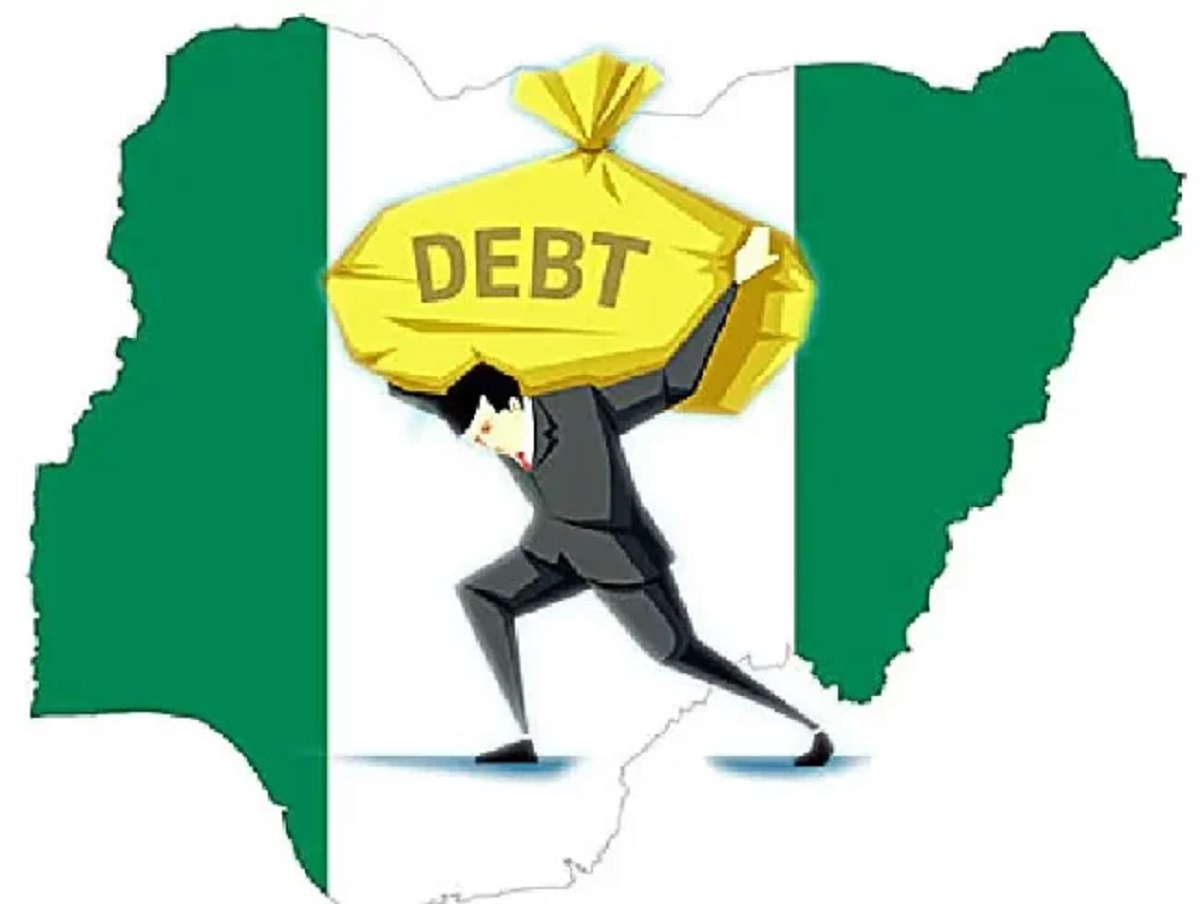
Nigeria has retained its position as the third-largest borrower from the International Development Association (IDA), the concessional lending arm of the World Bank, despite a slight decline in its debt exposure in the first quarter of 2026.

According to the IDA’s March 2026 financial statements, Nigeria’s exposure stood at $18.5 billion as of March 31, 2026, down marginally from $18.7 billion recorded at the end of December 2025.
The $200 million decline represents a 1.1 per cent reduction over the three-month period.
However, on a year-on-year basis, Nigeria’s debt exposure increased significantly by $1.2 billion, or 6.9 per cent, from $17.3 billion recorded in March 2025.
The latest ranking places Nigeria behind Bangladesh and Pakistan among the World Bank’s largest IDA borrowers.
Data from the report showed that Bangladesh remained the largest borrower with an exposure of $22.7 billion, followed by Pakistan with $19.2 billion, while Nigeria ranked third with $18.5 billion.
Other major African borrowers include Ethiopia with $14.4 billion, Tanzania with $14.3 billion, and Kenya with $13.2 billion in outstanding exposure.
The report also revealed that the IDA’s total loans outstanding stood at $230.8 billion as of March 31, 2026, slightly below the $231.1 billion recorded at the end of December 2025, reflecting a mild moderation in the institution’s lending portfolio.
According to the IDA, loans classified under non-accrual status represented only 0.4 per cent of the total portfolio, while provisions for potential loan losses amounted to $6.3 billion, equivalent to about 2.0 per cent of underlying exposures.
Nigeria’s exposure accounted for roughly eight per cent of the IDA’s total loan portfolio and approximately 13.3 per cent of the combined exposure represented by the institution’s ten largest borrowing countries.
The IDA noted that its ten largest country exposures collectively accounted for about 60 per cent of total portfolio exposure as of March 2026, highlighting the concentration of concessional lending among a relatively small number of developing economies.
Despite the slight quarter-on-quarter decline, Nigeria’s debt profile with the World Bank continues to trend upward over the longer term.
The report showed that Nigeria’s exposure rose from $17.3 billion in March 2025 to $18.5 billion in March 2026, underscoring the country’s increasing reliance on concessional financing to support development priorities and economic reforms.
Similarly, Ethiopia’s exposure increased from $13.2 billion to $14.4 billion over the same period, while Tanzania’s exposure rose from $12.6 billion to $14.3 billion.
Bangladesh’s debt exposure climbed from $21.2 billion to $22.7 billion, while Pakistan’s increased from $18.3 billion to $19.2 billion.
Ghana also recorded an increase from $7.1 billion to $7.4 billion.
Nigeria’s position among the top borrowers reflects the scale of its infrastructure, social investment, and reform financing needs under the World Bank’s concessional lending framework.
The Federal Government is also currently engaging the World Bank for additional financing support.

Nigeria Civil Aviation Authority has suspended plans to enforce its proposed “no pay, no service” policy against domestic airlines owing statutory charges, following consultations with operators and concerns over rising operational costs in the aviation sector.

Director-General of Civil Aviation, Chris Najomo, said the decision followed a review of prevailing challenges facing airlines, particularly the rising cost of Jet A1 aviation fuel.
The NCAA had earlier issued a memo on May 22 placing at least 11 domestic carriers on a “no pay, no service” list over outstanding debts owed to aviation agencies.
Affected airlines reportedly included Air Peace, Ibom Air, Overland Airways, Arik Air, United Nigeria Airlines, Max Air and Caverton Helicopters.
Industry sources said airlines immediately began discussions with the regulator after the directive was announced, leading to the temporary suspension of enforcement.
The NCAA clarified that the suspension did not amount to a cancellation or waiver of the debts, adding that all affected airlines remained responsible for settling their statutory obligations.
According to the authority, engagements with operators would continue to ensure compliance while avoiding disruptions to flight operations and passenger services.
The regulator also referenced earlier intervention measures approved by President Bola Tinubu, including a 30 per cent discount on outstanding charges owed by domestic airlines to aviation agencies.
The measure, it said, was introduced to cushion the impact of high aviation fuel costs and stabilise the sector.
The NCAA defended the five per cent Ticket and Cargo Sales Charge imposed on airlines, describing it as a statutory levy established under Nigeria’s Civil Aviation Act.
“The charge is not part of airline revenue or operating profit and should not be treated as such,” the authority stated.
It added that the agency operates largely on a cost-recovery basis and depends on remittances from operators to sustain regulatory oversight and aviation safety functions.
According to the NCAA, suspending the enforcement action was intended to balance regulatory compliance with the need to maintain operational stability in the aviation industry.
The authority reaffirmed its commitment to recovering all outstanding debts while supporting the long-term sustainability of domestic airline operations.

Kaspersky Reveals NFC Relay Attacks on Smartphones Surged by 188% in 2026

Coscharis Technologies, Huawei Unveil IdeaHub S3 Interactive Board in Nigeria

Pope Calls for ‘Disarming’ of AI, Warns of “New Forms of Slavery”

NITDA Raises Alarm over Fake ‘CPM’ Platform Extorting Victims Using Agency’s Name

NBC Sets 2028 Deadline for Full Digital Switch-Over

MTN, VDT, Zoracom, Digital Realty Back 2026 Girls in ICT Campaign

Vitel Wireless Partners Fintechs to Expand Access to Services

FG Okays 112 as Toll-Free National Emergency Response Number

Opay Plans IPO in US, Targets $4Bn in Valuation

Elon Musk Launches XChat with Video Calling to Take on WhatsApp, Messenger




 Telecom2 days ago
NITDA Inaugurates Regulatory Sandbox Team to Drive Digital Innovation

 E-Financial1 day ago
Transfers Fail as Banks Suffer USSD Glitches

 Telecom2 days ago
Meet the 25 Media Professionals Chosen for MTN’s Elite Innovation Programme

 General News1 day ago
Court Orders FG to Reveal Identity of Local Contractors in $460m Abuja CCTV Project

 General News1 day ago
FG Classifies Ebola Importation into Nigeria as High Risk

 General News1 day ago
NCAA Suspends Services to Air Peace, Others over Debts

 News1 day ago
Legend Internet Repays N10Bn Commercial Paper

 News13 hours ago
Moniepoint Group Commits to Boost Hands-on, Entrepreneurship in Three Nigerian Universities with ₦3B Innovation Hubs