

E-Financial
Nigeria’s Booming Banks And A Collapsing Economy

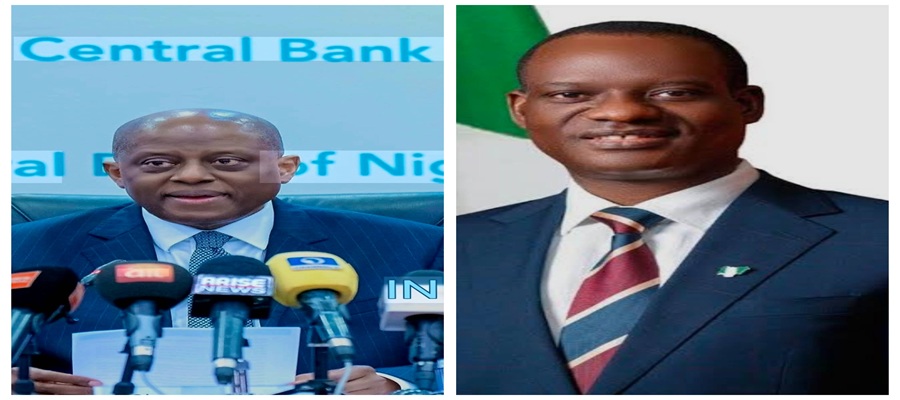
Nigeria’s banking industry appears to be booming, largely driven by the policies of the Central Bank of Nigeria (CBN), under Governor Olayemi Cardoso, while the real economy continues to suffocate.

At a time when millions of Nigerians are sinking deeper into poverty, when inflation continues to erode household incomes, when businesses are collapsing under unbearable operating costs, and when migration has become a survival strategy for many young professionals, Nigerian banks are announcing staggering profits, stronger capital positions and unprecedented liquidity growth.
According to the bank’s financial statements, the financial system appears healthy. In reality, the economy where citizens work, trade and survive is gasping for breath.
This growing disconnect between financial sector prosperity and economic suffering now represents one of the gravest threats to Nigeria’s long-term economic stability and its ambition of building a $1 trillion economy.
The numbers are indeed impressive. Nigerian banks’ shareholders’ funds reportedly surged to about N27 trillion following the recapitalisation exercise. The top five banks now command balance sheets estimated at over N164 trillion. Tier-1 banks collectively generated trillions in profits within the first quarter of 2026 alone, while the sector-wide recapitalisation exercise raised over N4.56 trillion.

Ordinarily, such figures should inspire confidence about the future of the economy. Stronger banks are expected to translate into stronger businesses, more jobs, industrial expansion and wider economic opportunities. But Nigeria’s experience is proving otherwise.
Instead of serving as engines of productive growth, banks are increasingly becoming custodians of liquidity trapped within the financial system itself. That is the real danger.
Even as banking liquidity expands sharply, lending to the productive economy remains weak and constrained. Reports indicate that banks parked a record N24.13 trillion with the CBN, while simultaneously increasing investments in government securities and treasury bills because these avenues are safer, more profitable and less risky than lending to businesses operating within Nigeria’s harsh economic climate. This reality exposes a dangerous contradiction.
A developing economy desperately in need of industrialisation, manufacturing growth, infrastructure expansion and job creation cannot afford a banking system that prefers financial safety over productive economic risk.
A sustainable economy cannot thrive where the real sector is starved of funds. Yet this is exactly where Nigeria now stands.
Despite the massive liquidity in the banking system, growth in lending to the private sector continues to lag behind the pace of liquidity expansion. The implication is clear. Financial sector strength is no longer translating into real economic development. This is not how healthy economies function.
Ordinarily, banks in developing economies are expected to operate as catalysts for economic transformation. Across successful economies, commercial banks finance manufacturing, agriculture, innovation, infrastructure and entrepreneurship because those sectors generate jobs, productivity and national wealth.
Small and Medium Enterprises (SMEs), especially, are globally recognised as the backbone of grassroots economic development. Nigeria is no exception.
SMEs account for over 70 percent of registered businesses, contribute nearly half of Nigeria’s GDP and generate between 84 and 90 percent of employment opportunities. Yet despite their overwhelming importance, SMEs reportedly receive barely between 0.5 percent and one percent of total commercial bank lending. That is not merely a policy failure. It is an economic tragedy.
Every denied SME loan is a denied employment opportunity. Every failed business represents another frustrated entrepreneur. Every frustrated entrepreneur becomes another Nigerian contemplating migration.
This is how economic dysfunction transforms into human displacement. The so-called “Japa” phenomenon did not emerge in isolation. It is deeply connected to economic hopelessness. When productive citizens lose faith in their country’s economic future, migration stops being a lifestyle choice and becomes a survival mechanism.
Unbeknownst to the policymakers is that Nigeria cannot realistically build a $1 trillion economy while productive sectors remain financially suffocated.
A closer glance at the trend of events helps to reveal that the danger becomes even more severe when viewed against the backdrop of the recent outcome of the 305th Monetary Policy Committee (MPC) meeting, where the CBN retained the Monetary Policy Rate (MPR) at 26.5 percent in its bid to sustain disinflation and macroeconomic stability.
It is understandable and certain that inflation control is important, but the fact is that at 15.69 percent, inflation remains painfully high and continues to weaken purchasing power. Food prices remain elevated. Transportation costs remain unbearable. Consumer demand is weakening. The middle class is shrinking rapidly.
But maintaining elevated interest rates also comes with painful consequences. Simple arithmetic tells us that higher interest rates mean higher lending costs. Higher lending costs mean higher production costs. Higher production costs worsen inflationary pressures and weaken business survival rates.
Invariably, this also tells us that for Nigerian manufacturers and corporates already battling a weak naira, volatile exchange rates, expensive diesel, energy insecurity and declining consumer demand, access to affordable credit is becoming almost impossible.
Many businesses are no longer borrowing to expand production or employ workers. They are borrowing merely to survive. This is economic suffocation.
Meanwhile, banks continue to profit massively from high-yield government securities and treasury investments. Reports indicate that major Nigerian banks generated over N6.68 trillion from investment securities and treasury bills instead of financing productive enterprises capable of stimulating growth and employment.
Government’s appetite for borrowing itself shows no sign of slowing down. Public borrowing reportedly climbed above N39 trillion. Historically, excessive government borrowing crowds out private sector investment because banks naturally prefer lending to government rather than exposing themselves to risks associated with businesses operating in unstable economic conditions.
The result is predictable. The real sector weakens while speculative and non-productive financial activities flourish. This explains why Nigeria increasingly resembles a financial system disconnected from the realities of ordinary citizens.
While banks celebrate rising profits, poverty and hunger worsen visibly across the country. Unemployment continues to rise. Small businesses are dying quietly. Household purchasing power is collapsing under inflationary pressure.
Yet the financial system appears more liquid than ever. That contradiction should alarm policymakers. The recapitalisation exercise itself now raises difficult questions.
What exactly is the purpose of stronger banks if stronger banks do not strengthen national productivity?
If recapitalisation merely empowers banks to deepen investments in government debt instruments while manufacturers, farmers, exporters and SMEs remain starved of affordable credit, then the exercise risks becoming financially impressive but economically hollow.
Indeed, the current monetary environment appears to reward financial conservatism over productive risk-taking.
The stringent Cash Reserve Requirement (CRR), elevated interest rates and broader macroeconomic uncertainty continue to discourage aggressive lending to the private sector. Banks understandably seek safety. But nations do not industrialise through excessive financial caution.
No economy develops when capital circulates primarily within treasury bills and government securities instead of flowing into factories, farms, logistics, housing, innovation and production.
This is the larger danger confronting Nigeria today. Economic crises rarely begin with recession statistics alone. Sometimes, they begin when financial institutions become detached from the suffering realities of the wider economy. They begin when growth exists only within banking balance sheets but disappears from households, factories and streets.
Without productive credit expansion, economic growth becomes artificial and exclusionary. Without affordable financing, businesses cannot scale. Without business expansion, jobs cannot emerge. Also, it must be noted that without jobs, insecurity, poverty and migration inevitably worsen. The implications for social stability are enormous.
One painful fact is that citizens already burdened by inflation, debt pressures and widespread distrust now face a system where economic opportunities continue shrinking despite apparent financial sector prosperity. One of the lurking dangers is that this deepens resentment, weakens confidence in institutions and threatens long-term economic cohesion.
The CBN’s inflation fight may be necessary, but monetary stability alone cannot substitute for productive economic expansion. Financial stability without inclusive growth eventually becomes unsustainable.
The real economy matters more than banking optics. Nigeria urgently needs policies that incentivise real sector lending, reduce structural risks facing manufacturers and SMEs, strengthen credit infrastructure, lower production bottlenecks and redirect liquidity toward productive economic activity.
As a matter of fact, it is high time for Nigeria to start rethinking the growing dependence on debt-driven fiscal management that continues to crowd out private investment. Development cannot occur when government borrowing consumes the financial oxygen needed by businesses.
Ultimately, banking profitability should not become an isolated island of prosperity surrounded by a collapsing productive economy.
A nation cannot celebrate trillion-naira banking profits while millions of citizens sink deeper into economic despair. No society sustains such a contradiction indefinitely.
If Nigeria truly hopes to build a resilient and inclusive economy, then the banking sector must once again become a vehicle for national development rather than merely a beneficiary of government debt and monetary tightening.
Otherwise, the country risks creating a contradictory economy where banks grow richer while citizens grow poorer and where financial prosperity exists only on paper while economic hardship defines everyday life.
Blaise, a journalist and PR professional, writes from Lagos and can be reached via: [email protected]


E-Financial
SEC Unveils Probate/Unclaimed Monies Clinic to Help Families Recover Inherited Investments


Securities and Exchange Commission (SEC) has intensified efforts to reduce unclaimed funds and other dormant investment assets by launching a Probate/Unclaimed Monies Awareness and Investor Clinic aimed at helping beneficiaries recover inherited investments and strengthening investor protection in Nigeria’s capital market.

Speaking at the opening of the clinic in Abuja organised by the Commission in partnership with Meristem on Thursday, Dr. Emomotimi Agama, director-general, SEC, said the initiative was designed to bridge the gap between investors’ legal entitlements and their ability to access inherited assets.
He noted that many Nigerian families face prolonged delays in accessing shares, dividends and other investments after the death of loved ones because they are unfamiliar with probate procedures, documentation requirements and registrar processes.
“For many Nigerian families, the death of a loved one who held shares, dividends, or other investments marks the beginning of a long and often confusing journey,” Agama said.
Describing unclaimed funds and dormant assets as a persistent challenge, he said they represent “real money that belongs to real families, sitting idle, disconnected from the people it was meant to serve.”
According to him, the Commission is committed to closing the gap through policy initiatives and direct engagement with investors.
He explained that the clinic brought together the Federal Ministry of Justice, the Probate Registry, the National Population Commission and capital market registrars to provide practical guidance on probate procedures, required documentation and the recovery of inherited investments.
“Today is not simply an awareness session. It is a working clinic, designed to equip you with practical knowledge: how probate works, how to obtain the right documentation, and how to recover what is rightfully yours,” he said.
Agama stressed that SEC’s mandate to protect investors extends beyond the lifetime of shareholders.
“This Commission exists to protect your rights in the capital market, and that protection does not end when a shareholder passes on. It extends to ensuring their beneficiaries can access what is due to them without unnecessary hardship,” he added.
Also speaking, Ms. Nkechinyelu Okoye, acting chief executive officer, Meristem Registrars and Probate Services Limited, identified lack of awareness and poor estate planning as key reasons billions of naira in financial assets remain unclaimed.
“There are three categories of beneficiaries that we encounter quite often. The first are those who think only land, houses and other physical assets can be transferred legally from deceased loved ones. They do not realise that financial assets such as shares, fixed income investments and even money in savings apps also form part of an estate,” she said.
Okoye said another group consists of beneficiaries who are unaware their deceased relatives owned financial assets, while a third group knows the investments exist but does not understand the claims process or required documentation.
“I dare add a fourth category. These are investors who do not provide or update their KYC documents and, as a result, when they pass on, their loved ones have no idea they have investments to claim,” she said.
According to her, these factors have contributed to the rising volume of unclaimed dividends, dormant accounts and other abandoned financial assets.
“All of these categories contribute to the several unclaimed assets lying all around. Ultimately, financial resources that could have been beneficial to these beneficiaries remain inaccessible,” she said.
She described the investor clinic as more than an awareness programme, saying it would provide practical support to investors, beneficiaries, executors and administrators.
“Our goal is to empower investors, beneficiaries, executors, administrators and the general public with the knowledge they need to navigate probate and estate administration with greater confidence,” Okoye said.
She also urged investors to prepare valid wills, maintain accurate shareholder records and regularly update their Know Your Customer (KYC) information to make it easier for beneficiaries to access inherited investments.
“We want investors to appreciate the importance of preparing a valid Will, maintaining accurate shareholder records and ensuring that their affairs are properly organised. Taking these simple steps today can save families considerable stress and delay in the future,” she added.
The SEC said the clinic forms part of its broader investor protection strategy and provides participants with direct access to experts on tracing investments, verifying shareholder records, resolving probate-related issues and recovering unclaimed capital market assets.

Nigeria Deposit Insurance Corporation (NDIC) has reassured on the multiple layers of protection for the Nigerian banking industry with more than 98 per cent of depositors and 281 million accounts insured by the corporation.

Thompson Sunday, managing director, NDIC, gave the assurance in Lagos at the retreat for members of the House Of Representatives Committee on Insurance and Actuarial Matters.
He said that striking the right balance between innovation, consumer protection, and financial stability remains a key policy imperative.
The theme of the retreat was “Strengthening the Financial Safety Net in an Era of Banking Sector Recapitalisation and Fintech Innovation”.
He said the increasing digitisation of financial services has heightened exposure to cyber threats, fraud, data breaches, and operational risks.
He said that with banks’ adoption of emerging technologies, regulators and safety-net participants must remain proactive in identifying and mitigating these risks while encouraging innovation.
Sunday also highlighted the rapid growth of financial technology (fintech) which has revolutionised the way financial services are delivered.
He said: “Digital banking platforms, mobile money services, payment solution providers, and other fintech innovations have expanded access to financial services and accelerated progress toward financial inclusion. Millions of previously unbanked and underserved Nigerians now have access to formal financial services through digital channels”.
He said that as the banking industry adjusts to higher capital requirements and technological innovations reshape financial service delivery, adding that its imperativefor banks to reinforce rules that safeguard financial stability and protect depositors’ funds.
According to him, a strong and well-coordinated financial safety net system is necessary for maintaining stability and resilience in any modern financial system.
“It promotes public confidence, protects depositors, supports orderly resolution of distressed financial institutions, and helps prevent systemic crises. At a time when Nigeria is pursuing ambitious economic growth objectives, including the goal of attaining a one trillion-dollar economy in 2030, a robust and credible financial safety net is essential to maintaining depositors’ and investors’ confidence and enhancing financial system resilience,” Sunday said.
He said the recently concluded banking sector recapitalisation programme represents a significant milestone in strengthening the capacity of Nigerian banks to support economic development.
“Well-capitalised banks are better positioned to absorb shocks, finance large-scale investments, support enterprise growth, and withstand periods of economic uncertainty. However, while recapitalisation enhances the resilience of financial institutions, it must be complemented by effective regulation, sound governance practices, strong risk management frameworks and good compliance culture, all attribute of a reliable financial safety net,” Sunday said.
He said the stability of the financial system depends largely on the trust that depositors and investors place in financial institutions.
He said: “History has shown that where confidence is low, distress can spread rapidly, threatening the stability of, not only the financial system but the wider economy. It is, therefore, essential that institutions responsible for financial stability continue to strengthen measures that preserve and enhance public trust.
Also speaking, opening remarks, Ahmadu Usman Jaha, chairman, House Committee on Insurance and Actuarial Matters, said financial systems across the globe are being reshaped by rapid technological advancement, digital financial services, artificial intelligence, cybersecurity risks, and changing customer expectations.
He said Nigeria is undertaking one of the most significant banking recapitalisation exercises in its recent history, requiring banks to strengthen their capital base while remaining innovative, resilient and competitive.
“These developments present enormous opportunities for economic growth, financial inclusion and innovation. However, they also introduce new categories of systemic risks that require stronger institutions, modern regulatory frameworks, and robust financial safety nets capable of maintaining public confidence under all circumstances,” he said.
He explained that Nigeria’s banking industry continues to occupy a central position in our economy with banking sector assets running into several trillions of naira and serving tens of million of depositors across conventional banking channels and rapidly expanding digita platforms.
“Equally important is the rapid expansion of financial technology. While fintech innovation has significantly increased financial inclusion and payment efficiency, it also raises complex issues relating to cyber resilience, operational risk, consumer protection, digital fraud, and the scope of deposit insurance coverage. These are issues that require continuous legislative attention and collaborative policy responses,” he stated.


Nigeria’s $92 billion virtual asset market, built overwhelmingly by young Nigerians and now the largest in Sub-Saharan Africa, risks being driven offshore by the new Guidelines on the Taxation of Virtual Assets, the Digital Assets Coalition warned, as it published its formal position paper on the framework, which came into force on 3 August 2026.

The Coalition, the industry alliance representing digital-asset participants and operators in Nigeria, opens the paper, titled “Tax the Profit, Not the Movement of Money”, with an unambiguous statement of support for taxation. It backs taxing real gains, registering platforms, verifying customers, and requiring full transaction reporting, in line with the standards of the United Kingdom, South Africa, and Brazil.
The Coalition objects to the charges on the gross movement of money rather than on any profit earned. The first is a 1.5% stamp duty on every conversion between naira and digital assets, never refunded and charged whether a person gains or loses. The second is a 1% withholding deducted from the entire value of every sale, even where the seller made a loss. A third concern is the requirement to remit taxes in tokens, which is inconsistent with the Nigeria Tax Administration Act, 2025, whose Section 39 mandates payment in currency.
Obinna Iwuno, spokesperson of the Digital Assets Coalition, while presenting the position of the Coalition at a press conference in Lagos yesterday said: “We support the taxation of virtual assets without qualification,” said “Our concern is with a design choice that taxes the movement of money itself. This charge falls on a remittance to a student abroad, on a freelancer converting earnings already taxed as income, and on a trader in a year they lost money. That is not a tax on profit. It is a toll on participation.”
The burden falls hardest on the young Nigerians who built the market as working infrastructure for global earnings, family remittances, and savings that survive Naira volatility. Because young users transact small and often, the levies compound fastest against their pattern of use.
They bite even below the ₦10 million threshold the Nigeria Tax Act itself exempts and within the ₦800,000 income band taxed at zero, while filing burdens can exceed a student’s entire earnings. “The framework is anti-youth in effect, even if not in intent,” Iwuno said. “You cannot tax your way into the future by taxing the people building it.”
Every comparable country has reversed course. India’s 1% transaction withholding saw regulated exchanges lose 81% of volume within four months, with over 90% of trading moving offshore within a year, according to the Esya Centre. Kenya repealed its 3% transaction tax in 2025, and Turkey withdrew a similar levy in 2026.
The Coalition calls on the Nigeria Revenue Service to defer commencement and consult publicly, to tax real gains rather than movement, to collect taxes in Naira, to protect small earners with a de minimis exemption, to retain registration and reporting in full, and to confirm that tax rates are set only by the National Assembly.
“This is not a fight against taxation. It is a request for a design that works for citizens and the Revenue Service alike,” Iwuno added. “The Coalition stands ready to help make a workable framework succeed.”

Fleeing Southeast Asia Scam Syndicates Find New Homes in Nigeria, Kenya- Report

DSS Arraigns Eze for Allegedly Hacking, Stealing N800m from SunTrust Bank

SEC Unveils Probate/Unclaimed Monies Clinic to Help Families Recover Inherited Investments

We have Multiple Layers of Protection for 281m Accounts in Nigeria – NDIC

NCC Asks Telcos to Make Budgetary Provisions for Cybersecurity

From Scarcity to Scale: What Africa Can Learn from India’s Agricultural Transformation

EFCC Busts NIS Visa Overstay Racket, Uncovers N700m in an Account

BON Establishes Six Ad Hoc Committees to Modernize Broadcasting

How EFCC Turned Recovered Loot Into School Supplies for Thousands of Nigerian Students

BVN Enrollments Hit 69.55m- NIBSS




 E-Business2 days ago
Kaspersky Reveals a New Malicious Framework Targeting Cryptocurrency Users with the Use of OkoSpyware

 E-Business2 days ago
CMS T&M Launches TMO Rides to Enable a Faster & Cashless Transport Experience for CMS – Ajah Passengers

 E-Business2 days ago
Nigeria Tightens Data Privacy Compliance as FG Issues Directive to MDAs

 E-Business2 days ago
Firm to recruit over 100 professionals to boost NRS e-Invoicing compliance

 Telecom2 days ago
FG Commences 90,000km Fibre Optic Rollout within Weeks

 Telecom2 days ago
Treepz Partners with CMS T&M to Digitize Public Transportation for Millions of Lagos Commuters

 Telecom2 days ago
Dimension Data to Channel Funds to Support Nigerian Fibre Expansion

 E-Financial1 day ago
Access Holdings Deepens Sustainable Finance Impact, Expanding Green Assets to ₦92.14 Billion