

Broadcasting
CNN’s Decoded Explores How the Internet of Things is Changing the Way we Live

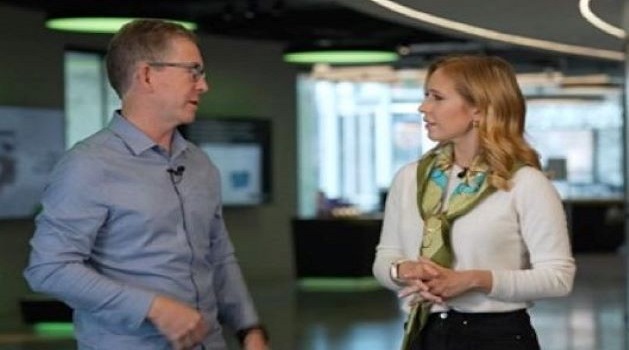
In a new episode of Decoded, CNN’s Anna Stewart explores the smart, connected devices that make up the Internet of Things (IoT). From ordinary household items to complicated industrial systems, smart devices are changing the way we live.

Stewart visits the Expo 2020 site in Dubai to see how smart cities are using IoT to enable more informed city planning. Helmut Von Struve, CEO of Siemens Middle East gives an example, “Artificial intelligence can say within 20 minutes, 30 minutes, there would be maybe 150 people walking in this direction. So, you can already start cooling the building down.”
IoT devices are also being used to combat climate change. In Boston, a connected forest is helping scientists study how much carbon dioxide trees take out of the atmosphere.
Jackie Hatala Matthes, Senior Scientist at the Harvard Forest describes the project, “With IoT, we’re able to get really high-resolution data, high temporal resolution data, and we’re able to look at those changes in real time, which helps to feed into other global models of climate change.” One of the trees even uses IoT to tweet the data and communicate in real time what the tree is experiencing.
In Shenzhen, known as the Silicon Valley of hardware, the programme meets German entrepreneur Florian Simmendinger who has developed a modern twist on a metronome.
He explains that although it’s possible to create smart devices for many tasks now, the best ones are those that fulfil a need, “If you find something meaningful that actually improves the product experience, then you know you have a real winner on your hands when it comes to an IoT product. There’s definitely a case in the IoT space of just because you can connect something doesn’t necessarily mean you should.”
At the Jebel Ali Port in Dubai, Stewart meets Ibrahim Al Najjar, Vice President IT, at DP World who demonstrates how a network of connected sensors, devices, and software all communicate to operate the smart port.
Stewart also meets the man who created the term ‘Internet of Things’. In the late 1990s, Kevin Ashton was searching for a name for his presentation on supply chain logistics, “At that time the internet was such a big buzzword.
“I needed to shoehorn the word internet in to like get any attention at all. and here we are now. Still talking about it. That’s the biggest surprise.”
Ashton describes what makes a good IoT device, “The thing that I look for to make it the Internet of Things is it knows something about the world without a human being telling it. I don’t really think about these voice assistants people have in their kitchen where you say you know, Alexa, add this to my shopping list. Well, in my world, Alexa would know that you needed to add it to the shopping list, it wouldn’t need you to tell it.”
The idea that everything we touch, every we move we make, can be monitored and uploaded to the cloud may seem convenient and efficient, but for some it raises concerns about regulation and trust. Stewart speaks to professional hacker Ken Munro, CEO of Pen Test Partners.
He demonstrates how easy it is to hack IoT devices like a children’s doll with speech recognition and warns, “As we know, legislation often trails innovation. So I think it’s really important that we bring in some regulation to help manufacturers prioritise cybersecurity and also help protect us consumers from manufacturers who may be a bit fast and loose with security.”
The show also meets the man behind the first smart device – a Coca Cola vending machine, and visits an Amazon factory using IoT devices to be faster and more efficient.


Lebara Nigeria has announced the launch of Lebara Play, described as Africa’s first telecoms-owned micro-drama platform aimed at expanding opportunities for African storytellers and distributing local content to global audiences.

The company said the platform is designed to support creators by providing a new distribution channel for African narratives while making content accessible to both subscribers and non-subscribers worldwide.
Lebara Nigeria added that the platform will debut with an original production titled Imported Bahu, produced by Forever 7 and starring Osas Ighodaro.
The project is directed by Hamisha Daryani Ahuja, known for her work on Namaste Wahala, and is positioned as the first in a series of original content offerings.
According to the company, Lebara Play is built to serve both creators and audiences, with a focus on showcasing African stories to a global market and strengthening the continent’s growing digital entertainment ecosystem.
Speaking on the company’s vision at the launch, Teniola Stuffman, chief executive officer, Lebara Nigeria, said the organisation was focused on building a telecommunications ecosystem that combined innovation, connectivity, and customer-centric digital experiences.
Stuffman said, “This platform represents an important step in our vision of building a telecommunications brand that delivers more than connectivity. We are creating an ecosystem where technology, innovation, and entertainment come together to provide meaningful experiences for customers while unlocking new opportunities for creative talent and content development across Africa.”
Beyond entertainment, she said, industry stakeholders believed the initiative demonstrated how global telecommunications expertise could be adapted to local market realities.
“Drawing from decades of experience across multiple international markets, Lebara is expected to introduce additional innovative services aimed at enhancing convenience, engagement, and value for Nigerian consumers,” she said.
Stuffman added that the company’s strategy reflected growing recognition that today’s telecom customers demanded more than network access, pointing out that consumers increasingly seek brands that offer seamless digital experiences, personalised services, and access to content that enriches everyday life.
Stuffman stated that LebaraPlay also aligned with the company’s commitment to supporting Africa’s creative economy by creating new distribution channels for content creators, producers, and digital storytellers.
“Through a combination of original productions and strategic partnerships, the platform seeks to create opportunities for talent while delivering quality entertainment to audiences,” she said.
Hamisha Daryani, founder of Forever7 Entertainment, expressed excitement over the partnership with Lebara Nigeria and the premiere of her latest micro-drama series on the LebaraPlay platform.
She stated that Lebara’s customer-centric vision aligns closely with the values of Forever7 Entertainment, making the collaboration a natural fit for both organisations.
Daryani revealed that the new microdrama featured a star-studded cast drawn from both Bollywood and Nollywood, in a compelling romantic story designed specifically for mobile audiences.
According to her, the production is developed with mobile-first consumers in mind, delivering premium entertainment in short, engaging formats at an affordable cost.
“Microdrama, which typically consists of short episodes of about three minutes, is redefining how audiences consume entertainment. It offers a convenient, immersive, and affordable viewing experience for people who increasingly access content through their mobile devices,” she said.
She added that the platform was created to support seamless creative expression while providing new opportunities for content creators across the continent.
Daryani further explained that the microdrama format has already achieved significant success in Asia and the Americas and is now gaining traction across Africa.
She said the initiative would create opportunities for emerging creatives through knowledge sharing, skills development, content curation, and industry collaboration, with the Nigerian rollout of the featured series expected to commence in July.
Broadcasting
CANAL+ Partners Samsung to Pre-Load DStv Stream on New Samsung TVs In Nigeria, Other African Countries
Following an expanded partnership between CANAL+ and Samsung Electronics, the DStv Stream app will now be pre-installed on new Samsung Smart TVs sold in Nigeria and 17 other African countries.

The agreement covers English and Portuguese-speaking African markets, including Nigeria, Kenya, Angola, Tanzania, Uganda, Zambia, Zimbabwe and South Africa. It marks the first pre-installation rollout of a MultiChoice Group streaming application on Samsung Smart TVs.
The development comes after the completion of the combination between CANAL+ and MultiChoice Group. It also extends an existing relationship between both companies that already spans 40 markets across Europe, French-speaking Africa, and Asia.
Through the integration, Samsung customers can now access DStv Stream directly from the television home screen. The app provides access to premium sports and entertainment content, including coverage of the FIFA World Cup 2026, English Premier League football, domestic and international rugby, and local and international television programming.
With the introduction of this connected television which kicked off on June 1, televisions can now connect to the internet, allowing users to stream content directly without requiring a separate decoder or satellite dish. The pre-installation of the app removes the need for users to search for and download it themselves, reducing friction and improving content discoverability.
The rollout is one of the first major distribution initiatives following the integration of CANAL+ and MultiChoice. The combined group has identified streaming growth and enhanced digital distribution as key priorities across Africa, where connected television adoption continues to increase.
David Mignot, CEO of CANAL+ Africa and CEO of MultiChoice Group, affirmed, “We are delighted to extend our longstanding partnership with Samsung across new English and Portuguese-speaking African countries. It marks a significant milestone in the synergies created by the combination of CANAL+ and MultiChoice Group.
“Mignot added, “As viewing habits continue to evolve rapidly across the continent, strengthening the accessibility and discoverability of our content offer on connected devices is key. By expanding the availability of our applications on Samsung Smart TVs across key African markets, we are making it even easier for millions of MultiChoice Group’s subscribers to seamlessly access the content that define the uniqueness of the CANAL+ and MultiChoice Group experience.”
This extended partnership is expected to strengthen Samsung’s position as a key distribution partner for streaming services globally while providing CANAL+ and MultiChoice with a broader route to market as competition intensifies among international and regional streaming platforms across Africa.

The Court of Appeal in Abuja has dismissed an appeal filed by the National Broadcasting Commission (NBC) challenging a Federal High Court judgment that restrained the commission from imposing fines on broadcast stations.

Delivering judgment, Justice Jane Esienanwan Inyang held that the appeal was fundamentally defective and therefore incompetent.
The appeal stemmed from a Jan. 17, 2024 judgment delivered by Justice Rita Ofili-Ajumogobia of the Federal High Court, Abuja, which barred the NBC from enforcing N5 million fines imposed on several broadcast stations in 2022.
The sanctions had been issued over allegations that the stations aired documentaries on banditry and insecurity considered by the commission to be capable of undermining national security.
The affected broadcasters included Multichoice Nigeria Limited, owners of DStv, TelCom Satellite Limited, Trust TV Network Limited and NTA StarTimes Limited.
The suit was instituted by Media Rights Agenda (MRA), which challenged the legality of the fines imposed by the commission.
In her ruling, Justice Inyang pointed to a discrepancy in the appeal documents, noting that the respondent before the Federal High Court was listed as the “National Broadcasting Commission,” while the notice of appeal identified the appellant as the “Nigerian Broadcasting Commission.”
According to the court, the inconsistency was substantial enough to deprive it of the jurisdiction required to entertain the appeal.
“The notice of appeal is the foundation of an appeal and a condition precedent to the exercise of appellate jurisdiction by this court,” the judge held.
Consequently, the appeal was struck out without consideration of the substantive issues raised by the commission.
The ruling represents another setback for the NBC in its efforts to defend its authority to sanction broadcast organisations through administrative fines.
In April 2026, the Court of Appeal similarly dismissed a separate appeal by the commission against another judgment that restricted its powers to impose fines on broadcasters.
Earlier, in May 2023, the Federal High Court in Abuja ruled that the NBC lacked the judicial authority to impose penalties on media organisations without recourse to the courts.
The controversy over the commission’s sanctioning powers dates back to March 2019 when the NBC imposed N500,000 fines on 45 broadcast stations for alleged violations of the Nigerian Broadcasting Code during the general elections.
At the time, the then Director-General of the commission, Is’haq Kawu, said the sanctions were imposed for ethical breaches and violations of broadcasting regulations.
Legal analysts say the latest judgment reinforces previous court decisions limiting the commission’s authority to impose fines on broadcasters without judicial intervention.

Privacy Crisis May Undermine Local Hosting of Data by Banks, Fintechs

AI-Powered Scams are Biggest Payment Fraud Threat -Visa Report

How to Build a Safer Cyberworld for People, Business, and Society

Nestlé Commits to Boosting West Africa Solar Rollout Through Partnership

Airtel Africa Foundation Launches Airtel Green Schools to Promote Sustainability Education in Nigeria

CBN Extends PoS Geo-Fencing Enforcement Deadline to August 2026

London Strengthens Global Investment Ties with Africa @ First Ever London-Africa Business Summit

FG Targets Alleged N3tn Capital Flight, Opens Airtime Credit Market to Nigerian Fintechs

Japan, UNESCO Boost Digital Learning in 15 CoEs with Donation of ICT Equipment

Mobile Internet Gender Gap Widest in Africa – GSMA




 E-Business2 days ago
Kaspersky Discovered a Malware Campaign Targeting Steam Users Through Infected Wallpaper

 Telecom2 days ago
Big Tech Shake-Up: Zuckerberg Announces Sudden WhatsApp Leadership Change

 General News2 days ago
Fiona Ahimie Launches LEADHER Mentorship Session to Inspire the Next Generation of Female Leaders

 Broadcasting2 days ago
CANAL+ Partners Samsung to Pre-Load DStv Stream on New Samsung TVs In Nigeria, Other African Countries

 News2 days ago
NESREA Defends Plastic Waste Rules, Says Policy Targets Pollution

 E-Financial2 days ago
FG Engages Banks on RevOp, New Digital Platform for Revenue Generation

 Telecom2 days ago
Irvine Partners CEO Rachel Irvine Sweeps Top Industry Honours in the UK and EMEA

 News2 days ago
Arridex Floats West Africa’s First Multi-tech 3D Industrial Omnifactory in Lagos