

News
Zinox to Invest $250M on Renewable Energy, Retrain Over 500 Nigerian Engineers Nationwide


Zinox Technologies Limited, one of Africa’s leading integrated technology group, has unveiled a plan to invest over $250,000,000 after years of research, test running of durable and cost efficient multifaceted renewable energy solutions for Africa particularly Nigeria, with leading renewable energy companies in China, UK, South Africa and Dubai as partners.

For 23 years, Zinox has pioneered innovative technologies and boasts of an enviable track record of efficient delivery of critical tech solutions in Nigeria and various African countries.
The iPOWER – Solar, Inverters and Batteries, a brand of global partnership, is now available in Nigeria with up to 25 years’ warranty. Zinox plans to deliver within 24 hours all orders for iPOWER PRODUCTS to major cities in Nigeria subject to stock availability.
Unveiling this at the just concluded annual strategic business retreat, attended by captains of tech and Power industries including the Chairman of Zinox Group, Leo Stan Ekeh, the Managing Director of Zinox Technologies Limited, Mrs Kelechi Eze-Okonta said that Zinox is the tech heartbeat of the continent and has proven that Africa has a level of Technology Independence with high quality tech related projects timely and successfully deployed across Africa.
‘’We have taken our time, with huge investments on research with distinguished global partners, to come to this point. We believe that what is worth doing, is worth doing well.
“We now have tested products that have warranties of up to 25 years. We also plan to launch our integrated Executive Mobile Energy solution for Professionals, SMES, PaaS for Telcos’ Rural Telephony Infrastructure and students on the 4th of September.’’
In her own words, we have worked with credible domestic partners to deploy renewable solutions in over 25,000 homes, schools and offices in the last seven years.
‘’We are now excited to hit the market with specific cost-efficient energy solutions that are budget friendly both for homes and businesses, no matter your size and scope, but most importantly, we will take responsibility no matter who you buy iPower – Inverters, Solar Panels and Batteries from.
“We are also starting to train over 500 Nigerian Engineers and certified technicians from 36 states plus Abuja who shall conduct standard power audit, installations and after sales support nationwide to offer our customer full value for money.’’
Continuing, Mrs Eze-Okonta disclosed that Zinox has quietly been test running different configurations of sustainable renewable energy products from Solar, Wind, and a bit of Biomass, with complimentary quality products such as batteries and Inverters engineered and internationally certified to be country and continent specific.
‘’We want to delete Nigeria as a dump site for all sorts of fake energy products which we really consider as unethical and unacceptable and save the scarce resources available in the country.
“We take responsibility for iTEC Solar, Inverters and Batteries locally as we are equipped for comprehensive aftersales support.’’
Zinox shall work closely with key stakeholders such as the Renewable Energy Association of Nigeria (REAN), and local developers to provide the necessary support to aid the improvement of the acute power supply crisis that threatens economic growth, where over 70 million Nigerians lack access to power, coupled with increasing electricity costs in Nigeria.
Renewable energy can help Nigeria not only meet its energy needs but also power sustainable economic growth and create jobs while achieving global climate and sustainable development objectives.
Contributing in same vein, Dr. Leo Stan Ekeh, managing director of Zinox Technologies Limited and the Chairman of the Zinox Group, disclosed that the sum of $250m has been secured specifically to expand access to competitive and climate-friendly electricity supplies for Nigeria Homes and Businesses.
He said that the project will help create new opportunities for improving the quality of life while providing additional support to developers, REAN, and other key stakeholders in the preparation of its priority projects.
Zinox, with her partnerships shall launch enterprise products and solutions that will power off grid solutions, estates, hospitality businesses, while continuing with the consumer products with its very successful iPower products for homes, small and medium organizations, he concluded.


News
NCC Retains Rudman as Chairman of the Newly Inaugurated IPv6 Council Board, Tasked Them to Advance Nigeria’s Digital Migration

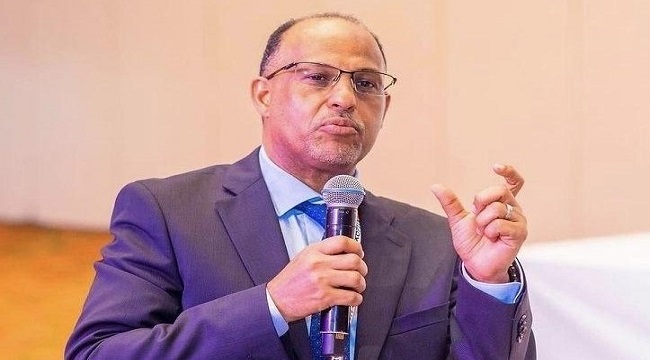
The Nigerian Communications Commission (NCC) has officially inaugurated the new board of the Nigerian Internet Protocol version 6 (IPv6) Council in Ikeja, Lagos. Mr. Muhammed Rudman, Chief Executive Officer of the Internet Exchange Point of Nigeria (IXPN), will continue to serve as Chairman.

This inauguration marks a significant milestone for Nigeria’s telecommunications sector, as global demand for IPv4 now exceeds the available IPv4 address space.
Following the event, Rudman acknowledged the contributions of former board members, including Olusola Teniola (former President, ATCON), Funke Opeke (Founder, MainOne), Mary Uduma (former President, NiRA), and Lanre Ajayi (past President, ATCON), emphasizing that their involvement was instrumental in establishing the nation’s foundational IPv6 migration efforts.
Rudman noted that membership in the IPv6 Council is institution-based. The reconstituted board includes Mr. Muhammed Rudman as Chairman and a representative from the NCC as Co-Chairman. Institutional representatives from NITDA, ATCON, NIRA, ALTON, ISPON, and NgREN serve as board members, with Dr. Chris Uwaje and Prof. Latif Ladid acting as Advisers. This group is responsible for leading the nationwide migration from IPv4 to IPv6.
“The transition to IPv6 is a strategic national priority. It is essential for enabling Nigeria’s digital transformation, economic growth, and global competitiveness. The council’s strategy identifies IPv6 as a primary catalyst for national development, focusing on three pillars: supporting emerging technologies such as 5G and the Internet of Things (IoT), promoting economic diversification, and providing enhanced security and performance compared to legacy solutions such as Network Address Translation (NAT),” Rudman stated.
To achieve these objectives, the council’s action plan is structured around two primary initiatives: awareness-raising and capacity-building. The board will prioritize promoting national awareness of IPv6 through targeted events and workshops, while also providing IPv6 training to network engineers across various operators, including ISPs, telecommunications companies, educational institutions, and financial organizations. These efforts are expected to facilitate the acquisition and deployment of IPv6 throughout Nigerian networks.
The council will develop and oversee the national IPv6 strategy, monitor adoption across sectors, and report regularly to the Federal Government. Additionally, the council will identify technical challenges, strengthen local engineering capacity, and recommend regulatory measures to encourage ISPs, telecommunications operators, academic institutions, and enterprises to upgrade.
With the Nigeria IPv6 Council now operational, local enterprises and network providers are required to upgrade their systems to sustain the nation’s position in the global digital landscape.

Pan-African talent accelerator ALX is expanding its footprint and shifting to a fully self-paced learning model to train and integrate young Africans into the workforce, as the global economy reorganises around artificial intelligence (AI).

Partnering with the MasterCard Foundation, the technology training provider and career accelerator designed to equip African talent, says it enables learners to access tech training for $5 a month.
It emphasises a shift in demographics saying that by 2035, more young Africans will enter the workforce annually.
ALX notes that its model has graduated 347,100 learners, with 63% finding employment within six months. Women represent over half of all graduates. To increase flexibility, the organisation emphasises that learning is now entirely self-paced.
“Learners progress through modular blocks, earning credentials as they go, ensuring that the training fits around their existing responsibilities,” says Shana-Michelle Rabonda, Chief Operating Officer of ALX.
Rabonda adds that global employers are taking notice: “We are building a direct pipeline to the global digital economy. When companies look for elite tech talent, they are looking at Africa.”
Due to this demand, firms such as Absa, Stanbic Bank, MTN, and KPMG now employ between 50 and 180 ALX graduates each. Meanwhile, community entrepreneurs have created over 60,100 jobs through AI startups like Signvrse and Edulga.
With Africa’s AI market projected to grow to $16.5 billion by 2030, ALX operates alongside competitors like Moringa School and GoMyCode to secure mindshare.
“With the right skills and networks, young Africans can seize these opportunities,” Rabonda emphasises. “Africa’s youth should not just be consumers of AI; they should be creators shaping innovations that will define the global economy.”
A Federal High Court sitting in Lagos has ordered the advertisement of a winding-up petition filed against telecommunications service provider, Swift Network Plc, over its alleged inability to settle a debt exceeding N115 million.

The order followed an application filed by Optics and Wireless Limited through its counsel, Bimbo Adebayo-Ogunlaja, urging the court to permit the publication of the winding-up petition instituted against the company.
In the petition, Optics and Wireless Limited alleged that Swift Network Plc is indebted to it in the sum of N115,482,302.88, being the outstanding payment for network devices supplied to the telecommunications firm since April 2024.
The petitioner is also seeking the payment of N70,530,062 as accrued interest arising from a loan facility allegedly obtained to finance the transaction between both parties, as well as general damages for breach of contract.
According to court documents, the dispute arose from a series of transactions carried out between April 2024 and February 2025, during which Swift Network Plc, through its procurement officer, allegedly requested the petitioner to manufacture and supply various network devices based on purchase orders issued by the company.
The petitioner stated that payment for the supplied items was expected either immediately after delivery or within 30 days of supply, but alleged that Swift Network repeatedly failed to honour the agreement despite receiving the products.
Optics and Wireless Limited further claimed that it became apparent after the final order for servers in April 2025 that the respondent was either unwilling or unable to settle the accumulated debt.
The petitioner also informed the court that its solicitors, Messrs Zionla Legal Practitioners & Solicitors, subsequently issued a statutory notice of demand dated December 11, 2025, demanding payment of the outstanding sum and accrued interest.
According to the petitioner, all efforts to recover the debt proved unsuccessful, adding that the situation has exposed the company to serious financial challenges and possible legal action from the bank that allegedly granted it the loan facility used to execute the supply contracts.
Optics and Wireless Limited argued that Swift Network Plc is insolvent and unable to meet its financial obligations, urging the court to wind up the company in line with the provisions of the Companies and Allied Matters Act and the Winding-Up Rules.
Among the reliefs sought, the petitioner asked the court to order that Swift Network Plc be wound up by the court and that any voluntary winding-up process involving the company should continue under the supervision of the court.
Justice Lewis Allagoa subsequently adjourned the matter till July 10 for further hearing.

NCC Retains Rudman as Chairman of the Newly Inaugurated IPv6 Council Board, Tasked Them to Advance Nigeria’s Digital Migration

CBN Extends PoS Geo-Fencing Enforcement Deadline to August 2026

Nigerian Capital Market to Transition to T+1 Settlement Cycle on Monday

Report Shows Start-ups Fuel Innovations in Africa

NCC Expands IPv6 Board with the Appointment of Olusola Teniola, Funke Opeke Others

MTN, VDT, Zoracom, Digital Realty Back 2026 Girls in ICT Campaign

Vitel Wireless Partners Fintechs to Expand Access to Services

CPN Begins Crackdown on Quack IT Professionals, Vows Tougher Action against Cybercrime

Nigeria Hit by 24.1m Data Breaches – Surfshark

Kaspersky Identifies Ongoing Supply Chain Attack on Official Daemon Tools Website Distributing Backdoor Malware




 Telecom3 days ago
Telcos Mull Calculator to Address Data Depletion Complaints

 E-Business3 days ago
Anthropic Raises $65 Bn to Expand AI Research, Innovation

 General News3 days ago
NCDC Says Lagos, FCT, Others on High Ebola Alert
 E-Financial2 days ago
Nigerian Capital Market to Transition to T+1 Settlement Cycle on Monday
 Telecom2 days ago
NCC Expands IPv6 Board with the Appointment of Olusola Teniola, Funke Opeke Others
 E-Business2 days ago
Report Shows Start-ups Fuel Innovations in Africa

 E-Business2 days ago
NDPC Raises Alarm: Fake News, Data Abuse Could Destroy Nigeria’s 2027 Elections

 Telecom2 days ago
QNET, Manchester City Host Football Clinic for Young Talents in Ghana