

Telecom
NASENI Empowers 200 Imo Youths On Electrical Installation, Maintenance

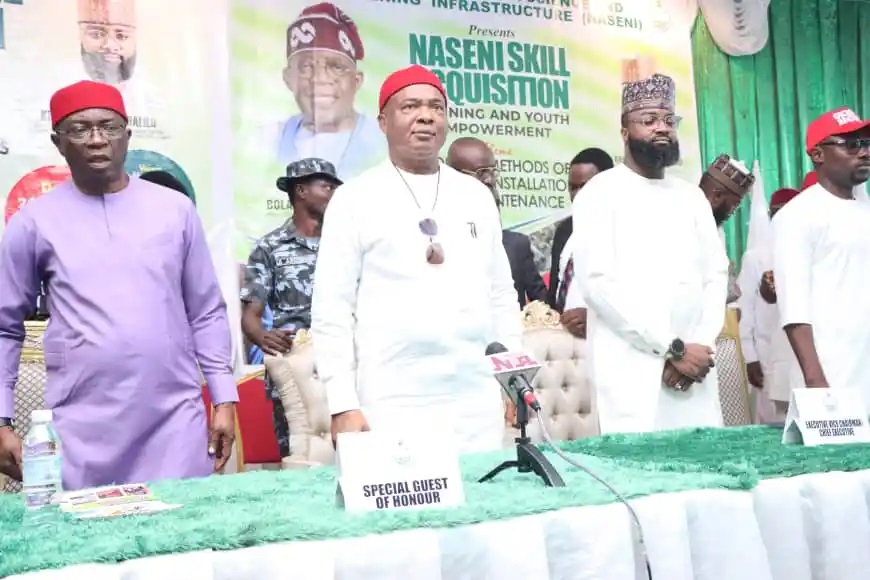
Mr. Khalil Suleiman Halilu, executive vice chairman/chief executive officer of the National Agency for Science and Engineering Infrastructure (NASENI) has applauded President Bola Ahmed Tinubu’s focus on job creation and employment generation in the Renewed Hope Agenda, even as NASENI, at the weekend, empowered 200 Imo State youths in modern Electrical Installations and Maintenance.

Mr Halilu said that the Renewed Hope Agenda of the Federal Government has inspired NASENI to embark on training of 200 young individuals from Imo State who benefited from the five-day comprehensive training in the special vocation of electrical installation and maintenance, which began on Monday and was concluded on Saturday 28th October, 2023.
Speaking during the closing ceremony of the NASENI Skill Acquisition Training & Youth Empowerment programme, held at the Rockview Hotel located at Okigwe, Owerri, Imo State, the EVC/CEO said NASENI took the participants through access to capacity enhancement modules in modern electrical installation and maintenance and advanced training tools like multimeter testers and cordless drilling machines, aimed at equipping them with necessary skills and knowledge to undertake electrical installation and maintenance with enhanced proficiency.
According to Halilu “in the 21st century, the significance and value of technical and vocational skills cannot be overemphasised, especially in a developing country like ours. The economic opportunities are limitless, for those who realize the value and commit themselves to learning and re-learning”
Halilu said further “More so President Bola Ahmed Tinubu government’s focus on job creation and youth development aligns perfectly with the goals of NASENI and the program. As a federal agency, he explained, NASENI remains steadfast in its commitment to realising the renewed hope agenda and opportunity for the people”.
He recalled President Bola Ahmed Tinubu’s 8-point Renewed Hope Agenda which identifies crucial sectors for economic development: Food Security, Poverty Alleviation, Economic Growth & Job Creation, Access to Capital & Consumer Credit, Inclusivity, Improved Security, a Fair Playing Field & Rule of Law, and Fighting Corruption.
The EVC/CEO expressed NASENI’s gratitude to President Tinubu for creating enabling agency to organise the training and capacity building program for the youths in Imo State.
He said it is through the President’s vision and dedication that NASENI, established in 1992, continues to drive the development of science, technology, engineering and innovation in Nigeria.
The Executive Governor of Imo State, Senator Hope Uzodinma whose State’s citizens benefited from the NASENI 5-Day training programme joined in praising the President for focusing on critical issues of job creation and youths’ empowerment especially at this time when the nation is going through a difficult economic phase.
He said “youth empowerment and giving fresh skills to citizens to cope with new trends in service delivery into their various vocations is the only measure to keep them in their jobs and make them relevant”.
The Governor said he was grateful to President Tinubu and the EVC/CEO of NASENI for considering Imo State’s citizens in the implementation of the Skill Acquisition Training and Empowerment Programme.
He said he felt fulfilled each time he was able to put smiles on the faces of the youths in the State because they are the future of the State.
He said he believed that this initiative by NASENI has the potential not only to empower the youths but to create wealth and to chat a viable economic future for the participating youths.
Imo State, he said, was the only place where NASENI has empowered about 200 youths. For other States, he said usually 100 participants were selected.
Governor Uzodinma said he was impressed that such an empowerment opportunity came during his administration of the State and under the watch of a new administration of President Tinubu.
According to him, the empowerment of youths is a priority agenda of the State, especially in innovation and digital skills to make the citizens self-reliant.
The Governor announced a cash donation of N100,000 to each of the participant, in addition to the N20,000 for transportation which was given to them by NASENI, as start off fund as they move into practicing of modern Electrical Installation and Maintenance.
The NASENI boss used the opportunity of the closing ceremony to hand over to 300 vulnerable women in the State the NASENI Save 80 Efficient Cook Stove.
On this gesture, again, the governor expressed his heartfelt appreciation to NASENI and the federal government for remembering the poor and the vulnerable women in Imo State.
On his part, Mr. Halilu appreciated the Governor for his commitment to improving the lives of the people of Imo State, and for his invaluable support for the NASENI initiative.
He said the Governor’s dedication has been instrumental in making this program a resounding success.
The 200 trainees were carefully selected from those already working in the field of Electrical Installation and Maintenance. Having completed their training, they were handed a complete set of electrical tools.
The new tools will enable them apply their newly-acquired knowledge to install electrical systems in buildings and vehicles, and to identify, rectify and mitigate electrical faults.
The EVC/CEO charged beneficiaries, to put this new expertise to diligent use. He admonished them “now that you have acquired these new skills, they belong to you, and only you can decide whether you will use them productively or not.
What is clear is that you now have in your hands the power to create economic opportunities for yourselves, and even for others. As you grow and expand in your line of work, you will be able to train, mentor and hire other people, and extend the circle of prosperity and fulfilment” he said.
“For us at NASENI, we will continue to operate in full alignment with President Bola Ahmed Tinubu’s vision for new investments, jobs, skills, exports, and industrialisation.
“We will support him to transform Nigeria into a global hub for digital and technological innovation, powered by a competent and capable workforce,” he added.



Banks and telecommunications operators in Nigeria have ended a four-year dispute over nearly N300bn owed for Unstructured Supplementary Service Data services (USSD), with the debt now fully cleared, according to Association of Licensed Telecommunications Operators of Nigeria (ALTON).

Gbenga Adebayo, chairman, announced the resolution on Thursday during an official visit to Idris Olorunnimbe, chairman, Nigerian Communications Commission (NCC).
He credited the intervention of the NCC, led by Dr Aminu Maida, executive vice chairman of the commission, with bringing the long-standing dispute to a close.
“When Dr Maida assumed office, he inherited significant industry challenges,” Adebayo said.
“One of the most difficult was the USSD debt crisis, a debt burden that grew over four years to nearly N300bn. It had become a systemic risk to our sector and the digital financial ecosystem.
Through firm leadership, structured engagement, and decisive coordination, Dr Maida and his team resolved this issue.
Today, there is no outstanding USSD debt. The ecosystem has fully migrated to end-user billing. What was once a looming crisis has been converted into a sustainable framework.”
The clearing of the debt ends years of accusations and counter-accusations between banks and telecom operators, which had threatened the stability of digital financial services in the country.
Adebayo praised the NCC’s leadership for steering the telecom sector through one of its most delicate periods, noting other interventions, including last year’s approval of a 50 per cent USSD tariff.
He described the resolution of the debt crisis as a milestone for the telecom and digital finance ecosystem, ensuring sustainability and predictability for operators and service providers.
Nigeria’s telco and bank billing for USSD services transitioned to the end-user billing model in mid-2025, moving charges from bank accounts to customers’ mobile airtime, which is deducted directly by telecom operators.
This shift resolved the long-standing dispute in which banks owed operators up to N300bn in unpaid USSD fees.
The transition arose from years of tension between telecom operators, including MTN and Airtel, and banks over USSD revenue sharing, with debts peaking at N250–300bn by 2024.
The NCC, in collaboration with the Central Bank of Nigeria, developed the EUB framework to standardise billing, enhance transparency, and support financial inclusion for unbanked users who rely heavily on USSD codes.
Under the EUB system, charges are now deducted directly from mobile airtime at N6.98 per session lasting up to 120 seconds, with user consent prompts issued before each deduction. Banks no longer bill for USSD services; telcos handle them exclusively, with regulatory safeguards preventing double-billing. Users can opt in or out of the service, and banks are required to notify customers in advance of any USSD session charges.
Migration to the EUB model began between June 3 and 18, 2025, following partial debt repayments amounting to N171bn. By February 19, 2026, banks had fully cleared the remaining debt, solidifying the EUB rollout.
The model improves user control through immediate airtime deductions and session notifications, similar to voice and SMS billing. While some critics have expressed concern over potential burdens on low-income users, the transition strengthens telecom revenue sustainability and contributes to the stability of Nigeria’s digital financial ecosystem.
Credit: Punch

Federal Airports Authority of Nigeria (FAAN) and MTN Nigeria have launched free, high-speed WiFi services for passengers at the international wing of the Murtala Muhammed Airport in Lagos and the Nnamdi Azikiwe International Airport in Abuja.

The partnership, both bodies explained, will be followed up with similar development taking place at the airports in Kano, Port Harcourt and Enugu within the next few months.
Mrs Olubunmi Kuku, managing director of FAAN, officially unveiled the internet service at MMIA Terminal two.
Kuku, who was represented by Capt. Abdullahi Mahmood, director of Airport Operations, described the initiative as a major milestone partnership for the aviation ecosystem.
The FAAN boss said the milestone marked a new benchmark in digital infrastructure and passenger experience across Nigerian airports.
According to her, the free WiFi service will be extended to the MMIA Temporary Terminal within weeks, before extension to Enugu, Port Harcourt, and Kano international airports over the next three months.
“In 21st century Nigeria, no Nigerian airport should be an offline island.
“This collaboration with MTN Nigeria demonstrates how effective Public-Private Partnership (PPP) alignment can modernise infrastructure and strengthen the country’s digital economy,” she said.
Kuku assured travellers that FAAN was committed to closing service gaps and enhancing operational efficiency across airports nationwide.
“This WiFi is our promise that FAAN is listening. We have turned on the signal today, but the signal we are truly sending is this: Nigerian aviation is writing a new chapter; one of innovation, partnership, and unwavering commitment to excellence,” she said.
Kuku said the project was a key component of the digital economy agenda led by President Bola Tinubu and the transformative vision of Mr Festus Keyamo, minister of Aviation.
She commended MTN Nigeria for its technical expertise and investment in the project, describing the partnership as purpose-driven and transformative.
On his part, Mr Karl Toriola, chief executive officer of MTN Nigeria, who was represented by Lynda Saint-Nwafor, chief enterprise business officer, assured passengers that the service would be reliable, secure and efficient.
“We are proud to announce the launch of a free WiFi service across major airports in Nigeria in partnership with FAAN.
“This initiative reflects a shared commitment to improving passenger experience and enhancing digital accessibility,” Toriola said.
He noted that airports served as critical gateways for business travellers, tourists, airport personnel and service providers, all of whom required seamless connectivity.
“With this service, travellers waiting to board, in transit, or upon arrival can now stay connected freely and effortlessly,” he added.
MTN Nigeria also announced plans to activate on-ground engagement campaigns at the Lagos and Abuja airports over the next month to drive awareness and encourage usage.
According to the telecom giant, the project reinforces its commitment to national infrastructure development and expanding digital access in public spaces.

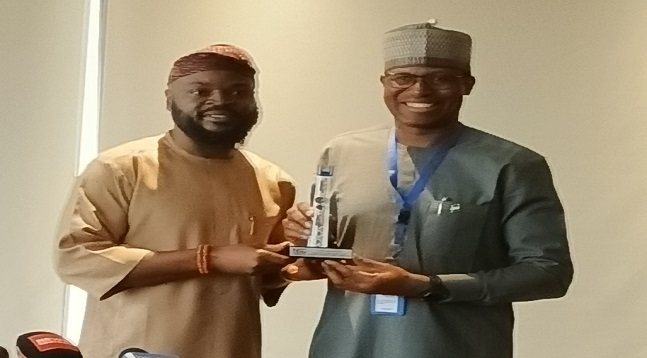
Nigerian Communications Commission (NCC) is considering imposing sanction on any road contractor that destroys telecommunications metro fibre across the country.

Idris Olorunnimbe, chairman, Board of Commissioners, NCC, stated this at congratulatory visit to the Chairman by members of Association of Licensed Telecommunications Operators of Nigeria (ALTON) in Lagos yesterday.
According to him, “I think what we need to do to address the damage of metro fibre by government contractors is simply. He who cuts It must fix it, and we’ll take this message to our state governments.
If any contractor knows that if they damage that critical national infrastructure, their work is going to stop and they are going to be the ones to fix it, they will not destroy it.
Responding, Engr. Gbenga Adebayo, chairman, Association of Licensed Telecommunications Operators of Nigeria (ALTON), said up until now, there are no consequences for those infractions, and if there are no consequences, the tendency to continue to do bad is very high.
“Contractors of government carrying out roadworks, whether road maintenance or road expansion, and their machines destroy communications super highway at will, if there are consequences, or if there were consequences some of those actions will not have escalated to the level that we are in.
“What the chairman has said today is very important, if you destroy it you fix it. What we are expecting now is that the consequence of managing those problems will be a lot more, and there will be legal deterrent for people from destroying operators’ fibre. I must emphasize the communication super highway. That’s the highway by which all the signals are carried.
“When this highway is broken, it’s like you have a major bridge that’s broken. You can’t reach east, neither can you reach west. And until we take it as the major super communications highway and so protective, we will continue to be where we are.
“That’s actually what it is. When this highway is broken, we are all affected. So, it’s no longer an infrastructure that is for operators, but it belongs to all of us. If I don’t have service on my phone, some of these are the consequence of this violation that we are seeing.
Earlier in his welcome address, Engr. Adebayo highlighted some of the key challenges in the sector which includes: Daily fibre cuts — often caused by federal and state road construction contractors — are creating enormous economic losses.
- Nationwide service disruptions
- Destruction of critical digital infrastructure
- Loss of assets without compensation
- Banking, education, and security interruptions
There is currently insufficient institutional recourse for operators when these damages occur. A structured pre-construction fibre mapping and mandatory coordination framework is urgently required.
Key Regulatory Priorities for Sector Stability
- Independence of the Regulator
He said regulatory independence ensures:
- Credible oversight
- Investor confidence
- Transparent decision-making
- Long-term sector stability
Independence must not only exist in law — it must be visible in practice.
“We recommend: Legislative reinforcement explicitly affirming NCC independence
- Clear codification of interaction boundaries between the regulator and supervising authorities
- Operational safeguards insulating regulatory processes from undue influence
Multiple Regulation
Overlapping regulatory interventions by various MDAs on matters already within NCC jurisdiction create:
- Duplicative investigations
- Conflicting directives
- Increased compliance costs
- Regulatory uncertainty
“We recommend structured inter-agency coordination frameworks and legislative clarification reaffirming NCC’s exclusive jurisdiction over telecommunications matters.
Multiple Taxation
Adebayo stated that operators continue to face excessive sub-national taxes and levies.
Enforcement tactics such as site shutdowns directly affect Quality of Service and national connectivity.
A harmonized national telecom taxation framework is essential for broadband expansion and digital inclusion.

ACAMB Educates Content Creator to Curb Misinformation on Bank Recapitalisation

Banks, Telcos Settle Four-Year Dispute over N300Bn USSD Debt

NITDA Warns Nigerians of Actively Exploited Microsoft Office Vulnerability

INTERPOL Arrests 651, Recovers $4.3m from Cybercrime in Nigeria, Others

NDPC Investigates over 1,000 Schools over Data Privacy Compliance
Nigeria’s 9 Top FinTech Firms Valued at $10.6Bn in January 2026

DG NCC Tasks University Dons on Research Commercialization, IP Management to Build Global Competitive Ecosystems

Firm Detected a Fivefold Surge in QR Code Phishing Attacks in the Second Half of 2025

Kaspersky Launches OT Calculator to Align Cybersecurity Investments with Business Goals

Firm Detected a Scam Exploiting OpenAI’s Teamwork Features




 Telecom3 days ago
Terra Moves to Expand in African Drone Sector, Secures $22m Funding

 Telecom3 days ago
Temu Assures Compliance Amid Nigeria Data Privacy Probe

 E-Financial3 days ago
DMO Offers ₦800bn FGN Bonds in February Auction Surge

 E-Financial3 days ago
Danjuma, Taj Bank Staff Jailed for 5 Years over N22m Fraud

 E-Financial3 days ago
KPMG Outlook Reveals Financial Services CEOs Double down on AI, Resilience and Growth in 2026

 E-Financial2 days ago
Ecobank Nigeria Fully Repays $300m Eurobond Notes

 News3 days ago
Chianugo, Nigerian $150m suit Against Google, GoDaddy.com Stalled due Judge’s Absence

 General News3 days ago
FG to Review MTN’s $6.2Bn IHS Acquisition — Tijani