

Telecom
Robust FinTech Critical for Deepening Financial Inclusion in Nigeria – Maida

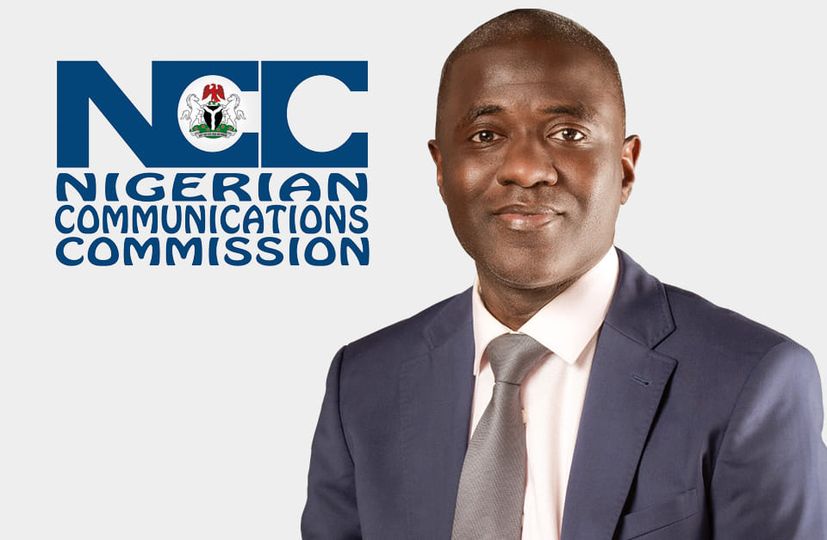
Dr. Aminu Maida, Executive Vice Chairman and Chief Executive officer (EVC/CEO) of the Nigeria Communications Commission (NCC), has described the Financial Technology (FinTech) industry as a critical driver of financial inclusion of Nigerian citizens living in the underserved and unserved communities across the country.

Dr. Maida made this known in his keynote address at the 2023 edition of the annual Nigeria Information Technology Reporters Association (NITRA) FinTech Forum which focused on, “Harnessing Nigeria’s Fintech Potential: Challenges and Opportunities” and took place in Lagos recently.
The EVC, who was represented at the event by the Controller of NCC Lagos Zonal Office, Mr Henry Ojiokpota, stated that the theme of the forum was suitable at this time for a discourse about the financial industry given the significant rise in digital financial services across the nation.
The EVC said Fintech is revolutionizing Nigeria’s financial ecosystem as it represents a positive disruption to the conventional financial system. Maida stated that financial technology’s emergence to leverage technology to enhance financial services such as mobile banking, borrowing, investment, and cryptocurrency, comes as an enhancer and enabler of business and other opportunities in the sphere of innovation, job creation and investment that further stimulates economic growth.
The EVC stated that fintech applications such as robo-advisors, payment apps, peer-to-peer (P2P) lending apps, investment apps, and crypto apps, among others, create business opportunities for individuals. He also stated that the adoption of these Fintech applications for socioeconomic gains by the youth, who account for 70 per cent of Nigeria’s population, will add value to the economy.
Maida recalled recent industry statistics citing active subscriptions across mobile networks in Nigeria, which hit 220.7 million in August 2023, to demonstrate that the Nigerian Fintech ecosystem can offer an array of financial services to telecom subscribers.
He said the Commission will continue to expand and enhance telecommunications infrastructure to enable robust Fintech services, and address consumer concerns, and regulatory challenges in the sector because the optimal utilization of digital technologies will enhance the provision of financial services to rural communities and underserved segments of the population through leveraging of high mobile phone penetration in Nigeria.
“Therefore, Fintech has the potential to deepen the existing payment and financial system infrastructure to reach unserved and underserved areas and further stimulate economic growth”, Maida said.
He said the Commission has begun implementing new strategies to meet the new target of 70 per cent Broadband penetration by the year 2025 as contained in the Nigerian National Broadband Plan 2020-2025 and the blueprint released by the Honourable Minister for accelerating the growth of the digital economy sector through technology.
The EVC said these policies and strategies have huge implications for enhancing derivable benefits of the Fintech industry as well as significantly and positively impacting Nigeria’s goals on financial inclusion and the digital economy at large.
The NCC boss promised that the Commission will continue to support the Fintech industry in harnessing its enormous potential and will not rest on its oars in its strides to address the challenges in the sector, including improving the provision of secured infrastructure that support the delivery of digital financial services in efficient ways. He also reiterated the Commission’s focus on maintaining minimum standards in Quality of Service (QOS) to ensure uninterrupted connectivity to enhance sectoral contribution to the economy.
The EVC stated that the Commission, in support of its vision in this sphere, has implemented a Memorandum of Understanding with CBN on boosting payment systems and financial inclusion, which is in line with the Nigeria Payments System Vision 2025. He also informed that NCC will continue to play an important role in harnessing the potential of Fintech through maximum support for Fintech policies, enforcing regulations, and strengthening collaborations with relevant authorities.



Digital solutions company, Globacom, has optimized its “Borrow Me Credit” service, reinforcing its commitment to ensuring that subscribers remain connected even when they have insufficient or low airtime balance.

In a statement issued in Lagos, the company disclosed that it has simplified the eligibility requirements for the service, enabling millions of active prepaid subscribers nationwide to access instant airtime and data when needed.
Globacom explained that although the service attracts a charge, its primary objective is to provide timely support to customers whenever they run low on credit.
The enhanced “Borrow Me Credit” platform now offers additional features, including “Borrow Special Data” and the option to “Borrow Airtime/Data for Others.” These innovations allow subscribers to support friends and family members who may be unable to recharge immediately, thereby strengthening connectivity and fostering a stronger sense of community among Glo users.
According to the company, the service ensures that subscribers remain connected in critical situations, whether for urgent business communications, late-night academic research, or keeping in touch with loved ones during emergencies.
Globacom noted that the service accommodates diverse customer needs, with airtime and data packages ranging from as little as N25 to as much as N4,000, offering flexible options to suit different usage patterns.
It further stated that borrowing limits are determined by a customer’s usage profile and level of engagement on the network, with more active subscribers qualifying for higher credit and data limits.
By maintaining regular activity on the network, prepaid customers can access different borrowing tiers, from basic emergency airtime to larger data packages. This structure ensures the sustainability of the service while rewarding frequent users with borrowing limits that align with their digital needs and lifestyle.
Globacom encouraged all eligible prepaid subscribers to take advantage of the service by dialing *303# and selecting their preferred airtime or data option. Customers can also obtain additional information on eligibility requirements and applicable service charges by visiting the official Globacom website.

Sub-Saharan Africa is projected to become one of the world’s fastest-growing 5G markets, with subscriptions expected to reach 370 million by 2031, according to the latest Ericsson Mobility Report.

The report says the rapid expansion, driven by the phase-out of legacy networks, will help provide the connectivity foundation needed to support the continent’s emerging AI economy.
Global 5G mobile subscriptions surpassed three billion during the first quarter of 2026. In Sub-Saharan Africa, the transition from legacy networks to advanced connectivity is accelerating.
“The acceleration of 4G and 5G is a defining opportunity for Africa to leapfrog into the AI era. By transitioning away from legacy networks, we are building the foundation for a vibrant, inclusive digital economy,” said Majda Lahlou Kassi, vice president and head of Ericsson West and Southern Africa.
“With the right collaborative investments in spectrum and policy frameworks, Africa is positioned to fully participate in and benefit from the AI boom.”
The report also notes that LTE (4G) subscriptions are forecast to grow from 490 million in 2025 to 610 million by 2031, accounting for 46% of all subscriptions.
Meanwhile, 5G is expected to account for 28% of all mobile subscriptions by the end of 2031.
While Sub-Saharan Africa remains behind more mature markets in 5G adoption, the region is expected to record one of the fastest growth rates globally over the next five years as operators expand coverage and retire older networks.
Markets such as South Africa, Nigeria, Kenya and Ethiopia are expected to account for a significant share of new 5G connections, driven by growing smartphone adoption, network investment and increasing demand for high-speed mobile broadband.
The growth trend is also reflected in the total amount of mobile data used each month in the region is expected to increase significantly—from 2.8 exabytes per month in 2025 to 9.7 exabytes per month by 2031.
An exabyte is a very large unit of digital information equivalent to one billion gigabytes and this forecast indicates rapid growth in mobile data consumption over the coming years
Despite the positive outlook, the GSMA warns that Africa’s smartphone market remains divided between rapid growth and persistent digital exclusion.
While nearly 82% of individuals own a mobile phone, only about 40% own a smartphone. High device costs relative to income, limited network infrastructure in rural areas and low levels of digital literacy continue to restrict mobile internet adoption.
Ericsson said service providers are increasingly prioritising fixed wireless access (FWA) as part of their connectivity strategies.
“FWA is emerging as a key focus area for connecting consumers and enterprises, presenting significant long-term potential to address the region’s demand for reliable broadband.”

By Kehinde Ogundare, Country Head, Zoho Nigeria
Ask a tech entrepreneur in San Francisco what AI means for their business, and they are likely to talk about competitive advantage, product differentiation, and scale. Ask a small business owner in Kano or Onitsha the same question, and the conversation shifts entirely.

Kehinde Ogundare, Country Head, Zoho Nigeria
For many Nigerian SMEs, the priority is keeping the lights on, managing costs, and finding sustainable ways to grow in a challenging economic environment. This difference in perspective explains why the global AI conversation, often shaped by assumptions about stable infrastructure, deep capital, and abundant technical talent, frequently fails to address the realities facing Nigerian SMEs.
This matters because Nigerian SMEs are not a peripheral concern. In 2024 alone, MSMEs contributed 46.32% to Nigeria’s GDP, accounting for 96.9% of businesses and 87.9% of employment. These businesses are the backbone of the Nigerian economy, and if AI is going to mean anything for Nigeria’s development, it has to work for them in the daily conditions they actually operate in.
However, research drawing on empirical data from 144 Nigerian SMEs found that inadequate infrastructure, low digital literacy, skills shortages, and regulatory gaps are collectively preventing them from meaningfully engaging with AI. Awareness of AI is high and growing. What is missing is a clear and honest conversation about what adoption actually requires in this specific context. The barriers are real, but none of them are insurmountable. The question is whether the tools, pricing models, and support structures being offered to Nigerian SMEs are designed with those barriers in mind, or whether they have been built for another market entirely.
Subscription models making AI affordable for small businesses
When most small business owners hear “AI,” they imagine expensive software, specialist consultants, and a hefty upfront bill.
That assumption is not entirely wrong, but it describes a particular way of buying technology, not AI itself. The shift that makes AI genuinely accessible at the SME level is the move away from large, one-time capital purchases towards tools that charge a predictable monthly subscription. Businesses can pay for what they use, scale back when necessary, and avoid the debt that a major technology investment can create.
The deeper opportunity here is consolidation. Many SMEs are already spending money across multiple disconnected tools—one for invoicing, another for customer records, another for stock tracking—none of which talk to each other. An integrated platform that handles several of these functions together, with AI built in, can actually cost less than the sum of those separate subscriptions while giving business owners a clearer picture of their operations.
With margins already under pressure, any technology a business adopts needs to, visibly, show increase in productivity or bottom line. Subscription-based, integrated platforms, priced transparently and honestly, are the model that best fits this reality.
Infrastructure challenges demand a mobile-first approach
No conversation about technology in Nigeria is complete without confronting the infrastructure problem, and AI is no exception. Nigeria continues to face major infrastructure barriers, including limited broadband access, unreliable power supply, and high data costs, all of which constrain deeper AI adoption. These are structural features of the operating environment that any sensible technology strategy must account for today.
The electricity situation alone is significant. The World Bank estimates that the lack of stable electricity costs Nigeria’s economy approximately $26.2 billion annually, equivalent to about 2% of GDP, forcing many businesses to run on expensive diesel generators. That cost ripples outward.
In practical terms, AI tools built for Nigeria cannot assume a stable broadband connection or a computer that is always powered on. The tools that will actually get used are the ones that work on a smartphone, consume minimal data, and can function offline when connectivity drops, syncing back up when it returns. The mobile phone is already how many Nigerian SME owners run their businesses. AI that meets them there, rather than demanding infrastructure they do not have, is AI that has a genuine future in this market.
The direction is clear: build capability from within, using tools that make that possible. Recent AI performance research reveals that 64% of African workers are already actively using AI at work, signaling massive grassroots readiness and driving forward-thinking organizations across Nigeria, Kenya, and South Africa to aggressively prioritize internal upskilling frameworks to bridge the talent gap.
As the policy groundwork is being laid, the commercial ecosystem is beginning to respond. What remains is a clear-eyed acceptance that AI tools built for this market need to look different from those built for markets with different realities. Low cost, low bandwidth, and usability for non-technical people are not modest ambitions; they are the actual requirements. Build for those realities, and AI has a real future in Nigeria’s SME economy.

Lebara Nigeria Launches Lebara Play, Africa’s First Telecom-Owned Micro-Drama Platform

SEC Bars Dangote Refinery IPO Adverts

PalmPay MD Seeks Stronger Infrastructure, Access to Finance for SMEs @ Digital Pay Expo 2026

Winners Emerge in KidsCook Showdown 2.0 Programme

Glo Elevates Customer Experience with optimized “Borrow Me Credit” Service

CBN Extends PoS Geo-Fencing Enforcement Deadline to August 2026

London Strengthens Global Investment Ties with Africa @ First Ever London-Africa Business Summit

FG Targets Alleged N3tn Capital Flight, Opens Airtime Credit Market to Nigerian Fintechs

Japan, UNESCO Boost Digital Learning in 15 CoEs with Donation of ICT Equipment

Mobile Internet Gender Gap Widest in Africa – GSMA




 Telecom3 days ago
MTN Nigeria Commits to Ethical Conduct with IFRS S1, S2 Compliance

 E-Financial3 days ago
FG Moves to End Double Taxation

 News3 days ago
BoI’s EIB-Backed Financing Accelerates Fidson’s Pharmaceutical Manufacturing Growth

 E-Business3 days ago
NDPC to Review Data Law to Address AI, Privacy Concerns

 General News3 days ago
ALTON Backs CBN on Local Data Hosting Rule for Banks, Fintechs

 Telecom3 days ago
NCC, CAC Move to Block Unapproved Ownership Changes in Telecom Sector

 E-Business2 days ago
Kaspersky Discovered a Malware Campaign Targeting Steam Users Through Infected Wallpaper

 E-Business3 days ago
Galaxy Backbone @ 20, Unveils New Identity