

News
Dangote, BUA, Billionaires Fight in Public over Allegations Financial Impropriety

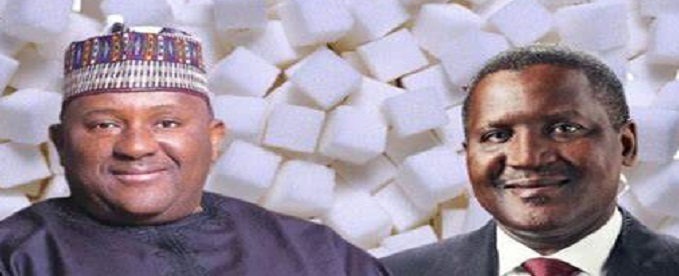
Aliko Dangote, Africa’s richest man has Abdul Samad Rabiu, another billionaire of attempting to instigate a probe into alleged money laundering at companies run by Dangote.

Abdul Samad Rabiu, BUA Group and Aliko Dangote, Dangote Group
The latest is coming after the truce brokered by Abdullahi Ganduje, then Kano governor and current APC chairman, between Dangote of Dangote Group and Rabiu of BUA Group seems to have been short-lived.
However, both conglomerates are now engaged in renewed clashes after a brief respite. Dangote Group recently accused BUA of running a smear campaign in the media over alleged financial crimes.
Through their large investment empires that stretch across sectors, they place Nigeria on the spotlight for good.
While Dangote Group has accused BUA Group of orchestrating a malicious campaign in the media by disguising as a concerned citizen, the latter on the other recalled how it overlooked its rival’s antics aimed at running it out of business.
In a seven-page statement titled: “Economic Sabotage : Our Stand,” published in the media on November 2, Dangote Group dismissed claims on its investigation for alleged illegal foreign exchange deals and money laundering running to $3.4billion under the watch of Godwin Emefiele, former governor of the Central Bank of Nigeria (CBN).

The company described the report as a rehash of a similar report peddled out operating as a concerned Nigerian” in 2016.
“The attention of the management of Dangote Industries Limited has been drawn to an unfounded allegation making the rounds in some online media, suggesting that the Company is being probed over alleged illegal foreign exchange laundering running to $3.4bn allegedly perpetrated by the Central Bank of Nigeria under the leadership of Mr. Godwin Emefiele over the years.
“As an organisation, it is not in our custom to respond to any spurious allegation. Still, since it is a rehash of a similar report peddled out of malice by a competitor masquerading as a concerned Nigerian in 2016, we are constrained to provide context to this issue.
“The reporting of this spurious foreign exchange allegation by some media houses was turned down by some credible traditional and online media news until it was featured as a paid advertorial in two Nigerian Newspapers BusinessDay and Leadership (Published on March 14, 2016) titled “Acts of Economic Sabotage by Dangote Cement” published in the name of David Osa Ighalo, from Benin, Edo State.
“It is saddening to note that this publication of Monday, March 16, 2016, wherein the author alleged that ‘monies went from the company in question to other sister Dangote Companies Outside Nigeria.
“It is estimated that almost $3bn, if not more, has been taken out of Nigeria through these means. This encourages round-tripping and, in effect, money laundering since there is no proper documentation has recently been given a fresh false slant by one Ahmed Fahad, purporting it to be a new petition directed to the attention of President Bola Ahmed Tinubu and Mr. Jim Obazee, the Special Investigator probing the CBN,” the statement read.
Responding, BUA, in a statement issued by its management on Friday, recalled how it resisted Dangote’s antics for 32 years as both organisations engaged in an acrimonious battle for control in their various market segments.
“We have been cast as the antagonists in a narrative woven with malice. We have not just survived; we have thrived, expanding our operations and contributing to Nigeria’s economy without resorting to subterfuge.
“It’s with a profound sense of responsibility and a heavy heart that we address the claims and very cheap attempts at blackmail levelled against BUA by Aliko Dangote in a recent 7-page editorial following months of sponsored campaigns of calumny against us using third-party platforms. To put things in perspective, it’s imperative to revisit history—a history not of rivalry but of resilience; not of enmity, but of endurance.
“In August 1991, a young BUA was doing its commodities trading business just as Nigeria faced a scarcity of sugar. As sugar was scarce, BUA was lucky to be one of the few with any stock for sale, and we stood prepared to supply the nation’s needs as best as our stock could.
“It was during this period that Aliko Dangote approached us to purchase sugar. If only we knew he was setting the first of many traps in our business history. He gave us a Societe Generale Bank of Nigeria cheque which bounced upon presentation to the bank. Unbeknown to us, this was a ruse that would lead to a court-sanctioned freeze of our assets orchestrated by Dangote.
“For three agonising months, our accounts were garnisheed, warehouses shuttered, and our spirit tested. Yet, from the ashes of deceit, BUA survived.
“Fast forward a few years later, we decided that since we were making good progress in our various businesses, we should open a sugar refinery. We approached one Usman Dantata (now late), Aliko Dangote’s uncle, and leased his NPA waterfront land (4.5 hectares) at the Tincan Island port, ‘Polo House’.
“We took the land, signed an agreement with the consent of NPA, and paid all applicable dues. Dangote waited until our contractors and equipment had been mobilised to the site, then he went to former President Olusegun Obasanjo. President Obasanjo had the land revoked entirely and gave the lease to Dangote. As a result, even his uncle lost the land. BUA was only given 24 hours to vacate the land,” it said.
It is unclear how this rift would be resolved this time around.


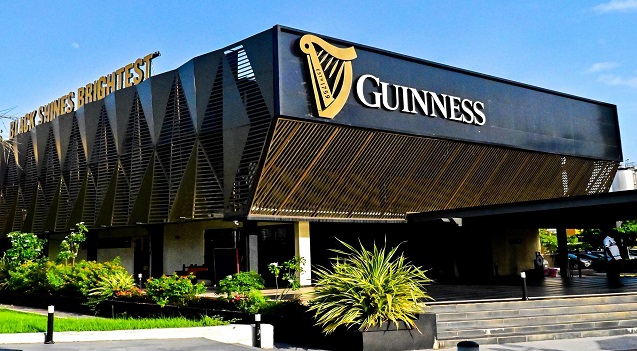
Guinness Nigeria has launched a nationwide National Consumer Promotion (NCP) tagged ‘Open For More’. This is a consumer rewards initiative that will see more than ₦400 million in cash and prizes won by consumers across the country.

The promotion, which runs nationwide, offers consumers the opportunity to win ₦1 million every day, ₦100,000 cash rewards for 1,000 winners, and a brand-new Toyota Land Cruiser Prado as the grand prize. The campaign is designed to reward loyal consumers while creating more opportunities for everyday Nigerians to celebrate life’s meaningful moments.
To participate, consumers are required to purchase specially marked bottles of Guinness Foreign Extra Stout or Guinness Smooth, check for the unique code beneath the crown cork, and enter the code at www.guinnessng.com/1759 for a chance to win.
Speaking on the launch, Ramanathan Solayappan, Marketing and Innovations Director, Guinness Nigeria, said the promotion reflects the brand’s longstanding relationship with consumers and its commitment to creating memorable experiences beyond the product itself.
“Nigerians have made Guinness part of their celebrations, milestones, and everyday moments for over seven decades. The ‘Open For More’ promotion is our way of rewarding that loyalty by giving consumers genuine opportunities to win prizes that can make a meaningful difference in their lives.”
Solayappan added that the promotion was deliberately designed to make participation simple and accessible to consumers across the country.
“We believe, at Guinness, that there is always room for more possibilities, more progress, and more reasons to celebrate. Through this campaign, we are inviting consumers and beloved Nigerians over the age of 18 years to take part in an experience that goes beyond enjoying a Guinness. Every eligible purchase could open the door to something more.”
Beyond rewarding consumers, the promotion comes at a time when many Nigerians are placing greater value on opportunities that offer tangible returns. By putting more than ₦400 million in cash and prizes directly into the hands of consumers, Guinness Nigeria is creating a campaign that celebrates loyalty and delivers meaningful rewards that can support personal aspirations, family needs, and everyday goals.
As part of the campaign, winners will emerge weekly throughout the promotion period, with regular winner announcements and prize presentations aimed at ensuring transparency and public confidence in the process.
The Open For More National Consumer Promotion strengthens Guinness Nigeria’s commitment to rewarding consumers while creating excitement around the brand through meaningful and impactful experiences. Consumers are encouraged to look out for specially marked promotional packs and follow Guinness Nigeria’s official communication channels for updates, winner announcements, and further information on participation mechanics.

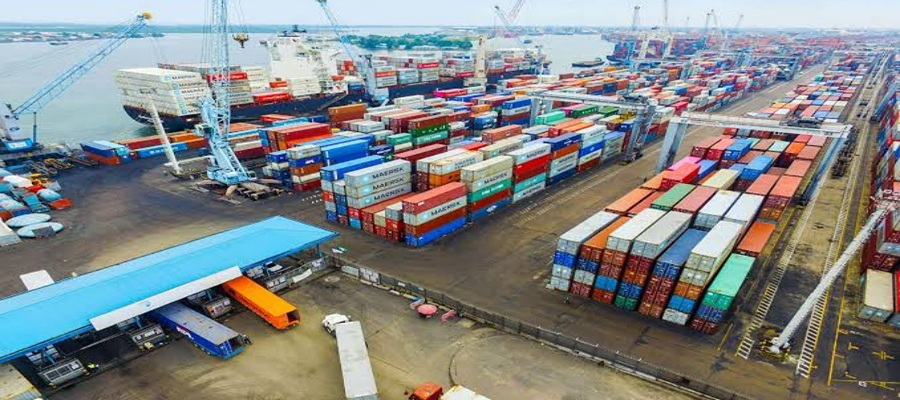
Bashir Adeniyi, Comptroller-General of the Nigeria Customs Service (NCS), has disclosed that the value of Import Duty Exemption Certificate (IDEC) approvals granted by the Federal Government rose to about N34 trillion in 2025.

Adeniyi made the disclosure on Monday during an investigative hearing of the Senate Committee on Finance in Abuja.
He said the import duty exemptions had significantly affected the service’s revenue generation, although many of the waivers were introduced to support critical national priorities.
According to him, about 60 per cent of the approved waivers were granted for the importation of military hardware in response to the country’s security challenges.
He said other beneficiaries included importers of compressed natural gas (CNG), electric and hybrid vehicles, healthcare equipment and medical supplies, industrial machinery, manufacturing inputs and food intervention programmes.
“IDEC approvals reached about N34 trillion in 2025, about 60 per cent of which was rightly granted for military hardware procurements due to Nigeria’s prevailing security challenges,” Adeniyi said.
The Comptroller-General noted that the introduction of the IDEC scheme in March 2020 had remained one of the major fiscal policies affecting Customs revenue.
He said the service would have generated significantly higher revenue over the years if not for government fiscal measures and other external factors that reduced its revenue base.
Adeniyi, however, maintained that fiscal policy should not be evaluated solely on the basis of revenue generation.
He said government interventions through duty waivers were intended to stimulate economic growth, improve healthcare delivery, encourage industrial production and address national security concerns.
He urged the Federal Government to strengthen monitoring mechanisms to ensure that beneficiaries of import duty waivers achieved the intended objectives, including reducing prices, increasing production and improving access to essential goods and services.
The Customs boss also disclosed that the service generated N7.28 trillion in revenue in 2025.
He added that out of the N11.04 trillion revenue target for 2026, the service had realised N4.5 trillion as of June 30.
Adeniyi expressed optimism that the service would continue implementing measures aimed at improving revenue collection while supporting government fiscal policies.

DataPro Rating Agency has upgraded the long-term credit rating of Dangote Cement Plc to AA+ from AA, citing the company’s strong financial performance, market leadership and ability to meet its financial obligations despite Nigeria’s challenging economic environment.

In its latest rating report, the technology-driven credit rating agency also affirmed Dangote Cement’s short-term rating at A1, with a Stable Outlook. The ratings are valid until June 16, 2027.
DataPro said the upgrade reflects the cement maker’s sustained financial strength, resilient operating performance and dominant position in Nigeria and across Africa.
According to the agency, the assessment followed a comprehensive review of the company’s capital base, earnings, liquidity, corporate governance, regulatory compliance and the sustainability of its financial performance over the medium to long term.
It noted that Dangote Cement’s strong brand, leading market share, solid earnings, robust asset base and experienced management continue to strengthen its ability to meet financial commitments on time.
The agency also highlighted the company’s outstanding financial performance in 2025.
According to the report, Dangote Cement posted N4.31 trillion in revenue during the year, representing a 20 per cent increase from the previous year. Profit before tax more than doubled, rising 109 per cent to N1.53 trillion, driven by higher sales, improved operating efficiency, lower finance costs and a stronger capital structure.
DataPro said the AA+ long-term rating indicates low credit risk and reflects excellent financial strength, business profile and operating performance relative to its rating benchmarks.
It added that the A1 short-term rating signifies good credit quality and shows that the company has a strong capacity to meet its short-term financial obligations as they fall due.
The rating agency, however, noted that the credit rating has a maximum shelf life of 12 calendar months in line with international best practice and should be used only as a reference, not as an offer to trade in securities or as a substitute for investors’ independent judgement.

Next Currency Crisis May Turn $300Bn in Stablecoins into National Currencies

NIHSA Warns States of Possible Flood within Seven Days

FG to Raise N1.2 Trillion via Fresh Bond Offer – DMO

Gigbanc Nigerian Fintech Startup Closes Shop after 3 Years

Mbunabo, Nigerian Filmmaker Accuses Ghana TV Stations of Pirating Nollywood Films

NRC, Ponzi Scheme Collapses Resulting Loss of Billions of Naira

Nigeria Launches FreeTV Nationwide

NASENI Moves to Digitize CCB’s 5m Assets Declaration and Operations

Lebara Nigeria Launches Lebara Play, Africa’s First Telecom-Owned Micro-Drama Platform

CANAL+ Partners Samsung to Pre-Load DStv Stream on New Samsung TVs In Nigeria, Other African Countries




 News3 days ago
Xora Finance, Fintech Firm Refuses to Hire Nigerians over Alleged Dishonesty

 Telecom3 days ago
NCC Advances Dig Once Policy, Engages Stakeholders on Cost-Based Framework for Duct Sharing

 Telecom3 days ago
NCC to Keynote Telecom Sector Sustainability Forum 7.0
 News3 days ago
How Ponzi Scheme Victims can Seek Legal Remedies — Lawyers

 General News3 days ago
FG Secures Fresh $208.3m World Bank Loan for Cash Transfer

 Telecom2 days ago
MTN Nigeria Slashes Cost of Broadband Internet Router, Unwraps New Data Bundles for Low-Budget Users

 News3 days ago
PalmPay Nigeria Appoints Samuel Oluyemi as Chief Operating Officer

 E-Financial2 days ago
Nigerians Accumulate $59Bn in Cryptocurrency Assets —FDC