

News
Ajaokuta Steel: Mittal, Indian Businessman Gets $500m Bailout in Nigeria

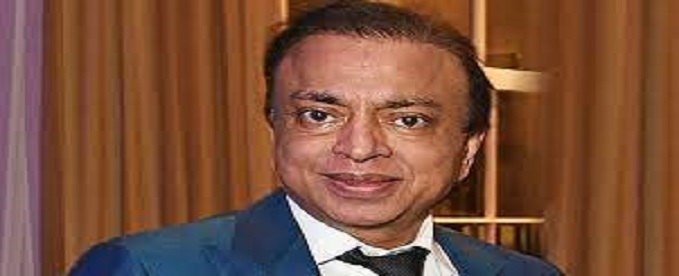
A company owned by Pramod Mittal, an Indian businessman who was the chairman of Ispat Industries Limited (now JSW Ispat Steel) is reportedly getting almost $500 million after the federal government of Nigeria agreed to pay his company the sum to settle a contract dispute over a deal that a previous administration said was tarnished by fraud.

Source: Bloomberg
Bloomberg reported that Mittal’s firm won a settlement tied to a Soviet-era steel plant that has sucked up more than $7 billion in Nigerian public investment without producing any metal.
Mittal, whose career in the steel industry has been less glittering than Lakshmi Mittal, his better-known sibling — the tycoon behind the €20 billion ($21.2 billion) ArcelorMittal SA conglomerate —, has a string of abandoned factories and a trail of unpaid debts to his name.
Five years ago, his Isle of Man-registered Global Steel Holdings Ltd., or GSH, was put into liquidation over $167 million owed to Moorgate Industries Ltd., a company spun off from one of the world’s biggest steel traders.
As a UK court weighed Moorgate’s request to declare Pramod personally bankrupt three years ago, the London-based Indian national held out the prospect of a payout from the Nigerian state to clear his debt.
The judge was unconvinced at the time, but the settlement subsequently reached with Nigeria last year now looks like the 67-year-old’s best route out of insolvency.

Still, while payments from the Nigerian government have reached GSH’s liquidators, as of Oct. 4, Moorgate had yet to see any of those funds despite having asked for them, court documents show.
With Pramod’s bankruptcy winding its way through English court rooms, a new Nigerian president has taken office, and last month his steel minister said one of the administration’s top priorities is to finally fire up the furnaces of the massive plant at the heart of the younger Mittal’s $496 million compensation.
The government has justified the agreement with a former unit of Pramod’s GSH, which was announced in September 2022, saying it frees the state to pursue its ambitions for the sprawling 24,000-hectare (92 square mile) site.
The settlement — representing about 1.5% of Nigeria’s foreign reserves — is just the latest twist in the saga of the vast Soviet-built factory complex begun 44 years ago.
The project has sucked up more than $7 billion in public investment and has yet to produce any metal.
The story of the Ajaokuta steel mill on the banks of the Niger River 190 kilometers south of the capital, Abuja, is often cited as emblematic of the corruption, poor governance and incompetence that bedevils the West African nation.
The country’s most notorious white elephant still sparks passionate debate over whether it should be written off or revived.
“Ajaokuta has been a black hole that has gobbled up billions of dollars, enriching multiple generations of politicians and foreign enablers,” said Matthew Page, a former Nigeria expert for US intelligence agencies and now an associate fellow at London-based Chatham House.
“This last failed reboot — and the giant price tag that came with it — is a preview of the next failed re-concessioning attempt. At this point, Ajaokuta’s dilapidated machinery is capable of doing only one thing: making public funds disappear.”
Bloomberg claimed that neither Pramod’s representatives nor the spokespeople for the newly elected President Bola Tinubu and Steel Minister Shuaibu Audu responded to requests for comment.
Abubakar Malami, Nigeria’s attorney general from 2015 to earlier this year, on whose watch the settlement was reached, said last year that the administration of former President Muhammadu Buhari “rescued the steel industry from interminable and complex disputes as well as saving the taxpayer from humongous damages.”
Pramod’s Involvement
Pramod entered into the Ajaokuta picture in 2004, when then President Olusegun Obasanjo awarded GSH a series of contracts, including an arrangement first to manage and later to buy the steel mill.
Shortly after GSH took over the plant, Solgas Energy Ltd., a small US company, sued it in Texas. Solgas claimed that GSH discussed becoming Solgas’ subcontractor on Ajaokuta before breaching a confidentiality accord and bribing Nigerian officials, including one of Obasanjo’s sons, to “steal the concession.”
While the case was thrown out on jurisdictional grounds, in December 2008 a separate arbitration tribunal ordered Nigeria to pay Solgas $15.2 million in damages for the wrongful termination of the contract — while noting the US firm hadn’t provided evidence to support the corruption allegations.
By then, Umaru Yar’Adua had taken over as Nigeria’s president, and he canceled GSH’s contracts after a panel that his steel development minister set up said the concessions were rife with irregularities. GSH’s claim it had invested $200 million was “a ruse,” the inspectors said.
Rather, the company had used its Nigerian assets to borrow more than $192 million from local banks — funds they “strongly” suspected had been dispatched abroad, they said.
The panel’s full report — never made public but seen by Bloomberg — said rescuing Ajaokuta was beyond the “financial, technical and experiential capabilities” of GSH, which instead had been “systematically cannibalizing, vandalizing and moving valuable equipment” out of the factory.
GSH and its Nigerian unit initiated arbitration proceedings against the government and later entered mediation, which produced last year’s settlement.
Pramod had signed two earlier agreements with the Nigerian government – in 2014 and 2016 – that would have seen his firm retain the right to manage an idled state-owned iron ore mining company but receive no payout.
“I threatened them with criminal proceedings for tax evasion, in addition to other criminal infractions that they had clearly committed,” Mohammed Adoke, a former attorney general who had reached the first of these accords, wrote in his memoir titled “Burden of Service.” “To amicably resolve the issue, I insisted that Global Steel should relinquish (Ajaokuta) for free without any form of compensation.”
Adoke’s successor, Malami, who was the attorney general when the half-a-billion-dollar settlement was struck, modified the terms of the deal to take back the mining firm and award a payment. Malami didn’t respond to a request for comment.
Moorgate’s Case
Even before finalizing the Ajaokuta windfall, Pramod had suggested using the money to pay down the Moorgate debt. In June 2020, as Moorgate sought his bankruptcy, he told Judge Catherine Burton that GSH’s liquidators had failed to account for the “very real prospects of a payment” from Nigeria. He said his Abuja-registered subsidiary would settle the obligation to Moorgate “out of whatever money it receives from the mediation,” according to the decision issued by Burton, who — unpersuaded — ruled in favor of the creditor.
Pramod also tried another way to skirt bankruptcy — using an individual voluntary arrangement, or IVA. He proposed repaying less than £5 million out of £2.5 billion ($3.1 billion) — or 0.2% of what a handful of companies and individuals said they were owed by the businessman.
Moorgate countered that “friendly creditors” who approved this meager offer were either associated with Pramod or relying on loan agreements that were “not true or contemporaneous documents.” A UK judge revoked the IVA last November, expressing “serious doubts” about the authenticity of the paperwork. In the IVA, Pramod said he was worth £117,000, claiming he didn’t control GSH. The family’s London mansion is held through an offshore company whose directors were senior managers at GSH.
Contrary to Pramod’s argument, the court determined he controlled the British Virgin Islands-registered company that owned GSH through his influence over a family trust, with an Isle of Man judge similarly describing him as that firm’s “driving force.”
Pramod made other apparent attempts to distance himself from the group and its subsidiaries. Since April 2021, GSH’s Nigerian unit — the settlement’s beneficiary — has been owned by a Mauritian entity named Luminous Star Ltd., classified as defunct for a decade and with a director who was formerly a GSH employee. While Pramod ceased to be a director of the Nigerian firm in late 2020, his son sits on the board.
In January, Nigeria’s then Information Minister Lai Mohammed said the government had paid $446 million to GSH’s local unit in multiple instalments under the settlement. The law firm hired by the Nigerian subsidiary for the mediation made six transfers from these funds to GSH’s account, totaling £219 million ($272 million) between October 2022 and February 2023, according to reports filed by the company’s liquidators. The law firm, King & Spalding LLP, declined to comment on the rest of the money.
In December and again in March, Moorgate asked to be paid out of funds recovered by GSH’s liquidators, according to a court decision issued last month in the Isle of Man. The liquidators, who estimate that only £40 million is available for creditors once GSH’s potential tax liability and additional costs are taken into consideration, are yet to comply with the request, the judge said on Oct. 4, ruling that Moorgate is entitled to receive part-satisfaction of the debt. Moorgate and GSH’s liquidators declined to comment.
Emulating Lakshmi
Like his brother Lakshmi, who built the world’s second-largest steel producer after splitting from the family business in the mid-1990s and embarking on a legendary deal-making spree, Pramod’s efforts also hinged on international acquisitions. As Lakshmi, the UK’s sixth-richest person, entered the wealth stratosphere, his brother sought to emulate him.
In 2004, Lakshmi’s daughter got married in a lavish ceremony at Versailles, France. Nine years later, the younger Mittal spent £50 million on his daughter’s wedding in Barcelona, according to Moneylife, an Indian media outlet, and Spanish news site Vanitatis. Pramod’s spokespeople didn’t comment on the figure. Just this year, Pramod’s son got married to his long-term partner in a “multi-million pound ceremony” at a five-star UK hotel, the Daily Mail reported.
Pramod’s steel ambitions took him not only to Nigeria, but also to Bosnia, Bulgaria, Libya, Zimbabwe and the Philippines where his companies ran up nearly a billion dollars in debts. During the mid-2000s expansion, GSH agreed to take a loan of up to $35 million from an offshore company owned by his brother Lakshmi, board meeting minutes show. Neither Lakshmi nor the group he heads “have any business connection to the investments” of Pramod, a spokesperson for ArcelorMittal said by email.
In the Philippines, GSH bought a shuttered steel plant in 2004. Within five years, activity at the facility stopped amid a legal battle, with lenders claiming Pramod’s firm had defaulted and the company accusing the banks and liquidator of reneging on an obligation to clear tax arrears. In Bulgaria, where GSH failed to turn around a communist-era steelmaker, a Sofia court put the company owning the mill into bankruptcy in 2008 after it defaulted on a Є325 million bond.
Authorities in Bosnia-Herzegovina arrested Pramod in July 2019 and charged him in January this year with “heading an organized crime group.” Prosecutors alleged that GSH “illegally appropriated” about $11.5 million from a manufacturer of iron-ore smelting coke that the firm took control of in 2003. In a statement following his detention, GSH said the “complaints are categorically false,” according to Mumbai-based news outlet Global Prime News. Pramod was released on bail shortly after being questioned and has not returned to Bosnia. He and his family have initiated arbitration proceedings against the Bosnian state.
Meanwhile, in Nigeria, the attachment of the country’s leaders to the Ajaokuta plant shows no sign of abating, even though critics including the World Bank have called the facility obsolete. President Tinubu pledged during his election campaign to get the steel mill up and running. His predecessor’s government, which left office in May, congratulated itself not only for liberating Ajaokuta from Pramod’s legal claim but also securing it for a settlement significantly smaller than the $5.3 billion that GSH had apparently demanded.
Just last month, touting the potential of the complex to one day create half a million jobs, Vice President Kashim Shettima said the “Ajaokuta plant can be a game changer for the Nigerian nation.”
Source: Bloomberg L.P except headlines and add ons



Management of Nigeria CommunicationsWeek Media has withdrawn its publication titled “Adefolarin Ogunsanya and the Allegations of Shareholder Interference and Self-Dealing at Pan African Towers,” which was published on its platform.

The decision to retract the story follows an editorial review to ensure that the platform maintains the highest standards of accuracy, fairness and responsible journalism in reporting matters that are the subject of ongoing judicial proceedings.
Nigeria CommunicationsWeek acknowledges that the issues raised in the publication remain before the courts and have not been finally determined.
Accordingly, the organisation has decided to remove the article from its platforms pending the conclusion of the legal processes or the availability of additional verified information.
The publication regrets any inconvenience or misunderstanding the report may have caused to readers or any individuals or organisations mentioned in the story.
Nigeria CommunicationsWeek remains committed to the principles of balanced, factual and ethical journalism and will continue to uphold professional standards in its coverage of judicial and corporate governance matters.


INTERPOL’s African Cyberthreat Assessment Report 2026 revealed that Artificial intelligence accounts for 55 per cent of reported cybercrimes across Africa and making attacks faster, more sophisticated and increasingly difficult to detect.

The report warns that the continent’s rapid digital transformation, marked by more than 1.1 billion mobile subscribers in 2025, is being matched by an equally rapid evolution in cybercrime, while fragmented legislation and limited AI readiness among law enforcement agencies continue to weaken responses.
The 40-page assessment, based on survey data from 36 African member countries, said cybercrime has shifted from isolated criminal activity to an industrialised, borderless ecosystem powered by AI.
According to the report, East Africa has become a hotspot for mobile money fraud and ransomware attacks targeting critical infrastructure, while business email compromise (BEC) and romance scams are widespread across Central and West Africa.
Southern Africa, it noted, has become an attractive target for international cybercriminals due to its high level of internet connectivity.
The report also highlighted the growing financial impact of cybercrime across the continent, revealing that losses have more than doubled since 2024, rising from 192 million dollars to 484 million dollars.
It attributed the increase largely to AI-enabled scams, credential harvesting and automated social engineering attacks.
INTERPOL said online scams remained the most commonly reported form of cybercrime in 2025, with criminals exploiting mobile money platforms, social media and AI-generated content to deceive victims.
It added that 72 per cent of surveyed countries reported the existence of scam centres, with the highest concentration recorded in Southern and West Africa.
The report further identified digital sextortion and online harassment as persistent threats, driven increasingly by AI-generated deepfakes and synthetic media.
According to data from TrendAI, one of INTERPOL’s partners, about 600,000 sextortion incidents were detected during the reporting period.
Business email compromise schemes have also become more sophisticated, with AI being used to generate highly convincing email communications.
The report said Africa-based threat actors are increasingly targeting victims in Europe and North America using cyber infrastructure spread across multiple jurisdictions.
INTERPOL warned that the absence of real-time information sharing between banks, telecommunications companies and law enforcement agencies has created significant vulnerabilities in tackling financial cybercrime.
It said cybercriminals are no longer relying solely on stolen credentials but are now creating AI-generated synthetic identities by combining genuine personal information with fabricated details.
These synthetic identities, the report noted, have been used to bypass biometric verification systems, open bank accounts, obtain mobile loans and register SIM cards under false identities.
Neal Jetton, Director of INTERPOL’s Cybercrime Directorate, described cybercrime as one of the most significant criminal threats facing Africa.
“Cybercrime has emerged as one of the most significant criminal threats to the region. AI is automating every stage of a cyberattack from reconnaissance and phishing to extortion and evasion.
“However, we see that when countries work together, cybercriminal infrastructure can be identified, disrupted and dismantled,” he said.
Despite the growing threat, the report highlighted progress in strengthening cybersecurity across the continent.
It disclosed that 17 African countries enacted or amended cybercrime legislation in 2025, while Senegal launched an online reporting platform to improve responses to online offences affecting children.
The report also noted that regional capacity-building initiatives are helping to improve long-term cyber resilience.
INTERPOL said four major cybercrime operations conducted in 2025, Operation Serengeti 2.0, Operation Contender 3.0, Operation Sentinel and Operation Red Card 2.0, resulted in more than 1,500 arrests, the seizure of hundreds of electronic devices and the recovery of over 100 million dollars.
To address the growing threat, the report recommended the adoption of standardised digital forensic capabilities, stronger cross-border collaboration, greater investment in AI literacy for law enforcement personnel and formal public-private partnerships to improve cybercrime prevention, detection and response.
The African Cyberthreat Assessment 2026 forms part of INTERPOL’s African Joint Operation against Cybercrime initiative, funded by the United Kingdom’s Foreign, Commonwealth and Development Office, with data contributions from Fortinet, Mastercard, the Shadowserver Foundation, S2W and TrendAI.

Nigerian students will soon design, assemble, test and fly drones as part of their university education, following a partnership between Miva Open University and Abuja-based defence technology company Terra Industries.

The collaboration comes as Nigeria intensifies efforts to develop indigenous capabilities in advanced manufacturing and defence technology, with both organisations seeking to strengthen Africa’s pipeline of deep-tech talent.
The partnership will see students gain hands-on experience in drone engineering and related technologies through dedicated labs and industry collaboration.
The partners will establish robotics, drone and virtual reality laboratories across Miva’s study centres, beginning with a pilot facility in Abuja.
Students will also gain access to industry-led workshops, research opportunities, internships and mentorship in artificial intelligence, robotics, cybersecurity and autonomous systems.
According to the partners, Terra’s engineering teams will work alongside Miva faculty to integrate hands-on hardware training into academic programmes, exposing students to real-world engineering challenges and building industry experience before graduation.
Nathan Nwachuku, co-founder and CEO of Terra Industries, said Africa’s technological future depends on developing engineers capable of building solutions for local challenges.
“The engineers who will build Africa’s future must learn by building. This partnership creates opportunities for students to work with the technologies shaping modern security, infrastructure and autonomous systems,” said Nwachuku.
Miva Open University said the initiative forms part of its commitment to experiential learning, adding that students will have the opportunity to “design, test and fly drones as part of their academic experience”.
The partnership builds on Terra’s expanding role in Nigeria’s defence technology sector. Earlier this year, the company signed a joint venture with the Defence Industries Corporation of Nigeria to localise the production of drones, robotics systems and cybersecurity infrastructure, supporting efforts to strengthen domestic manufacturing and reduce reliance on imports.

Dimension Data to Channel Funds to Support Nigerian Fibre Expansion

FG Commences 90,000km Fibre Optic Rollout within Weeks

Kaspersky Reveals a New Malicious Framework Targeting Cryptocurrency Users with the Use of OkoSpyware

Nigeria CommunicationsWeek Retracts Story on Pan African Towers Litigation

Firm to recruit over 100 professionals to boost NRS e-Invoicing compliance

NRC, Ponzi Scheme Collapses Resulting Loss of Billions of Naira

From Scarcity to Scale: What Africa Can Learn from India’s Agricultural Transformation

EFCC Busts NIS Visa Overstay Racket, Uncovers N700m in an Account

BON Establishes Six Ad Hoc Committees to Modernize Broadcasting

NELFUND Investigates 34 Universities Over Students’ Missing Tuition Refunds




 News3 days ago
Atte, Nigerian Develops AI Algorithm for Hair Transplants

 News3 days ago
FG to Abolish Subsidies in Power Sector in 2027 – Minister

 E-Financial3 days ago
FCT Court Awards Ex-Customers N15m against Stanbic IBTC over Data Privacy Breach

 E-Financial3 days ago
CBN Exposes over 13,000 BVNs Tied to Fraud as Banks Tighten Security

 Telecom3 days ago
Starbase Technologies Introduces Yolly, a Reward-Based Social Entertainment Platform

 General News3 days ago
Dare Tackles Onaiyekan over Criticism of Tinubu, Says Economic is Working

 E-Business2 days ago
Kaspersky Identifies Cyberespionage as a Growing Threat Across Africa, Others

 General News3 days ago
SERAP Asks Tinubu to Probe Alleged N6.79Bn Missing Police Funds, Firearms